Full Text
Full text is available in PDF
Jundishapur Journal of Microbiology
Ahvaz Jundishapur University of Medical Sciences
Authors
 2,*, Iraj Pakzad3, Fatemeh Zabihi1, Maedee Alizadeh2, Fattane Karimi2
Silver has been used from ancient times by humans, and recently nanoparticles of silver have been used in many aspects of human life including as a potent antibacterial agent.
In the current study a completely green method to prepare silver nanoparticles is reported. Two types of starches (potato and corn starches) were used to produce and stabilize silver nanoparticles. Antimicrobial activities of prepared nanofoods were investigated.
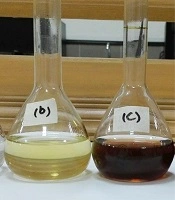
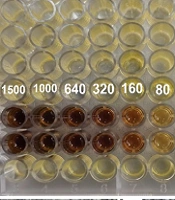
Nanosilver particles have been produced using high temperature water containing bulk silver nitrate and starch sources. Presence of nanosilver containing particles and formation of the nanoparticles were confirmed using transmission electron microscopy (TEM) and ultraviolet-visible spectroscopy, respectively. The anti-bacterial activity of emulsions made from nanoparticles containing starches was evaluated by assessing minimum inhibitory concentrations (MIC) against the studied standard, and pathogenic bacteria.
Findings of the current study indicated that the size and shape of silver nanoparticles depended on the type of starch. For example for a special type of potato starch the cubic silver nanoparticles were obtained whereas for other types of potato starch and corn starch spherical silver nanoparticles were produced. Nanoparticle sizes were mainly about 20 nm, but ranging from 2-30 nm in different situations. Due to the biocompatibility of starch synthesized silver nanoparticles, this method can be used for medicinal purposes. Both kinds of nanosilver containing starch sources have excellent antibacterial activity.
The current study indicated that silver nanoparticles produced using different starches had strong antibacterial activities on the studied standard and pathogenic bacteria including gram positive and gram negative.
© 2013, Author(s). This open-access article is available under the Creative Commons Attribution 4.0 (CC BY 4.0) International License (https://creativecommons.org/licenses/by/4.0/), which allows for unrestricted use, distribution, and reproduction in any medium, provided that the original work is properly cited.
Zarei M, Jamnejad A, Khajehali E. Antibacterial Effect of Silver Nanoparticles Against Four Foodborne Pathogens. Jundishapur J Microbiol. 2014;7(1):e8720. doi: https://doi.org/10.5812/jjm.8720
Tariq F, Ahmed N, Afzal M, Khan MAU, Zeshan B. Synthesis, Characterization and Antimicrobial Activity of Bacillus subtilis-Derived Silver Nanoparticles Against Multidrug-Resistant Bacteria. Jundishapur J Microbiol. 2020;13(5):e91934. doi: https://doi.org/10.5812/jjm.91934
Asgari Pirbalouti MM, Shahbazi S, Shahrokh Shahraki S, Reiisi S, Mokhtari A. Study the Antifungal Effects of Green Synthesized Silver Nanoparticles on the Aspergillus niger, Microsporum canis, and Candida albicans. J Microbiota. 2024;1(3):e154535. doi: https://doi.org/10.5812/jmb-154535
Hashemi Z, Mortazavi-Derazkola S, Biparva P, Goli HR, Sadeghian F, et al. Green Synthesized Silver Nanoparticles Using Feijoa Sellowiana Leaf Extract, Evaluation of Their Antibacterial, Anticancer and Antioxidant Activities. Iran J Pharm Res. 2020;19(4):e124378. doi: https://doi.org/10.22037/ijpr.2020.112523.13805
Tanhaeian A, Shahriari Ahmadi F. Inhibitory Effect of Biologically Synthesized Silver Nanoparticle on Growth and Virulence of E. coli. Zahedan J Res Med Sci. 2018;20(6):e10269. doi: https://doi.org/10.5812/zjrms.10269
Last Update: 1 week ago
Last Update: 1 week ago
Last Update: 1 week ago
Last Update: 9 hours ago
Last Update: 10 hours ago
Last Update: 5 days ago