Journal of Kermanshah University of Medical Sciences
Peer-reviewed Medical Quarterly
e-ISSN 2588-2570
p-ISSN 2588-2562
Image Credit:J Kermanshah Univ Med Sci
Outline
The epidemiological indices of malaria in Kermanshah province (1996-2010)
Authors
1Dept. of Parasitology & mycology, School of Medicine, Kermanshah University of Medical Sciences, Kermanshah, Iran
2Fertility and Infertility Research Center, Kermanshah University of Medical Sciences, Kermanshah, Iran
3Students Research Committee, Kermanshah University of Medical Sciences, Kermanshah, Iran
*Corresponding Author: Corresponding author: Mansour Rezaei, Fertility and Infertility Research Center, Kermanshah University of Medical Sciences, Kermanshah, Iran, Tel: +989183318978 Email: mrezaei@kums.ac.ir
Published online:Jan 29, 2016
Article type:Research Article
Received:Jul 25, 2015
Accepted:Jan 19, 2016
How to Cite:Nazari N, Rezaei M, Ghadery E. The epidemiological indices of malaria in Kermanshah province (1996-2010). J Kermanshah Univ Med Sci. 2016;19(6):e69810. doi: https://doi.org/10.22110/jkums.v19i6.1899
Abstract
Background: Malaria is a major health problem in tropical and subtropical countries worldwide. According to the World Health Organization report, in the year 2011, approximately 791000 persons died due to malaria. To introduce the features of this disease in the province of Kermanshah, the registered characteristics of this disease were analyzed during 1996-2010.
Methods: In this descriptive- analytical study, the data of 168 patients, based on the report forms of malaria cases, were collected from urban and rural health centers, health center of cities, and Kermanshah province health center. Data such as age, sex, place of disease, plasmodium type, transmission type, nationality and type of slide preparation were recorded. Data were analyzed by SPSS 16 software using descriptive statistics (mean, percentage and one and two-dimensional tables).
Results: During 15 years, 168 malaria cases were reported in Kermanshah province with about 2 million populations. 94 (78.3%) of them were male and in 163 cases (97%) of P. vivax was the etiologic agent and P. falciparum was found in 5 other cases. Most cases were reported in 1375, 87 patients (51.8%) and most of the cases 43 (25.6%) were found in Paveh city.
Conclusion: Malaria in Kermanshah province is now limited to cases traveling to or entering the Southeast areas of Iran. Although local transmission of malaria in the country, especially in the Southeast of the country continues to be a big problem, Kermanshah province is now considered a part of country where this disease is going to be eradicated and malaria control programs are being run successfully.
Highlights
References
- 1.The references of this article is available on PDF.
Copyright
© 2016, Journal of Kermanshah University of Medical Sciences. This open-access article is available under the Creative Commons Attribution-NonCommercial 4.0 (CC BY-NC 4.0) International License (https://creativecommons.org/licenses/by-nc/4.0/), which allows for the copying and redistribution of the material only for noncommercial purposes, provided that the original work is properly cited.
Similar Articles
19
Sep
2003
Epidemiology of malaria in Hamadan province during a 20 -year period (1980-2001)
M Fallah,
A Miraarab,
F Jamalian,
A Ghaderi,
A Zolfaghari
Fallah M, Miraarab A, Jamalian F, Ghaderi A, Zolfaghari A. Epidemiology of malaria in Hamadan province during a 20 -year period (1980-2001). J Kermanshah Univ Med Sci. 2003;7(2):e81211. doi:
17
Mar
2025
Outbreak of Malaria in Southern Iran-Possible Ways to Manage
Mohammad Khammarnia,
Mostafa Peyvand,
Eshagh Barfar,
Fatemeh Setoodehzadeh,
Shiva Kargar,
Iman Rokni
Khammarnia M, Peyvand M, Barfar E, Setoodehzadeh F, Kargar S, et al. Outbreak of Malaria in Southern Iran-Possible Ways to Manage. Jundishapur J Microbiol. 2025;18(3):e159462. doi: https://doi.org/10.5812/jjm-159462
7
May
2012
Epidemiological Features of Malaria in Qom Province from 2001 to 2011
Abedin Saghafipour,
Mehdi Noroozi,
Moharam Karami-Jooshin,
Abbas Poudat
Saghafipour A, Noroozi M, Karami-Jooshin M, Poudat A. Epidemiological Features of Malaria in Qom Province from 2001 to 2011. Zahedan J Res Med Sci. 2012;14(8):e93286. doi:
12
Nov
2024
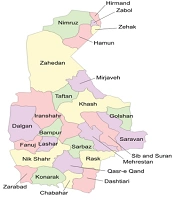
Malaria Epidemiology in Rask City and Surrounding Areas (2020 - 2023), Southeast Iran
Mahdi Rezaei Kahkha-Zhaleh,
Davoud Salahi,
Shaghayegh Dabirzadeh,
Mansour Dabirzadeh
Rezaei Kahkha-Zhaleh M, Salahi D, Dabirzadeh S, Dabirzadeh M. Malaria Epidemiology in Rask City and Surrounding Areas (2020 - 2023), Southeast Iran. Jundishapur J Microbiol. 2024;17(9):e150059. doi: https://doi.org/10.5812/jjm-150059
10
Jan
2013
Malaria Epidemiology in Sistan and Balouchestan Province during
Narjes Sargolzaie,
Masoud Salehi,
Malek Kiani,
Abdolghafar Hassanzehi,
Mohamad Sakeni
Sargolzaie N, Salehi M, Kiani M, Hassanzehi A, Sakeni M. Malaria Epidemiology in Sistan and Balouchestan Province during. Zahedan J Res Med Sci. 2014;16(4):. doi:
More by these authors
Cited by
- Scopus by DOI: 0
Last Update: 6 days ago
- Scopus by Title: 0
Last Update: 6 days ago
- Scopus by Title (Ref): 2
Last Update: 6 days ago
- CrossRef: 0
Last Update: 6 days ago
- OpenAlex: 2
Last Update: 2 days ago
- OpenCitations: 0
Last Update: 4 days ago
Comments
Number of Comments:0