In Iran, malaria is stratified into four epidemiological regions, with the southern area being malaria-endemic (
21). This study identified
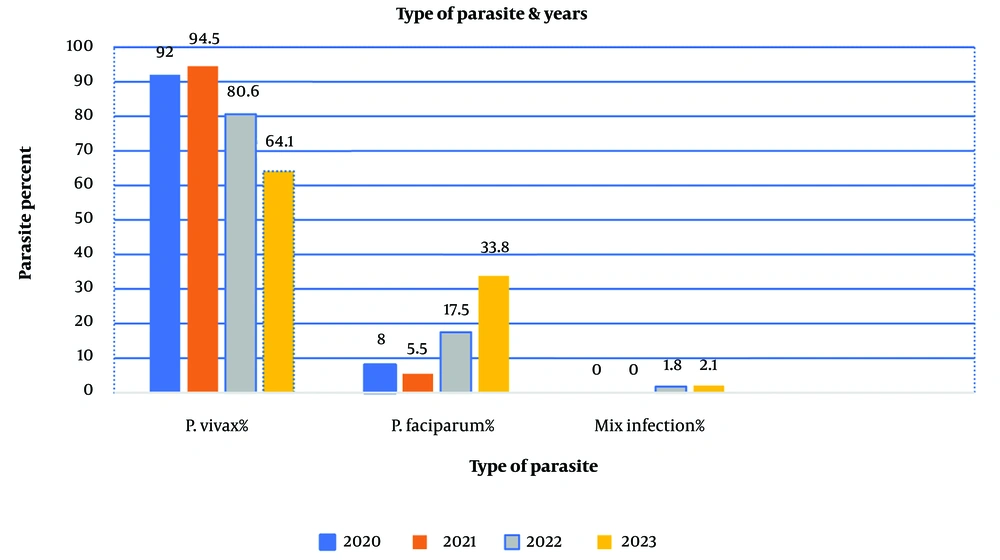
P. vivax as the predominant species, suggesting unique transmission dynamics and offering new research opportunities into its environmental interactions and health impacts. This finding is consistent with similar studies in Iran, such as one in Kermanshah, where
P. vivax accounted for 98% of cases (
22).
All areas were classified into four categories based on new autochthonous malaria cases per 1000 population: (1) there are four stages in malaria control efforts: (1) it is important to note that areas with an Annual Parasite Index/1000 more significant than five are designated as intensified control areas. This designation is substantial and requires attention to ensure the safety and well-being of individuals in those areas. By remaining informed and taking necessary precautions, we can work towards minimizing the impact of parasites and maintaining the health of our communities. (2) pre-elimination, where the API/1000 is between 5 and 1; (3) elimination, where the API/1000 is less than 1; and (4) prevention of reintroduction, for regions with no new autochthonous malaria cases in the past 36 months. Control measures, such as vector management and intervention strategies, are customized to each category. It's compelling to see how these targeted approaches enhance program effectiveness and implementation (
4).
In our study, the API for malaria in the years 2021, 2022, and 2023 were 2.68, 2.35, 10.59, and 15.60, respectively, indicating an outbreak in this region of southeastern Iran. Several factors may contribute to the increase in API, particularly in southern or southeastern Iran: Climatic conditions: Climate change, including rising temperatures and shifts in rainfall patterns, can extend the mosquito breeding season and increase population density, leading to higher malaria transmission (
23). The emergence of parasite resistance to antimalarial drugs, such as chloroquine, can cause treatment failures, thereby contributing to a rise in API (
5). Mosquito resistance to insecticides can reduce the effectiveness of vector control measures, resulting in higher malaria transmission (
24). Increased human movement across borders, particularly migration from malaria-endemic neighboring countries, can lead to the importation and spread of malaria (
25). Limitations in healthcare resources can impede the efficient surveillance and treatment of malaria, resulting in elevated levels of the API (
26). Poverty worsens the spread of malaria because of inadequate housing, lack of protective measures, and limited access to healthcare (
27). Deforestation, irrigation, and changes in land use can create more suitable habitats for Anopheles mosquitoes, which carry malaria (
28).
Soleimanifard et al. investigated 726 patients in Isfahan between 1859 and 2009. Among these, 679 patients (93.5%) were male, and 47 (6.5%) were female, with a mean age of 25.9 ± 9.9 years.
Plasmodium vivax was identified as the most prevalent parasite, accounting for 94.6% of cases. The highest malaria prevalence was observed in 2005, with 243 patients (23.5%) during June (11.8%). Afghan immigrants made up 91% of the cases, while Iranian patients represented only 2.8%. Following treatment, 348 patients (47.9%) fully recovered, 39 patients (5.4%) remained under treatment, and there was no available information for 339 patients (46.7%) (
29).
Recent studies indicate an increase in the Afghan refugee population in Iran. The United Nations High Commissioner for Refugees (UNHCR), a reliable source on refugee populations, reports that Iran hosts one of the world’s largest and most longstanding urban refugee populations, including Afghans who have fled conflict and economic instability in their home country. Recent events in Afghanistan have further intensified displacement towards neighboring countries, including Iran. A study by As highlights an outbreak in this southeastern region. Several factors may contribute to the increase in annual parasite incidence (API) for malaria, particularly in southern and southeastern Iran. Climatic conditions, such as rising temperatures and shifting rainfall patterns due to climate change, can extend mosquito breeding seasons and increase population density, potentially leading to higher malaria transmission rates (
30).
In recent years, malaria incidence has increased in southeastern Iran, particularly in the provinces of Sistan and Baluchestan, Hormozgan, and Kerman. These trends are linked to changes in precipitation and humidity patterns in the region (
31). A study conducted in Sistan and Baluchestan identified a noteworthy positive correlation between malaria incidence and average, minimum, and maximum monthly temperatures, along with a negative correlation with humidity (
32). Similarly, research in Babol found the strongest positive correlation between malaria incidence and minimum air temperature (r = +0.991, P < 0.05) and the strongest negative correlation with relative humidity at noon (r = -0.863, P < 0.05) (
33). Migration and weather conditions appear to be significant contributors to the recent rise in malaria cases in southeastern Iran.
The distribution of malaria cases also varies based on the type of parasite and the current status of the disease center, as shown in
Table 5. Specifically, most
P. vivax cases were reported when the disease center was classified as new active (43.3%) or old active (35.5%). In contrast,
P. falciparum cases were more evenly distributed across all categories, with the highest percentage reported in newly active centers (48.9%). Most mixed infections were also reported in newly active centers (58.2%). This suggests that malaria type distribution may differ based on the disease center’s status, which has implications for targeted interventions. The association between parasite type and the latest status of the disease center was statistically significant (P = 0.002), indicating that the distribution of parasite types varies across the different categories of disease center status. This finding underscores the importance of monitoring the disease center’s status to better understand malaria distribution and inform targeted interventions.
The P-value indicates the probability that the observed differences in the data occurred by chance. In this case, a P-value of 0.002 suggests a very low probability (less than 0.2%) that the differences in malaria type distribution across the latest statuses of disease centers after a positive report occurred by chance. Thus, we can conclude there is a statistically significant difference in malaria type distribution across the latest statuses of the disease center following a positive report. The findings in
Table 5 have important implications for malaria control and prevention. The variations in malaria type distribution based on the latest status of the disease center suggest that targeted interventions may be necessary to address the unique challenges of each parasite type. For instance, targeted indoor residual spraying or mass drug administration may be particularly effective in areas with higher
P. vivax prevalence, while enhanced vector control measures may be more suitable for areas with high
P. falciparum transmission. By monitoring the latest status of the disease center and adjusting interventions accordingly, malaria burden can potentially be reduced, leading to improved public health outcomes.
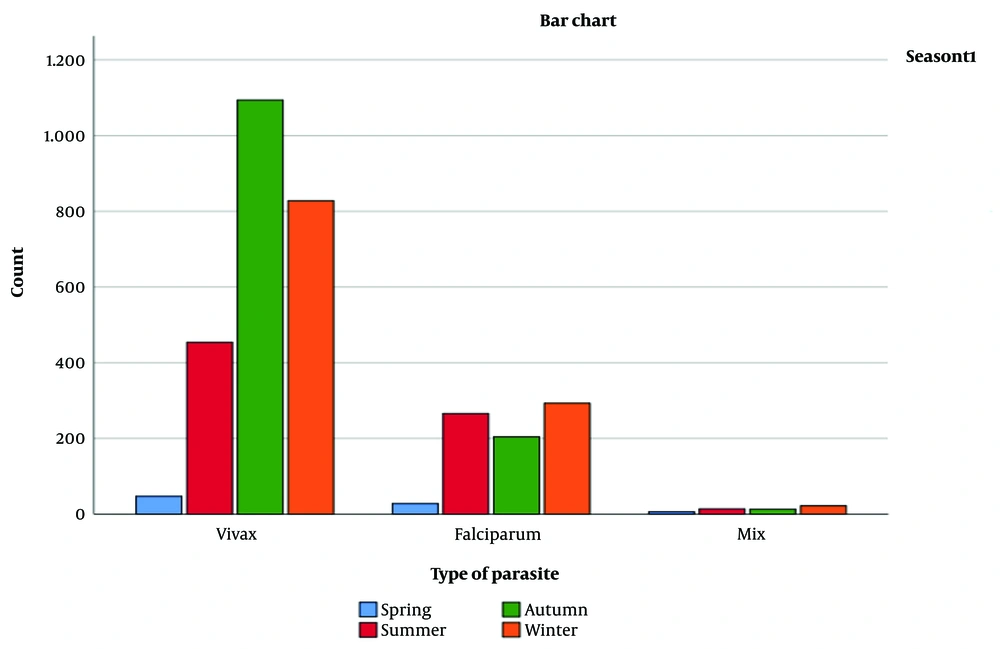
Figure 3 shows a higher incidence of malaria cases during the summer, consistent with previous studies reporting peak malaria transmission in warm and wet seasons. The proportion of
P. vivax cases was highest in autumn, while
P. falciparum cases peaked in summer. This aligns with previous research indicating that
P. vivax is more prevalent in cooler, drier areas, whereas
P.falciparum is more common in warmer, wetter regions.
Figure 3 also illustrates an increase in mixed infections (
P. vivax and
P. falciparum) during the summer compared to other seasons. Mixed infections can be more complex to diagnose and treat, underscoring the importance of accurate diagnostics and appropriate treatment strategies.
The higher proportion of malaria cases in males compared to females, as shown in
Table 1, aligns with previous studies in Iran and other malaria-endemic regions. This gender disparity may be due to varying exposure levels to malaria-carrying mosquitoes, with outdoor occupations that increase the likelihood of mosquito bites potentially contributing to higher exposure for males.
On the other hand, it is worth noting that the percentage of pregnant women affected by malaria is lower compared to that of nonpregnant women. This difference could be attributed to increased awareness and targeted prevention efforts specifically aimed at pregnant women. However, it is essential to recognize that even a relatively small number of malaria cases in pregnant women can have severe consequences for both the mother and the fetus. The lack of statistically significant differences in the proportion of pregnant women with malaria across different years may indicate that prevention efforts targeting pregnant women have been successful in maintaining low levels of malaria infection. Nonetheless, continuous monitoring and evaluation of these efforts are crucial to ensure long-term sustainability and effectiveness.
5.1. Conclusions
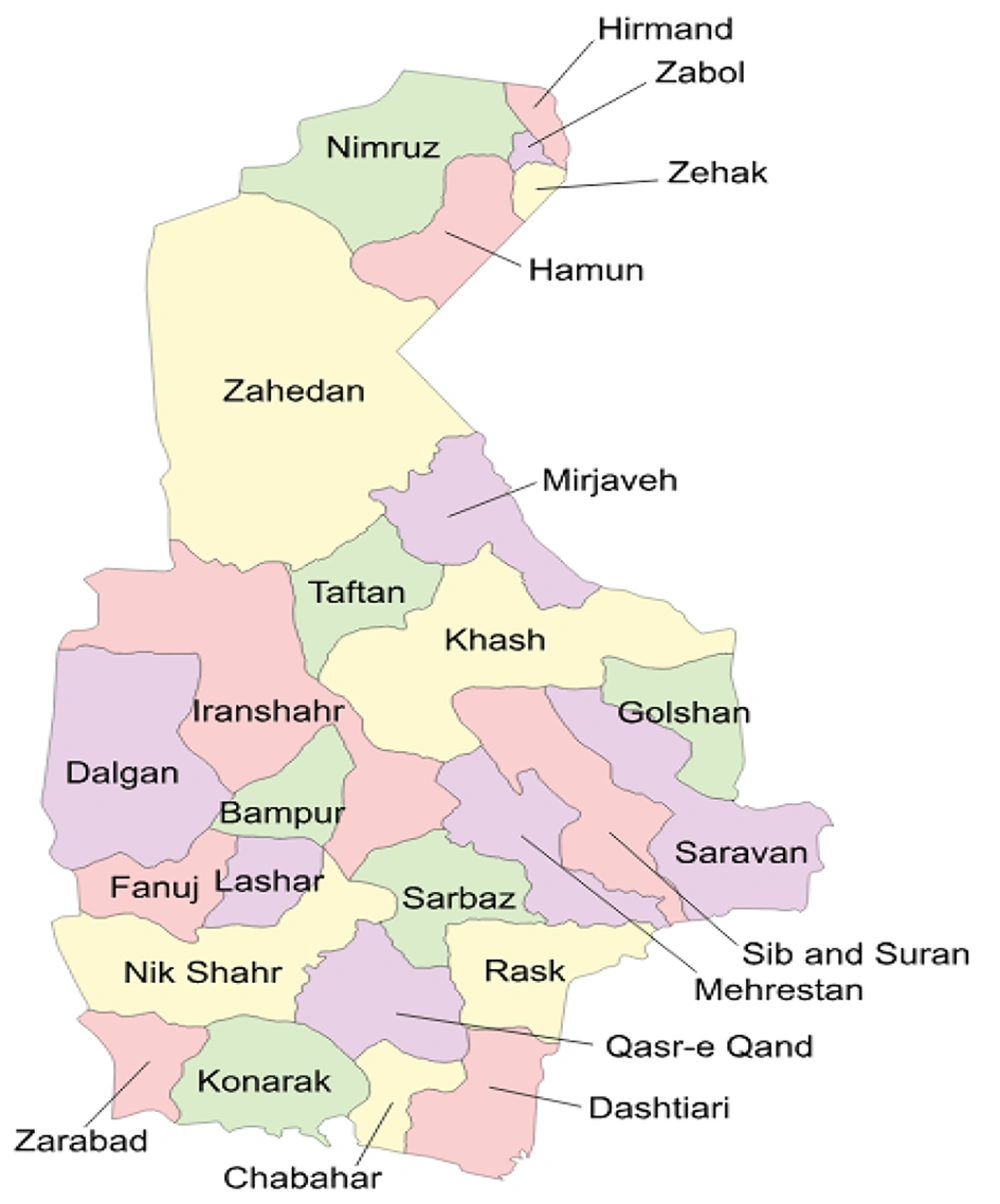
In conclusion, these findings highlight the ongoing need for surveillance and targeted interventions to mitigate the burden of malaria in the study area, particularly among high-risk populations such as males and nonpregnant women. The study had limitations related to data availability and potential sampling bias. Its location in Rask city, Iran, and reliance on specific diagnostic methods restricted the generalizability of the findings. Furthermore, external factors such as socioeconomic conditions, climate change, and vector control measures affecting malaria transmission were not explicitly taken into account in the study.