Journal of Kermanshah University of Medical Sciences
Peer-reviewed Medical Quarterly
e-ISSN 2588-2570
p-ISSN 2588-2562
Image Credit:J Kermanshah Univ Med Sci
Outline
Perceptual integration and visual object recognition in children with high functioning autism
Authors
1Dept. of Psychology, Faculty of Education and Psychology, Tabriz University, Tabriz, Iran
*Corresponding Author: Corresponding author: Mehdi Alizade Zarei, Dept. of Psychology, Faculty of Education and Psychology, Tabriz University, Tabriz, Iran, Tel: +98 9123070065 Email: m-alizadeh@tums.ac.ir
Published online:Jan 29, 2014
Article type:Research Article
Received:Sep 16, 2013
Accepted:Nov 05, 2013
How to Cite:Bayrami M, Mahmood Alilou M, Hashemi T, Alizade Zarei M. Perceptual integration and visual object recognition in children with high functioning autism. J Kermanshah Univ Med Sci. 2014;17(10):e74333. doi: https://doi.org/10.22110/jkums.v17i10.1383
Abstract
Background: Although defects in social and communicative functioning are the most obvious features in autistic children, there is evidence suggesting that unusual perceptual processing is at least a concomitant and possible cause of many of the behavioral signs and symptoms of autism spectrum. In the present study, the perceptual integration of autistic children was studied. These processes require perceptual coherence in visual structure in a holistic manner.
Methods: 25 high-functioning autistic and 25 neuro-typical boys were assessed in term of visual perceptual processing. Visual stimuli included fragmented (incomplete) and complete object images that were presented in a monitor. The subject’s task was rapid and accurate naming of images that were seen. Responses were compared by independent t-test. Also, the effect of completeness factor and group type on the samples’ visual processing was analyzed by repeated measure analysis of variance.
Results: The autistic children had lower function in naming the fragmented picture, however, both groups were equivalent in recognition of the complete image. On the other hand, all subjects in this study performed better in naming the complete images compared with the fragmented images. Also, the interaction effect of image type and group on visual processing was significant.
Conclusion: Defect in recognition of fragmented images can be indicative of disturbance of processes related to visual perceptual integration in individuals with autism. Detection of these images in autistic children was significantly different from that of normal children, that indicates weakness of processes related to visual completion and perceptual integration.
Highlights
References
- 1.The references of this article is available on PDF.
Copyright
© 2014, Journal of Kermanshah University of Medical Sciences. This open-access article is available under the Creative Commons Attribution-NonCommercial 4.0 (CC BY-NC 4.0) International License (https://creativecommons.org/licenses/by-nc/4.0/), which allows for the copying and redistribution of the material only for noncommercial purposes, provided that the original work is properly cited.
Similar Articles
26
Feb
2024
Effect of Motion Imagery on Visual Motor Perception in Children with Autism Spectrum Disorder: A Randomized Control Trial
Maryam Alsadat Kardaani,
Majid Ebrahimpur
Kardaani MA, Ebrahimpur M. Effect of Motion Imagery on Visual Motor Perception in Children with Autism Spectrum Disorder: A Randomized Control Trial. Jundishapur J Chronic Dis Care. 2024;13(3):e139854. doi: https://doi.org/10.5812/jjcdc-139854
12
Feb
2012
Comparing Diagnostic Ability of Basic Emotional States in Children with High Performance Autism Disorder with Normal Peers
fatemeh jalili,
Hadi Bahrami,
vahid nejati
jalili F, Bahrami H, nejati V. Comparing Diagnostic Ability of Basic Emotional States in Children with High Performance Autism Disorder with Normal Peers. Zahedan J Res Med Sci. 2012;14(2):e93579. doi:
29
May
2024
Effect of Sensory-Motor Integration Trainings on Executive Functions and Social Interactions of Children with High Functioning Autism Disorder
Ayoub Hashemi,
Mohammad Hossein Zamani,
Abouzar Saadatian
Hashemi A, Zamani MH, Saadatian A. Effect of Sensory-Motor Integration Trainings on Executive Functions and Social Interactions of Children with High Functioning Autism Disorder. J Motor Control Learn. 2024;6(1):e147293. doi: https://doi.org/10.5812/jmcl-147293
13
Jun
2016
Comparision of visual perceptual skills in children with cerebral palsy based on the severity of gross motor function
Hamid Dalvand,
Mostafa Eghlimi,
Saeid Fatoorechi,
Hojjat allah Haghgoo,
Akbar Biglarian
Dalvand H, Eghlimi M, Fatoorechi S, Haghgoo HA, Biglarian A. Comparision of visual perceptual skills in children with cerebral palsy based on the severity of gross motor function. J Clin Res Paramed Sci. 2016;5(2):e81466. doi:
31
Jan
2026
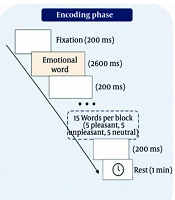
Recognition Memory of Emotional Words in Children with Autism Spectrum Disorder: A Preliminary Comparative Study
Maryam Najarzadegan,
Mehdi Tehrani-Doost,
Reza Khosrowabadi
Najarzadegan M, Tehrani-Doost M, Khosrowabadi R. Recognition Memory of Emotional Words in Children with Autism Spectrum Disorder: A Preliminary Comparative Study. Arch Neurosci. 2026;13(1):e170565. doi: https://doi.org/10.5812/ans-170565
Cited by
- Scopus by DOI: 0
Last Update: 1 week ago
- Scopus by Title: 0
Last Update: 1 week ago
- Scopus by Title (Ref): 0
Last Update: 1 week ago
- CrossRef: 0
Last Update: 6 days ago
- OpenAlex: 0
Last Update: 6 hours ago
- OpenCitations: 0
Last Update: 4 days ago
Comments
Number of Comments:0