
1. Background
It is well known that primitive reflexes, which play a crucial role in infant survival and development, emerge by the 25th week of gestation. These reflexes — including spinal and brainstem reflexes — develop during the fetal period and typically integrate fully by 12 months of age (1). Primitive reflexes facilitate essential functions such as navigating the birth canal, initiating breathing, avoiding harmful stimuli, urination, crawling, grasping, head control, feeding (sucking/swallowing), and kicking (2). A critical question arises: Why are infants born with these reflexes? For skilled movement development, primitive reflexes must fade or integrate, allowing voluntary motor control to replace them (3).
The timing of primitive reflex appearance and disappearance serves as a key marker of typical neurodevelopment, with deviations indicating potential atypical development (4). Persistence beyond the expected age suggests central nervous system immaturity and is associated with developmental delays (5, 6). This study focuses on retained primary reflexes — asymmetrical tonic neck reflex (ATNR), symmetrical tonic neck reflex (STNR), and tonic labyrinthine reflex (TLR) — in children aged 6 - 9 years (7). Prior research reports high prevalence rates of retained reflexes in this population (8, 9), with ATNR linked to gait asymmetry (10) and even healthy school-aged children often exhibiting at least one active primitive reflex, which may impair motor coordination and academic performance (11). Persistent reflexes during preschool and school years can disrupt neuromotor maturation, hindering overall motor skill development (12).
The ATNR is an involuntary response to head rotation: When the head turns, the limbs on the same side extend while the opposite limbs flex. Retention beyond 6 months may impair movement, balance, and hand-eye coordination (13). The TLR, present at birth, should integrate by 2 - 4 months; persistence compromises postural stability and vertical balance (14). The STNR is triggered by head flexion/extension: Flexion bends the upper limbs and extends the lower limbs, while extension reverses this pattern. Failure to inhibit STNR disrupts crawling coordination (5), sitting posture, and hand-eye control (15).
A key concern is the relationship between retained primitive reflexes and motor proficiency. Motor proficiency — reflected in the quality of gross and fine motor skills — serves as a benchmark for children’s motor competence (16, 17). Gross motor skills (e.g., walking, jumping) involve large muscle groups, whereas fine motor skills (e.g., writing, playing the piano) require precise small-muscle coordination (18).
Proper primitive reflex integration is foundational for later motor skill acquisition. Retained reflexes may impede milestones like rolling, crawling, and walking (3). Understanding their impact on sensorimotor function enables accurate diagnosis and enhances treatment efficacy (19). Moreover, early motor competence establishes the groundwork for lifelong physical activity (20).
Relevant studies highlight that reflex integration techniques improve motor outcomes in children with spastic cerebral palsy (13). In typically developing preschoolers, higher reflex activity correlates with lower motor efficiency, underscoring the need for early screening to mitigate academic and social challenges (14). Targeted intervention may reduce developmental delays and improve cognitive-motor outcomes (14). Poorly integrated reflexes are also associated with task-specific difficulties, such as reading analog clocks (21). However, systematic reviews note limited evidence linking primitive reflexes to motor and learning deficits in preschoolers, calling for further research (22).
2. Objectives
Limited research has investigated the persistence of primitive reflexes and their association with motor difficulties in typically developing children, as most studies have prioritized academic and social outcomes over motor skill assessment (1). Existing literature primarily examines the prevalence and clinical implications of primitive reflexes in children with neurodevelopmental disorders (13, 23, 24). Elucidating the link between retained primitive reflexes and motor proficiency could identify early markers of developmental delay and guide the design of targeted screening and intervention programs for motor deficits in educational and clinical settings (12). Consequently, this study aimed to explore this relationship in neurotypical children.
3. Methods
3.1. Subjects
This descriptive correlational study examined 110 typically developing children (57 girls, 53 boys) aged 6 - 9 years, randomly selected from Arak public schools. The sample size was determined via G*Power (v1.3), requiring 112 participants (α = 0.05, power = 0.95, R = 0.3). Inclusion criteria comprised: (1) No special education/sports training beyond school activities, (2) normal medical history without developmental delays, prematurity (< 37 weeks), cerebral palsy, ADHD, or Developmental Coordination Disorder (DCD) (verified through records). From an initial pool of 130 children, 20 were excluded for ADHD (5 boys and 5 girls)/DCD (7 boys and 3 girls), yielding the final sample.
3.2. Apparatus and Task
3.2.1. Primitive Reflexes
Evaluation methods of Blythe were used to evaluate reflexes and diagnose children's motor neurodevelopment. To assess the ATNR, the child stands with arms extended forward at shoulder level and wrists relaxed. With the child's eyes closed, the examiner slowly rotates the child's head to each side so the chin is parallel with the shoulder, holding each position for 5 - 10 seconds before returning to the center. This process is repeated four times on each side (25). To assess the STNR, the child is placed in a four-point kneeling position, and the examiner gives the instructions and asks the child to slowly bend the head; after a 5-second pause, the head is slowly moved upward. All steps are repeated six times (25). To assess the TLR, the child is placed in a standing position with legs next to each other and hands next to the body. Then the child is asked to close the eyes and extend the head; then after 10 seconds, slowly flexes the head. All steps are repeated 4 times. The response is scored from 0 (non-retained) to 4 (completely retained) after each reflection (25).
Goddard-Blythe's reflex assessment methods are widely recognized in the field of neurological research for their systematic approach to the evaluation of primitive reflexes. These methods are based on decades of research on the role of primitive reflexes in the development of children and their impact on motor, cognitive, and behavioral results. This instrument has been used in many studies and has acceptable validity and reliability (12, 14).
3.2.2. Motor Proficiency
The motor skills of children were assessed using the Bruininks-Oseretsky Test of Motor Proficiency Second Edition (16). The four composites along with the subtests are: (1) Fine manual control, including (A) fine motor precision and (B) fine motor integration; (2) Manual coordination, including (A) manual dexterity and (B) upper limb coordination; (3) Body coordination, including (A) bilateral coordination and (b) balance; (4) Strength and agility, including (A) speed and (B) strength. The short form of BOT-2 contains 14 items, which include five fine motor skills and nine gross motor skills (26-28). According to the instructions of the Bruininks-Oseretsky motor skills manual, how to perform each subtest was explained to each student.
3.2.3. Developmental Coordination Disorder Questionnaire for Parents
The parent-completed DCD Questionnaire has 15 items assessing motor control, general coordination, and fine movements on a 5-point scale. It is used to identify and exclude children prone to DCD from the sample. In the end, according to the points obtained, children are classified as either prone to DCD or without DCD based on their scores (29).
3.2.4. Conners' Parent Rating Scale
To identify children with ADHD, the Conners' Parent Rating Scale (CPRS) was used. This scale consists of 48 items, which evaluate the Hyperactivity Index according to a 4-point Likert scale (30).
3.3. Procedure
Before starting the research, the parents attended a briefing session, and the purpose of the research was explained to them. The parents completed the consent form, the CPRS, and the DCD Questionnaire. Afterwards, the reflex evaluation test and then the BOT-2 test were administered. The testing environment was secure, safe, and completely silent, and each individual child was tested for 30 - 40 minutes.
3.4. Data Analysis
The data were analyzed using SPSS 26, with a significance level set at P ≤ 0.05. The variable of motor proficiency and gross motor tasks of boys had a normal distribution, while other variables, including fine motor tasks, gross motor tasks of girls, and all three reflexes (ATNR, STNR, and TLR), had a non-normal distribution. As a result, non-parametric tests such as Spearman’s correlation and the Mann-Whitney U test were used, alongside the independent samples t-test, to analyze relationships and mean differences between boys and girls.
4. Results
In Table 1, we discussed the demographic and descriptive characteristics of male and female students.
Table 1.
Demographic and Descriptive Characteristics of Participants a
| Variables | Boys (N = 53) | Girls (N = 57) |
|---|---|---|
| Age (y) | 7.87 ± 0.94 | 84 ± 0.90.7 |
| Weight (kg) | 28.00 ± 6.23 | 39 ± 7.57.27 |
| Height (m) | 128.42 ± 9.29 | 05 ± 7.53.127 |
| Gross motor skill | 29.23 ± 8.22 | 49 ± 6.34.26 |
| Fine motor skill | 23.25 ± 4.45 | 33 ± 4.47.23 |
| Motor proficiency | 51.75 ± 10.90 | 82 ± 9.35.49 |
| ATNR | 1.30 ± 1.21 | 40 ± 1.19.1 |
| STNR | 0.89 ± 1.17 | 33 ± 0.69.0 |
| TLR | 0.89 ± 1.08 | 88 ± 1.15.0 |
Abbreviations: ATNR, asymmetrical tonic neck reflex; STNR, symmetrical tonic neck reflex; TLR, tonic labyrinthine reflex.
a Values are expressed as mean ± SD.
4.1. Prevalence of Reflex Activity
The prevalence of primitive reflexes was analyzed based on response scores (range: 0 - 4) among male and female students. Across all participants, ATNR showed the highest reflex activity (65.4%), while STNR exhibited the lowest (63.6%). Mann-Whitney U tests revealed statistically significant gender differences in STNR prevalence (U = 1099, P = 0.004), with boys demonstrating higher mean retained primitive reflex scores than girls. Gender-specific analysis showed ATNR as the most prevalent reflex in both boys (62.3%) and girls (68.4%), whereas STNR showed the lowest prevalence (boys: 49.1%; girls: 24.6%), indicating particularly low retention among female students.
4.2. Motor Proficiency
An independent samples t-test revealed no significant gender differences in overall motor proficiency [t(108) = -1.02, P = 0.308]. The Mann-Whitney U test was utilized to examine the mean difference of fine and gross motor skills as well as the subscales of the BOT-2 test between boys and girls. While no significant differences emerged for the fine (U = 1498, P = 0.943) or gross motor (U = 1199, P = 0.062) scores, there was a significant difference in the subscales of Dribbling a Ball (U = 993, P = 0.002), Tapping Feet and Fingers (U = 1206, P = 0.033), and Knee Push-ups (U = 1078, P = 0.008).
4.3. Correlation Between Retained Primitive Reflexes and Motor Proficiency by Gender
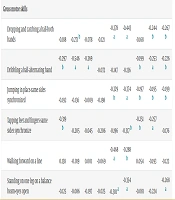
Table 2 shows the relationship between retained primitive reflexes and the subscales of BOT-2. The results indicate that in both girls and boys, there are significant negative correlations between the persistence of primitive reflexes and motor proficiency. In particular, reducing retained reflexes is associated with higher motor proficiency scores, affecting both fine and gross motor skills.
Table 2.
Correlation Between Retained Primitive Reflexes and the Subscales of BOT-2 of Elementary School Children by Gender
| Variables | Boys (N = 53) | Girls (N = 57) | Total Students (N = 110) | ||||||
|---|---|---|---|---|---|---|---|---|---|
| ATNR | STNR | TLR | ATNR | STNR | TLR | ATNR | STNR | TLR | |
| Fine motor skills | |||||||||
| Drawing, lines through paths-crooked | -0.204 | -0.191 | -0.103 | -0.115 | -0.184 | -0.183 | -0.160 | -0.153 | -0.141 |
| Folding Paper | -0.384 a | -0.152 | -0.052 | -0.226 | -0.149 | -0.179 | -0.293 a | -0.183 | -0.120 |
| Copying a square | -0.210 | 0.059 | -0.162 | -0.230 | -0.057 | -0.296 b | -0.224 a | 0.044 | -0.226 b |
| Copying a star | -0.254 | -0.435 a | -0.121 | -0.160 | -0.067 | -0.122 | -0.199 b | -0.244 | -0.118 |
| Transferring pennies | -0.282 b | -0.307 | 0.044 | 0.095 | -0.104 | -0.101 | -0.115 | -0.202 b | -0.035 |
| Total fine motor | -0.388 b | -0.343 b | -0.141 | -0.192 | -0.150 | -0.177 | -0.295 a | -0.242 | -0.162 |
| Gross motor skills | |||||||||
| Dropping and catching a ball-both hands | -0.188 | -0.271 b | -0.078 | -0.121 | -0.378 a | -0.443 a | -0.168 | -0.244 b | -0.267 b |
| Dribbling a ball-alternating hand | -0.297 b | -0.546 a | -0.369 a | -0.072 | -0.147 | -0.136 | -0.199 b | -0.253 a | -0.226 b |
| Jumping in place-same sides synchronized | -0.192 | -0.136 | -0.009 | -0.198 | -0.329 b | -0.374 a | -0.197 b | -0.195 b | -0.199 b |
| Tapping feet and fingers-same sides synchronize | -0.319 b | -0.205 | -0.045 | -0.206 | -0.196 | -0.317 b | -0.251 b | -0.257 a | -0.176 |
| Walking forward on a line | 0.138 | -0.019 | 0.001 | -0.069 | -0.468 a | -0.288 b | 0.054 | -0.193 | -0.122 |
| Standing on one leg on a balance beam-eyes open | -0.125 | -0.086 | -0.197 | -0.025 | -0.381 a | -0.354 a | -0.081 | -0.224 | -0.268 a |
| One-legged stationary hop | -0.010 | -0.164 | -0.083 | -0.054 | -0.251 | -0.073 | -0.032 | 0.209 | -0.080 |
| Knee push-ups | -0.202 | -0.176 | -0.150 | -0.255 | -0.113 | -0.285 b | -0.237 b | -0.073 | -0.213 b |
| Sit-ups | -0.344 a | -0.171 | -0.087 | -0.254 | -0.011 | -0.053 | -0.296 a | -0.055 | -0.019 |
| Total gross motor | -0.380 a | -0.410 a | -0.221 | -0.258 | -0.341 a | -0.315 b | -0.321 a | -0.302 a | -0.266 a |
| Motor proficiency | -0.415 a | -0.421 a | -0.232 | -0.283 b | -0.311 b | -0.301 b | -0.359 b | -0.311 a | -0.268 a |
Abbreviations: ATNR, asymmetrical tonic neck reflex; STNR, symmetrical tonic neck reflex; TLR, tonic labyrinthine reflex.
a Correlation is significant at the 0.01 level (2-tailed).
b Correlation is significant at the 0.05 level (2 tailed).
5. Discussion
Retained primitive reflexes can disrupt the development of voluntary motor control, leading to issues with movement patterns, coordination, and timing in children (12, 14). This study aimed to investigate the relationship between retained primitive reflexes and motor proficiency among elementary school children and found that boys had higher levels of the STNR reflex than girls. Overall, there was a significant negative relationship between the persistence of these reflexes and both fine and gross motor skills, indicating that retained reflexes are associated with lower motor proficiency in children.
The key finding of this study is the significant negative relationship between the persistence of reflexes and motor skills. This result is consistent with the findings of Pecuch et al. (12) and Callcott (31). In this regard, Callcott (8) found that 65% had moderate to high levels of persistent ATNR reflexes, and this retention was linked with lower motor and academic skills. If primitive reflexes are not properly integrated as the child grows, a range of functions — including cognitive, academic, social, and motor abilities — can be negatively affected (12). Richards et al. (32) also concluded that children with the persistence of primitive reflexes are likely to have lower typical word and letter legibility scores.
The findings show that ATNR is the most commonly retained primitive reflex among students (65.4%), while STNR is the least common (63.6%), with previous research supporting ATNR’s high prevalence and STNR’s lower prevalence in children (14). A high rate of retained reflexes suggests delayed integration, highlighting the importance of assessment by professionals and the need for reflex integration therapy. Such therapy, using targeted exercises, can improve motor skills, coordination, and balance, ultimately supporting children’s broader development (12).
Previous studies have pointed out differences between boy and girl participants and acknowledged that retained primitive reflexes are higher in boys than in girls (19, 31). Our findings also partially confirm these results, although only the STNR reflex was statistically significant; boys had a higher level of motor proficiency than girls. Therefore, while it has been shown that the presence of some reflexes is associated with a decrease in motor skills subtests in boys, still, their performance is better than in girls.
Early motor control theories posited that persistent primitive reflexes may contribute to developmental delays, with empirical evidence linking uninhibited reflexes to learning challenges and underscoring the critical need for early intervention (33). Our findings align with this literature, demonstrating that children with retained primary reflexes exhibit weaker motor proficiency. This supports the dual importance of reflex integration programs and targeted motor skills training, both of which have demonstrated efficacy in improving motor coordination and emotional regulation (12, 14). Notably, our results suggest that heightened primitive reflex activity may impair sensory-motor development, potentially affecting multiple domains including motor competence, social functioning, and academic achievement. These findings emphasize the necessity of comprehensive diagnostic approaches that identify underlying causes rather than solely addressing symptomatic behaviors, thereby enabling more effective intervention strategies (19).
Given that primitive reflexes constitute the neurodevelopmental foundation for subsequent motor milestones (34), their assessment represents a valuable screening tool for identifying at-risk children. Several limitations warrant consideration. First, our sample (N = 110) was drawn from a single school, potentially limiting generalizability. Second, the study focused exclusively on three primary reflexes (ATNR, STNR, and TLR); future investigations should incorporate a broader array of primitive reflexes. We recommend subsequent research with larger, more diverse samples to enhance external validity. Furthermore, in light of our findings and previous research demonstrating an inverse relationship between primitive reflex retention and motor proficiency, future studies should investigate the efficacy of combined reflex integration protocols and motor skill interventions. Such investigations could establish evidence-based practices for addressing these neurodevelopmental concerns.