Fulltext
The body of the article can be found in the PDF file.
Journal of Medical Education for Future Demands
Former Title: Journal of Medical Education | The Official Journal of School of Medical Education and Learning Technologies
Image Credit:J Med Edu
Authors
Background The aim of using distracters in multiple-choice questions (MCQs) is to distract those who don't know the correct answer of the question. The MCQs must be designed in a way that the students who have reached the pre-determined educational objectives, have a better chance in finding the correc1 answer than those who have not. Therefore, a question has an appropriate efficacy when more /ow-grade students are attracted to the distracters than high-grade students.Purpose Considering the important role of distracters in differentiating between low and high-grade students, this research studies the distracters in the multiple-choice tests (MCTs) given in Mashad Medical School in the first semester of 1001-2002.Method In this descriptive study, the data of 21 MCTs performed in one semester were collected and recorded by Optical Mark Reader (OMR). From 128-1 questions, 6-12 MCQ ques1io11s were sampled randomly, and the numbers of low and high-grade students choosing the distracters were compared and analyzed using SPSS software.Results The efficacy of 45.9% of distracters was ''relatively weak" to "extremely weak", with "relatively weak", "weak", "very weak" and "extremely weak" distractors having a prevalence of 11.4%, 10%, 15.1% and 9.4% respectively. Extremely weak distracters were those that had a negative impact. Which means the high-grade students were more attracted than the low-grades. Of the MCQs. -12.7% had one. and one third of the questions had two weak distracters. Among all 6- questions. only 15.1% had three good distracters.Conclusion Our study showed that more than half of he distracters had a weak quality. So we suggested that before performing a test, the experts ' opinion about the designed questions should be obtained and considered to minimize the technical problems of the questions. Keywords multiple-choice test, distracter.
© 2002, Author(s). This open-access article is available under the Creative Commons Attribution 4.0 (CC BY 4.0) International License (https://creativecommons.org/licenses/by/4.0/), which allows for unrestricted use, distribution, and reproduction in any medium, provided that the original work is properly cited.
Kaveh Tabatabaee MS, Bahreyni Toosi MH, Derakhshan A, Khajeh Dalloee M, Gholami H. Analytic Assessment Of Multiple-Choice Tests. J Med Edu. 2003;2(2):e105008. doi: https://doi.org/10.22037/jme.v2i2.883
Rahmati Yamchi M, Rahbani Noubar M, Najafipour R, Mobasser M, Zarghami N. Analysis of multiple choice questions on health sciences at Health Faculty of Qazvin University of Medical Sciences (2009). J Inflamm Dis. 2012;16(2):e155694. doi:
Emamjomeh M, Zahedifar F. Analysis of multiple choice questions on health sciences at Health Faculty of Qazvin University of Medical Sciences (2009). J Inflamm Dis. 2012;15(4):e155671. doi:
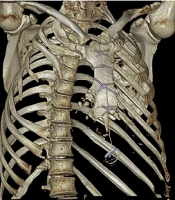
Alshibaya MM, Mamalyga ML, Musin DY, Dorofeev AV, Getsadze GG, et al. Analysis of multiple choice questions on health sciences at Health Faculty of Qazvin University of Medical Sciences (2009). Multidiscip Cardio Annal. 2021;12(2):e115638. doi: https://doi.org/10.5812/mca.115638
Pourmirza Kalhori R, Darabi F, Roshanpour F, Rezaei M. Analytic assessment of multiple choice questions (MCQ) of faculties' members' scholarship in Kermanshah University of Medical Sciences, 2010-2011. J Clin Res Paramed Sci. 2013;2(1):e82210. doi:
Last Update: 3 weeks ago
Last Update: 3 weeks ago
Last Update: 3 weeks ago
Last Update: 6 days ago
Last Update: 8 hours ago
Last Update: 4 days ago