Fulltext
The body of the article can be found in the PDF file.
Journal of Medical Education for Future Demands
Former Title: Journal of Medical Education | The Official Journal of School of Medical Education and Learning Technologies
Image Credit:J Med Edu
Authors
Background: Simulation based training has shown to be of benefit in the education of medical students. However, the impact of induction based clinical simulation on surgical ability of qualified doctors remains unclear.The aim of this study was to establish if a 60 minute teaching session integrated into an Emergency Medicine speciality induction program produces statistically significant improvements in objective and subjective suturing abilities of junior doctors commencing an Emergency Medicine rotation.Methods: The objective suturing abilities of 16 Foundation Year Two doctors were analysed using a validated OSATs scale prior to a novel teaching intervention. The doctors then undertook an intensive hour long workshop receiving one to one feedback before undergoing repeat OSATs assessment.Subjective ability was measured using a 5 point likert scale and self-assessed competency reporting interrupted suturing before and after the intervention. Photographs of wound closure before and after the intervention were recorded for further blinded assessment of impact of intervention. A survey regarding continued ability was repeated at four months following the intervention. The study took place on 7/12/16 during the Belfast Health and Social Care Trust Emergency Medicine induction in the Royal Victoria Hospital Belfast. The hospital is a regional level 1 trauma centre that has annual departmental attendances in excess of 200,000.All new junior doctors commencing the Emergency Medicine rotation were invited to partake in the study. All 16 agreed. The group consisted of a mixture of undergraduate and postgraduate medicaldoctors who all had 16 months experience working in a variety of medical or surgical jobs previously.Results: Following the teaching intervention objective and subjective abilities in interrupted suturing showed statistically significant improvement (P>0.005). Self-reporting of competency of independently suturingwounds improved from 50% pre intervention to 100% post intervention. At four month follow up responding participants reported continued increase in confidence and independence in interrupted suturing.Conclusion: This study suggests that induction based teaching is a practical and robust means of producing lasting improvement in the subjective and objective suturing abilities of medical staff commencingEmergency Medicine placements. We would suggest that the results are also translatable to doctors starting other surgical rotations and practical induction based teaching should be considered for all new trainees.
© 2017, Author(s). This open-access article is available under the Creative Commons Attribution 4.0 (CC BY 4.0) International License (https://creativecommons.org/licenses/by/4.0/), which allows for unrestricted use, distribution, and reproduction in any medium, provided that the original work is properly cited.
Ballouhey QQ, bataille J, Vaysse Vic M, Drouinaud A, Ramin L, et al. Student Mentoring to Enhance Suturing Proficiency in a Medical Curriculum. J Med Edu. 2019;18(4):e105697. doi: https://doi.org/10.22037/jme.v18i4.26506
Etezadi F, Najafi A, Pourfakhr P, Shariat Moharari R, Reza Khajavi M, et al. An Assessment of Intubation Skill Training in Novice Anesthesiology Residents of Tehran University of Medical Sciences With the Use of Mannequins. Anesth Pain Med. 2016;6(6):e39184. doi: https://doi.org/10.5812/aapm.39184
Daffalla-Awadalla Gismalla M, Kaliya-Perumal A, Babeker Habour A, Mohammed MEI. Does perception of clinical competency correlate with perception of training efficiency?. J Med Edu. 2017;16(4):e105595. doi: https://doi.org/10.22037/jme.v16i4.18698
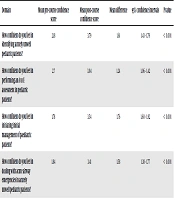
Kumar P, Chitnis S, Lawrence L, Langasco N, McGowan N. Simulation of Pediatric Life-Threatening Emergency Scenarios (SimPLES): The Development, Implementation, and Evaluation of an Undergraduate Immersive Simulation-Based Educational Intervention. J Med Edu. 2020;19(3):e110406. doi: https://doi.org/10.5812/jme.110406
Razavi M, Meshkani Z, Panahkhahi M. Teaching And Testing Basic Surgical Skills Without Using Patients. J Med Edu. 2004;6(1):e105143. doi: https://doi.org/10.22037/jme.v6i1.793
Last Update: 1 month ago
Last Update: 1 month ago
Last Update: 1 month ago
Last Update: 6 days ago
Last Update: 10 hours ago
Last Update: 4 days ago