Fulltext
Full-text is available in PDF format.
Journal of Nursing and Midwifery Sciences
The Official Journal of Mazandaran University of Medical Sciences
Authors
 1, Zeinab Hamzegardeshi2, Seyed Nouraddin Mousavinasab3, Marzieh Azizi4, Zohreh Shahhosseini5,*
Context: Although Middle‑east is a region with high population growth, but in some countries such as Iran, the population growth significantly decreased rapidly. Social capital is an important factor in formatting the positive willingness of childbearing among couples. Social capital referred to resources that individuals access them through the personal relationships.
Aims: This study aimed to investigate the role of social capital on unwillingness toward childbearing in reproductive‑aged women referred to Babol Health Care Centers in 2018.
Setting and Design: A cross‑sectional study in Babol Health Centers, Iran, in 2018.
Materials and Methods: Three hundred reproductive‑aged women 18–39 years with maximum of two children were recruited through a systematic sampling method. Demographic fertility characteristics form, Miller’s childbearing motivation questionnaire, Onyx, and Bullen social capital questionnaire were used for the data collection.
Statistical Analysis Used: Descriptive statistics such as frequency, mean ± standard deviation, the Pearson correlation coefficient, and multiple regression were used for the data analysis.
Results: The most reasons of unwillingness for childbearing included “worrying about the health and safety of my child,” (83%) “being responsible for a needy and demanding baby,” (78.8%) and “worrying whether I am raising my child the right way.” (77%) Unwillingness to childbearing was associated with the factors such as social capital (β = −0.259, P = 0.001), being employed (β = 0.207, P = 0.001), and well self‑evaluation of socioeconomic status (β = −0.187, P = 0.004) .
Conclusions: Improving the current conditions of childbearing in the Iranian society requires the involvement of policy‑makers in the various domains and levels of decision‑making at the family, community, and macrolevels.
© 2022, Author(s). This open-access article is available under the Creative Commons Attribution 4.0 (CC BY 4.0) International License (https://creativecommons.org/licenses/by/4.0/), which allows for unrestricted use, distribution, and reproduction in any medium, provided that the original work is properly cited.
Mohamadloo A. Determinants of Fertility Desires and Associated Factors among Married Women Attending Comprehensive Health Centers in Iran. Health Scope. 2026;15(2):e168296. doi: https://doi.org/10.5812/healthscope-168296
Ghahremani F, Ahmadi Doulabi M, Mahmoodi Z, Nasiri M. The Relationship Between Social Determinants of Health and Attitudes Towards Childbearing with the Mediation of Social Support Among Women of Reproductive Age: A Path Analysis. Iran J Psychiatry Behav Sci. 2025;19(2):e141364. doi: https://doi.org/10.5812/ijpbs-141364
Hosseini H, Bagi B. Socioeconomic, cultural and demographic determinants of childbearing desires among married women attending health centers in Hamedan (2012). J Kermanshah Univ Med Sci. 2014;18(1):e74273. doi: https://doi.org/10.22110/jkums.v18i1.1578
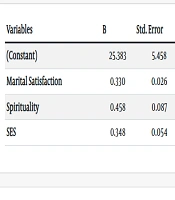
Sarsharbeidokhti P, Bagherzadeh Ledari R, Bagheri M. The Role of Spirituality, Marital Satisfaction and Socio-Economic Status on Attitudes Toward Childbearing Among Married Women Without the Intention and History of Pregnancy: A Cross-Sectional Study. J Nurs Midwifery Sci. 2024;11(4):e154615. doi: https://doi.org/10.5812/jnms-154615
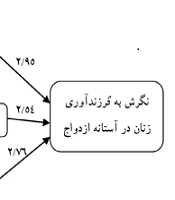
Mahboubi M, Pahlavanzadeh B, Afkar A, Khovaitarizadeh H. Attitude Towards Having Children in Women at the Threshold of Marriage in the Southwestern Region of Khuzestan. Koomesh. 2024;26(5):e153402. doi: https://doi.org/10.69107/koomesh-153402
Last Update: 1 month ago
Last Update: 1 month ago
Last Update: 1 month ago
Last Update: 6 days ago
Last Update: 1 day ago
Last Update: 4 days ago

