Fulltext
Full-text is available in PDF format.
Journal of Nursing and Midwifery Sciences
The Official Journal of Mazandaran University of Medical Sciences
Authors
Context: The basis of anxiety disorders in cognitive and emotional fields can be effective in coping strategies to anxiety.
Aims: This research aimed to investigate the mediating role of emotional distress tolerance in relationship between self-discrepancy with anxiety in people suffering from special phobias. Settings and Design: The present study was a correlational research with structural equation modeling.
Materials and Methods: The statistical population of this study was all individuals suffering from specific phobia disorders in the 5th Azar Hospital in Gorgan City. The sample size selection, which was made by Loehlin method (2004), was 220 persons suffering from anxiety disorder referring to Psychiatric Clinics of 5 Azar Hospital in Gorgan City and was investigated by purposeful sampling. Data gathering tools included Distress Tolerance Scale, self-discrepancy questionnaire, and Spielberger State-Trait Anxiety Inventory.
Statistical Analysis Used: The collected data were analyzed using structural regression equations using SPSS 18 and Amos 23 software.
Results: The findings showed that the research model is fit and overall, 42% of the anxiety could be explained through emotional stress tolerance and self-discrepancy, and emotional distress tolerance has a mediating role in relationship self-discrepancy with anxiety.
Conclusions: The results of this research emphasized the necessity of self-discrepancy as well as the role of mediator of emotional distress tolerance in anxiety in people suffering from special phobias, which can provide applied templates for improving the psychological state of anxious individuals with therapists and counselors.
© 2019, Author(s). This open-access article is available under the Creative Commons Attribution 4.0 (CC BY 4.0) International License (https://creativecommons.org/licenses/by/4.0/), which allows for unrestricted use, distribution, and reproduction in any medium, provided that the original work is properly cited.
Bahramkhani M, Isazadeh M. Developing a Pathological Model of Social Anxiety Based on Attachment Styles, Mentalization Capacity, and Ego Strength Among Adolescents in Qazvin: A Path Analysis Approach. Iran J Psychiatry Behav Sci. 2026;20(1):e162436. doi: https://doi.org/10.5812/ijpbs-162436
Abasi I, Pourshahbaz A, Mohammadkhani P, Dolatshahi B. Mediation Role of Emotion Regulation Strategies on the Relationship Between Emotional Intensity, Safety and Reward Motivations with Social Anxiety Symptoms, Rumination and Worry: A Structural Equation Modeling. Iran J Psychiatry Behav Sci. 2017;11(3):e9640. doi: https://doi.org/10.5812/ijpbs.9640
Asmari Bardezard Y, Barahmand U, Qanbaryjoopish M, Ghasimi P. The Mediating Role of Shame and Self-criticism in Social Anxiety: An Emotion-Focused Therapy Approach. Iran J Psychiatry Behav Sci. 2025;19(1):e156867. doi: https://doi.org/10.5812/ijpbs-156867
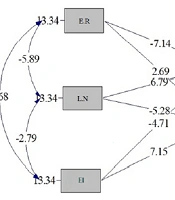
Rostami P, Eyni S, Zemestani M. Social Anxiety in Students with Specific Learning Disorders Based on Emotion Regulation and Emotional Intelligence: The Mediating Role of Perceived Self-Efficacy. J Compr Ped. 2024;15(3):e145101. doi: https://doi.org/10.5812/jcp-145101
Mohammadkhani P, Abasi I, Pourshahbaz A, Mohammadi A, Fatehi M. The Role of Neuroticism and Experiential Avoidance in Predicting Anxiety and Depression Symptoms: Mediating Effect of Emotion Regulation. Iran J Psychiatry Behav Sci. 2016;10(3):e5047. doi: https://doi.org/10.17795/ijpbs-5047
Last Update: 1 month ago
Last Update: 1 month ago
Last Update: 1 month ago
Last Update: 6 days ago
Last Update: 2 days ago
Last Update: 4 days ago
