
1. Background
Chronic kidney disease (CKD) presents a significant global health challenge, with its prevalence on the rise in many countries, including Iran. The causes of CKD are diverse, including diabetes, hypertension, and other factors. Maintenance hemodialysis stands as the primary therapy for patients with chronic renal failure, which is often considered a family disease, necessitating the patient's family members to provide care (1, 2). The incidence of End-stage renal disease in Iran is approximately 380 cases per million individuals, with over 30 thousand individuals currently undergoing hemodialysis treatment (3). Additionally, according to specific studies, caregivers of hemodialysis patients experience a considerable burden. For example, as noted in Taheri's article, the mean burden was severe, with a score of 44.6 ± 7.4 before the intervention (4-6).
The 5-A Self-Management model, developed by Russell E. Glasgow in 2003, is among the most widely recommended models by the American Preventive Services Task Force. This evidence-based model, also known as the Behavior Consultation Model, draws upon the principles of Behavior Modification Counseling. In this approach, clients are empowered to collaborate with healthcare providers, fostering a partnership for effective self-management (7). The model primarily focuses on the individual's role in self-care, evaluating knowledge, skills, behaviors, self-confidence, and obstacles. The process of changing self-care behaviors is meticulously planned, empowering clients to take responsibility for their unique and personalized self-care journey, leading to increased self-efficacy and improved self-management (8).
There is a growing body of literature on the effectiveness of teaching the 5A self-management model to caregivers of hemodialysis patients. Several studies have shown that this approach can lead to improved patient outcomes, including better adherence to treatment regimens, improved quality of life, and reduced hospitalizations (9-11).
One study published in the Journal of Renal Care found that caregivers who received training in the 5A model were better able to support patients in managing their symptoms and adhering to their treatment plans. Another study published in the Journal of Nephrology Nursing and Practice found that patients whose caregivers received 5A training had better outcomes in terms of blood pressure control and medication adherence (12).
Family caregivers play a crucial role in caring for patients undergoing hemodialysis. Teaching the 5A self-management model to caregivers can effectively improve patient outcomes and quality of life, but further research is needed for optimal implementation strategies.
2. Objectives
To examine the impact of implementing the 5A Self-Management model on the burden experienced by caregivers of patients undergoing hemodialysis.
3. Methods
3.1. Study Design
The current study utilized a true experimental design with a pre-test and post-test design with caregivers of patients undergoing hemodialysis from October 2021 to August 2022.
3.2. Study Setting and Participants
The study was conducted at the largest referral clinic in Qazvin Province (Bouali Sina), with 40 active beds and over 600 hemodialysis patients. Participants were selected through a simple random sampling method and were divided into intervention and control groups using blocked randomization.
The study had specific criteria for participant inclusion, which included minimal dependence on caregivers. To assess this, patients were queried about their ability to perform personal activities and the extent of care required. Those reporting high capability and minimal need for care were excluded. Caregivers had additional inclusion criteria: Being a family member, providing direct care for at least 6 months, being over 18, not caring for another patient, and not receiving consultation or support. Unwillingness to participate, missing multiple self-management sessions, and admission for kidney transplantation were reasons for exclusion.
The sample size was determined based on previous research (13), considering a type I error of α = 0.05 (95% confidence), type II error of β = 0.1 (90% power), and d = 5. Therefore, 39 patients were required in each group. To accommodate potential participant attrition during the study, 45 participants were included in each group.
The 90 selected caregivers were assigned to control and intervention groups through blocked randomization (14). Randomization involved sequencing samples from 1 to 90 using random allocation based on 15 blocks of 6. In the intervention group, of the 45 participants, three were excluded due to their patient's death, and three withdrew from the study; two were transferred to another dialysis center, while the third was hospitalized for advanced care and missed two sessions. Thus, 39 participants remained in the intervention group. In the control group, four participants were excluded due to their patient's death, and three left the study; consequently, 38 participants remained in the control group (Figure 1). The intervention group was divided into three groups of 15 members, with each group receiving four 90-minute sessions per week for 4 weeks (Table 1). The control group did not receive any educational intervention, and in adherence to research ethics principles, self-management content was provided to participants in this group.
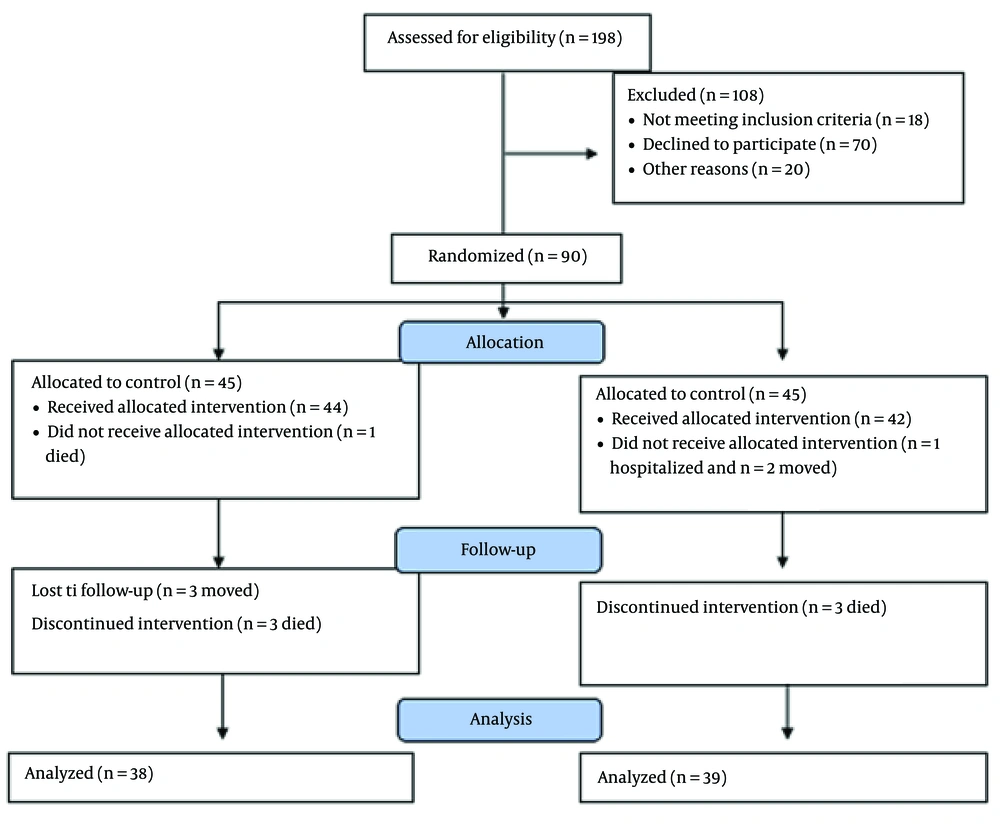
Figure 1.
Flow diagram of the study (CONSORT)
Table 1.
The 5-A Self-management Plan Steps
| Row | Steps | Measures |
|---|---|---|
| 1 | Assessment step (Assess) | The gathered information about hemodialysis patients and their family caregivers' challenges. Explored caregivers' beliefs, behaviors, and awareness related to hemodialysis and daily challenges. |
| 2 | Advising step (Advice) | Identified and communicated necessary modifications based on previous studies’ findings regarding beliefs, attitudes, and behaviors. Emphasized the importance of change. |
| 3 | The step of agreement with family caregivers of hemodialysis patients in setting goals (Agree) | Reached an agreement with caregivers on modifying attitudes and behaviors related to identified care issues. Established appropriate behavioral objectives. Caregivers documented daily patient care performance for six weeks. |
| 4 | Assistance step (Assist) | Provided training to caregivers on physical and mental care for hemodialysis patients. Covered prevention of complications, including fluid retention, high blood pressure, cardiovascular disease, weak bones, anemia, and infection vulnerability. Educated caregivers about patient medication regimens, pharmacotherapy, side effects, and appropriate diets. Emphasized necessary skills for modifying identified risk factors. |
| 5 | Performance follow-up step (Arrange) | Caregivers were followed for 6 weeks using various methods: Phone calls, WhatsApp groups, and in-person meetings as needed. The follow-ups initially occurred at short intervals, gradually extending for caregiver independence (daily in the first week, every other day in the second week, twice a week in the third week, and once a week in weeks 4-6). |
3.3. Intervention
Before the intervention, both groups underwent a pre-test to evaluate their baseline caregiving burden. Family caregivers of patients undergoing hemodialysis participated in five group-based self-management sessions. These training sessions included both theoretical and practical components and were supplemented by phone and virtual follow-ups through a WhatsApp group. To prevent communication between participants in the intervention and control groups, they were organized based on their dialysis schedule (odd or even days) and the time of day (morning, evening, or night). This ensured that caregivers from different groups attended on different days and shifts, minimizing information sharing (15). The control group received the hospital's routine program. The caregiving burden was reassessed one and three months after the intervention as a post-test.
3.4. Data Collection and Measurement
After explaining the research objectives to the caregivers and obtaining written informed consent, a checklist of demographic information was used to measure the personal and social factors of the patients and their caregivers. This included the patient's ability to perform personal tasks, age, gender, marital status, education, co-morbidities, length of hemodialysis, and employment status. The ZARIT burden interview measurement tool, developed by Zarit et al. in 1980, was used to assess the caregiving burden (16). Pahlavanzadeh et al. adapted this questionnaire to fit Iranian culture and demonstrated a reliability of 0.94 using the test-retest method (17). The questionnaire comprises 22 items related to personal, social, emotional, and financial pressures experienced by caregivers. Caregivers were interviewed by the researcher. Using a Likert scale, caregivers' responses were scored from 0 to 4 based on "never," "rarely," "sometimes," "often," or "always" choices. Thus, the total score ranged from 0 to 88. The caregiving burden was represented by the total caregiver scores; a lower score indicated a lower caregiving burden. For each item, both the lowest and highest levels of caregiving burden were reported separately. Scores between 0 and 20 indicated little or no caregiving burden, scores between 21 and 40 suggested moderate caregiving burden, while scores between 41 and 88 indicated significant caregiving burden.
3.5. Data Analysis
Data analysis was conducted using SPSS software version 25 (Armonk, NY: IBM Corp) (18). Descriptive statistics such as mean, standard deviation, frequency, and percentage were used to describe the data. Chi-square and independent t-tests were employed. Repeated measures ANOVA was performed, considering P < 0.05 as statistically significant.
4. Results
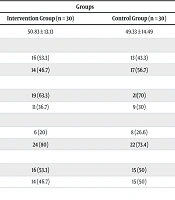
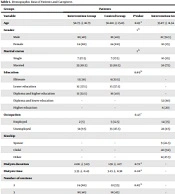
Ninety caregivers were initially enrolled in the study. Thirteen caregivers, six from the intervention group and seven from the control group, were subsequently excluded. Therefore, the study was completed with 77 caregivers, comprising 39 in the intervention group and 38 in the control group. The mean age of caregivers was 47.18 ± 13.77 years in the control group and 43.62 ± 9.07 years in the intervention group. The mean duration of caregiving was 4.62 ± 4.96 years in the control group and 5.89 ± 6.62 years in the intervention group. Female caregivers represented 68.4% in the control group and 74.5% in the intervention group. In the control group, the majority of caregivers (50%) were spouses of the patients, while in the intervention group, most caregivers (56.4%) were children of the patients. Regarding marital status, the majority of caregivers were married in both the control (76.3%) and intervention (76.9%) groups. The frequency distribution of caregivers based on gender, marital status, occupation, education level, and their relationship to the patient was similar in both groups, with no statistically significant differences between them (Table 2 P-value > 0.05).
Table 2.
Frequency Distribution of Hemodialysis Caregivers in Control and Intervention Groups a
| Variables | Groups | P-Value b | |
|---|---|---|---|
| Control Group (n = 38) | Intervention Group (n = 39) | ||
| Sex | 0.268 | ||
| Female | 26 (68.4) | 31 (79.5) | |
| Male | 12 (31.6) | 8 (20.5) | |
| Marital status | 0..324 | ||
| Single | 9 (23.7) | 7 (17.9) | |
| Married | 29 (76.3) | 30 (76.9) | |
| Widow | 0 (0) | 2 (2.6) | |
| Education | 0.455 | ||
| Under the Diploma | 18 (47.4) | 17 (43.6) | |
| Diploma | 9 (23.7) | 14 (35.9) | |
| Academic | 11 (28.9) | 8 (20.5) | |
| Family relationship | 0.165 | ||
| Father or Mother | 2 (5.3) | 4 (10.3) | |
| Spouse | 19 (50.0) | 12 (30.8) | |
| Sister or Brother | 1 (2.6) | 1 (2.6) | |
| Child | 16 (42.1) | 22 (56.4) | |
| Occupation | 0.196 | ||
| Unemployed | 2 (5.3) | 3 (7.7) | |
| Housewife | 19 (50.0) | 25 (64.1) | |
| Employed | 13 (34.3) | 8 (20.5) | |
| Retired | 2 (5.3) | 3 (7.7) | |
| Student | 2 (5.3) | 0 (0) | |
| Age, y | 47.18 ± 13.77 | 43.62 ± 9.07 | 0.185 |
| Duration of care, y | 4.62 ± 4.96 | 5.89 ± 6.62 | 0.346 |
a Values are expressed as No. (%) or mean ± SD.
b Chi-square test or independent t-test.
The independent t-test was employed to compare the mean caregiving burden in the control and intervention groups at various time points. Before the intervention, the scores of the intervention group were significantly higher than those of the control group (P = 0.018); however, after the intervention, the scores of the control group were significantly lower than those of the intervention group. The caregiving burden scores of the intervention group were lower than those of the control group immediately after the intervention (P = 0.018), as well as one month after the intervention (P = 0.004), and three months after the intervention (P = 0.003) (Table 3). Moreover, the results of the repeated measures ANOVA showed that, overall, the effect of time (P < 0.001) and the interaction effect (P < 0.001) were statistically significant, indicating the positive effect of the intervention on the caregiving burden and the significant difference in score changes between the two groups over time. However, the group effect was not statistically significant regardless of the time (P = 0.335).
Table 3.
Comparison of Mean and Standard Deviation of Caregiving Burden in Hemodialysis Patient Caregivers - Control vs. Intervention Group Before and After Treatment and in the Follow-Up a
| Group | Caregiver Burden | P-Value b | |
|---|---|---|---|
| Control Group (n = 38) | Intervention Group (n = 39) | ||
| Before intervention | 34.10 ± 11.47 | 41.89 ± 9.80 | 0.018 |
| After intervention | 34.52 ± 9.63 | 30.66 ± 8.08 | 0.018 |
| One month after the intervention | 35.47 ± 11.32 | 29.94 ± 7.06 | 0.004 |
| Three months after intervention | 37.02 ± 10.34 | 30.48 ± 8.23 | 0.003 |
| P-value c | Time effect: P = 0.001 | Group effect: P = 0.335 | Time*Groups interaction effect: P = 0.001 |
a Values are expressed as mean ± SD.
b Repeated measures ANOVA.
c Independent t-test.
Since the scores of the two groups were significantly different before the intervention, the baseline scores were included in a separate model of repeated measures ANOVA as a covariate variable, which showed a significant group effect (P < 0.001) and interaction effect (P = 0.018) even after controlling for the effect of the baseline scores.
5. Discussion
In the current study, the majority of caregivers were female (74%) and housewives (57.1%), which is consistent with the studies conducted by Hemati Maslakpak and Alshammari (19, 20). Previous studies suggest that globally, women play the main role in taking care of chronically ill, disabled, and elderly family members. Women spend more time performing multiple roles and tasks, such as providing care and doing personal tasks. Stress-coping theories state that women are more likely to experience caregiving stressors and suffer from physical and mental illnesses, as well as stress related to caregiving (21, 22). Caregivers of patients have to simultaneously take care of their own needs and those of the patients, which increases the caregivers' physical, emotional, social, and financial stress, leading to changes in their caregiving roles and lifestyle (23). Studies have shown that the burden of taking care of patients at home leads to feelings of guilt, hopelessness, loneliness, depression, anger, stress, loss of freedom to do personal activities, and mental health problems, as well as physical problems (24). Hence, it is important to provide educational programs to empower and support caregivers of chronic patients.
This research focused on assessing the influence of implementing the 5-A Self-Management model on the burden faced by caregivers of individuals undergoing hemodialysis. The key finding indicates a significant positive impact of the model on reducing perceived caregiving burden. Overall, it suggests that the 5-A Self-Management model serves as an effective intervention for alleviating the burden experienced by caregivers of hemodialysis patients (25). In the present study, most of the caregivers felt less of a caregiving burden. Self-management programs have been shown to enhance individuals' ability to manage and treat the physical and mental symptoms of chronic diseases, as well as modify their life circumstances to improve their quality of life while living with their current conditions (13). Few studies have investigated the 5-A Self-Management model on the general population or caregivers and family members of patients with chronic diseases. Heydari et al. used the 5-A Self-Management model to assess the effect of the caregiving burden on the caregivers of patients with stroke. This program was conducted for three months, and the results showed that the 5-A Self-Management model effectively reduces the caregiving burden of caregivers of stroke patients (15). In another study, the effect of this program was investigated on the general health of mothers of children with cerebral palsy, which showed that following the implementation of this self-management model, mothers were more able to take care of their children with cerebral palsy. The mean scores of general health improved (25).
Educational programs can assist caregivers in learning more about the disease and improving their skills. Self-management programs are crucial in treatment as they aid patients in becoming independent, thus preventing numerous hospital admissions and reducing costs to the treatment systems (26). Equipping caregivers with the necessary skills and providing adequate support can mitigate the adverse physical and mental effects of caregiving, resulting in positive health outcomes for both the patient and caregivers (27). The findings of this study suggest that the 5-A Self-Management model can help alleviate the caregiving burden of caregivers of patients undergoing hemodialysis, who play a crucial role in patient care. Implementing supportive educational programs empowers caregivers to effectively fulfill their caregiving role, adjust to caregiving responsibilities, and adapt to lifestyle changes resulting from caring for the patient at home (24). The development of self-management programs, such as the 5-A Self-management model, aids in managing chronic diseases (15).
5.1. Conclusions
The study demonstrated that the 5-A Self-Management model is a valuable tool for reducing the caregiving burden of caregivers of hemodialysis patients. By focusing on both the needs of the patient and the caregiver, the model enhances caregivers' capabilities and empowerment. These findings suggest that healthcare facilities can benefit from implementing this model to improve the overall quality of life for patients and caregivers. Nurses, in particular, can play a crucial role in facilitating communication and serving as consultants to enhance the health and well-being of both patients and caregivers. Moving forward, these results can inform healthcare facilities in their efforts to enhance the care and support provided to patients with chronic illnesses and their caregivers.