
1. Context
Nurses, the largest professional cohort in health care, have unparalleled direct contact with patients, positioning them as key determinants of patient outcomes (1). Their daily responsibilities—including direct patient care, high work intensity, rapid and critical decision-making, and continuous exposure to suffering, illness, and death—are major sources of occupational stress. Heavy workloads, demanding shift schedules, inadequate financial compensation, inequitable treatment, lack of recognition of professional competence, job insecurity, and insufficient managerial support further exacerbate these stressors. Consequently, these conditions lead to reduced nursing performance, increased absenteeism and staff turnover, additional costs to health care systems, and, ultimately, compromised patient safety and quality of care (2, 3). Evidence from international studies indicates that these challenges are prevalent across many health care systems and have substantial consequences for both nurses and patients. A study involving more than 6,600 nurses from 58 hospitals in Canada found that more than three-quarters perceived their workload as unsafe. More than half of the participants reported burnout, while more than one-third reported job dissatisfaction. Moreover, an increased patient-to-nurse ratio was associated with higher patient mortality and poorer patient outcomes (4). Additional evidence indicates that these difficulties are particularly pronounced in high-pressure clinical environments, including emergency departments. For instance, a Chinese study found that emergency nurses reported elevated burnout and psychological strain, with more than 50% of participants endorsing depressive symptoms and nearly half experiencing severe burnout. Furthermore, occupational role stress and perceived workplace stress were directly correlated with the nurses’ mental health status and professional quality of life (5). Given these widespread psychological and organizational challenges and their adverse effects on nurses’ professional well-being and the quality of patient care, nurse empowerment has emerged as a proposed strategy for addressing the occupational demands of the nursing profession (6). Nurses facing excessive workloads, immediate clinical care demands, time constraints, and unclear role expectations may benefit substantially from programs designed to build psychological resilience and self-regulatory capacities. In this context, the International Council of Nurses underscores empowerment as a global strategic imperative for strengthening the nursing labor force and advancing health outcomes (7). Empowerment has become a central concept in contemporary health care organizations and serves as a strategic approach to improving employees’ job satisfaction, motivation, and overall well-being (8). Two fundamental perspectives on employee empowerment have been proposed: structural empowerment, which involves managers modifying workplace structures and facilitating employees’ access to organizational resources; and psychological empowerment, which, according to Spreitzer, reflects employees’ sense of control in the workplace and their perceptions of the work environment (9). Accordingly, there is a growing imperative to develop and implement interventions to strengthen nurses’ psychological empowerment (10). Psychological empowerment is conceptualized as a motivational construct comprising four fundamental dimensions: meaning, competence, self-determination, and impact. Meaning pertains to nurses’ perceptions of the value and purpose inherent in their professional role. Competence refers to the knowledge, skills, and abilities that enable nurses to perform their duties proficiently. Self-determination denotes nurses’ perceived autonomy and discretion in fulfilling their professional obligations, whereas impact signifies the degree to which nurses believe their actions affect their unit or the broader organization (8, 11). Given the importance of psychological empowerment in improving nurses’ professional performance, various interventions have been developed and implemented in recent years to enhance this construct. These interventions have used educational, psychological, leadership, and organizational approaches (6). However, they are highly heterogeneous in their theoretical frameworks, program components, implementation methods, intervention durations, and measured outcomes. Consequently, a comprehensive understanding of the types, characteristics, theoretical foundations, implementation strategies, and outcomes of these interventions is lacking. Under these circumstances, a comprehensive understanding of the existing evidence is essential to guide future research and intervention development. Given the diversity and heterogeneity of the available evidence, a scoping review is an appropriate methodological approach for comprehensively examining the literature in this field. By systematically identifying, mapping, and synthesizing the available evidence, scoping reviews clarify the breadth and nature of existing research while facilitating the identification of knowledge gaps and the establishment of future research priorities (12, 13). Therefore, this study can provide a comprehensive overview of the current state of the evidence and establish a foundation for developing evidence-based interventions. A prior scoping review by Huang et al. (2024) examined interventions to support nurses’ psychological empowerment and included 11 studies published up to September 2024. Although that review provided a foundational overview and used the TIDieR checklist, several limitations remain: (1) its search ended in September 2024, excluding recent studies from 2025 – 2026; (2) it included only 11 studies, whereas our review includes 14 studies, adding eight studies not captured previously; (3) it provided limited analysis of null or mixed findings; (4) it did not explore cultural differences in intervention effectiveness; and (5) it did not examine in depth the interplay between structural and psychological empowerment (6). Our review addresses these gaps by (1) including studies published up to June 2026; (2) providing a more comprehensive mapping of intervention characteristics; (3) separately analyzing studies with null overall effects; (4) discussing cultural and contextual factors; and (5) examining the relationship between structural and psychological empowerment. Thus, this review offers an updated and more comprehensive synthesis of the evidence.
2. Objectives
This scoping review aimed to systematically map and synthesize existing evidence on interventions designed to foster psychological empowerment among nurses and to identify their key characteristics, theoretical frameworks, delivery methods, duration, and outcome measures. Using the Population‑Concept‑Context (PCC) framework, the population was defined as registered nurses, the concept as interventions designed to enhance psychological empowerment, and the context as workplace settings. A descriptive synthesis was used to map intervention characteristics, theoretical underpinnings, delivery modalities, duration, and empowerment‑related outcomes.
3. Methods
3.1. Design
This study employed a scoping review design based on the Joanna Briggs Institute (JBI) framework (14). We followed the updated nine-step JBI methodology for scoping reviews (15): (1) defining and aligning the objective(s) and question(s); (2) developing and aligning the inclusion criteria with the objective(s) and question(s); (3) describing the planned approach to evidence searching, selection, data extraction, and presentation; (4) searching for the evidence; (5) selecting the evidence; (6) extracting the evidence; (7) analyzing the evidence; (8) presenting the results; and (9) summarizing the evidence in relation to the review purpose, drawing conclusions, and noting the implications of the findings (15). The protocol was written, finalized, and officially recorded on the Open Science Framework on 28 July 2026 (https://doi.org/10.17605/OSF.IO/X7DZR). The systematic literature search (Section 3.4) had been completed on 30 June 2026, before protocol finalization and registration; screening, data extraction, and synthesis were conducted thereafter in accordance with the registered protocol. Because the protocol was finalized after the search had been completed, its registration was retrospective. The registered protocol was not amended after registration. However, in response to peer review, the following clarifications and additions were made to the manuscript and were not part of the registered protocol: a supplementary search without workplace or hospital terms (Section 3.4); the handling of full texts that could not be retrieved (Section 3.3.2); the handling of pilot, single-group, mixed-methods, and qualitative studies (Section 3.3.2); and the rules used to classify study outcomes (Section 3.7). Furthermore, we applied the PRISMA-ScR checklist throughout the review process as a quality assurance measure (13).
3.2. Research Question Development
The research questions were developed according to the Population‑Concept‑Context (PCC) framework established by the Joanna Briggs Institute (JBI) (15). Within this framework, the population (P) was defined as registered nurses; the concept (C) focused on interventions intended to strengthen nurses' psychological empowerment; and the context (C) encompassed studies conducted in workplace environments. Based on this framework, the following research questions guided this review: (1) What are the key characteristics (study design, duration, and delivery format) of interventions aimed at fostering psychological empowerment among nurses? (2) What theoretical frameworks underpin these interventions? (3) What instruments have been used to measure psychological empowerment and related outcomes in these studies? (4) What effects have these interventions reported on nurses' psychological empowerment and related outcomes?
3.3. Defining the Eligibility Criteria
The eligibility criteria were established based on the Population‑Concept‑Context (PCC) framework and the research question.
3.3.1. Inclusion criteria: (1) original, peer-reviewed investigations using intervention designs, such as randomized controlled trials, quasi-experimental studies (including single-group pre-post and pre-experimental designs), nonrandomized controlled trials, before-after controlled designs, and mixed-methods pilot studies evaluating an intervention; (2) studies involving nurses in various workplace settings, including hospital wards, emergency departments, intensive care units, community health centers, long‑term care facilities, and psychiatric hospitals; (3) studies investigating interventions aimed at improving nurses' psychological empowerment; (4) studies reporting at least one outcome related to psychological empowerment or its dimensions (meaning, competence, self-determination, and impact); and (5) articles published in English.
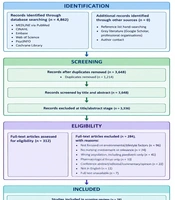
3.3.2. Exclusion criteria: (1) studies focusing on other health care professionals without a nursing population; (2) grey literature, including conference abstracts, theses, dissertations, news reports, letters, editorials, or book chapters; and (3) duplicate publications or secondary analyses of the same study. Full-text unavailability was treated as missing evidence rather than a formal eligibility exclusion; records for which the full text could not be retrieved were recorded separately from records excluded on eligibility grounds (see Results and Figure 1). The screening procedure is outlined in the search strategy flow diagram (Figure 1). Single-group pre-post and pre-experimental studies (16-19) and pilot studies (20, 21) were included alongside controlled trials because all evaluate intervention effects, although they differ in internal validity; their findings were interpreted as preliminary. This approach aligns with scoping review methodology, which aims to map available evidence regardless of study design (15). For mixed-methods studies (7, 20, 21), only quantitative intervention outcomes were used to classify findings; qualitative components were not systematically synthesized, although brief qualitative findings reported alongside quantitative results are noted in Tables 1 and 2 (e.g., (20, 22). Purely qualitative studies were not eligible because they do not evaluate intervention effects on psychological empowerment outcomes. Duplicate records were removed before screening (n = 936). Publications from the same research program were counted as separate studies only when they reported distinct samples (21-23); companion or secondary reports of an included trial were not counted separately (exclusion criterion 3), and possible participant overlap is noted in Section 4.2. Grey literature (e.g., conference abstracts, theses, and unpublished reports) was excluded because such sources typically lack peer review and sufficient methodological detail to support reliable data extraction and assessment of the completeness of intervention reporting; the potential implications of this decision for publication bias are addressed in the Limitations section.
Table 1.
Intervention Characteristics, Outcome Measures, and Principal Findings for Studies with Significant or Mixed Overall Findings a
| Reference | Intervention Characteristics | Follow-Up | Outcome Measures | Effect Size (95% CI) | Principal Findings |
|---|---|---|---|---|---|
| Şen Olgay & Uğur (7) | NLP-based educational program: 5 sessions × 3 hours over 1 week; face-to-face; group discussions, journaling, peer feedback | Posttest and 1-month | Psychological Empowerment Scale (Spreitzer) - 12 items, 5-point Likert | Total: d = 1.84; subscales: d = 1.44 – 3.36 (CI = 0.91 – 1.97 to 2.67 – 4.05) | Significant improvement in total PE and all subdimensions (meaning, competence, self-determination, impact) at posttest and 1-month follow-up (P < 0.001); effect sizes: d = 1.84 (CI = 1.30 – 2.38) |
| Sarıköse & Şenol Çelik (24) | Online education (8 modules over 2 weeks) + face-to-face (2 days, 10 hours); based on SE and PE theories and flipped classroom model | 3-month | Psychological Empowerment Scale (Spreitzer); CWEQ-II (structural empowerment) | Not reported | Significant increase in PE scores in intervention group compared to control group at 3-month follow-up (P < 0.001); total mean score of intervention group was higher |
| Özbaş & Tel (25) | Psychodrama-based psychological empowerment program: 10 sessions × 2 hours (1 day/week for 10 weeks); group sessions with scenarios and role-playing | 1- and 3-month | Psychological Empowerment Scale (Spreitzer); Nurse Work Empowerment Scale; Maslach Burnout Inventory | Not reported | Psychological empowerment scores were significantly higher in the psychodrama group than in the control group at 1 month (F = 38.00, P < 0.001) and 3 months (F = 40.27, P < 0.001), with no baseline difference (P = 0.63); workplace (structural) empowerment was significantly higher in the psychodrama group at 3 months (F = 9.11, P < 0.001) but not at 1 month (P = 0.06); significant decrease in burnout (P < 0.05) |
| Sawyer et al. (23) | RISE for Nurse Leaders: 9 weekly sessions × 90 minutes; virtual (Microsoft Teams); based on Mindfulness, ACT, CBT, and Post-Traumatic Growth theory | End of program, 1, 3, and 6-month | Psychological Empowerment Scale (Spreitzer); Posttraumatic Growth Inventory; Professional Quality of Life Scale; Perceived Stress Scale | Total: d = 0.52; subscales: d = 0.23 – 0.68 (CI not reported) | Significant improvement in PE total score (P = 0.007) and subdomains: Meaning (P = 0.024), Competence (P < 0.001), Self-Determination (P = 0.045); sustained at 1- and 3-month follow-up; no significant change in Impact subdomain |
| Sawyer et al. (21) | RISE for Nurse Managers: 9 weekly sessions × 90 minutes; virtual (Microsoft Teams); pilot study; based on Mindfulness, ACT, CBT, and Post-Traumatic Growth theory | Posttest only | Psychological Empowerment Scale (Spreitzer); Posttraumatic Growth Inventory; Professional Quality of Life Scale; Perceived Stress Scale | PEI total: MD = −0.25 (95% CI: −0.46 to −0.04); subscales: MD = −0.54 to 0.04 (95% CI: −0.85 to 0.29) | Significant increase in PE total score (P = 0.03) and Competence (P < 0.01) and Impact (P = 0.04) subdomains; participants reported higher psychological empowerment after the intervention |
| Chang et al. (26)b | Empowerment-based education program (EBEP): 24 hours over 4 weeks (4 classes + 4 group workshops); based on Thomas & Velthouse's cognitive empowerment model and Freire's reflective approach | Posttest only | Evaluation tools consisted of the Spreitzer Psychological Empowerment Scale, supplemented by measures of organizational empowerment, job satisfaction, productivity, and innovative behavior | Partial η² as reported by the authors: total PE 0.18, impact 0.20, competence 0.22 (competence not significant on recalculation); CI not reported | Significantly higher PE total score than the control group (ANCOVA-adjusted) [F(1,47) = 5.09, P = 0.001, η² = 0.18] and Impact [F(1,47) = 4.98, P = 0.002, η² = 0.20] subdomain; Competence was reported as significant by the authors [F(1,47) = 3.96, P = 0.05, η² = 0.22] but is not significant on recalculation (P ≈ 0.052); no significant effect on organizational empowerment and job satisfaction |
| Dirik & Intepeler (17) | Multi-faceted authentic leadership training: 10 main sessions (45 min each) + 3 reinforcement sessions; workshops, group work, case studies; based on authentic leadership theory and empowerment theories | Posttest and 6-month | Psychological Empowerment Scale (Spreitzer); CWEQ-II (structural empowerment); Safety Climate Survey; Authentic Leadership Questionnaire | Not reported | Significant increase in PE in followers (P = 0.013), particularly in Impact subdomain (P = 0.004); no significant change in PE for leaders (P = 0.062); authentic leadership and structural empowerment were predictors of safety climate |
| Yeh et al. (27) | Empowering leadership training through flipped learning: 12 modules × 2 hours/week; combination of e-learning, face-to-face classes, and post-class assignments; based on empowering leadership theory | Posttest only | Spreitzer's Empowerment Scale (12 items, 5-point Likert); Leader Empowerment Behavior Scale; Occupational Burnout Inventory; Minnesota Job Satisfaction Questionnaire | Psychological empowerment: B = −7.5 (95% CI: −8.7 to −6.2) | Compared with the control group, significant improvement over time in psychological empowerment (P < 0.001) and all four subdimensions: meaning, competence, self-determination, and impact (P < 0.001); compared with controls, staff in the intervention group also reported higher job satisfaction and reduced burnout |
a Classification was based on between-group comparison for studies with a comparator and on within-group pre–post change for single-group designs (Table 5). Studies with mixed findings are indicated in the text. Abbreviations: ACT, Acceptance and Commitment Therapy; CBT, Cognitive Behavioral Therapy; CWEQ, Conditions of Work Effectiveness Questionnaire; EBEP, empowerment-based education program; NLP, Neuro-Linguistic Programming; PE, psychological empowerment; RISE, Resilience, Insight, Self-Compassion, and Empowerment; SE, structural empowerment.
b Statistics are reproduced as reported in the primary publication, which is internally inconsistent. (i) Reported P-values (abstract/text versus its Table 2) differ from each other and from those implied by the reported F statistics (df = 1, 47): psychological empowerment, F = 5.09, reported P = 0.001/0.00, recalculated P ≈ 0.029; competence, F = 3.96, reported P = 0.05, recalculated P ≈ 0.052 (not significant); impact, F = 4.98, reported P = 0.002/0.01, recalculated P ≈ 0.030; job productivity, F = 4.88, reported P = 0.002/0.02, recalculated P ≈ 0.032; innovative behavior, F = 5.09 (df = 1, 46), reported P = 0.001/0.00, recalculated P ≈ 0.029. (ii) Reported partial η² values (0.18, 0.22, 0.20, 0.19, 0.24) are about twice those implied by the F statistics (≈ 0.10, 0.08, 0.10, 0.09, 0.10). (iii) The sums of squares, mean squares, and F values for psychological empowerment and innovative behavior are identical in its Table 2. Total psychological empowerment and impact remain significant on recalculation (classification unchanged); competence does not.
Table 2.
Summary of Studies with No Significant Change in Overall Psychological Empowerment a
| Reference | Intervention Characteristics | Follow-Up | Outcome Measures | Effect Size (95% CI) | Principal Findings |
|---|---|---|---|---|---|
| Sawyer et al. (22) | RISE program: 8 weekly sessions × 90 minutes; in-person; based on Mindfulness, ACT, and CBT; themes: resilience, insight, self-compassion, empowerment | 1- and 3-month follow-up (vs wait-list control); 1-, 3-, and 6-month follow-up within the intervention group | Psychological Empowerment Scale (Spreitzer); Brief Resilience Scale; Self-Compassion Scale; Perceived Stress Scale; Maslach Burnout Inventory | Not reported | No significant change in PE scores (P > 0.05); however, participants described feeling more control over their decisions and response to stress; significant improvements in resilience (P = 0.003), self-compassion (P = 0.013), and perceived stress (P = 0.032) |
| Askari et al. (28) | Empowerment program based on Benner Theory: 5 workshops × 3.5 hours over 1 month; face-to-face; educational content based on comprehensive books, guidelines, and accreditation standards | Posttest only | Spreitzer and Mishra's empowerment scales (15 items, 5-point Likert); Luthans' job satisfaction questionnaire; Allen and Meyer's organizational commitment questionnaire | Not reported | No statistically significant difference in empowerment scores between experimental and control groups (P > 0.05); no significant change in job satisfaction and organizational commitment; the educational content showed no significant effect on the variables studied |
| Doucet & Rhéaume (18) | Online educational module on inter-hospital transfers: asynchronous, self-paced; 30-60 minutes; based on Kanter's structural empowerment theory | Posttest only | Psychological Empowerment Scale (Spreitzer); CWEQ-II (structural empowerment); Self-efficacy Scale | PEI total: d = 0.01; subscales: d = 0.00 – 0.21 (CI not reported) | No significant difference in overall psychological empowerment scores (P = 0.739); significant increase in informal power (structural empowerment) (P = 0.025) and several self-efficacy items related to interprofessional collaboration (P < 0.05) |
| Bevan (20) | Freirean conscientization intervention: 3 sessions × 4 hours; small-group sessions; based on Freire's Pedagogy of the Oppressed and Iris Young's Theory of Oppression | Posttest only | Psychological Empowerment Scale (Spreitzer); CWEQ-II (structural empowerment); Moral Distress Scale-Revised | Not reported | No significant difference in PE total score (P = 0.07); significant increase in Meaning subdomain (P = 0.046); mixed results in perceived personal and group empowerment; qualitative findings showed increased sense of empowerment |
| Abel et al. (16) | Online learning certificate program for front-line leaders: 12 modules, 5.4 contact hours; self-paced, asynchronous; based on Kanter's structural empowerment theory | Posttest only | Psychological Empowerment Scale (Spreitzer); CWEQ-I (structural empowerment); Intent to stay; Self-reported knowledge and effectiveness | Not reported | No significant difference in overall PE scores (P = 0.127); significant improvement in structural empowerment (P = 0.002); 83% of participants agreed the program contributed to their 'sense of empowerment in their role' |
| Yılmaz & Duygulu (19) | Training-based empowerment program: 14 hours theoretical + 12 hours group work + 8 hours individual work; face-to-face; for unit charge nurses | Posttest and 4-month | Psychological Empowerment Scale (Spreitzer); Hospital Survey on Patient Safety Culture | Total: η² = 0.08; subscales: η² = 0.04 – 0.19 (CI not reported) | Significant increase in Meaning (P = 0.023) and Competence (P = 0.039) subdomains of PE in UCNs; no significant change in total PE score (P > 0.05); significant increase in event reporting (P < 0.001) |
a Formal risk-of-bias appraisal was not conducted for the studies in Tables 1 and 2, consistent with JBI scoping review methodology, which prioritizes mapping the breadth of available evidence over methodological quality assessment (15). Classification was based on between-group comparison for studies with a comparator and on within-group pre–post change for single-group designs (Table 5). Abbreviations: CWEQ, Conditions of Work Effectiveness Questionnaire; PE, psychological empowerment; RISE, Resilience, Insight, Self-Compassion, and Empowerment; UCNs, unit charge nurses.
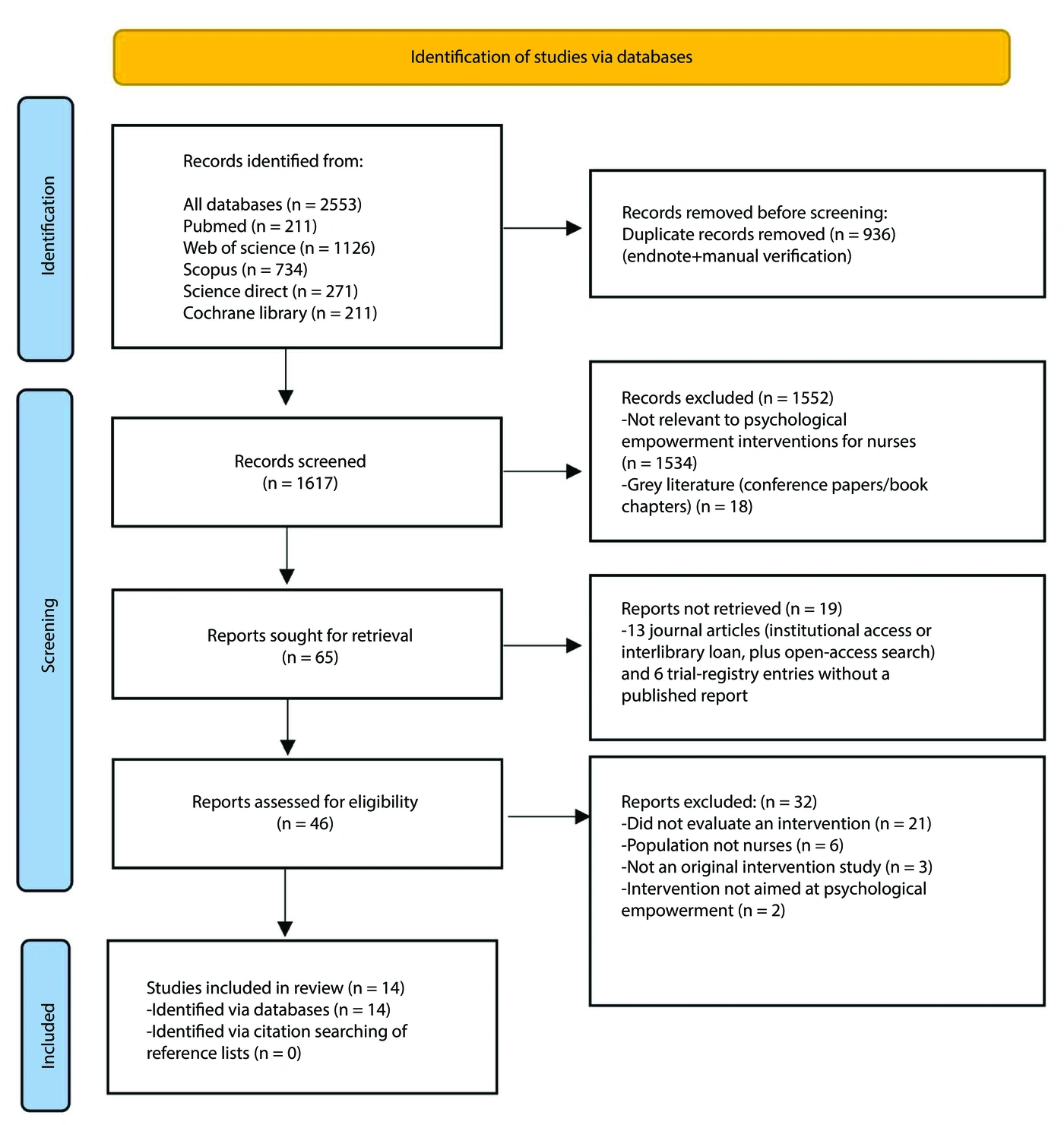
Figure 1.
Flow Diagram of Search Strategy
3.4. Search Strategy
The search strategy was initially developed by the primary author and subsequently refined in consultation with two senior researchers with expertise in systematic reviews and nursing research. To optimize sensitivity and specificity, Medical Subject Headings (MeSH) were applied in PubMed, and free-text terms were incorporated to accommodate terminological variations across diverse contexts.
The main search query was constructed according to the PCC framework:
Population: (Nurse OR "Nursing Staff" OR "Registered Nurse" OR "Nursing Personnel") Concept: ("Psychological Empowerment" OR "Empowerment") AND ("Intervention" OR "Program") Context: ("Workplace" OR "Hospital")
The search strategy consistently incorporated Boolean operators (AND, OR), truncation, and quotation marks for phrase searching. Initial retrieval was conducted without language or methodological filters to optimize sensitivity. The English-language restriction (Section 3.3) was applied during full-text eligibility assessment rather than at initial retrieval to avoid prematurely excluding potentially relevant non-English records before their titles and abstracts could be screened. Additionally, database-level filters, including publication year and study design, were deliberately avoided to ensure broad and inclusive coverage. CINAHL and PsycINFO were not accessible through institutional subscriptions at the time of the search. Although Embase access was available, it did not permit the export of search results in a format compatible with reference-management software, precluding systematic screening; therefore, it was also excluded.
The complete search queries, including database-specific syntax and the precise execution date, are presented in Table 3. The literature search covered the period from database inception through 30 June 2026 and was conducted across five electronic databases: PubMed, Scopus, Web of Science, ScienceDirect, and the Cochrane Library. The ScienceDirect search covered the platform's entire collection of journals and books, without restriction to specific imprints, subject areas, or content types. We also manually screened the reference lists of all studies included in the final analysis to identify any relevant publications that might have been missed in the electronic database searches. No additional eligible studies were identified through reference-list screening. As a sensitivity check, a supplementary search using only the population and concept terms (Nurse AND Empowerment/Intervention terms), without the context terms ("Workplace" OR "Hospital"), was conducted across the databases listed above; no additional eligible studies were identified. This check assessed only the sensitivity of the search string; no formal analysis of the potential yield of CINAHL, PsycINFO, or Embase was possible because these databases could not be searched.
Table 3.
Comprehensive Search Strategies for All Databases, Including Precise Syntax and Execution Date
| Database | Search Date | Search String |
|---|---|---|
| PubMed | 30 June 2026 | (Nurse*[Title/Abstract] OR "Nursing Staff"[MeSH]) AND ("Psychological Empowerment"[Title/Abstract] OR Empowerment[Title/Abstract]) AND ("Intervention"[Title/Abstract] OR "Program"[Title/Abstract]) AND ("Workplace"[Title/Abstract] OR "Hospital"[Title/Abstract]) |
| Scopus | 30 June 2026 | TITLE-ABS-KEY(Nurse* OR "Nursing Staff") AND TITLE-ABS-KEY("Psychological Empowerment" OR Empowerment) AND TITLE-ABS-KEY(Intervention* OR Program*) AND TITLE-ABS-KEY(Workplace OR Hospital) |
| Web of Science | 30 June 2026 | TS=(Nurse* OR "Nursing Staff") AND TS=("Psychological Empowerment" OR Empowerment) AND TS=(Intervention* OR Program*) AND TS=(Workplace OR Hospital) |
| ScienceDirect | 30 June 2026 | Title, abstract, keywords: (Nurses OR "Nursing Staff") AND ("Psychological Empowerment" OR Empowerment) AND (Intervention OR Program) AND (Workplace OR Hospital) |
| Cochrane Library | 30 June 2026 | (Nurse* OR "Nursing Staff" OR "Registered Nurse") AND ("Psychological Empowerment" OR Empowerment) AND (Intervention* OR Program*) AND (Workplace OR Hospital) |
3.5. Study Selection and Data Extraction
Following the systematic search, all identified records were exported to EndNote X8 for reference management and duplicate removal. Two reviewers independently screened the titles and abstracts of all retrieved studies against the predefined eligibility criteria. Subsequently, the full texts of potentially relevant studies were thoroughly assessed for final inclusion. Any disagreements at either stage were resolved through discussion or consultation with a third senior reviewer. Of the 19 records, 13 were journal articles and 6 were trial-registry entries without a linked publication, for which no full text was available. For the 13 articles, retrieval was attempted through institutional access (11 articles), interlibrary loan (2 articles), and open-access repository searches (all 13); the attempts for each record are listed in Supplementary Table S2. A complete list of the 32 full-text exclusions, with the primary reason for each, is provided in Supplementary Table S1. The 19 reports that could not be retrieved are listed in Supplementary Table S2 with their authors or registry, year, title, and source or identifier. The screening process was conducted entirely manually, without automation tools, to preserve contextual accuracy in nursing‑focused research.
Data were extracted independently by the same two reviewers directly into the structured summary tables presented in this review (Tables 1, 2, and 4–6). The extracted information encompassed (1) author(s) and year of publication; (2) country and setting; (3) study design and sample size; (4) participant characteristics; (5) intervention characteristics (type, content, duration, delivery method, and theoretical framework); (6) outcome measures related to psychological empowerment; and (7) key findings. Any discrepancies during extraction were resolved by consensus or consultation with the third reviewer. To ensure accuracy and consistency, the third reviewer independently verified a random sample of the extracted data, with no discrepancies identified. No additional data were requested from study authors because all required information was available in the published reports. The data extraction items and extracted data for all included studies are openly available on the Open Science Framework (https://osf.io/frbde/overview?view_only=29d5083acd344a4d9ce40006f1315481).
Table 4.
Completeness of Intervention Reporting a
| Intervention Studies | Şen Olgay (2025) (7) | Sarıköse (2025) (24) | Özbaş (2016) (25) | Sawyer (2023a) (22) | Sawyer (2023b) (23) | Sawyer (2022) (21) | Askari (2025) (28) | Doucet (2020) (18) | Bevan (2020) (20) | Chang (2008) (26) | Dirik (2024) (17) | Abel (2020) (16) | Yılmaz (2021) (19) | Yeh (2025) (27) |
|---|---|---|---|---|---|---|---|---|---|---|---|---|---|---|
| 1. Brief name: Provide the name or a phrase that describes the intervention? | ● | ● | ● | ● | ● | ● | ● | ● | ● | ● | ● | ● | ● | ● |
| 2. Why: Describe any rationale, theory, or goal of the elements essential to the intervention? | ● | ● | ● | ● | ● | ● | ● | ● | ● | ● | ● | ● | ○ | ● |
| 3. What (materials): Describe any physical or informational materials used in the intervention, including those provided to participants or used in intervention delivery or in training of intervention providers. | ● | ● | ● | ● | ● | ● | ● | ● | ● | ● | ● | ● | ● | ● |
| 4. What (procedures): Describe each of the procedures, activities, and/or processes used in the intervention, including any enabling or support activities? | ● | ● | ● | ● | ● | ● | ● | ● | ● | ● | ● | ● | ● | ● |
| 5. Who provided: For each category of intervention provider (for example, psychologist, nursing assistant), describe their expertise, background and any specific training given? | ● | ○ | ● | ○ | ○ | ○ | ○ | ○ | ● | ● | ● | ○ | ● | ● |
| 6. How: Describe the modes of delivery (such as face to face or by some other mechanism, such as internet or telephone) of the intervention and whether it was provided individually or in a group? | ● | ● | ● | ● | ● | ● | ● | ● | ● | ● | ● | ● | ● | ● |
| 7. Where: Describe the type(s) of location(s) where the intervention occurred, including any necessary infrastructure or relevant features? | ● | ● | ● | ● | ● | ● | ● | ● | ● | ● | ● | ● | ● | ● |
| 8. When and how much: Describe the number of times the intervention was delivered and over what period of time including the number of sessions, their schedule, and their duration, intensity or dose? | ● | ● | ● | ● | ● | ● | ● | ● | ● | ● | ● | ● | ● | ● |
| 9. Tailoring: If the intervention was planned to be personalized, titrated or adapted, then describe what, why, when, and how? | ○ | ○ | ● | ● | ○ | ● | ○ | ○ | ● | ○ | ○ | ○ | ○ | ● |
| 10. Modifications: If the intervention was modified during the course of the study, describe the changes (what, why, when, and how)? | ○ | ○ | ○ | ○ | ○ | ○ | ○ | ○ | ○ | ○ | ○ | ○ | ○ | ○ |
| 11. How well (planned): If intervention adherence or fidelity was assessed, describe how and by whom, and if any strategies were used to maintain or improve fidelity, describe them? | ● | ● | ● | ● | ● | ● | ● | ● | ● | ● | ● | ● | ● | ● |
| 12. How well (actual): If intervention adherence or fidelity was assessed, describe the extent to which the intervention was delivered as planned? | ● | ● | ● | ● | ● | ● | ● | ● | ● | ● | ● | ● | ● | ● |
a ● Fully reported; ◐ Partially reported; ○ Not reported; NA, not applicable (conditional items 9 – 12 only). No numerical score was calculated. Abbreviations: TIDieR, Template for Intervention Description and Replication.
Table 5.
Characteristics of Included Studies a
| Reference | Study Design | Country/Year | Sample (n) | Comparator | Setting | Single/Multiple Center |
|---|---|---|---|---|---|---|
| Şen Olgay & Uğur (7) | Quasi-experimental with mixed methods | Turkey (2025) | 70 registered nurses | None (within-group pre-post) | Foundation university hospital | Single center |
| Sarıköse & Şenol Çelik (24) | Randomized Controlled Trial (RCT) | Turkey (2025) | 64 new graduate nurses | Control group | Private university hospital | Single center |
| Özbaş & Tel (25) | Quasi-experimental with control group | Turkey (2016) | 82 oncology nurses | Control group | Two university oncology hospitals | Multiple centers |
| Sawyer et al. (22) | Randomized Controlled Trial (RCT), wait-list control | USA (2023) | 75 registered nurses | Wait-list control group | Multi-campus healthcare system hospitals | Multiple centers |
| Sawyer et al. (23) | Randomized Controlled Trial (RCT), wait-list control | USA (2023) | 77 nurse leaders | Wait-list control group | Multi-campus healthcare system hospitals | Multiple centers |
| Sawyer et al. (21) | Mixed-methods pilot study (pre-post design) | USA (2022) | 19 nurse managers | None (within-group pre-post) | Multi-campus healthcare system hospitals | Multiple centers |
| Askari et al. (28) | Quasi-experimental with control group | Iran (2025) | 77 novice nurses | Control group | University hospital | Single center |
| Doucet & Rhéaume (18) | Single group pre-post design | Canada (2020) | 19 critical care nurses | None (within-group pre-post) | Hospitals (emergency and ICU) | Multiple centers |
| Bevan (20) | Mixed-methods pilot study | USA (2020) | 13 critical care nurses | None (within-group pre-post) | Urban hospitals (critical care units) | Single center |
| Chang et al. (26) | Quasi-experimental with control group | Taiwan (2008) | 61 public health nurses | Control group | Public health centers (two bureaus) | Multiple centers |
| Dirik & Intepeler (17) | Quasi-experimental (one-group pre-test post-test) | Turkey (2024) | 189 (36 leaders + 153 nurses) | None (within-group pre-post) | University hospital | Single center |
| Abel et al. (16) | Pre-test/post-test (single group) | USA & Australia (2020) | 29 front-line leaders (charge nurses) | None (within-group pre-post) | Urban private and community hospitals | Multiple centers |
| Yılmaz & Duygulu (19) | Pre-experimental (one-group pre-test post-test) | Turkey (2021) | 212 (38 unit charge nurses and 174 staff nurses) | None (within-group pre-post) | Urban training and research hospital | Single center |
| Yeh et al. (27) | Quasi-experimental pre-post with control group | Taiwan (2025) | 287 (80 nursing staff + 186 residents + 21 leaders) | Control group | Six non-profit long-term care facilities | Multiple centers |
a Study design labels follow the terminology used by the original authors. Abbreviations: RCT, randomized controlled trial.
Table 6.
Theoretical Frameworks a
| Reference | Theoretical Frameworks Applied (When Reported) |
|---|---|
| Şen Olgay & Uğur (7) | Spreitzer's Psychological Empowerment Theory (1995) (11) and Neuro-Linguistic Programming (NLP) (29). |
| Sarıköse & Şenol Çelik (24) | Kanter's Structural Empowerment Theory (30) and Spreitzer's Psychological Empowerment Theory (1995); Flipped Classroom Model (31). |
| Özbaş & Tel (25) | Psychodrama Theory (32) and Spreitzer's Psychological Empowerment Theory (1995) |
| Sawyer et al. (22) | Mindfulness (Kabat-Zinn) (33), Acceptance and Commitment Therapy (ACT) (34), and Cognitive Behavioral Therapy (CBT) (35). |
| Sawyer et al. (23) | Mindfulness (Kabat-Zinn), Acceptance and Commitment Therapy (ACT), Cognitive Behavioral Therapy (CBT), and Post-Traumatic Growth Theory (Tedeschi & Calhoun) (36). |
| Sawyer et al. (21) | Mindfulness (Kabat-Zinn), Acceptance and Commitment Therapy (ACT), Cognitive Behavioral Therapy (CBT), and Post-Traumatic Growth Theory |
| Askari et al. (28) | Benner's Novice-to-Expert Theory (Benner Theory) (37). |
| Doucet & Rhéaume (18) | Kanter's Structural Empowerment Theory (30) |
| Bevan (20) | Freire's Pedagogy of the Oppressed (Conscientization) and Iris Young's Theory of Oppression (38, 39). |
| Chang et al. (26) | Thomas & Velthouse's Cognitive Empowerment Model (1990) (40) and Freire's Reflective Empowerment Education Approach (41). |
| Dirik & Intepeler (17) | Authentic Leadership Theory (Walumbwa et al., 2008) (42); Kanter's Structural Empowerment Theory and Spreitzer's Psychological Empowerment Theory |
| Abel et al. (16) | Kanter's Structural Empowerment Theory (1993) (30). |
| Yılmaz & Duygulu (19) | Not reported |
| Yeh et al. (27) | Empowering Leadership Theory (43) and Flipped Learning Approach (44). |
a Abbreviations: ACT, Acceptance and Commitment Therapy; CBT, Cognitive Behavioral Therapy; NLP, Neuro-Linguistic Programming.
3.6. Completeness of Intervention Reporting
We assessed the completeness of intervention reporting in the selected studies using the TIDieR (Template for Intervention Description and Replication) tool (45). This 12-item checklist evaluates key components of intervention reporting, including the intervention name, rationale, materials, procedures, providers, delivery methods, setting, dosage, tailoring, modifications, fidelity, and adherence. The TIDieR checklist evaluates only the completeness of intervention reporting and cannot assess the risk of bias or methodological quality of the included studies. Consistent with Joanna Briggs Institute (JBI) guidance for scoping reviews, a formal risk-of-bias assessment was not performed because the primary aim of this review was to map the available evidence and identify research gaps rather than to evaluate methodological quality or synthesize intervention effectiveness. However, design-related limitations are addressed in the Limitations section. Accordingly, findings are reported descriptively in terms of the statistical significance reported by the studies and, because risk of bias was not appraised, are not interpreted as evidence of intervention effectiveness.
Two reviewers independently assessed each included study against the 12 TIDieR criteria. Each criterion was rated as fully reported, partially reported, not reported, or not applicable. Items 9 – 12 (tailoring, modifications, and fidelity) are conditional; when the condition did not apply (e.g., no tailoring or modification was described), the item was rated not applicable rather than not reported. No numerical score was calculated; completeness is presented item by item. Discrepancies between reviewers were resolved through discussion or consultation with a third reviewer. All studies were included regardless of how completely the intervention was reported to ensure comprehensive coverage of the available evidence, as is standard in scoping reviews. The results of the completeness-of-intervention-reporting assessment were used to contextualize the findings in the narrative synthesis. Table 4 presents the completeness of intervention reporting for each included study.
3.7. Synthesis and Reporting of Findings
A descriptive approach was used to summarize the extracted data. Findings from each included study were organized into tables and summarized narratively to provide an overview of the identified interventions. Key features, including study design, intervention types, delivery methods, theoretical frameworks, and outcome measures, were categorized. This approach enabled the identification of patterns and gaps in the existing evidence base. For the narrative synthesis, studies were classified according to their reported statistical outcomes for the primary psychological empowerment measure. The categories were mutually exclusive and were based on the overall psychological empowerment score: (1) significant improvement, if the overall score improved significantly in all analyzed participant groups; (2) mixed findings, if the overall score improved significantly in one analyzed participant group but not in another (e.g., followers but not leaders); and (3) no significant change, if the overall score did not improve significantly in any analyzed group. For studies with a comparator, classification was based on the between-group comparison (group × time interaction or adjusted post-intervention difference); for single-group designs, it was based on within-group pre–post change (Table 5). Improvements in individual subdimensions or related outcomes (e.g., structural empowerment, self-efficacy, burnout) were not used for classification and are described separately in Sections 4.6 and 5.1 and Table 2. In addition, a sustained effect was recorded if a statistically significant improvement was maintained at a follow-up time point beyond the immediate post-intervention assessment. These criteria were applied consistently throughout the synthesis presented in Sections 4 and 5.
4. Results
A total of 2,553 records were initially identified across five electronic databases: PubMed (n = 211), Web of Science (n = 1,126), Scopus (n = 734), ScienceDirect (n = 271), and the Cochrane Library (n = 211). After duplicates were removed (n = 936) and titles and abstracts were screened, 1,552 articles were excluded because they were unrelated to psychological empowerment interventions for nurses or constituted grey literature. Of the remaining 65 records, full texts could not be retrieved for 19, leaving 46 articles for full-text eligibility assessment. These 19 records were not retrieved because the full texts were unavailable, rather than because the records were ineligible; therefore, they are reported separately from records excluded on eligibility grounds. At this stage, 32 articles were excluded for the following reasons: absence of an intervention component (n = 21), intervention not aimed at psychological empowerment (n = 2), population not nurses (n = 6), and not an original intervention study (n = 3). Ultimately, 14 studies met all inclusion criteria and were incorporated into the review. The complete search and screening workflow is illustrated in the flow diagram (Figure 1).
4.1. Completeness of Intervention Reporting
Table 4 presents the completeness of reporting for each intervention item. Eight of the 12 TIDieR items (items 1, 3, 4, 6 – 8, 11, and 12) were fully reported in all 14 studies (7, 16-28). The most common reporting deficiencies involved the Tailoring and Modifications items: Tailoring was fully reported in only 5 of the 14 studies (20-22, 24, 25), and the Modifications item was rated as not reported or not applicable in all 14 studies. Additionally, the “Who provided” item was not fully reported in 7 studies (16, 18, 21-24, 28), and the “Why” item (rationale) was not reported in one study (19) (Table 4).
4.2. Characteristics of Included Studies
All 14 studies included in this scoping review examined psychological empowerment interventions for nurses. The studies originated from six countries: Turkey (7, 17, 19, 24, 25), USA (20-23), Taiwan (26, 27), Iran (28), Canada (18), and one collaborative study from the USA and Australia (16). Publication years ranged from 2008 to 2025, indicating growing attention to this field in recent years. Regarding study design, 3 were randomized controlled trials (RCTs) (22-24), 4 were quasi-experimental studies with a control group (25-28), 1 was a quasi-experimental mixed-methods study without a control group (7), 4 used one-group pre-test/post-test designs, either quasi-experimental or pre-experimental (16-19), and 2 were mixed-methods pilot studies (20, 21). Sample sizes ranged from 13 to 287 participants. In the study by Yeh et al. (27), the total sample of 287 comprised 80 nursing staff, 21 nurse leaders, and 186 long-term care residents; only the 101 nursing staff and leaders were included in the psychological empowerment analysis, while resident outcomes were reported separately. Regarding the number of centers, 6 studies were single-center and 8 were multi-center (Table 5). The trial registration for the nurse-leader trial (23) (ClinicalTrials.gov NCT05254600) lists participation in the earlier nurse-manager pilot study (21) among its inclusion criteria, so some participants may overlap; the two studies are reported separately, and no data were pooled.
4.3. Theoretical Frameworks
Regarding theoretical frameworks, Spreitzer's Psychological Empowerment Theory (1995) and Kanter's Structural Empowerment Theory (1977, 1993) were the most frequently used frameworks (each in 4 studies). Spreitzer's theory was used in four studies (7, 17, 24, 25), whereas Kanter's theory was used in four studies (16-18, 24). Other theoretical frameworks included the Flipped Learning Model (24, 27), Cognitive Behavioral Therapy, Mindfulness, Acceptance and Commitment Therapy (21-23), Post-Traumatic Growth Theory (21, 23), Benner's Theory (28), Psychodrama Theory (25), Freire's Pedagogy (20, 26), Empowering Leadership Theory (27), Authentic Leadership Theory (17), and Thomas & Velthouse's Cognitive Empowerment Model (26). Only one study (19) did not report a specific theoretical framework (Table 6).
4.4. Intervention Characteristics
Table 1 shows considerable diversity in intervention content, duration, and delivery methods. Intervention duration ranged from 30 – 60 minutes (self-paced online module (18)) to 10 weeks (psychodrama-based program (25)). The most common delivery methods included face-to-face workshops, online education, and blended approaches combining online and face-to-face delivery. Interventions were primarily designed as group-based programs using educational, psychological, and cognitive-behavioral approaches. The RISE program, with 8 to 9 weekly sessions (21-23), and the psychodrama-based program, with 10 sessions over 10 weeks (25), were among the structured, long-term interventions. In contrast, despite comprising 5 sessions, the NLP-based program (7) was delivered over a single week and should not be classified as a long-term intervention. The short online module (18) and self-paced online programs (16) had shorter durations.
4.5. Findings Related to Psychological Empowerment
According to Table 1, seven of the 14 included studies reported significant improvements in psychological empowerment (7, 21, 23-27), whereas one study (17) reported mixed findings, with significant improvement in psychological empowerment among followers but no significant change among leaders. Among these studies, Şen Olgay & Uğur (2025) reported effect sizes of d = 1.84 (CI = 1.30 – 2.38) for an NLP-based educational program (7). Sarıköse & Şenol Çelik (2025) found significant increases in both types of empowerment at the 3-month follow-up after a blended education program based on structural and psychological empowerment theories (24). Yeh et al. (27) reported significantly greater improvement than that in the control group and improved resident outcomes in long-term care settings after implementing a flipped learning approach to empowering leadership training (27).
4.6. Studies with No Significant Change in Psychological Empowerment
Six studies (16, 18-20, 22, 28) showed no significant change in overall psychological empowerment scores. Of these, five studies (16, 18-20, 22) reported improvements in specific subdimensions (such as meaning and competence) or other related outcomes (such as structural empowerment, self-efficacy, and reduced burnout), whereas one study (28) showed no significant effect on psychological empowerment, job satisfaction, or organizational commitment. Detailed findings for each study are presented in Table 2.
4.7. Measurement Scales and Study Outcomes
As shown in Table 1 (for studies with significant improvements) and Table 2 (for studies with no significant overall change), all included studies used standardized scales based on Spreitzer's Psychological Empowerment Model (1995) to measure psychological empowerment, primarily the Psychological Empowerment Scale (Spreitzer). One study (28) used an adapted Spreitzer-based version co-developed with Mishra. The studies also assessed burnout (22, 25, 27), job satisfaction (26-28), structural empowerment (16-18, 20, 24), self-efficacy (18), professional quality of life (21, 23), and perceived stress (21-23).
5. Discussion
5.1. Principal Findings
This review of 14 studies describes mixed outcomes of psychological empowerment interventions (7, 16-28); because the risk of bias was not assessed, these findings should not be interpreted as evidence of effectiveness. Seven studies (50.0%) reported significant improvements in empowerment scores (7, 21, 23-27). One study (17) showed mixed findings, with significant improvement among followers but no significant change among leaders. In contrast, 6 studies (42.9%) reported no significant change in overall psychological empowerment scores (16, 18-20, 22, 28); of these, 5 studies (16, 18-20, 22) nonetheless reported improvements in specific subdimensions (such as meaning and competence) or other related outcomes (such as structural empowerment, self-efficacy, and reduced burnout), while 1 study (28) showed no significant effect on psychological empowerment, job satisfaction, or organizational commitment. These counts of statistically significant findings should be interpreted with caution because they do not account for differences in study design, sample size, effect magnitude, or risk of bias. The direction and magnitude of effects, along with design limitations, are presented for each study in Tables 1 and 2. The NLP-based psychotherapeutic intervention reported an effect size of d = 1.84 (CI = 1.30 – 2.38) (7); however, effect sizes are not directly comparable across studies because of heterogeneity in study designs, comparators, and measures. Some longer programs (≥4 weeks) reported significant improvements (21, 23, 25), whereas an 8-week program did not (22), and the one-week NLP program (7) also reported large effects; these descriptive observations do not allow conclusions about duration. However, the geographical distribution is heavily skewed, with the majority of studies conducted in Turkey (n = 5) (7, 17, 19, 24, 25), the USA (n = 4) (20-23), and Taiwan (n = 2) (26, 27), with one study each conducted in Canada (18) and Iran (28), as well as one collaborative USA-Australia study (16), which may limit the generalizability of the findings to other health care contexts. The lack of long-term follow-up assessments (>12 months) in most studies highlights the need for more rigorous methodological approaches to establish causal relationships and evaluate the sustainability of intervention effects.
5.2. Theoretical Foundations
The predominance of Spreitzer's Psychological Empowerment Theory (1995) and Kanter's Structural Empowerment Theory (1993) as the theoretical foundations of interventions (each used in 4 studies, 28.6%) reflects recognition in the field that empowerment is a multidimensional construct influenced by both internal cognitive processes and external organizational structures. This finding is consistent with that of Huang et al. (2024), who similarly identified these two theories as the most frequently used frameworks in psychological empowerment interventions for nurses (6). Spreitzer's theory, which emphasizes the four cognitive dimensions of meaning, competence, self-determination, and impact, was applied in studies using educational, psychotherapeutic, and leadership approaches (7, 17, 24, 25). Kanter's theory, which focuses on access to information, support, and resources, was applied in studies targeting structural workplace factors (16-18, 24). Only two studies (17, 24) integrated both theoretical frameworks. Of these, one (24) reported significant improvements in both psychological and structural empowerment, whereas the other (17) showed mixed findings, with improvement among followers but not leaders. This limited and inconsistent evidence provides only tentative support for the notion that addressing both individual and organizational factors may produce synergistic effects; it should not be interpreted as a general pattern. To clarify conceptual boundaries, studies grounded in Spreitzer's theory primarily targeted individual perceptions, whereas those based on Kanter's theory addressed organizational structures. Interventions combining both approaches appeared to yield more comprehensive improvements. In contrast to Huang et al.'s review, which reported that theoretical frameworks were reported in seven of eleven studies, the present review found that 13 out of 14 studies (92.9%) reported their theoretical frameworks, indicating progress in this area. Despite this improvement, the absence of a theoretical framework in one study (19) highlights the continued need for greater attention to theoretical grounding in future intervention design, as theory-based interventions have been shown to have a higher likelihood of success and to enable better interpretation of findings (46). Furthermore, the emergence of newer theoretical approaches in the included studies, such as Neuro-Linguistic Programming (7), psychodrama (25), and Freire's Pedagogy of the Oppressed (20, 26), suggests a paradigm shift toward more experiential and psychotherapeutic methods that extends beyond the traditional frameworks identified in previous reviews.
5.3. Intervention Characteristics
Interventions varied considerably in content, duration, and delivery methods. Their duration ranged from 30 – 60 minutes for a self-paced online module (18) to 10 weeks for a psychodrama-based program (25). Among the longer programs (≥4 weeks), some reported significant improvements that were maintained at follow-up (23, 25), whereas an 8-week program showed no significant overall change (22); no comparative analysis by duration was undertaken. However, the NLP-based program, which consisted of five sessions over one week, also reported a large effect size (d = 1.84; CI = 1.30 – 2.38) (7). This may indicate that intensity and content matter as much as duration, although this cannot be confirmed here. Although longer interventions may provide more opportunities for skill reinforcement and behavioral integration, well-designed short-term programs with substantial experiential content can also yield substantial improvements. Melnyk et al. (47) similarly reported in a systematic review that cognitive-behavioral and mindfulness-based interventions require at least 4 weeks to produce sustainable reductions in stress and burnout (47), although the strong effect of the NLP program despite its one-week duration suggests that this threshold may not apply universally. In contrast, short-term interventions, such as the self-paced online module (18) and the online certificate program (16), did not produce significant changes in overall psychological empowerment. This may suggest that a minimum intervention dose is needed, although this cannot be established from the present evidence. Regarding delivery methods, blended approaches combining online and face-to-face components appeared to be associated with favorable results in two available studies (24, 27). This finding extends the work of Huang et al. (2024), who emphasized face-to-face education as the dominant format (6), by showing that blended approaches have been used in recent studies. The two studies of blended approaches reported favorable results, but no comparison with other delivery formats was made; therefore, no conclusions about superiority can be drawn. This may be consistent with Kolb's experiential learning theory (1984), which posits that effective learning involves a cycle of concrete experience, reflective observation, abstract conceptualization, and active experimentation—a cycle that blended approaches may be well positioned to support. A comparable application of this theory in nursing education is illustrated by Chen et al. (48), who reported favorable results from applying Kolb's experiential learning theory in clinical nursing teaching, although this represents a single application example rather than broad confirming evidence (48). However, these observations should be interpreted as patterns requiring confirmation in future research rather than as established comparative findings, given the heterogeneity of study designs and the absence of a prespecified comparative synthesis.
5.4. Psychological Empowerment vs. Related Outcomes
Seven of the 14 included studies (50.0%) reported significant increases in psychological empowerment (7, 21, 23-27), while one additional study (17) showed mixed findings (significant improvement among followers but not leaders). The NLP-based program (7) reported effect sizes of d = 1.84 (CI = 1.30 – 2.38) and focused on cognitive restructuring, anchoring, and belief change techniques that may target the four dimensions of empowerment (meaning, competence, self-determination, and impact). This finding is consistent with the study by Huang et al. (2024), which reported generally favorable outcomes, although some studies reported mixed results (6). The study by Sarıköse and Şenol Çelik (24), which employed a blended education program based on both structural and psychological empowerment theories, reported significant increases in both types of empowerment at 3-month follow-up, which may suggest that interventions targeting both structural and psychological factors may have synergistic effects, although this pattern was not consistently observed, as the only other study combining both frameworks (17) showed mixed results, limiting confidence in this interpretation. The study by Yeh et al. (27), which used a flipped learning approach for empowering leadership training, reported significant increases in psychological empowerment among nursing staff as well as improved resident outcomes in long-term care settings, suggesting preliminary evidence for cascading effects of multi-level interventions; however, this finding is based on a single study and should be interpreted as an initial observation rather than conclusive evidence. By contrast, six studies (16, 18-20, 22, 28) showed no significant change in overall psychological empowerment scores. Potential contributing factors varied across these studies and may have included short intervention duration, limited interactive or experiential components, or the absence of a structural empowerment component. These findings suggest that interventions without active engagement, experiential learning, or structural support may fail to produce meaningful changes in psychological empowerment, highlighting the importance of both content and delivery method in intervention design. This finding aligns with the meta-analysis by Li et al. (49), which reported that structural empowerment has a stronger correlation with job satisfaction (r = 0.52) compared with psychological empowerment (r = 0.33), suggesting that interventions targeting psychological factors alone without addressing structural workplace conditions may have limited effectiveness, although this evidence is correlational (49). Furthermore, the systematic review and meta-analysis by Şenol Çelik et al. (2024) reported that structural and psychological empowerment are associated with reduced emotional exhaustion and increased personal accomplishment in nurses, supporting the importance of addressing both dimensions in intervention design (50).
5.5. Psychological vs. Structural Empowerment
In the outcome measures section, all included studies used standardized scales based on Spreitzer's model to measure psychological empowerment, enabling direct comparison of results across studies, with one study (28) using an adapted Spreitzer-based version co-developed with Mishra. This finding aligns with the scoping review by Huang et al. (2024), which similarly found that assessments were predominantly conducted using Spreitzer's Psychological Empowerment Scale (6). However, the meta-analysis by Li et al. (49) reported that structural empowerment has a stronger correlation with job satisfaction (r = 0.52) compared with psychological empowerment (r = 0.33), and this correlation was significantly stronger in Chinese samples compared with European and North American samples (49). This finding, which was not explicitly addressed in Huang et al.'s review, suggests that cultural factors may moderate the effectiveness of empowerment interventions, and intervention design should be culturally sensitive (6). Similarly, the umbrella review by Chang et al. (51) revealed that the relationship between psychological empowerment and job satisfaction is weak to moderate in Western contexts, while structural empowerment shows no such cultural variation, further emphasizing the importance of considering cultural context when interpreting the effectiveness of psychological empowerment interventions (51). The reduction in burnout observed in several studies (25, 27) indicates that psychological empowerment can serve as a protective factor against negative occupational outcomes, consistent with the Job Demands-Resources Model (Bakker & Demerouti, 2024), which posits that psychological resources such as empowerment can buffer the negative effects of job demands (52). A recent study by Salar et al. (53) reported no significant between-group difference in moral distress after a grand rounds-based empowerment program for ICU nurses, although moral distress decreased gradually within the intervention group, which suggests a potential benefit that needs confirmation (53).
5.6. Heterogeneity and Gaps
The influence of nursing specialties and cultural settings on intervention outcomes warrants careful consideration. Interventions in high‑acuity settings, such as intensive care units or emergency departments, may face different contextual challenges, including higher stress, limited autonomy, and rigid hierarchies, compared with those in community or long‑term care settings, where nurses often have more sustained patient relationships and greater role flexibility. These differences may shape both the delivery and reception of empowerment interventions. The majority of studies were conducted in Turkey (n = 5), the USA (n = 4), and Taiwan (n = 2), with single studies from Iran and Canada and one collaborative USA‑Australia study. These countries differ substantially in power distance, individualism, and organizational norms. In high power‑distance cultures, interventions emphasizing autonomous decision-making may conflict with hierarchical expectations, potentially attenuating their effectiveness. Conversely, in more individualistic settings, such interventions may align more closely with professional norms and yield stronger effects. The limited geographical diversity restricts firm conclusions about cultural moderation; however, the observed variability in effect sizes may partly reflect these underlying cultural and contextual differences (51).
5.7. Limitations and Future Directions
This review has several limitations that should be considered when interpreting the findings. First, restricting the review to English-language articles may have resulted in the omission of important studies published in other languages. Second, the high heterogeneity of study designs and outcomes precluded meta-analysis. Third, reporting completeness varied across studies, particularly with respect to tailoring and modifications (Table 4), which may challenge the replicability of interventions. Fourth, the limited geographical diversity of the included studies, which were drawn from only six countries across three continents, limits the generalizability of the findings to other healthcare contexts. Fifth, the predominance of quasi-experimental or pre-experimental designs (9 studies, 64.3%) and the lack of long-term follow-up assessments (>12 months) in most studies highlight the need for more rigorous methodological approaches. Sixth, the protocol was registered retrospectively, after the search was completed, limiting the transparency benefits typically associated with prospective registration. Seventh, six of the fourteen included studies overlap with those identified in the prior scoping review by Huang et al. (2024). Although this review extends coverage through mid-2026 and adds eight new studies, findings from the overlapping studies are not independent of that earlier synthesis (6); the overlap is detailed in Supplementary Table S3. In addition, the search terms for intervention type were limited to “intervention” and “program,” so studies described only as training, education, or workshop-based initiatives, without these words in their titles or abstracts, may have been missed. Furthermore, several factors constrain the interpretability and generalizability of the findings: the absence of CINAHL, PsycINFO, and Embase; the exclusion of grey literature; small sample sizes; reliance on self-reported measures, which are susceptible to social desirability and confirmation bias, particularly in unblinded designs; the absence of a formal risk-of-bias appraisal; and the lack of standardized follow-up durations. Likewise, the heterogeneity of study designs precludes a robust comparative assessment of intervention effectiveness. Potential publication bias should also be considered because positive findings are more likely to be published. An important limitation of this review is that 19 potentially relevant reports could not be retrieved despite the retrieval attempts described in Section 3.5 (Supplementary Table S2). Of these, 11 (six trial-registry entries and five journal articles; marked in Supplementary Table S2) were identified as potentially intervention-related based on the available bibliographic information. Although the available records were re-examined, the lack of full-text access prevented definitive verification of their eligibility against all inclusion criteria. Therefore, some potentially eligible studies may have been missed, which could have affected the completeness of the evidence mapped in this review and may have led to an underestimation of the number and diversity of psychological empowerment interventions. However, it cannot be assumed that all 11 records would have met the eligibility criteria. Accordingly, the findings should be interpreted with caution, recognizing the possibility of incomplete evidence coverage. Additionally, considerable heterogeneity in content, duration, delivery methods, and outcome measures limits direct comparability and highlights the need for more standardized reporting. Future research should prioritize multicenter randomized controlled trials with standardized protocols, theory-driven designs, longer follow-up, and fidelity assessment, and should complement self-report scales with objective indicators such as nurse retention, turnover, absenteeism, and performance or patient-safety metrics. Additionally, cost-effectiveness studies, subgroup analyses by role and setting, culturally adapted interventions, and evaluations of patient and organizational outcomes are needed to strengthen the evidence base and guide implementation (6). Given the cultural differences in intervention effectiveness identified in the meta-analysis by Li et al. (49) and the umbrella review by Chang et al. (51), culturally tailored programs should be developed to meet the specific needs of diverse healthcare contexts (49, 51). In addition, future research should include structural empowerment as a co‑primary outcome alongside psychological empowerment, as proposed by Li et al. (49), to gain a more holistic understanding of the pathways through which empowerment interventions affect nurses' well‑being and professional performance (49).
6. Conclusion
This scoping review reveals the evolution and expansion of research examining interventions designed to foster psychological empowerment among nurses. A range of approaches, including empowerment‑based educational initiatives, multi‑component training programs, nursing leadership development courses, and psychoeducational group interventions, have been used. Of the 14 included studies, 7 reported significant improvements in overall psychological empowerment, 1 reported mixed findings, and 6 reported no significant overall change. Because risk of bias was not assessed, the certainty of the evidence is likely low, and these results do not establish effectiveness. The heterogeneity of study designs and the predominance of quasi-experimental studies further warrant cautious interpretation. Nevertheless, several methodological limitations should be addressed in subsequent investigations. Future studies should adopt randomized controlled trial designs with adequately powered samples. Moreover, selecting suitable theoretical frameworks grounded in the core tenets of psychological empowerment is essential to enhance the scientific rigor and internal validity of future research. Intervention content and delivery formats should also be further diversified, with programs tailored more precisely to the real‑world needs and clinical realities of nursing practice. Finally, evaluation of both implementation processes and intervention outcomes should be strengthened by employing a broader array of assessment methods and indicators to ensure a comprehensive and accurate appraisal of their effectiveness.
7. Relevance to Clinical Practice
The findings of this scoping review suggest that psychological empowerment interventions may support nurses’ professional well-being; evidence regarding clinical performance and patient care outcomes remains very limited. Empowered nurses are reported to demonstrate greater autonomy, resilience, and commitment, which may contribute to high-quality, safe care in demanding health care environments. Healthcare organizations and nursing leaders may therefore consider piloting structured, theory-informed empowerment programs that combine educational content with practical, experiential learning, are delivered through flexible formats, and undergo formal evaluation. Furthermore, the favorable results reported in about half of the included studies, without risk-of-bias appraisal, suggest that empowerment-focused programs merit further evaluation, although no included study compared them with traditional leadership or training approaches. However, given the heterogeneity of study designs and the limited number of randomized controlled trials, these findings should be considered preliminary evidence requiring further confirmation rather than definitive evidence sufficient to support widespread implementation. In particular, only one included study reported resident-level outcomes; therefore, conclusions regarding patient care quality remain tentative and require evaluation in future research. Nonetheless, organizations may consider evaluating theoretically grounded interventions that target both individual psychological factors and organizational structures. Professional bodies and policy makers may consider supporting well-designed pilot initiatives with formal evaluation; whether such initiatives foster healthier work environments or reduce nurse burnout requires confirmation in future research. Given the current evidence base, future implementation efforts should be accompanied by rigorous evaluation of both nurse-level and patient-level outcomes.