Phytochemical Analysis and Evaluation of Purified Extract of Tinospora crispa Stem for In Vivo Antihyperuricemic Effect
Authors
Abstract
Background: Tinospora crispa is used in folk medicines for the treatment of gout, rheumatoid arthritis, and internal inflammation. The presence of flavonoids, polyphenols, glycosides, and alkaloids in T. crispa stem is supposed to contribute to these therapeutic effects. This study aimed to analyze qualitative and quantitative phytochemical of purified extract of T. crispa stem (PETS) and to evaluate the in vivo antihyperuricemic effect.
Materials and Methods: First, total flavonoid and total alkaloid contents of PETS were determined by colorimetric and gravimetric methods. After that, potassium oxonate-induced hyperuricemic mice were treated with three doses of PETS at 50, 100, and 200 mg/kg, and hydroalcoholic extract at 500 mg/kg. Moreover, allopurinol at 10 mg/kg and sodium carboxymethylcellulose 0.5% were orally administered as positive and negative controls, respectively. Serum uric acid levels were measured by ultraviolet–visible spectrophotometry.
Results: The high flavonoids content (31.08% } 1.77% rutin equivalent) in T. crispa stem possesses a potential as uricostatic in the treatment of gout. The purified extract of T. crispa stem at a dose of 100 mg/kg revealed a significant uric acid–lowering effect compared with negative control (P < 0.05).
Conclusion: This study indicates the potential of T. crispa purified extracts in the treatment of hyperuricemia and gout.
Highlights
Copyright
© 2020, Author(s). This open-access article is available under the Creative Commons Attribution 4.0 (CC BY 4.0) International License (https://creativecommons.org/licenses/by/4.0/), which allows for unrestricted use, distribution, and reproduction in any medium, provided that the original work is properly cited.
Similar Articles
Cassia angustifolia Vahl. Leaves: Determination of Total Phenolic and Sennoside Contents of Different Fractions in Comparison with Their α- Glucosidase and Tyrosinase Inhibitory Effects
Morid Ahmadi D, Mojtabavi S, Ghadami S, Eftekhari M, Shams Ardekani MR, et al. Cassia angustifolia Vahl. Leaves: Determination of Total Phenolic and Sennoside Contents of Different Fractions in Comparison with Their α- Glucosidase and Tyrosinase Inhibitory Effects. Iran J Pharm Res. 2024;23(1):e140914. doi: https://doi.org/10.5812/ijpr-140914
HPTLC Analysis, Antioxidant and Antigout Activity of Indian Plants
Nile SH, Park SW. HPTLC Analysis, Antioxidant and Antigout Activity of Indian Plants. Iran J Pharm Res. 2014;13(2):e125524. doi: https://doi.org/10.22037/ijpr.2014.1501
Pharmacognostic Standardization and Chromatographic Fingerprint Analysis on Triterpenoidal Constituents of the Medicinally Important Plant Artocarpus heterophyllus by High-Performance Thin Layer Chromatography Technique
Srivastava G, Singh MP. Pharmacognostic Standardization and Chromatographic Fingerprint Analysis on Triterpenoidal Constituents of the Medicinally Important Plant Artocarpus heterophyllus by High-Performance Thin Layer Chromatography Technique. J Rep Pharm Sci. 2019;8(1):e147421. doi: https://doi.org/10.4103/jrptps.jrptps_12_17
Effects of Parsley (Petroselinum crispum) and its Flavonol Constituents, Kaempferol and Quercetin, on Serum Uric Acid Levels, Biomarkers of Oxidative Stress and Liver Xanthine Oxidoreductase Aactivity inOxonate-Induced Hyperuricemic Rats
Haidari F, Keshavarz SA, Mohammad Shahi M, Mahboob S, Rashidi M. Effects of Parsley (Petroselinum crispum) and its Flavonol Constituents, Kaempferol and Quercetin, on Serum Uric Acid Levels, Biomarkers of Oxidative Stress and Liver Xanthine Oxidoreductase Aactivity inOxonate-Induced Hyperuricemic Rats. Iran J Pharm Res. 2011;10(4):e126017. doi: https://doi.org/10.22037/ijpr.2011.1016
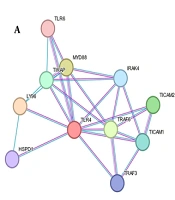
Investigating the Anti-inflammatory Mechanism of Alpinia purpurata (Vieill.) K. Schum. Rhizome Extract: Metabolite Profiling, Network Pharmacology, in vitro Safety, and in vivo Validation
Mulkiya Yuliawati K, Salsabilla Yuniar F, Febrina E, Wilar G, Febriyanti RM, et al. Investigating the Anti-inflammatory Mechanism of Alpinia purpurata (Vieill.) K. Schum. Rhizome Extract: Metabolite Profiling, Network Pharmacology, in vitro Safety, and in vivo Validation. Iran J Pharm Res. 2026;25(1):e169725. doi: https://doi.org/10.5812/ijpr-169725
- Scopus by DOI: 7
Last Update: 1 month ago
- Scopus by Title: 7
Last Update: 1 month ago
- Scopus by Title (Ref): 7
Last Update: 1 month ago
- CrossRef: 0
Last Update: 6 days ago
- OpenAlex: 12
Last Update: 8 hours ago
- OpenCitations: 8
Last Update: 4 days ago
