
Synthesis and Cytotoxic Evaluation of 6-Amino-4-Aryl-3-Methyl- 2,4-Dihydropyrano[2,3-C]Pyrazole-Carbonitrile Derivatives Using Borax with Potential Anticancer Effects
Authors
Abstract
A green and efficient one-pot, four-component synthesis of 6-amino-4-aryl-3-methyl- 2,4-dihydropyrano[2,3-c]pyrazole-carbonitrile derivatives catalyzed by borax in water has been examined and described. This method has several advantages such as environmental friendliness, shorter reaction time, excellent yields, and simple workup procedure. The in vitro cytotoxic activity of the synthesized compounds was investigated against cancer cell lines (SW48, A549, KB, HepG2) in comparison with doxorubicin, a well-known anticancer drug, using MTT colorimetric assay. The synthesized compounds showed good and reasonable cytotoxicity compared with doxorubicin in some studied cell lines. The compounds 5b, 5c, 5g in KB cell line (IC50 = 8±2.217 μM, 7±2.77 μM, 7.5±1.49 μM respectively), 5f in A549 cell line (IC50 = 31.5±2.02 μM), 5g in HepG2 cell line (IC50 = 22.5±3.09 μM), 5e, and 5i in SW48 cell line (IC50 = 23±0.772 μM, 23±4.97 μM respectively) showed the best results in close to the control drug (IC50 = 6.8±0.78 μM, 6.3±0.65 μM, 5.4±0.5 μM, 4.3±0.12 μM in A549, HepG2, KB, and SW48 cell lines respectively).
Highlights
Copyright
© 2013, Author(s). This open-access article is available under the Creative Commons Attribution 4.0 (CC BY 4.0) International License (https://creativecommons.org/licenses/by/4.0/), which allows for unrestricted use, distribution, and reproduction in any medium, provided that the original work is properly cited.
Similar Articles
Synthesis of 4-Phenyl-4,5-dihydropyranopyrazolone Derivatives with Activated Potassium Carbonate: Evaluation of Anticancer Activity on Cancer Cell Lines and Apoptosis Mechanism
Hosseinzadeh L, Mahmoudian N, Ahmadi F, Adibi H. Synthesis of 4-Phenyl-4,5-dihydropyranopyrazolone Derivatives with Activated Potassium Carbonate: Evaluation of Anticancer Activity on Cancer Cell Lines and Apoptosis Mechanism. J Rep Pharm Sci. 2019;8(2):e147411. doi: https://doi.org/10.4103/jrptps.JRPTPS_82_19
2-Amino-4-(nitroalkyl)-4H-chromene-3-carbonitriles as New Cytotoxic Agents
Zonouzi A, Mirzazadeh R, Safavi M, Kabudanian Ardestani S, Emami S, et al. 2-Amino-4-(nitroalkyl)-4H-chromene-3-carbonitriles as New Cytotoxic Agents. Iran J Pharm Res. 2013;12(4):e125751. doi: https://doi.org/10.22037/ijpr.2013.1396
Design, Synthesis, and Anticancer Activity Evaluation of Hybrids of Azoles and Barbituric Acids
Liu H, Huang X, Shen Q, Deng H, Li Z, et al. Design, Synthesis, and Anticancer Activity Evaluation of Hybrids of Azoles and Barbituric Acids. Iran J Pharm Res. 2021;20(2):e124321. doi: https://doi.org/10.22037/ijpr.2020.113547.14363
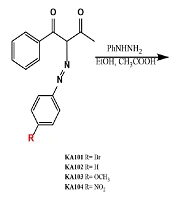
Synthesis, Cytotoxicity, and Structure Activity Relationship SAR of Novel Azo Substituted Pyrazoles
Mohammed Alseud K. Synthesis, Cytotoxicity, and Structure Activity Relationship SAR of Novel Azo Substituted Pyrazoles. J Rep Pharm Sci. 2026;14(1):e167584. doi: https://doi.org/10.5812/jrps-167584
N-(5-Mercapto-1,3,4-Thiadiazol-2-yl)-2-Phenylacetamide Derivatives: Synthesis and In-vitro Cytotoxicity Evaluation as Potential Anticancer Agents
Mohammadi-Farani A, Heidarian N, Aliabadi A. N-(5-Mercapto-1,3,4-Thiadiazol-2-yl)-2-Phenylacetamide Derivatives: Synthesis and In-vitro Cytotoxicity Evaluation as Potential Anticancer Agents. Iran J Pharm Res. 2014;13(2):e125547. doi: https://doi.org/10.22037/ijpr.2014.1503
- Scopus by DOI: 0
Last Update: 1 week ago
- Scopus by Title: 0
Last Update: 1 week ago
- Scopus by Title (Ref): 32
Last Update: 1 week ago
- CrossRef: 0
Last Update: 5 hours ago
- OpenAlex: 0
Last Update: 7 hours ago
- OpenCitations: 0
Last Update: 5 days ago