Journal of Semnan University of Medical Sciences
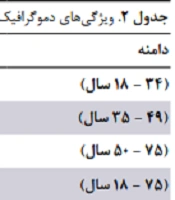
Image Credit:Koomesh
Outline
Development and Validation of a Connected Speech Analysis Protocol and Presentation of Speech Indices Averages in Persian-Speaking Adults
Authors

Abstract
Introduction:
Connected speech assessment in linguistic, cognitive, and clinical evaluations provides valuable information about grammar, semantics, and pragmatics, as well as a more realistic picture of a person's abilities in everyday social situations. Considering the necessity of a guide for its analysis, this study aimed to develop a connected speech analysis protocol and determine its validity.
Materials and Methods:
In the first phase, the protocol was developed using the Delphi method with 6 experts (2 Ph.D. in Linguistics, 2 Ph.D., and 2 Masters in Speech Therapy). In the second phase, the validity of the protocol was investigated by the content validity ratio (CVR), and the main and supplementary indices were determined. For differential validity, the connected speech of 108 healthy Persian-speaking individuals aged 18 to 75 were compared according to the developed indices.
Results:
The protocol was developed with 12 main and 8 supplementary indices and their validity was investigated. The results of the ANOVA test showed that 7 indices the average length of utterance, the number of nouns, the ratio of function words to the total vocabulary, the ratio of content words to the total vocabulary, the number of content words, the number of function words and type-token ratio- had a significant difference in 3 age groups.
Conclusion:
The connected speech analysis protocol can be an effective and valid tool for analyzing the connected speech of Persian-speaking adults. Also, the relationship between language indices and age indicates differences in language performance and should be considered in connected speech evaluation.
Highlights
References
- 1.Mayer J, Murray L. Functional measures of naming in aphasia: Word retrieval in confrontation naming versus connected speech. Aphasiol. 2010;17(5):481-97. https://doi.org/10.1080/02687030344000148.
- 2.Ghayoumi Anaraki Z. Developing and Validation of Persian Discourse Assessment Tasks. University of Social Welfare and Rehabilitation Sciences;. J Mod Rehabil. 2015;16(1.
- 3.Gordon JK. Factor Analysis of Spontaneous Speech in Aphasia. J Speech Lang Hear Res. 2020;63(12):4127-47. [PubMed ID:33197361]. https://doi.org/10.1044/2020_JSLHR-20-00340.
- 4.Shewan CM. The Shewan Spontaneous Language Analysis (SSLA) system for aphasic adults: description, reliability, and validity. J Commun Disord. 1988;21(2):103-38. [PubMed ID:3360975]. https://doi.org/10.1016/0021-9924(88)90001-9.
- 5.Prins R, Bastiaanse R. Review. Aphasiol. 2010;18(12):1075-91. https://doi.org/10.1080/02687030444000534.
- 6.Liberati A, Altman D, Tetzlaff J, Mulrow C, Gotzsche P, Loannidis J. Enhanced Reader. Nature. 2018;388:539-47.
- 7.Boschi V, Catricala E, Consonni M, Chesi C, Moro A, Cappa SF. Connected Speech in Neurodegenerative Language Disorders: A Review. Front Psychol. 2017;8:269. [PubMed ID:28321196]. [PubMed Central ID:PMC5337522]. https://doi.org/10.3389/fpsyg.2017.00269.
- 8.Jarrold W, Peintner B, Wilkins D, Vergryi D, Richey C, Gorno-Tempini ML, et al. Aided diagnosis of dementia type through computer-based analysis of spontaneous speech. 2014:27-37. https://doi.org/10.3115/v1/W14-3204.
- 9.Ghoreishi ZS, Azimian M, Alaghband Rad J, Khorrami Banaraki A, Rafiee SM, Salavati M, et al. Analysis of Connected Speech in Persian Aphasic Patients and its Relationship With Type and Severity of Aphasia. Function and Disability Journal. 2021;15(3):141-50. https://doi.org/10.32598/fdj.4.14.
- 10.Jalilevand N, Kamali M, Modarresi Y, Kazemi Y. The Persian developmental sentence scoring as a clinical measure of morphosyntax in children. Medical journal of the Islamic Republic of Iran. 2016;30:435.
- 11.Salmani M, Asadi M, Tohidast SA, Shekariyan T, Shah Hoseyni F. A New Persian Version of Language Assessment, Remediation, and Screening Procedure (P-LARSP). Iranian Rehabilitation Journal. 2023;20(4):517-28. https://doi.org/10.32598/irj.20.4.1470.1.
- 12.Linstone H, Turoff M. The Delphi Method: Techniques and Applications. Boston: Addison Wesley 1975.
- 13.Nicholas LE, Brookshire RH. A system for quantifying the informativeness and efficiency of the connected speech of adults with aphasia. J Speech Hear Res. 1993;36(2):338-50. [PubMed ID:8487525]. https://doi.org/10.1044/jshr.3602.338.
- 14.Bateni M. Word Structure. In: Bateni M, editor. [Description of Persian Language Structure]. Tehran, Iran: Tehran: Amirkabir Press; 2017.
- 15.Meshkatodini M. Noun phrase. In: Meshkatodini M, editor. [Persian Language Grammar Based on Transformational Theory]. Mashhad, Iran: Ferdowsi University of Mashhad Press; 2018.
- 16.Samaei M. [In translation of Persian Mahootian]. Tehran Markaz Press: Tehran; 2000.
- 17.Nilipour R, Pourshahbaz A, Ghoreyshi ZS. Reliability and validity of bedside version of Persian WAB (P-WAB-1). Basic and clinical neuroscience. 2014;5(4):253.
- 18.Nilipour R. Persian Aphasia Battery. Tehran, Iran: Social Welfare and Rehabilitation Sciences Publication; 2011.
- 19.Doyle PJ, Goda AJ, Spencer KA. The Communicative Informativeness and Efficiency of Connected Discourse by Adults With Aphasia Under Structured and Conversational Sampling Conditions. American Journal of Speech-Language Pathology. 1995;4(4):130-4. https://doi.org/10.1044/1058-0360.0404.130.
- 20.Barreto SDS, Ortiz KZ. Speech Intelligibility in Dysarthrias: Influence of Utterance Length. Folia Phoniatr Logop. 2020;72(3):202-10. [PubMed ID:31018200]. https://doi.org/10.1159/000497178.
- 21.Gurevich N, Scamihorn SL. Speech-Language Pathologists' Use of Intelligibility Measures in Adults With Dysarthria. Am J Speech Lang Pathol. 2017;26(3):873-92. [PubMed ID:28772293]. https://doi.org/10.1044/2017_AJSLP-16-0112.
- 22.Tavakol S, Shafiei B, Abnavi F, Moayedfar S. [Speech and language characteristics in ataxic dysarthria with vitamin E deficiency]. Koomesh. 2018;20(1). Persian.
- 23.Sheppard SM, Stockbridge MD, Keator LM, Murray LL, Blake ML, Right Hemisphere Damage working group E-BCRCAoNCD, et al. The Company Prosodic Deficits Keep Following Right Hemisphere Stroke: A Systematic Review. J Int Neuropsychol Soc. 2022;28(10):1075-90. [PubMed ID:34989666]. [PubMed Central ID:PMC9256864]. https://doi.org/10.1017/S1355617721001302.
- 24.Patel R, J. AK. Effect of speaking rate on comprehension of prosodic intent in dysarthria. Med Speech Lang Pathol. 2010;18(4):109-14.
- 25.Dalton SGH, Shultz C, Henry ML, Hillis AE, Richardson JD. Describing Phonological Paraphasias in Three Variants of Primary Progressive Aphasia. Am J Speech Lang Pathol. 2018;27(1S):336-49. [PubMed ID:29497748]. [PubMed Central ID:PMC6111492]. https://doi.org/10.1044/2017_AJSLP-16-0210.
- 26.Ovchinnikova I, Pavlova A. Lexical Substitution and Paraphasia in Advanced Dementia of the Alzheimer Type. Psychology of Language and Communication. 2017;21(1):306-24. https://doi.org/10.1515/plc-2017-0015.
- 27.Kynette D, Kemper S. Aging and the loss of grammatical forms: a cross-sectional study of language performance. Language & Communication. 1986;6(1-2):65-72. https://doi.org/10.1016/0271-5309(86)90006-6.
- 28.Kave G, Goral M. Do age-related word retrieval difficulties appear (or disappear) in connected speech? Neuropsychol Dev Cogn B Aging Neuropsychol Cogn. 2017;24(5):508-27. [PubMed ID:27583986]. [PubMed Central ID:PMC6204153]. https://doi.org/10.1080/13825585.2016.1226249.
- 29.Kave G, Samuel-Enoch K, Adiv S. The association between age and the frequency of nouns selected for production. Psychol Aging. 2009;24(1):17-27. [PubMed ID:19290734]. https://doi.org/10.1037/a0014579.
- 30.Kemper S, Rash S, Kynette D, Norman S. Telling stories: The structure of adults' narratives. European Journal of Cognitive Psychology. 1990;2(3):205-28. https://doi.org/10.1080/09541449008406205.
- 31.Nippold MA, Cramond PM, Hayward-Mayhew C. Spoken language production in adults: examining age-related differences in syntactic complexity. Clin Linguist Phon. 2014;28(3):195-207. [PubMed ID:24093162]. https://doi.org/10.3109/02699206.2013.841292.
- 32.Cheung H, Kemper S. Competing complexity metrics and adults' production of complex sentences. Applied Psycholinguistics. 2008;13(1):53-76. https://doi.org/10.1017/s0142716400005427.
- 33.Alyahya RSW, Conroy P, Halai AD, Ralph MAL. An efficient, accurate and clinically-applicable index of content word fluency in Aphasia. Aphasiology. 2022;36(8):921-39. [PubMed ID:35919460]. [PubMed Central ID:PMC7613208]. https://doi.org/10.1080/02687038.2021.1923946.
- 34.Bialystok E, Craik F, Luk G. Cognitive control and lexical access in younger and older bilinguals. J Exp Psychol Learn Mem Cogn. 2008;34(4):859-73. [PubMed ID:18605874]. https://doi.org/10.1037/0278-7393.34.4.859.
- 35.Duchin SW, Mysak ED. Disfluency and rate characteristics of young adult, middle-aged, and older males. J Commun Disord. 1987;20(3):245-57. [PubMed ID:3597824]. https://doi.org/10.1016/0021-9924(87)90022-0.
- 36.Mokhlesin M, Ahmadizadeh Z, Ahadi H. [Effect of age, gender and task on speech rate of Farsi speakers]. Koomesh. 2024;19(2):327-32. Persian.
- 37.Ghoreishi ZS, Azimian M, Khorrami banaraki A, Alaghband rad J, Rafiee SM, Salavati M, et al. [Lexical Access in Persian Normal Speakers: Picture Naming, Verbal Fluency and Spontaneous Speech]. Iranian Rehabilitation Journal. 2014;12(2):16-20. Persian.
- 38.Ghoreyshi Z. CIUs as a Measure of Communicative Performance in a Persian Speaker with Anomic Aphasia. International Journal of Clinical Images and Medical Reviews. 2022;3(1). https://doi.org/10.55920/ijcimr.2022.03.001101.
Copyright
© 2024, Author(s). This open-access article is available under the Creative Commons Attribution 4.0 (CC BY 4.0) International License (https://creativecommons.org/licenses/by/4.0/), which allows for unrestricted use, distribution, and reproduction in any medium, provided that the original work is properly cited.
Similar Articles
Persian Articulation Assessment for Children Aged 3 - 6 Years: A Validation Study
Zarifian T, Modarresi Y, Gholami Tehrani L, Dastjerdi Kazemi M, Salavati M, et al. Persian Articulation Assessment for Children Aged 3 - 6 Years: A Validation Study. Inn J Pediatr. 2017;27(4):e8217. doi: https://doi.org/10.5812/ijp.8217
Design and evaluation of validity of an electronic alternative and augmentative communication system for Persian-speaking children
Seyedhosseini SS, Haresabadi F, Ebadi A, Ghayoumi Z, Maleki Shahmahmood T. Design and evaluation of validity of an electronic alternative and augmentative communication system for Persian-speaking children. koomesh. 2022;24(3):e152745. doi:
Study of acoustic parameters among normal Persian speaking adults
Baghishani H, Salehi A, Tahamtan M, Karimlou M. Study of acoustic parameters among normal Persian speaking adults. koomesh. 2017;19(4):e152929. doi:

Adaptation and Feasibility of the POMAS and POMplexity Protocols for the Analysis of Spelling Errors in Persian-Speaking Students: A Preliminary Study
Salmani M, Zareei M, Rezazadeh M, Asadi M. Adaptation and Feasibility of the POMAS and POMplexity Protocols for the Analysis of Spelling Errors in Persian-Speaking Students: A Preliminary Study. Koomesh. 2026;28(4):e164309. doi: https://doi.org/10.69107/koomesh-164309
Development of the Initial Version of the Adult Dysarthria Assessment Test
Bemani Z, Mokhtari F, Azarshab F, Mehraeen Z, Ghasisin L. Development of the Initial Version of the Adult Dysarthria Assessment Test. Koomesh. 2024;26(1):e149359. doi: https://doi.org/10.69107/koomesh-149359
- Scopus by DOI: 0
Last Update: 2 weeks ago
- Scopus by Title: 0
Last Update: 2 weeks ago
- Scopus by Title (Ref): 0
Last Update: 2 weeks ago
- CrossRef: 0
Last Update: 6 days ago
- OpenAlex: 0
Last Update: 1 day ago
- OpenCitations: 0
Last Update: 4 days ago
