Journal of Semnan University of Medical Sciences
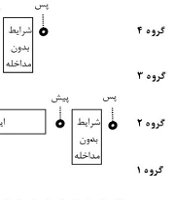
Image Credit:Koomesh
Outline
The Impact of Social Isolation and Counterconditioning on Morphine-Seeking Behavior in Male Mice
Authors
 1, Masoud Fereidoni2, Ali Mashhadi3, Zahra Mirchi3, Masoud Afshari1, Shahriar Gharibzadeh1, Imanollah Bigdeli3,*
Abstract
Background: Animal studies have indicated that enriched social conditions are associated with less vulnerability to addiction. In addition, it has been suggested that counter-conditioning through unpleasant stimuli may lead to a reduction in drug-seeking behavior.
Objectives: In the present study, the effects of social isolation and unpleasant stimuli were investigated in reducing morphine-seeking behavior in male mice.
Methods: The conditioned place preference (CPP) model was used to study morphine-seeking behavior and aversive learning through foot shock. Initially, two groups of mice were isolated for a specific period, while the mice of two other groups remained in their previous condition. Then, all groups were evaluated in terms of morphine-seeking behavior, before and after three consecutive days of subcutaneous morphine injection.
Results: Comparing the groups showed that there is a significant difference in morphine-seeking behavior between the isolated and non-isolated groups without foot shock (P < 0.001), while no significant difference was observed between the isolated and non-isolated groups with foot shock (P = 0.84). Also, within each of the two conditions of isolation and non-isolation, there were significant differences between the groups with and without receiving foot shock (P < 0.001).
Conclusion: Although a poor social life may increase the likelihood of vulnerability to addiction, it was found that an unpleasant stimulus can powerfully reduce the craving for morphine consumption in both isolated and non-isolated mice. These findings can emphasize the role of social life and counter-conditioning in combating addiction and its treatment.
Highlights
References
- 1.Famitafreshi H, Karimian M, Afshari M. Increase in Citrate and KCl Consumption during Morphine Withdrawal Period is Associated with Reduced Levels of Zinc and Brain-derived Neurotrophic Factor, and Poor Neurogenesis in Male Isolated Rats. Annu Res Rev Biol. 2016;11(1):1-14. https://doi.org/10.9734/arrb/2016/28084.
- 2.Leshner AI. Addiction Is a Brain Disease, and It Matters. Focus. 2003;1(2):190-3. https://doi.org/10.1176/foc.1.2.190.
- 3.Herman MA, Roberto M. The addicted brain: understanding the neurophysiological mechanisms of addictive disorders. Front Integr Neurosci. 2015;9:18. [PubMed ID:25852502]. [PubMed Central ID:4365688]. https://doi.org/10.3389/fnint.2015.00018.
- 4.Everitt BJ. Neural and psychological mechanisms underlying compulsive drug seeking habits and drug memories--indications for novel treatments of addiction. Eur J Neurosci. 2014;40(1):2163-82. [PubMed ID:24935353]. [PubMed Central ID:4145664]. https://doi.org/10.1111/ejn.12644.
- 5.Melenka RC, Sydor A, Brown R. Reinforcement and Addictive Disorders. In: Nestler EJ, Hyman SE, Malenka RC, editors. Molecular neuropharmacology: a foundation for clinical neuroscience. 2nd ed. New York: McGraw-Hill 2009. p. 364-75.
- 6.Afshari M, Parviz M, Keshavarz M, Ghaseminejad M. The effect of acute and chronic administration of naloxone on spatial memory in male cholestatic rats. J Basic Clin Pathophysiol. 2018;6(1):1-8. https://doi.org/10.22070/jbcp.2018.2786.1086.
- 7.Bordnick PS, Elkins RL, Orr TE, Walters P, Thyer BA. Evaluating the relative effectiveness of three aversion therapies designed to reduce craving among cocaine abusers. Behav Interv. 2004;19(1):1-24. https://doi.org/10.1002/bin.146.
- 8.Tunstall BJ, Verendeev A, Kearns DN. A comparison of therapies for the treatment of drug cues: counterconditioning vs. extinction in male rats. Exp Clin Psychopharmacol. 2012;20(6):447-53. [PubMed ID:23230857]. [PubMed Central ID:3716831]. https://doi.org/10.1037/a0030593.
- 9.Rukstalis MR, Weinrieb R. Principles of Addiction Medicine. Ann Intern Med. 1999;131(8):635. https://doi.org/10.7326/0003-4819-131-8-199910190-00034.
- 10.Inagaki TK, Ray LA, Irwin MR, Way BM, Eisenberger NI. Opioids and social bonding: naltrexone reduces feelings of social connection. Soc Cogn Affect Neurosci. 2016;11(5):728-35. [PubMed ID:26796966]. [PubMed Central ID:4847702]. https://doi.org/10.1093/scan/nsw006.
- 11.Pazoki Z, Kheirkhah MT, Gharibzadeh S. Cognitive training interventions for substance use disorders: what they really offer? Front Public Health. 2024;12:1388935. [PubMed ID:38694981]. [PubMed Central ID:11061450]. https://doi.org/10.3389/fpubh.2024.1388935.
- 12.Kazemitabar M, Kheirkhah MT, Mokarrami M, Garcia D. Does auditory attentional bias determine craving for methamphetamine? A pilot study using a word recognition dichotic listening task. Heliyon. 2022;8(11):e11311. [PubMed ID:36387442]. [PubMed Central ID:9640968]. https://doi.org/10.1016/j.heliyon.2022.e11311.
- 13.Broadbent DE. Perception and Communication. Oxford: Pergamon Press; 2013.
- 14.Liu Y, Young KA, Curtis JT, Aragona BJ, Wang Z. Social bonding decreases the rewarding properties of amphetamine through a dopamine D1 receptor-mediated mechanism. J Neurosci. 2011;31(22):7960-6. [PubMed ID:21632917]. [PubMed Central ID:3114880]. https://doi.org/10.1523/JNEUROSCI.1006-11.2011.
- 15.Lesscher HM, Spoelder M, Rotte MD, Janssen MJ, Hesseling P, Lozeman-van't Klooster JG, et al. Early social isolation augments alcohol consumption in rats. Behav Pharmacol. 2015;26(7 Spec No):673-80. [PubMed ID:26325660]. https://doi.org/10.1097/FBP.0000000000000165.
- 16.Tanimura M, Okuma K, Kyoshima K. Television viewing, reduced parental utterance, and delayed speech development in infants and young children. Arch Pediatr Adolesc Med. 2007;161(6):618-9. [PubMed ID:17548773]. https://doi.org/10.1001/archpedi.161.6.618-b.
- 17.Famitafreshi H, Karimian M, Afshari M. Susceptibility of Drug-seeking and Taking Behaviors Increases through Dysregulation of Copper and Zinc and Impaired Prefrontal Function in Addiction Period in Male Rats. Int J Biochem Res Rev. 2016;13(3):1-8. https://doi.org/10.9734/ijbcrr/2016/28542.
- 18.American Psychiatric Association. Diagnostic and Statistical Manual of Mental Disorders (DSM-5®). Washington, DC: American Psychiatric Association Publishing; 2013.
- 19.First MB, Reed GM, Hyman SE, Saxena S. The development of the ICD-11 Clinical Descriptions and Diagnostic Guidelines for Mental and Behavioural Disorders. World Psychiatry. 2015;14(1):82-90. [PubMed ID:25655162]. [PubMed Central ID:4329901]. https://doi.org/10.1002/wps.20189.
- 20.Markou A, Weiss F, Gold LH, Caine SB, Schulteis G, Koob GF. Animal models of drug craving. Psychopharmacology (Berl). 1993;112(2-3):163-82. [PubMed ID:7871016]. https://doi.org/10.1007/BF02244907.
- 21.Everitt BJ, Wolf ME. Psychomotor stimulant addiction: a neural systems perspective. J Neurosci. 2002;22(9):3312-20. [PubMed ID:11978805]. [PubMed Central ID:6758398]. https://doi.org/10.1523/JNEUROSCI.22-09-03312.2002.
- 22.Siegel S, Baptista MA, Kim JA, McDonald RV, Weise-Kelly L. Pavlovian psychopharmacology: the associative basis of tolerance. Exp Clin Psychopharmacol. 2000;8(3):276-93. [PubMed ID:10975617]. https://doi.org/10.1037//1064-1297.8.3.276.
- 23.Hyman SE, Malenka RC, Nestler EJ. Neural mechanisms of addiction: the role of reward-related learning and memory. Annu Rev Neurosci. 2006;29:565-98. [PubMed ID:16776597]. https://doi.org/10.1146/annurev.neuro.29.051605.113009.
- 24.Malenka RC, Bear MF. LTP and LTD: an embarrassment of riches. Neuron. 2004;44(1):5-21. [PubMed ID:15450156]. https://doi.org/10.1016/j.neuron.2004.09.012.
- 25.Ungless MA, Argilli E, Bonci A. Effects of stress and aversion on dopamine neurons: implications for addiction. Neurosci Biobehav Rev. 2010;35(2):151-6. [PubMed ID:20438754]. https://doi.org/10.1016/j.neubiorev.2010.04.006.
- 26.Van Gucht D, Baeyens F, Vansteenwegen D, Hermans D, Beckers T. Counterconditioning reduces cue-induced craving and actual cue-elicited consumption. Emotion. 2010;10(5):688-95. [PubMed ID:21038951]. https://doi.org/10.1037/a0019463.
- 27.Campos AC, Fogaca MV, Aguiar DC, Guimaraes FS. Animal models of anxiety disorders and stress. Braz J Psychiatry. 2013;35 Suppl 2:S101-11. [PubMed ID:24271222]. https://doi.org/10.1590/1516-4446-2013-1139.
- 28.Thanos PK, Bermeo C, Wang GJ, Volkow ND. D-cycloserine accelerates the extinction of cocaine-induced conditioned place preference in C57bL/c mice. Behav Brain Res. 2009;199(2):345-9. [PubMed ID:19152811]. [PubMed Central ID:2653598]. https://doi.org/10.1016/j.bbr.2008.12.025.
- 29.Arifin WN, Zahiruddin WM. Sample Size Calculation in Animal Studies Using Resource Equation Approach. Malays J Med Sci. 2017;24(5):101-5. [PubMed ID:29386977]. [PubMed Central ID:5772820]. https://doi.org/10.21315/mjms2017.24.5.11.
- 30.National Research Council US Committee for the Update of the Guide for the Care and Use of Laboratory Animals. Guide for the Care and Use of Laboratory Animals. Washington, DC: National Academies Press; 2011.
- 31.Sahraei H, Fatemi SM, Faghih-Monzavi Z, Shams J, Pashaei-Rad S, Ghoshooni H. [Effects of Papaver rhoeas L. Extract on the Expression and Development of Morphine-Induced Conditioned Place Preference in Mice]. J Med Plants. 2006;5(19):51-8. Persian.
- 32.Winkler M. Effects of Social Housing on Conditioned Place Aversion [master's thesis]. Youngstown, OH: Youngstown State University; 2016.
- 33.Wongwitdecha N, Marsden CA. Effect of social isolation on the reinforcing properties of morphine in the conditioned place preference test. Pharmacol Biochem Behav. 1996;53(3):531-4. [PubMed ID:8866951]. https://doi.org/10.1016/0091-3057(95)02046-2.
- 34.Trezza V, Campolongo P, Vanderschuren LJ. Evaluating the rewarding nature of social interactions in laboratory animals. Dev Cogn Neurosci. 2011;1(4):444-58. [PubMed ID:22436566]. [PubMed Central ID:6987553]. https://doi.org/10.1016/j.dcn.2011.05.007.
- 35.Shanks N, Greek R, Greek J. Are animal models predictive for humans? Philos Ethics Humanit Med. 2009;4:2. [PubMed ID:19146696]. [PubMed Central ID:2642860]. https://doi.org/10.1186/1747-5341-4-2.
Copyright
© 2024, Author(s). This open-access article is available under the Creative Commons Attribution 4.0 (CC BY 4.0) International License (https://creativecommons.org/licenses/by/4.0/), which allows for unrestricted use, distribution, and reproduction in any medium, provided that the original work is properly cited.
Similar Articles
Place Aversion by Morphine in Offspring Born of Female Morphine Administered Wistar Rats
Karami M, Zarrindast MR. Place Aversion by Morphine in Offspring Born of Female Morphine Administered Wistar Rats. Iran J Pharm Res. 2011;10(3):e125959. doi: https://doi.org/10.22037/ijpr.2011.1000
The Effect of Compulsory and Voluntary Exercise on Morphine-Induced Conditioned Place Preference in Rats
Ranjbar K, Naghshvarian Jahromi M, Fatemeh Sajjadi S. The Effect of Compulsory and Voluntary Exercise on Morphine-Induced Conditioned Place Preference in Rats. Arch Neurosci. 2017;4(1):e41488. doi: https://doi.org/10.5812/archneurosci.41488
Effect of Memory Attenuation on Creating Morphine Dependency in Male Mature Mice
Hosseini SE. Effect of Memory Attenuation on Creating Morphine Dependency in Male Mature Mice. Zahedan J Res Med Sci. 2013;15(10):e92833. doi:
Biphasic Effects of Naloxone in the Rats Receiving Morphine Overdose A Place Preference Study
Karimi S, Karami M, Zardooz H, Salimi SH, Sahraei H. Biphasic Effects of Naloxone in the Rats Receiving Morphine Overdose A Place Preference Study. Iran J Pharm Res. 2011;10(3):e125949. doi: https://doi.org/10.22037/ijpr.2011.998
Morphine-Induced Place Preference: Interactions with Neurotransmitter Systems
Zarrindast MR, Rezayof A. Morphine-Induced Place Preference: Interactions with Neurotransmitter Systems. Iran J Pharm Res. 2022;6(1):e128304. doi: https://doi.org/10.22037/ijpr.2010.693
- Scopus by DOI: 0
Last Update: 2 weeks ago
- Scopus by Title: 0
Last Update: 2 weeks ago
- Scopus by Title (Ref): 0
Last Update: 2 weeks ago
- CrossRef: 0
Last Update: 6 days ago
- OpenAlex: 0
Last Update: 1 day ago
- OpenCitations: 0
Last Update: 4 days ago

