Journal of Semnan University of Medical Sciences
Detection and cloning of desulfurization operon sox(dszAB) in rhodococcus FMF native bacterium
Authors
Abstract
Introduction: Native Rhodococcus FMF bacterium was selected among several isolated Iranian bacterium. Primary studies have shown that the bacterium use dibenzothiophene as a sulfur source. Since desulfurization is taken by a biochemical pathway, the present project was designed to detect, clone and sequence of desulfurization genes of the bacterium. Materials and Methods: Desulfurization operon was isolated from Rhodococcus erythropolis IGTS8 and was used as a probe for detection of desulfurization 4S pathway genes by southern blotting technique. Specific primers were designed and the dszA and B genes were amplified by polymerase chain reaction (PCR). PCR products were recovered from agarose gel and were cloned into the PTZ57R vector. Results: In this study, recombinant PTZAB57R vector was constructed by the insertion of dszA and B genes into the PTZ57R vector. The clones were confirmed by restriction digestion analysis. The PTZAB57R was extracted by large-scale method and was sequenced (MWG DNA Biotech). Conclusion: Comparison of sequences of dszA and B genes from native Rhodococcus FMF bacterium with Rhodococcus sp. IGTS8 bacterium were shown complete identity between them, which show that desulfurization pathway is conserved in this bacterium.
Highlights
Copyright
© 2004, Author(s). This open-access article is available under the Creative Commons Attribution 4.0 (CC BY 4.0) International License (https://creativecommons.org/licenses/by/4.0/), which allows for unrestricted use, distribution, and reproduction in any medium, provided that the original work is properly cited.
Similar Articles
Cloning and expression of SOX (dsz A, B, C) operon in E.coli strain DH5α and comparison its desulfurization activity with Pesudomonas aeroginosa EGSOX, Pesudomonas putida EGSOX and E.coli cc118λpir
Raheb J, Barzegar F, Mosavi M. Cloning and expression of SOX (dsz A, B, C) operon in E.coli strain DH5α and comparison its desulfurization activity with Pesudomonas aeroginosa EGSOX, Pesudomonas putida EGSOX and E.coli cc118λpir. koomesh. 2007;8(2):e152125. doi:
Identification and cloning of oxidoreductase gene from Rhodococcus erythropolis in E.Coli
Raheb J, AghaeiMoghadam E, Naghdi S, GhorbanAli M, BakhshKhaniki G. Identification and cloning of oxidoreductase gene from Rhodococcus erythropolis in E.Coli. koomesh. 2005;6(4):e152074. doi:
Enhansment of Biodesulfurization activity via the over expression of the oxidoreductase gene from R.erytheropolis IGTS8using pet 21a vector
Raheb J, AghaeiMoghadam E, Behzadi H. Enhansment of Biodesulfurization activity via the over expression of the oxidoreductase gene from R.erytheropolis IGTS8using pet 21a vector. koomesh. 2024;9(2):e152178. doi:
The Capability of Rhodotorula slooffiae to Produce Carotenoid
Naghavi FS, Hanachi P, Soudi MR, Saboora A. The Capability of Rhodotorula slooffiae to Produce Carotenoid. Zahedan J Res Med Sci. 2015;17(2):e1986. doi:
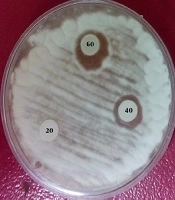
Evaluation of Laboratory-Produced Biosurfactant by Rhodotorula Species and Its Antifungal Activity
Gharaghani M, Zarei Mahmoudabadi A, Halvaeezadeh M. Evaluation of Laboratory-Produced Biosurfactant by Rhodotorula Species and Its Antifungal Activity. Jundishapur J Nat Pharm Prod. 2019;15(1):e11846. doi: https://doi.org/10.5812/jjnpp.11846
- Scopus by DOI: 0
Last Update: 3 weeks ago
- Scopus by Title: 0
Last Update: 3 weeks ago
- Scopus by Title (Ref): 0
Last Update: 3 weeks ago
- CrossRef: 0
Last Update: 6 hours ago
- OpenAlex: 0
Last Update: 8 hours ago
- OpenCitations: 0
Last Update: 4 days ago