Journal of Semnan University of Medical Sciences
Image Credit:Koomesh
Outline
Dosimetry evaluation of salivary glands in 3D conformal radiotherapy and intensity modulated radiotherapy in oral tongue cancer
Authors
Abstract
Introduction: The purpose of this study was to evaluate the dosimetric and radiobiological parameters of salivary glands in treatment of patients with oral tongue cancer by 3D conventional radiotherapy (3D-CRT) and intensity modulated radiation therapy (IMRT) techniques. Materials and Methods: This study was performed on treatment planning of patients with oral tongue cancer in T2-3/N0 cancer staging. In this way, the treatment planning was performed on CT images for 3D-CRT and IMRT techniques (with 5, 7 and 9 fields) for all patients. Then, the homogeneity (HI) and conformity index (CI) of dose in the target volume and maximum, mean does of the salivary glands and normal tissue complication probability of parotid glands were computed and compared between different treatment. Results: Results of this study indicated an increase in HI and CI in IMRT compared to 3D-CRT (up to 61.54% and 28.78%). Moreover, the increase in the number of beams in the IMRT technique can lead to decrease in the mean dose of sublingual glands (up to 9.52%) and decrease in the maximum dose of the submandibular glands (up to 6.93%), while, the use of IMRT with 5 and 7 beams can lead to a significant increase in the probability of xerostomia in parotid gland (up to 8.61%) compare with 3D-CRT technique. Conclusion: It can be concluded that IMRT technique with 9 fields led to improve the salivary glands protection, more homogeneity and conformity in the target volume and reducing the received dose of submandibular and sublingual glands compare to the 3D-CRT in patient with oral tongue cancer.
Highlights
References
- 1.Jemal A, Bray F, Center MM, Ferlay J, Ward E FD. Global cancer statistics. Cancer J Clin 2011; 61: 69-90.
- 2.Miller KD, Siegel RL, Lin CC, Mariotto AB, Kramer JL, Rowland JH, et al. Cancer treatment and survivorship statistics, 2016. CA Cancer J Clin 2016; 66: 271-289.
- 3.Siegel RL, Miller KD, Jemal A. Cancer statistics, 2019. CA Cancer J Clin 2019; 69: 7-34.
- 4.Collan J, Lundberg M, Vaalavirta L, Bck L, Kajanti M, Mkitie A, et al. Patterns of relapse following surgery and postoperative intensity modulated radiotherapy for oral and oropharyngeal cancer. Acta Oncol (Madr) 2011; 50: 1119-1125.
- 5.De Felice F, Musio D, Terenzi V, Valentini V, Cassoni A, Tombolini M, et al. Treatment improvement and better patient care: which is the most important one in oral cavity cancer? Radiat Oncol 2014; 9: 263.
- 6.Chen CC, Lin JC, Chen KW. Lymph node ratio as a prognostic factor in head and neck cancer patients. Radiat Oncol 2015; 10: 181.
- 7.Huang TY, Hsu LP, Wen YH, Huang TT, Chou YF, Lee CF, et al. Predictors of locoregional recurrence in early stage oral cavity cancer with free surgical margins. Oral Oncol 2010; 46: 49-55.
- 8.Chen WC, Hwang TZ, Wang WH, Lu CH, Chen CC, Chen CM, et al. Comparison between conventional and intensity-modulated post-operative radiotherapy for stage III and IV oral cavity cancer in terms of treatment results and toxicity. Oral Oncol 2009; 45: 505-510.
- 9.Khan FM, Gibbons JP. Khan's the physics of radiation therapy. Lippincott Williams Wilkins 2014.
- 10.Daly ME, Le QT, Kozak MM, Maxim PG, Murphy JD, Hsu A, et al. Intensity-modulated radiotherapy for oral cavity squamous cell carcinoma: patterns of failure and predictors of local control. Int J Radiat Oncol Biol Phys 2011; 80: 1412-1422.
- 11.Chen PY, Chen HH, Hsiao JR, Yang MW, Hsueh WT, Tasi ST, et al. Intensity-modulated radiotherapy improves outcomes in postoperative patients with squamous cell carcinoma of the oral cavity. Oral Oncol 2012; 48: 747-752.
- 12.Vallard A, Guy J, Mengue Ndong S, Vial N, Rivoirard R, Auberdiac P, et al. Intensitymodulated radiotherapy or volumetricmodulated arc therapy in patients with head and neck cancer: Focus on salivary glands dosimetry. Head Neck 2016; 38: 1028-1034.
- 13.Nutting CM, Morden JP, Harrington KJ, Urbano TG, Bhide SA, Clark C, et al. Parotid-sparing intensity modulated versus conventional radiotherapy in head and neck cancer (PARSPORT): a phase 3 multicentre randomised controlled trial. Lancet Oncol 2011; 12: 127-136.
- 14.Saarilahti K, Kouri M, Collan J, Kangasmki A, Atula T, Joensuu H, et al. Sparing of the submandibular glands by intensity modulated radiotherapy in the treatment of head and neck cancer. Radiother Oncol 2006; 78: 270-275.
- 15.Cozzi L, Fogliata A, Bolsi A, Nicolini G, Bernier J. Three-dimensional conformal vs. intensity-modulated radiotherapy in head-and-neck cancer patients: comparative analysis of dosimetric and technical parameters. Int J Radiat Oncol Biol Phys 2004; 58: 617-624.
- 16.Ahmed M, Hansen VN, Harrington KJ, Nutting CM. Reducing the risk of xerostomia and mandibular osteoradionecrosis: the potential benefits of intensity modulated radiotherapy in advanced oral cavity carcinoma. Med Dosim 2009; 34: 217-224.
- 17.Halperin EC, Brady LW, Wazer DE, Perez CA. Perez Brady's principles and practice of radiation oncology. Lippincott Williams Wilkins 2013.
- 18.Lambrecht M, Nevens D, Nuyts S. Intensity-modulated radiotherapy vs. parotid-sparing 3D conformal radiotherapy. Strahlentherapie und Onkol 2013; 189: 223-229.
- 19.Marks LB, Ten Haken RK, Martel MK. Guest editor's introduction to QUANTEC: a users guide. Int J Radiat Oncol Biol Phys 2010; 76: S1-2.
- 20.Eisbruch A, Chao KC, Garden A. Phase I/II study of conformal and intensity modulated irradiation for oropharyngeal cancer (RTOG 0022). Radiat Ther Oncol Gr Am Coll Radiol 2004.
- 21.Chen BB, Huang SM, Xiao WW, Sun WZ, Liu MZ, Lu TX, et al. Prospective matched study on comparison of volumetric-modulated arc therapy and intensity-modulated radiotherapy for nasopharyngeal carcinoma: dosimetry, delivery efficiency and outcomes. J Cancer 2018; 9: 978-986.
- 22.Fujiwara M, Kamikonya N, Odawara S, Suzuki H, Niwa Y, Takada Y, et al. The threshold of hypothyroidism after radiation therapy for head and neck cancer: a retrospective analysis of 116 cases. J Radiat Res 2015; 56: 577-582.
- 23.Zhai R, Kong F, Du C, Hu C, Ying H. Radiation-induced hypothyroidism after IMRT for nasopharyngeal carcinoma: clinical and dosimetric predictors in a prospective cohort study. Oral Oncol 2017; 68: 44-49.
- 24.Measurements IC on RU and. ICRU Report 83 Prescribing, Recording, and Reporting Photon-beam Intensity-modulated Radiation Therapy (IMRT)-Journal of the ICRU-Vol 10 No 1 2010. 2010.
- 25.Lee TF, Ting HM, Chao PJ, Fang FM. Dual arc volumetric-modulated arc radiotherapy (VMAT) of nasopharyngeal carcinomas: a simultaneous integrated boost treatment plan comparison with intensity-modulated radiotherapies and single arc VMAT. Clin Oncol 2012; 24: 196-207.
- 26.Gay HA, Niemierko A. A free program for calculating EUD-based NTCP and TCP in external beam radiotherapy. Phys Medica 2007; 23: 115-125.
- 27.Emami B. Tolerance of normal tissue to therapeutic radiation. Reports Radiother Oncol 2013; 1.
- 28.Deasy JO, Moiseenko V, Marks L, Chao KSC, Nam J, Eisbruch A. Radiotherapy dose-volume effects on salivary gland function. Int J Radiat Oncol Biol Phys 2010; 76: S58-63.
- 29.Radiation Therapy Oncology Group. RTOG 1016 phase III trial of radiotherapy plus cetuximab versus chemoradiotherapy in HPV-associated oropharynx cancer. 2014.
- 30.McQuaid D, Dunlop A, Nill S, Franzese C, Nutting CM, Harrington KJ, et al. Evaluation of radiotherapy techniques for radical treatment of lateralised oropharyngeal cancers. Strahlentherapie und Onkol 2016; 192: 516-525##.
Copyright
© 2020, Author(s). This open-access article is available under the Creative Commons Attribution 4.0 (CC BY 4.0) International License (https://creativecommons.org/licenses/by/4.0/), which allows for unrestricted use, distribution, and reproduction in any medium, provided that the original work is properly cited.
Similar Articles
A Report of Delayed Toxicities of Intensity Modulated Radiation Therapy for Nasopharyngeal Carcinoma: A Single Center Cross-sectional Study
Rakhsha A, Azghandi S, Ameri A, Yousefi Kashi AS, Karimi S, et al. A Report of Delayed Toxicities of Intensity Modulated Radiation Therapy for Nasopharyngeal Carcinoma: A Single Center Cross-sectional Study. Int J Cancer Manag. 2019;12(5):e91606. doi: https://doi.org/10.5812/ijcm.91606
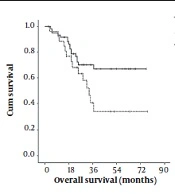
Evaluation of Three-Year Overall and Disease-Free Survival in Iranian Patients with Nasopharyngeal Carcinoma Treated by Intensity-Modulated Radiotherapy (IMRT): A Historical Cohort Single Center Study
Kalantari Khandani M, Azghandi S, Siavashpour Z, Rakhsha A, Yousefi Kashi AS, et al. Evaluation of Three-Year Overall and Disease-Free Survival in Iranian Patients with Nasopharyngeal Carcinoma Treated by Intensity-Modulated Radiotherapy (IMRT): A Historical Cohort Single Center Study. Int J Cancer Manag. 2023;16(1):e136257. doi: https://doi.org/10.5812/ijcm-136257
Efficacy and Side Effects of Combined Capecitabine Plus Intensity Modulated Radiotherapy as an Effective Adjuvant Therapy for Gastric Cancers
Fu J, Wang C, Wang C, Li H, Yang X, et al. Efficacy and Side Effects of Combined Capecitabine Plus Intensity Modulated Radiotherapy as an Effective Adjuvant Therapy for Gastric Cancers. Iran J Pharm Res. 2020;19(4):e124384. doi: https://doi.org/10.22037/ijpr.2019.14622.12542
Mid-term Outcomes of Prostate Cancer Patients Treated with 3D Conformal Radiotherapy: Experience from a Single Cancer Institution in Iran
Bayani R, Mousavi Darzikolaee N, Biniaz M, Sedighi Pashaki A, Soltani S, et al. Mid-term Outcomes of Prostate Cancer Patients Treated with 3D Conformal Radiotherapy: Experience from a Single Cancer Institution in Iran. Int J Cancer Manag. 2026;19(1):e164870. doi: https://doi.org/10.5812/ijcm-164870
The Effect of Care Training Intervention on Oral Health and Radiation-Induced Xerostomia in Patients with Head and Neck Cancer: A Quasi-Experimental Study
Sarabandi A, Sanchooli A. The Effect of Care Training Intervention on Oral Health and Radiation-Induced Xerostomia in Patients with Head and Neck Cancer: A Quasi-Experimental Study. Med Surg Nurs J. 2024;13(2):e163556. doi: https://doi.org/10.5812/msnj-163556
- Scopus by DOI: 0
Last Update: 1 month ago
- Scopus by Title: 0
Last Update: 1 month ago
- Scopus by Title (Ref): 0
Last Update: 1 month ago
- CrossRef: 0
Last Update: 10 hours ago
- OpenAlex: 0
Last Update: 11 hours ago
- OpenCitations: 0
Last Update: 4 days ago
