Journal of Semnan University of Medical Sciences
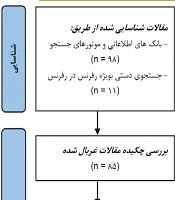
Image Credit:Koomesh
Outline
The Shortcomings of H-Index and Its Alternatives in Scientometrics: A Review Study
Authors

Abstract
Background: Today, the results of assessment the performance of researchers in the form of scientometrics are used in many cases, such as recruiting and promoting them, as well as awarding research grants.
Objectives: Given the increasing use of scientometric indicators, this study aimed to examine the shortcomings of the H-index as the most common scientometric tool and its developed alternatives.
Methods: This review study was conducted in 1402 and by assessing the international databases/search engines of Web of Science, PubMed, Scopus and Google Scholar as well as domestic ones including SID, Magiran, IranDoc and Elmnet. The including criteria were referring to shortcomings of H-Index and its alternatives based on a specific scientific criterion, as well as the articles being in English and Persian. The final included articles were determined based on the PRISMA guidelines and by appraising their content and quality. In the first review of the articles included in the study, all the H-Index shortcomings were identified; and in the second review, the main and common use H-Index alternatives were identified and subsequently their ability to address the shortcomings identified for H-Index was explored.
Results: The main shortcomings of the H-Index include the limited components used in the evaluation, the lack of a logical and statistical basis for the calculation, low validity in evaluating research performance, disregard for the performance stagnation of researchers, disregard for articles with high citations, disregard for the number of researchers' research years, disregard for the age of the article in the effectiveness of citations, disregard for the author's position in the article, disregard for the number of authors of the article, disregard for self-citations and unnecessary citations, inability to distinguish between levels of research performance, exclusion of articles with fewer citations than the H-Index, failure to weight all researcher's citations, disregard for the complexity and type of articles, failure to consider differences between different sciences, and failure to distinguish between articles by researchers with the same name. Studies have shown that each of the alternatives introduced for the H-Index has only been able to cover one or two of its shortcomings, and the other shortcomings remain intact. However, the G-Index, Hg-Index, A-Index, and M-Index indices, by focusing on the research life of the authors, the number of authors of the article, and considering a logical and statistical basis in their calculations, have been able to overcome some of the most important shortcomings of the H-Index and have been used in scientometric systems.
Conclusions: The H-Index and its alternatives face several shortcomings that cast doubt on their effectiveness as an efficient scientometric index. Therefore, developing a comprehensive scientometric index or using several appropriate indicators simultaneously can provide a suitable and objective view of researchers' performance.
Highlights
References
- 1.Alonso S, Cabrerizo FJ, Herrera-Viedma E, Herrera F. h-Index: A review focused in its variants, computation and standardization for different scientific fields. Journal of Informetrics. 2009;3(4):273-89. https://doi.org/10.1016/j.joi.2009.04.001.
- 2.Bihari A, Tripathi S, Deepak A. A review on h-index and its alternative indices. J Inform Sci. 2021;49(3):624-65. https://doi.org/10.1177/01655515211014478.
- 3.Memisevic H, Taljic I, Hadziomerovic AM. Making Use of H-index: the Shape of Science at the University of Sarajevo. Acta Inform Med. 2017;25(3):1187-90. [PubMed ID:29114112 ]. [PubMed Central ID:PMC5639886]. https://doi.org/10.5455/aim.2017.25.187-190.
- 4.Meho LI. The rise and rise of citation analysis. Physics World. 2007;20(1):32.
- 5.Fowler JH, Aksnes DW. Does self-citation pay? Scientometrics. 2007;72(3):427-37. https://doi.org/10.1007/s11192-007-1777-2.
- 6.Van Leeuwen TN, Visser MS, Moed HF, Nederhof TJ, Van Raan AFJ. The Holy Grail of science policy: Exploring and combining bibliometric tools in search of scientific excellence. Scientometrics. 2003;57(2):257-80. https://doi.org/10.1023/a:1024141819302.
- 7.Lane J. Let's make science metrics more scientific. Nature. 2010;464(7288):488-9. [PubMed ID:20336116]. https://doi.org/10.1038/464488a.
- 8.Costas R, Bordons M. The h-index: Advantages, limitations and its relation with other bibliometric indicators at the micro level. J Inform. 2007;1(3):193-203. https://doi.org/10.1016/j.joi.2007.02.001.
- 9.Sabouri Ghannad M, Valinejadi A, Ghonsooly B, Mohammadhassanzadeh H. Evaluation of Iranian Scientists Productions in Biotechnology and Applied Microbiology based on ISI through 2000 to 2008. Int J Inform Sci Manag (IJISM). 2012;10(2):43-55.
- 10.Hirsch JE. An index to quantify an individual's scientific research output. Proc Natl Acad Sci U S A. 2005;102(46):16569-72. [PubMed ID:16275915]. [PubMed Central ID:PMC1283832]. https://doi.org/10.1073/pnas.0507655102.
- 11.Dunnick NR. The H Index in Perspective. Acad Radiol. 2017;24(2):117-8. [PubMed ID:28089073]. https://doi.org/10.1016/j.acra.2016.11.016.
- 12.Costas R, Franssen T. Reflections around 'the cautionary use' of the h-index: response to Teixeira da Silva and Dobranszki. Scientometrics. 2018;115(2):1125-30. [PubMed ID:29628537]. [PubMed Central ID:PMC5880859]. https://doi.org/10.1007/s11192-018-2683-0.
- 13.Romanovsky AA. Revised h index for biomedical research. Cell Cycle. 2012;11(22):4118-21. [PubMed ID:22983124]. [PubMed Central ID:PMC3524206]. https://doi.org/10.4161/cc.22179.
- 14.Ball P. Index aims for fair ranking of scientists. Nature. 2005;436(7053):900. [PubMed ID:16107806]. https://doi.org/10.1038/436900a.
- 15.Huang M-h, Chi P-s. A comparative analysis of the application of h-index, g-index, and a-index in institutional-level research evaluation. J Library Inform Stud. 2010;8(2):1-10.
- 16.Rousseau R. The influence of missing publications on the Hirsch index. J Inform. 2007;1(1):2-7. https://doi.org/10.1016/j.joi.2006.05.001.
- 17.Franceschini F, Maisano DA. Analysis of the Hirsch index’s operational properties. Europ J Operat Res. 2010;203(2):494-504. https://doi.org/10.1016/j.ejor.2009.08.001.
- 18.Guns R, Rousseau R. Simulating growth of the h‐index. J Am Soc Inform Sci Technol. 2008;60(2):410-7. https://doi.org/10.1002/asi.20973.
- 19.Bornmann L, Mutz R, Daniel HD. Are there better indices for evaluation purposes than the h index? A comparison of nine different variants of the h index using data from biomedicine. J Am Soc Inform Sci Technol. 2008;59(5):830-7. https://doi.org/10.1002/asi.20806.
- 20.Waltman L, van Eck NJ. The inconsistency of the h‐index. J Am Soc Inform Sci Technol. 2011;63(2):406-15. https://doi.org/10.1002/asi.21678.
- 21.Kreiner G. The Slavery of the h-index-Measuring the Unmeasurable. Front Hum Neurosci. 2016;10:556. [PubMed ID:27853429]. [PubMed Central ID:PMC5089989]. https://doi.org/10.3389/fnhum.2016.00556.
- 22.Hu J, Gholami A, Stone N, Bartoszko J, Thoma A. An Evaluation of h-Index as a Measure of Research Productivity Among Canadian Academic Plastic Surgeons. Plast Surg (Oakv). 2018;26(1):5-10. [PubMed ID:29619353]. [PubMed Central ID:PMC5871118]. https://doi.org/10.1177/2292550317749508.
- 23.Costas R, Bordons M. Is g-index better than h-index? An exploratory study at the individual level. Scientometrics. 2008;77(2):267-88. https://doi.org/10.1007/s11192-007-1997-0.
- 24.Zhivotovsky LA, Krutovsky KV. Self-citation can inflate h-index. Scientometrics. 2008;77(2):373-5. https://doi.org/10.1007/s11192-006-1716-2.
- 25.Glänzel W, Persson O. H-index for Price medalists. ISSI newsletter. 2005;1(4):15-8.
- 26.Weingart P. Impact of bibliometrics upon the science system: Inadvertent consequences? Scientometrics. 2005;62(1):117-31. https://doi.org/10.1007/s11192-005-0007-7.
- 27.Tunç M. Adaptation of Hirsh Index (H-Index) Indicator in Sociometric Analyses. İstanbul Üniversitesi Sosyoloji Dergisi. 2014;3(29):425-40.
- 28.Vinkler P. Eminence of scientists in the light of the h-index and other scientometric indicators. J Inform Sci. 2007;33(4):481-91. https://doi.org/10.1177/0165551506072165.
- 29.Demaine J. h-index and Related Measures - Part 2: Variants and Extension of the h-index. Vienna: European summer school for scientometrics. 2011.
- 30.Maabreh M, Alsmadi IM. A Survey of Impact and Citation Indices: Limitations and Issues. Int J Adv Sci Technol. 2012;40(2):35-54.
Copyright
© 2025, Author(s). This open-access article is available under the Creative Commons Attribution 4.0 (CC BY 4.0) International License (https://creativecommons.org/licenses/by/4.0/), which allows for unrestricted use, distribution, and reproduction in any medium, provided that the original work is properly cited.
Similar Articles
H. Index, an Ugly Truth
Sabour S. H. Index, an Ugly Truth. Shiraz E-Med J. 2019;20(5):e84554. doi: https://doi.org/10.5812/semj.84554
Scientific Productivity of Zahedan University of Medical Sciences
vatankhah F. Scientific Productivity of Zahedan University of Medical Sciences. Zahedan J Res Med Sci. 2012;14(8):e93282. doi:
Comment on: H-Index Is an Ugly Truth; But What About Other Scientometric Criteria?
Esmaily H, Niknami E, Saffaei A. Comment on: H-Index Is an Ugly Truth; But What About Other Scientometric Criteria?. Shiraz E-Med J. 2019;20(8):e95098. doi: https://doi.org/10.5812/semj.95098
HAM-Index Instead of H-Index for Authors' Impact
SeyedAlinaghi S, Parsakian S, Mehraeen E. HAM-Index Instead of H-Index for Authors' Impact. Shiraz E-Med J. 2025;26(6):e159757. doi: https://doi.org/10.5812/semj-159757
Evaluation of the Scientific Output in One of the Major Medical Universities of Iran
Sharifzadeh S, Ghasempour M, Hajebrahimi M, Rezaianzadeh A, Dehghan S. Evaluation of the Scientific Output in One of the Major Medical Universities of Iran. Shiraz E-Med J. 2014;15(3):e22360. doi: https://doi.org/10.17795/semj22360
- Scopus by DOI: 0
Last Update: 3 weeks ago
- Scopus by Title: 0
Last Update: 3 weeks ago
- Scopus by Title (Ref): 0
Last Update: 3 weeks ago
- CrossRef: 0
Last Update: 6 days ago
- OpenAlex: 0
Last Update: 11 hours ago
- OpenCitations: 0
Last Update: 4 days ago
