
1. Background
Given the rising prevalence and chronic nature of heart failure (HF), many patients experience limitations in daily activities. Participation in meaningful activities is a key rehabilitation goal that influences health, well-being, and life satisfaction (1). In Iran, studies have examined the performance of patients with HF in activities of daily living (2) and have developed a related questionnaire (3).
One of the most important interventions for these patients is occupation-based approaches, specifically Occupational Performance Coaching (OPC), which emphasizes active participation, self-management, and the establishment of healthy routines and positive behaviors. OPC, which aims to enhance individuals’ participation, has considerable potential to improve self-management and participation in chronic diseases (4) and to strengthen individuals’ ability to establish occupational routines and healthy lifestyle behaviors (5). However, the use of occupation-based approaches such as OPC in Iran is relatively new (6).
Previous studies have shown that implementing an occupation-based model in practice presents challenges and complexities for occupational therapists and clients (7), and understanding these issues can help improve treatment processes. Accordingly, increasing awareness and knowledge of patients’ experiences and attitudes toward occupation-based interventions is an important strategy for identifying challenges and opportunities for improvement. Studies have also reported that identifying the barriers and needs of patients with HF plays an important role in designing compensatory and educational programs based on limited activities and impaired parameters in daily life activities (8). An accurate understanding of patients’ experiences and attitudes toward occupation-based interventions can facilitate improvements in implementation methods and the further development of these approaches.
2. Objectives
Therefore, the present study, which focused on examining the attitudes and experiences of patients with HF after the provision of the OPC intervention (9), sought to identify and analyze perceived barriers and facilitators to using the OPC intervention. The purpose of this qualitative inquiry was to gain an in-depth understanding of the barriers and facilitators influencing the implementation and perceived effectiveness of the OPC intervention among patients with HF. The qualitative data were analyzed independently using qualitative methods and provided unique insights that could not be captured through quantitative measures alone. The results of this study may inform the development of occupation-based interventions, education in this field, clinical decision-making, and health policies.
3. Methods
3.1. Study Design and Setting
This qualitative study used inductive content analysis. After receiving the code of ethics and obtaining the necessary permits to attend Shahid Rajaee Heart Hospital, the study was initiated. Interviews were conducted in a room in the cardiac rehabilitation ward of Shahid Rajaee Heart Hospital.
3.2. Participants and Sampling
Purposive sampling was conducted among patients with a confirmed diagnosis of HF who were allocated to the intervention group of the parent clinical trial and had received the OPC intervention. Eligibility criteria for the qualitative study included completion of the intervention and secondary assessments, the ability to participate in an individual, in-person interview, and willingness to provide informed consent. Participants had an HF diagnosis (NYHA class I-III) with a left ventricular ejection fraction ≤ 40% on echocardiography for ≥ 6 months. Participants had no major depression (Beck questionnaire), adequate cognitive function (MMSE score > 22), and no history of COPD or acute neurological/psychological illnesses. Sampling continued until data saturation was achieved, and 13 participants were interviewed.
Sampling continued until data saturation (10), and 13 patients from the intervention group participated in interviews. After completion of the secondary assessments of the clinical trial, the qualitative study began. Participants signed a consent form and then participated in individual, in-person interviews in a separate session. Interviews were semi-structured and lasted 45 - 75 minutes, with an average duration of approximately 60 minutes. The interview guide included 2 main open-ended questions, and additional probing questions were used as needed to explore participants’ responses in depth and ensure rich, detailed data.
Data collection and analysis were conducted concurrently. Data saturation was considered to have been reached when successive interviews did not yield new codes or substantially new insights into existing categories. After interview number 13, no new codes emerged, and previously identified codes and themes were confirmed and enriched. To confirm that saturation had been reached, no additional interviews were conducted because no new analytical information was being generated.
3.3. Data Collection and Analysis
Semi-structured interviews included questions about participants’ experiences of participating in the intervention, factors that helped them achieve their goals, how they found solutions, and why they did not achieve their goals. The interviews were conducted by the researcher who implemented the OPC intervention and included two main questions about the factors that helped participants achieve their goals (To begin with, can you tell me about your goals in this intervention? Did you achieve your goals? Why do you think you achieved your goals? Or why do you think we did not achieve this goal? What factors prevented you from achieving your goal?). During the interview, additional questions were developed based on participants’ responses. All interviews were recorded using a mobile phone and, after completion, were listened to again to ensure familiarity with the entire interview; all texts were transcribed verbatim and read several times for familiarity (11). The first step in the inductive inference method is open coding; therefore, an open coding approach was used in this study (12). After reviewing the written texts and notes taken during the interview session, the researcher carefully read the transcripts line by line to generate codes. The interview texts were then divided into small sections that conveyed a specific meaning and concept as semantic units, and codes were assigned based on their meaning. Coding was conducted and analyzed for each new interview; a large number of codes were generated and subsequently categorized. During coding, the transcripts were re-read and, where necessary, participants were contacted to clarify the codes, classify them, and address contradictions in the interpretations provided. The initial codes were then compared in terms of similarity and difference to develop categories, and codes with similar meanings were grouped within the same category. Using an inductive content analysis approach, subcategories were formed; subcategories with similar events and incidents were defined as categories, and categories were further organized into main themes (13). The process was iterative and involved repeated comparison and refinement.
3.4. Rigor
To assess the trustworthiness of this study, the four criteria of Guba and Lincoln were used: credibility, dependability, confirmability, and transferability. To enhance trustworthiness, the researcher maintained prolonged engagement and close interaction with participants, as the researcher was in contact with participants for two months during this qualitative study while implementing the OPC intervention. Data were collected from individuals of varying ages, genders, education levels, and socioeconomic classes. After coding five interviews (participants 1 - 5), transcripts and assigned codes were returned to each participant to verify coding accuracy. The perspectives of research colleagues were also used to enhance data trustworthiness. In addition, data were collected from participants differing in age, gender, education, socio-economic class, and level of family support. Trustworthiness was further strengthened by preparing transcripts as soon as possible; after documenting all stages of the research from interview texts to data analysis, the materials were provided to a research colleague for accuracy checking. To support this process, the interview texts and transcripts, along with the codes, categories, and subcategories, were provided to two qualitative research experts who were faculty members and did not participate in the research, to ensure that the codes and categories were consistent with the data.
To ensure validity, the researcher attempted to minimize bias throughout all stages of the research. To strengthen validity, research colleagues were asked to review the findings, which helped reduce the influence of the researcher’s perspectives during data analysis. To support transferability, all stages of the work were clearly reported, along with participants’ characteristics and quotes, to allow the research process to be followed and enable others to judge the transferability of the data. The researcher sought to remain aware of his own experiences, knowledge, and assumptions through self-reflection and self-criticism, and considered these beliefs and thoughts during data collection and interpretation to avoid undue influence of personal perspectives. To strengthen validity and reliability, which is equivalent to the scientific strength of findings in qualitative research, prolonged involvement with the subject was emphasized. In this design, the researcher has studied and conducted interventions in the field of OPC for at least a year and a half and has implemented OPC in a quantitative study.
4. Results
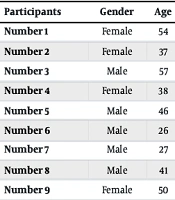
The findings from the interview analysis were classified into two main themes: barriers to access and facilitating factors influencing the use of the OPC intervention from the perspective of patients with HF. Accordingly, the findings are presented in two themes comprising 5 main categories and 14 subcategories. Within the facilitating factors theme, 3 main categories and 7 subcategories were identified. Within the barriers to OPC intervention theme, 2 main categories and 7 subcategories were determined. Tables 1 and 2 show that most participants in this section were men aged 27 to 57 years. Most had a bachelor’s degree and were married. Their occupations varied and included housewives, workers, employees, and freelancers. Table 3 also presents concepts at different levels of facilitating factors and barriers to the use of OPC from the perspective of patients with HF.
Table 1.
Background Information of Participants
| Participants | Gender | Age | Job Status | Marital Status (Number of Children) | Education Level |
|---|---|---|---|---|---|
| Number 1 | Female | 54 | Housewife | Married (2) | Bachelor |
| Number 2 | Female | 37 | Theater actor | Married (0) | Bachelor |
| Number 3 | Male | 57 | Retired | Single (1) | Bachelor |
| Number 4 | Female | 38 | Housewife | Married (2) | Diploma |
| Number 5 | Male | 46 | Supermarket owner and salesperson | Married (3) | Diploma |
| Number 6 | Male | 26 | Part-time work on a farm | Single (0) | Bachelor |
| Number 7 | Male | 27 | Iron sales associate | Married (0) | Bachelor |
| Number 8 | Male | 41 | housekeeper and car sales | Single (1) | Diploma |
| Number 9 | Female | 50 | Housekeeper | Married (2) | Diploma |
| Number 10 | Male | 27 | Unemployed | Single (0) | Diploma |
| Number 11 | Male | 46 | Employee | Married (1) | Bachelor |
| Number 12 | Male | 36 | Journalist | Married (0) | Bachelor |
| Number 13 | Female | 36 | Housekeeper | Married (2) | Diploma |
Table 2.
Comparison of Background Information of Participants
| Variables | Female | Male |
|---|---|---|
| Number | 5 | 8 |
| Age (y) | 36 - 54 | 27 - 57 |
| Married | 5 | 5 |
| Single | 0 | 3 |
| Unemployed (housewife-retired) | 4 | 1 |
| Employed (income-earning job) | 1 | 7 |
| Bachelor's degree | 3 | 3 |
| Diploma | 2 | 5 |
Table 3.
Extracted Concepts
| Themes and Categories | Subcategories |
|---|---|
| Facilitating factor | |
| Individual factors | Physical conditions; Self-motivation; Self-management |
| Intervention-related factors | Delivery method; Therapeutic presence |
| Environmental factors | Social supports; Access to cyberspace |
| Barrier Factors | |
| Personal factors | Physical limitation; Time constraints; Psychological pressures; Habituation; Economic status |
| Environmental factors | Limited social interactions; Physical barrier |
Interview transcripts were divided into semantic units and assigned codes based on meaning. This coding process was applied iteratively to each new interview, generating numerous codes that were subsequently categorized. During coding, transcripts were re-read, and participants were contacted when necessary to clarify codes and resolve interpretive discrepancies. Initial codes were then compared to identify similarities and differences, and codes with similar meanings were grouped into categories. Constant comparison supported conceptualization, enabling the researcher to merge codes representing the same content into new codes and subcategories. Codes were collated into subcategories, and subcategories reflecting similar events were grouped into categories, which were ultimately organized into main themes.
4.1. Facilitating Strategies Theme
As Table 3 shows, the main theme of strategies facilitating the use of OPC from the perspective of patients with HF comprises three interrelated categories—individual, environmental, and intervention-related factors—and seven subcategories. Importantly, these categories do not operate in isolation; rather, they interact dynamically, converging to sustain engagement in OPC.
4.1.1. Individual Factors
This category reflects patients’ internal resources and adaptive capacities, which were shaped through living with HF and further strengthened during participation in OPC. The subcategories of physical condition, self-motivation, and self-management illustrate how patients gradually reconstructed a sense of control over their illness experience. These factors not only facilitated participation but also reflected patients’ evolving perceptions of themselves as active agents in their self-care process.
4.1.1.1. Physical Condition
According to some participants, improvements in physical condition and reductions in disease symptoms played an important role in facilitating program implementation and achieving participation goals. This reduction in symptoms made them feel healthier and more empowered. Some participants also noted that if OPC had been introduced earlier, particularly at the time of diagnosis, it might have facilitated earlier acceptance of the disease and psychological adaptation to living with HF.
4.1.1.2. Self-Motivation
According to participants, motivation and willpower played an important role in the effective implementation of OPC activities because they served as a driving force for goal achievement. In patients with HF, willpower and a sense of duty emerged as key facilitators for sustaining participation in OPC goals. External factors such as family, pets, and therapists were also identified as motivators for continuity and success in interventions. Overall, these internal and external motivational factors appeared to enhance participants’ active engagement in OPC, thereby strengthening their involvement in self-care activities. Participant 4 reflected, “As I kept thinking about it, I said, I have to do this, move forward, like this relationship with the children, these things we were talking about, I wanted to move forward because these were things that were in my own mind that I would sometimes do and sometimes not”.
4.1.1.3. Self-Management
OPC also functioned as a catalyst for developing self-management capacity through increased knowledge acquisition, behavioral experimentation, and iterative self-monitoring. Participants reported that gaining awareness of their condition and modifying daily behaviors contributed to better symptom control and made intervention implementation more feasible. Statements such as “I think I have to help myself” (Participant 2) reflect an emerging sense of responsibility and active involvement in managing one’s health. Furthermore, engagement in OPC increased participants’ willingness to learn about their illness and adhere to treatment recommendations, including medication and diet management. As Participant 6 noted, “You helped me follow the diets, then I was able to control myself in many things.” This illustrates how OPC may scaffold transferable self-management skills, ultimately enhancing patients’ participation in care routines and strengthening occupational engagement through improved self-management and autonomy.
4.1.2. Intervention-Related Factors
Factors related to the OPC intervention included two subcategories: the delivery method of the intervention and therapeutic presence. These findings indicate that the effectiveness of OPC was closely linked to how the intervention was experienced relationally and structurally by participants. Patients did not describe OPC merely as a set of therapeutic activities; rather, they emphasized the importance of feeling continuously supported, understood, and actively engaged throughout the intervention process. The flexibility of the delivery method appeared to reduce participation barriers and integrate therapy into patients’ daily lives, while therapeutic presence fostered trust, emotional security, and motivation to pursue OPC goals.
4.1.2.1. Delivery Method
For participants in Tehran, virtual sessions mitigated substantial structural barriers, including long commutes, traffic congestion, and the physical limitations of advanced HF. As P4 stated, “It was also very good that it was virtual. Now our conditions are difficult. Our way was very far”; this underscores how OPC’s modality directly addresses geographic and functional exclusion. Agreement between the therapist and the patient regarding intervention timing, as well as weekly implementation of the interventions, were also reported as facilitators of participation goals. “It was good that it was done by phone. He didn't want to come and go. If he wanted to come and go, it might have been difficult.” (Participant No. 1)
4.1.2.2. Therapeutic Presence
Regular therapist follow-ups functioned not merely as reminders but as a therapeutic presence that sustained motivation amid chronicity. As Participant No. 2 stated, “You helped me, otherwise I wouldn’t have walked or exercised for about a year or so.” Similarly, joint goal-setting at session closeouts transformed abstract intentions into shared participatory goals, thereby converting clinical guidance into personally meaningful action plans. Participant No. 3’s remark, “Your help made me take a step and get here,” epitomizes this shift from passive recipient to co-actor. Critically, Participant No. 8’s observation, “Seeing someone else follow up was effective, the other person concentrates 100 percent more,” highlights how external accountability operates interpersonally rather than instrumentally: it signals being seen, which in turn activates self-regulatory investment.
4.1.3. Environmental Factors
This main category includes 2 subcategories—social support and access to cyberspace—and 4 subcategories. These findings highlight that successful engagement in OPC depended partly on whether patients’ surrounding environments enabled ongoing interaction and support. Social support from family members and others appeared to reinforce motivation, accountability, and emotional resilience, enabling patients to sustain engagement despite the challenges of HF. Similarly, access to cyberspace represented not only a technical requirement for participation but also a gateway to social connection, therapeutic continuity, and supportive resources.
4.1.3.1. Social Support
Social support, particularly from family members and close relatives, was identified as an important facilitator of engagement in OPC among patients with HF. Participants emphasized that relational support contributed not only to goal achievement but also to the enactment of intended activities. For example, Participant 11 stated: “My family being with me and my wife's help were also very good. We had been wanting to go on a trip for a long time, but this time it became serious and we went on a trip.” This indicates that family presence can transform previously aspirational goals into concrete, lived experiences. Similarly, Participant 2 noted: “My friends are very good, I feel better when they are with them, it's like they are a help and energy for me,” highlighting how social relationships enhance emotional energy and lower perceived barriers to participation. Overall, social support appears to strengthen participation in OPC by reinforcing motivation, sustaining engagement, and facilitating the translation of intentions into action.
4.1.3.2. Access to Cyberspace
Access to cyberspace enabled patients to obtain health-related information and develop a better understanding of their condition. Participants described using online resources to solve problems, clarify uncertainties, and expand their knowledge about disease management. For instance, Participant 2 reflected: “I had no clue about the heart and all that. I would take my mother to check my blood pressure, but now I check the medicines on the Internet to see what is available and what is not.” This shift suggests that digital access supports a transition from passive reliance on others toward more active information-seeking and informed decision-making. Consequently, access to cyberspace may contribute to increased participation in self-care activities and improved self-management capacity among patients with HF.
4.2. Barriers to Using OPC
Barriers to using OPC were organized into seven subcategories and two main categories. The subcategories included time constraints, physical limitations, psychological pressures, habituation, economic status, physical barriers, and limitations in social interactions. These findings suggest that barriers to OPC were not merely practical obstacles but reflected broader disruptions in patients’ physical, emotional, and social capacity to engage in care.
4.2.1. Personal Factors
4.2.1.1. Time Constraints
Time scarcity emerged as a significant barrier to participation in OPC activities, largely shaped by competing demands embedded in individuals’ social and occupational roles. These included caregiving responsibilities, unpredictable work schedules, and culturally embedded obligations related to kinship and mourning. For instance, Participant 11 described how bereavement-related duties disrupted engagement in daily routines: “Finally, my cousin passed away and we had a lot of work, ceremonies and all that.” Similarly, Participant 1 highlighted how bureaucratic and administrative demands consumed substantial time and energy: “I had to go to the bank for two days in a row for a bank job, which was very tiring and time-consuming.”
4.2.1.2. Physical Limitation
Physical limitation, rooted in HF pathophysiology, functions as a biological constraint. Fatigue, dizziness, and breathlessness disrupted the capacity necessary for sustained attention, synchronous interaction, and goal rehearsal in OPC sessions. Participant 13’s statement, “Sometimes I felt dizzy, sometimes I didn't feel like going out at all”. Participant 6’s reflection, “My physical condition, where I can't do everything and I go to everything I want, I think I'm not the same person I used to be or I remember my illness, I say, 'It's okay, I'm not the same as before, I have to be careful, I tried to go to things that didn't put pressure on me." Or "Illness, extreme fatigue, I can't get enough" (Participant No. 10) reveals withdrawal as a form of physical limitation, directly limiting exposure to OPC’s activities.). Within the Person–Environment–Occupation (PEO) model, both physical condition and physical limitation are situated within the Person domain; however, they operate in opposite directions in shaping occupational performance. Physical condition, particularly under favorable circumstances, functions as an internal resource that facilitates occupational engagement by enhancing the individual’s capacity, endurance, and readiness to participate in meaningful activities. In contrast, physical limitation reflects a dysfunctional or constrained physical state that directly reduces occupational performance by diminishing the individual’s ability to meet occupational demands and sustain participation in daily activities.
4.2.1.3. Psychological Pressures
Psychological pressures, including depressive feelings, interpersonal conflict, and occupational stress, were identified as important limiting factors affecting participants’ engagement in OPC goals. Participants reported that these emotional states negatively influenced energy levels, motivation, and daily functioning. For example, Participant 9 described: “For example, I get nervous or something happens, I get upset, I get sick sooner, I fall asleep sooner…” indicating how emotional distress was perceived to have direct somatic and functional consequences. Similarly, Participant 11 referred to bereavement-related distress: “A few emotional issues, as the saying goes, after all, my cousin had died.” Overall, these narratives suggest that psychological pressures reduce the capacity for sustained participation in OPC by diminishing emotional regulation, reducing motivation, and interfering with consistent engagement in self-care behaviors.
4.2.1.4. Habituation
Habituation refers to entrenched behavioral patterns developed over the life course that function as internalized dispositions. Participants described how long-standing routines and lifestyle patterns limited their ability to adopt new behaviors required to achieve OPC goals. For instance, Participant 3 stated: “Old habits and that life that I had, and the older I get, the harder it is to break habits.” These narratives suggest that habitual patterns operate as strong behavioral defaults, making it difficult to replace established routines with new, intervention-aligned actions.
4.2.1.5. Economic Status
Economic status emerged as a structural determinant shaping participants’ ability to engage in OPC activities, not only through material constraints such as limited access to resources, devices, or services, but also by narrowing the range of perceived achievable goals. Participants emphasized that financial capacity directly influenced opportunities for action and progression. For example, Participant 6 noted: “Finding a job is all about your financial situation. It is very important that you have even the initial capital to be able to start your own business and move forward.” This reflects how economic limitations restrict both practical participation and the imagination of feasible occupational goals.
4.2.2. Environmental Factors
Environmental factors were identified as contextual conditions that actively shaped participants’ engagement in OPC. This category included two subcategories: physical barriers and limited social interaction. Participants’ accounts indicated that both the built and social environments could constrain or facilitate participation, thereby directly influencing the extent to which individuals were able to engage in OPC-related activities and self-care behaviors.
4.2.2.1. Physical Barriers
Participants’ accounts revealed how built environments directly impeded their ability to translate goals into action. Stairs, absence of elevators, and narrow alleys were not neutral features but embodied barriers: they amplified symptom burden (e.g., breathlessness, knee pain), escalated physiological cost, and narrowed the range of feasible activities. Because several OPC goals required community-based activity (e.g., walking in green spaces, attending local sessions), inaccessible environments functioned as structural barriers, rendering otherwise viable goals practically unattainable. As Participant 13 stated: “In addition to shortness of breath, my knees also hurt a lot, which is another problem. I can't go up and down the stairs very much anymore, but because I constantly go up and down the stairs, my knees are under a lot of pressure and I'm short of breath”. Similarly, Participant 4 observed, “These things in the environment, where we live, I can't go up the alleys very much”.
4.2.2.2. Limitations in Social Interactions
Limitations in social interactions, from the participants’ perspective, resulted from the remote implementation of the OPC intervention and social limitations created by the coronavirus pandemic and air pollution. In the present study, the OPC intervention was implemented remotely and by phone due to restrictions during the coronavirus era and the ban on unnecessary travel in sessions 2 to 7; a number of participants reported that the intervention could have been more effective if it had been delivered in person. As Participant No. 13 stated, “I can't go because of the air pollution. I want to go to the park with my friends, but the weather is really bad and I'm honestly a little scared with these conditions” and “I wish the coronavirus situation wasn't there and there were more face-to-face and in-person meetings” (Participant No. 3)
5. Discussion
5.1. Facilitating Factors in Achieving OPC Goals
Successful implementation of the OPC program and achievement of its goals are supported by three interrelated domains: individual factors (physical condition, self-motivation, and self-management), intervention-related factors (delivery method and therapeutic presence), and environmental factors (social supports and access to cyberspace).
HF symptoms such as shortness of breath, fatigue, and limb edema limit performance of daily activities. Improving self-care and reducing inappropriate disease-related behaviors can enhance patients’ health and, consequently, increase their participation. Additionally, given the progressive nature of HF, a shorter disease duration is associated with reduced symptom severity and better physical ability to achieve participatory goals.
Self-motivation can enable individuals to achieve goals in specific ways (14). Consistent with the present study, Ahmadi Kahjoogh et al. reported that a lack of motivation to make life changes is a barrier to achieving OPC goals (6). In the present study, the OPC intervention fostered self-motivation, changed participants’ behavior, and facilitated engagement in activities related to the OPC intervention.
Enhancing self-management in people with chronic diseases requires engagement in health-promoting behaviors and assuming responsibility for managing daily life (15). The OPC intervention emphasizes that clients are independent decision-makers throughout the intervention. This, in turn, develops the skills and resources needed to improve ongoing self-management among intervention recipients (4). In this study, self-management developed as a result of the OPC intervention in these patients and was identified by participants as a facilitating factor. Malakouti et al. reported that self-management developed throughout the OPC intervention in patients with MS. Participants reported being able to plan and engage in their daily activities by setting more achievable participation goals (27).
Participants described the telephone-based OPC sessions as reducing barriers such as transportation difficulties, long commuting distances, urban traffic, and the physical burden associated with mobility limitations. Flexible scheduling and collaborative agreement regarding intervention timing further enhanced accessibility and continuity of participation. These findings align with previous research indicating that telehealth-based rehabilitation may increase adherence, reduce access inequities, and support sustained participation among individuals with chronic conditions and limited mobility.
The subtheme of therapeutic presence emphasizes that participants experienced therapist follow-up not merely as procedural monitoring but as an emotionally and motivationally meaningful relational process. The findings confirm the importance of emotional support and that creating a trusting, respectful, and collaborative communication environment is a key source of emotional support for participants’ participation in the goal-focused problem-solving process (4). Regular contact appeared to strengthen accountability, reinforce commitment to goals, and sustain participation in self-management behaviors despite the chronic and exhausting nature of HF. Participants’ narratives suggest that therapeutic presence fostered a sense of being supported, recognized, and accompanied throughout the rehabilitation process. Moreover, collaborative goal-setting at the end of sessions appeared to shift participants from passive recipients of care to active collaborators in their rehabilitation journey. These findings demonstrate that the therapeutic relationship itself can operate as a motivational resource, particularly for individuals living with chronic conditions.
The findings related to social support demonstrate that interpersonal relationships play a significant role in facilitating occupational participation among individuals with HF. Participants described family members and friends not only as sources of practical assistance but also as emotional and motivational resources that enabled them to engage more fully in meaningful activities. Within the Person–Environment–Occupation (PEO) framework, social support may be understood as an environmental facilitator that enhances the individual’s capacity to participate in desired occupations despite physical limitations associated with HF. Similar to the present study using the OPC intervention, Kessler et al. reported that social support was defined in the coding framework as support from family and other sources that was directly related to goal achievement. The availability of social support for goals was an important element in promoting OPC goals’ achievement (16).
The subtheme of access to cyberspace highlights the growing role of digital environments in supporting self-management and participation among patients with HF. Participants described using the internet as a resource for obtaining information about medications, monitoring health issues, and understanding their condition more independently. In this regard, the results of the study by Fathi et al. showed that cyberspace use between 1 and 4 hours a day can help people understand the reality of the disease and control their anxiety levels (17).
The environment was one factor through which individuals had to identify environmental barriers and facilitators in achieving their goals; accordingly, participants in the intervention group were able to recognize the facilitating effect of the environment on their collaborative performance. In this regard, Graham also reported that most changes that enable clients to progress toward goals occur in the physical or social environment of the target situations (4); therefore, the role of the environment in facilitating the achievement of collaborative goals becomes evident.
5.2. Barriers to Achieving OPC Intervention Goals
Barriers to achieving participation goals and implementing the OPC intervention were categorized into two overarching domains: personal factors and environmental factors. The subcategories identified within these domains included time constraints, physical limitations, psychological pressures, habituation, economic status, physical barriers, and limitations in social interactions.
The findings related to time constraints demonstrate that participation in OPC was not determined solely by individual willingness or health status, but was deeply embedded in the temporal organization of participants’ social and occupational lives. Competing demands associated with caregiving responsibilities, administrative obligations, employment, and culturally embedded social roles frequently disrupted participants’ ability to sustain engagement in intervention-related activities. Participants’ accounts suggest that time constraints operated not merely as a scheduling issue, but as a form of occupational imbalance in which time was insufficient for self-care and participation. Therefore, temporal flexibility and individualized scheduling may represent important considerations for sustaining participation in OPC interventions.
Physical limitation emerged as one of the most pervasive barriers influencing engagement in OPC goals. Participants described fatigue, dizziness, breathlessness, and reduced endurance as ongoing bodily constraints that limited mobility, disrupted concentration, and diminished capacity for sustained participation in meaningful occupations. These findings suggest that physical symptoms associated with HF influence participation not only through direct functional impairment, but also through anticipatory self-restriction, in which individuals avoid activities perceived as physically demanding or potentially harmful. Within the Person–Environment–Occupation (PEO) framework, physical limitation reflects a constraint within the Person domain that reduces the individual’s ability to respond effectively to occupational demands. In this regard, Jones and colleagues reported that fatigue is a distressing symptom in HF patients and emphasized the importance of planning and time management to use time properly, maintain energy levels, and cope with fatigue (18), and a study by Tierney and colleagues reported that HF symptoms, especially shortness of breath and fatigue, are a common obstacle to staying active in these patients. The unpredictability of these symptoms can be an obstacle to planning efforts (19).
Psychological pressures also emerged as significant barriers affecting engagement in OPC activities and self-management behaviors. Participants described emotional distress, bereavement, interpersonal tensions, and occupational stress as factors that reduced motivation, disrupted emotional regulation, and intensified perceptions of physical vulnerability. Importantly, several participants perceived a close interaction between emotional distress and physical symptoms, suggesting that psychological pressures were experienced as embodied rather than purely emotional phenomena. These findings align with biopsychosocial understandings of chronic illness, in which emotional burden may exacerbate symptom perception, reduce self-efficacy, and contribute to withdrawal from meaningful occupations. This suggests that emotional well-being is a central factor influencing sustained involvement in rehabilitation and daily activities. Studies have shown that job-related problems (an indicator of chronic stress levels) are associated with cardiovascular stress responses (20). Consistent with the present study, Ahmadi Kahjoogh et al. reported in a qualitative study that difficulty interacting with family members was a limiting factor in achieving the goals of the OPC (6). In a qualitative study on living with HF from the perspective of families conducted by Shomali et al., families of HF patients reported that the impact of HF on family relationships was influenced by how families coped with the dependencies, challenges, changes, and limitations caused by HF. Good adaptation to new circumstances strengthens relationships, whereas difficulties in adaptation strain relationships within the family (21).
The subtheme of habituation highlights the influence of long-established behavioral routines on participants’ ability to adopt new occupational patterns aligned with OPC goals. Participants described entrenched habits and familiar lifestyles as resistant to change, particularly in later adulthood when routines had become deeply integrated into identity and daily structure. Human participation in the world is largely regulated by habit because habits can predict an individual's future outcomes, repeated habitual actions can lead to powerful and stable behavioral patterns, and it is common for people to resist change and act according to their habits (22). These findings suggest that behavior change within OPC is not simply a matter of acquiring new knowledge or motivation, but also involves negotiating longstanding embodied routines that provide familiarity, predictability, and psychological comfort.
Economic status was identified as a structural factor that substantially shaped opportunities for participation and goal attainment within OPC. Importantly, the findings suggest that economic constraints influenced not only what participants could practically do, but also what they perceived as realistically achievable within their future lives. In this sense, economic status appeared to shape both material possibilities and occupational aspirations. For individuals with HF, limited financial resources may intensify dependency, reduce autonomy, and narrow the range of meaningful occupations available to them. Studies showed that occupational performance is influenced by cultural, economic, physical, and social environmental factors, as well as personal occupational factors (23), and having a chronic health condition is associated with lower labor force participation and poorer economic status; having multiple conditions exacerbates this effect, such that these individuals are much less likely to be employed and have much lower incomes (24). Ahmadi Kahjoogh et al. also reported economic factors as a barrier to achieving participatory goals as a result of the OPC intervention in mothers of children with cerebral palsy (6).
Environmental factors emerged as important contextual influences shaping participants’ ability to engage in OPC activities and sustain self-care behaviors. The subtheme of physical barriers illustrates how characteristics of the built environment can significantly restrict occupational participation among individuals with HF. Participants described stairs, steep alleys, lack of elevators, and inaccessible community spaces as environmental obstacles that intensified physical symptoms such as breathlessness, fatigue, and knee pain. Several OPC goals, including walking outdoors, attending community activities, and maintaining social participation, required interaction with public and neighborhood environments. Consequently, inaccessible environments functioned as structural barriers that transformed potentially achievable goals into impractical or exhausting tasks. Thus, improving accessibility within community and residential environments may play a critical role in supporting occupational participation and self-management among people living with HF. Kessler, in his study on the use of OPC intervention in stroke patients, also discussed physical problems and the need for environmental modifications from the perspective of stroke patients (16). Studies have also reported that environmental adaptations in the home environment are essential to help improve the performance of HF patients (25). In addition, physical adaptations also reduce the likelihood of falls (26).
Limitations in social interactions also emerged as a significant environmental barrier affecting participants’ engagement in OPC. Participants described how the social restrictions associated with the coronavirus pandemic, concerns regarding air pollution, and the remote format of intervention delivery reduced opportunities for face-to-face communication, outdoor participation, and interpersonal connection. Although remote OPC sessions increased accessibility for some participants, others perceived the absence of in-person interaction as limiting the emotional and relational depth of the intervention process. In line with the present study, Ahmadi Kahjoogh et al. also reported difficulty in social communication and loss of connection with others as a factor limiting the OPC intervention (6).
5.3. Conclusions
Given that the qualitative component reported the facilitating effect of the OPC intervention on goal achievement from the perspective of HF patients, these findings indicate that patients are receptive to person-centered and occupation-based interventions. Individual and environmental factors were identified as both facilitating and limiting factors, emphasizing the roles of the individual and the environment in improving therapeutic and rehabilitation interventions.
5.4. Study Limitations
Having the interviews conducted by the same individual who delivered the intervention may have introduced response bias, as participants might have felt inclined to provide more positive feedback due to the established therapeutic relationship. Several strategies were implemented to mitigate this potential bias. At the beginning of each interview, participants were explicitly informed that they were free to share both positive and negative experiences and that their responses would remain confidential and would not affect their access to services or their relationship with the intervention provider. In addition, the interview questions were designed to be open-ended and non-leading to minimize socially desirable responses. Given that the interview was the only data collection method, self-report was one limitation of this study; additionally, because the researcher was the data collection tool, the researcher's opinions may have affected the collection, analysis, and interpretation of data.