
1. Introduction
Shoulder pain is one of the most common musculoskeletal complaints and a frequent reason for orthopedic consultation worldwide (1). Shoulder impingement syndrome (SIS) accounts for a substantial proportion of shoulder pain cases and is often characterized by persistent or recurrent symptoms that may significantly impair daily function and quality of life (2). The condition becomes more prevalent with advancing age and may present as primary SIS, associated with intrinsic degenerative or structural changes, or as secondary SIS, often related to muscular imbalance and scapular dyskinesis (3). Repetitive overhead activity and prolonged arm elevation are recognized risk factors for the development of SIS (4). Conservative management of SIS includes patient education, activity modification, physiotherapy, pharmacological treatment, and, in some cases, subacromial corticosteroid injections (5). Physiotherapy plays a central role in management and may involve manual therapy, therapeutic exercise, kinesiology taping, and electrophysical modalities such as therapeutic ultrasound, interferential current, low-level laser therapy, radial extracorporeal shockwave therapy (rESWT), acupuncture, and pulsed electromagnetic field therapy (PEMF) (6-9). Although several non-invasive modalities are used in clinical practice, their comparative effectiveness remains insufficiently established (10, 11). In this context, PEMF has attracted increasing attention as a non-invasive treatment modality with potential analgesic and anti-inflammatory effects, whereas extracorporeal shock wave therapy (ESWT) has been widely used for various musculoskeletal conditions and is also applied in the management of shoulder disorders. As a non-invasive therapeutic modality, PEMF delivers pulsed electromagnetic fields to biological tissues and has been reported to modulate inflammatory processes, cellular signaling, and microvascular circulation, thereby contributing to pain reduction and tissue recovery. Similarly, ESWT is a non-invasive modality that transmits mechanical acoustic waves to the target area and is believed to enhance tissue regeneration, modulate pain transmission, and improve local blood flow and metabolic activity (12-14). However, direct evidence comparing PEMF and ESWT in patients with SIS is limited.
2. Objectives
The present randomized controlled trial aimed to compare the effects of PEMF and ESWT on pain, shoulder function, and range of motion in patients with SIS.
3. Methods
3.1. Study Design and Setting
This prospective, randomized, controlled clinical trial used a single-blind design. Outcome assessors were blinded to treatment allocation, whereas participants and treating clinicians were aware of the assigned interventions. The trial was performed at Amin Hospital, Isfahan, Iran, between July 2025 and July 2026. The study was approved by the Ethics Committee of Isfahan University of Medical Sciences (IR.MUI.MED.REC.1404.106) and was conducted in accordance with applicable national regulations, institutional guidelines, and the ethical principles of the Declaration of Helsinki. All participants provided written informed consent before enrollment. The trial was registered with the Iranian Registry of Clinical Trials (IRCT20250602066034N1).
3.2. Participants
Exclusion criteria included previous shoulder surgery, pregnancy, active malignancy, metallic implants (e.g., pacemaker), uncontrolled systemic or neurological disorders, bleeding disorders, intra-articular corticosteroid injection within the previous month, rheumatic or musculoskeletal disorders affecting shoulder outcomes, and a history of significant shoulder trauma.
3.3. Sample Size Calculation and Randomization
Eligible participants were randomized to either the PEMF group or the ESWT group in a 1:1 allocation ratio using a computer-generated random sequence produced by Random Allocation Software. Allocation concealment was ensured by an independent coordinator who had no involvement in participant screening, treatment delivery, or outcome assessment. The allocation codes were concealed in sequentially numbered, opaque, sealed envelopes, which were opened in sequence only after the participant had met all eligibility criteria, provided written informed consent, and completed baseline measurements.
3.4. Baseline Assessment
Baseline demographic and clinical characteristics, including age, sex, and duration of symptoms, were recorded. Primary and secondary baseline assessments included pain intensity measured using the Visual Analog Scale (VAS), active shoulder range of motion (ROM) measured with a standard goniometer, and functional status assessed using the DASH questionnaire.
3.5. Interventions
Standard Care (Both Groups): All participants received standardized conservative management consisting of oral El Artrit (one tablet daily with food for three weeks) and a structured home-based exercise program performed three times daily for three weeks, including Codman’s pendulum exercises, wall-walking exercises, posterior capsule stretching, and shoulder shrugs. Each exercise was performed in three sets, with each stretch held for 20 seconds.
3.6. Outcomes and Assessment Timeline
Evaluations were conducted at baseline, immediately after completion of treatment, and at one month and three months after treatment.
Primary Outcome: Upper-limb function was assessed using the DASH questionnaire (30 items scored on a 5-point Likert scale and transformed to a 0 – 100 scale, with higher scores indicating greater disability) (15).
Secondary Outcomes: Pain intensity was assessed using a 10-cm horizontal VAS ranging from 0 (no pain) to 10 (worst imaginable pain) (16), and active shoulder ROM was measured with a standard goniometer.
3.7. Statistical Analysis
Longitudinal treatment outcomes across the four assessment timepoints were evaluated using a coherent two-tier statistical framework:
Between-Group Comparisons Adjusted for Baseline (ANCOVA): Because minor baseline discrepancies were observed in certain range-of-motion parameters, a univariate Analysis of Covariance (ANCOVA) was subsequently conducted for each primary and secondary endpoint at each post-treatment follow-up interval. In each ANCOVA model, treatment allocation was entered as the fixed factor, and the corresponding baseline value was included as a continuous covariate to generate adjusted mean differences and isolate purely intervention-specific effects.
4. Results
4.1. Baseline Characteristics
A total of 52 patients with shoulder impingement syndrome (SIS) completed the study and were included in the final analysis, with 26 participants allocated to each treatment group. The mean age of participants was 53.88 ± 8.77 years in the PEMF group and 54.00 ± 7.16 years in the ESWT group. Females comprised the majority of participants in both groups (65.4% in the PEMF group and 76.9% in the ESWT group). No statistically significant differences were observed between the groups in age (P = 0.959) or sex distribution (P = 0.358), confirming adequate baseline comparability.
4.2. Functional Outcomes (DASH)
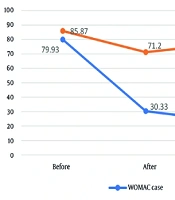
Baseline DASH scores were comparable between groups (P = 0.635). After adjustment for baseline values using ANCOVA, the PEMF group demonstrated significantly greater improvements in upper‑limb function than the ESWT group at all post‑treatment time points. Specifically, DASH scores were significantly lower in the PEMF group immediately after treatment (P < 0.001), at the one‑month follow‑up (P < 0.001), and at the three‑month follow‑up (P = 0.001) (Table 1). Within‑group analysis revealed a significant effect of time in both treatment groups (repeated‑measures ANOVA, P < 0.001). Post hoc comparisons confirmed significant reductions in DASH scores from baseline to all subsequent assessments in both groups (P < 0.001). Additional improvement was observed between the immediate post‑treatment evaluation and subsequent follow‑ups (P < 0.05), whereas no further significant change occurred between the one‑month and three‑month follow‑up assessments (P = 0.999). Effect size analysis demonstrated moderate‑to‑large treatment effects favoring PEMF therapy at all follow‑up time points (η² = 0.254 immediately post‑treatment, η² = 0.257 at one month, and η² = 0.244 at three months), indicating that approximately one‑quarter of the variance in functional outcomes was attributable to the treatment modality (Figure 1).
Table 1.
Mean DASH Scores Over the Assessment Time Points and Their Comparison Between the Two Groups a
| Timepoint | Group | Adjusted Mean Difference (95% CI)b | P-Value | |
|---|---|---|---|---|
| ESWT Group | PEMF Group | |||
| Before treatment | 40.03 ± 9.97 | 38.56 ± 12.18 | — | 0.635 c |
| Immediately after treatment | 30.48 ± 9.77 | 18.78 ± 10.04 | −10.98 (−15.65, −6.31) | < 0.001 b |
| After one month | 27.69 ± 10.25 | 15.60 ± 10.11 | −11.44 (−16.49, −6.39) | < 0.001 b |
| After three months | 27.01 ± 10.76 | 15.12 ± 10.05 | −11.25 (−16.45, −6.05) | < 0.001 b |
a Values are expressed as mean ± SD unless otherwise indicated. Repeated-measures ANOVA time effect within ESWT and PEMF groups both P < 0.001. Abbreviations: CI, confidence interval; SD, standard deviation.
b ANCOVA models adjusting for the respective baseline values (PEMF relative to ESWT; negative values favor PEMF).
c Independent-Samples t test at baseline.
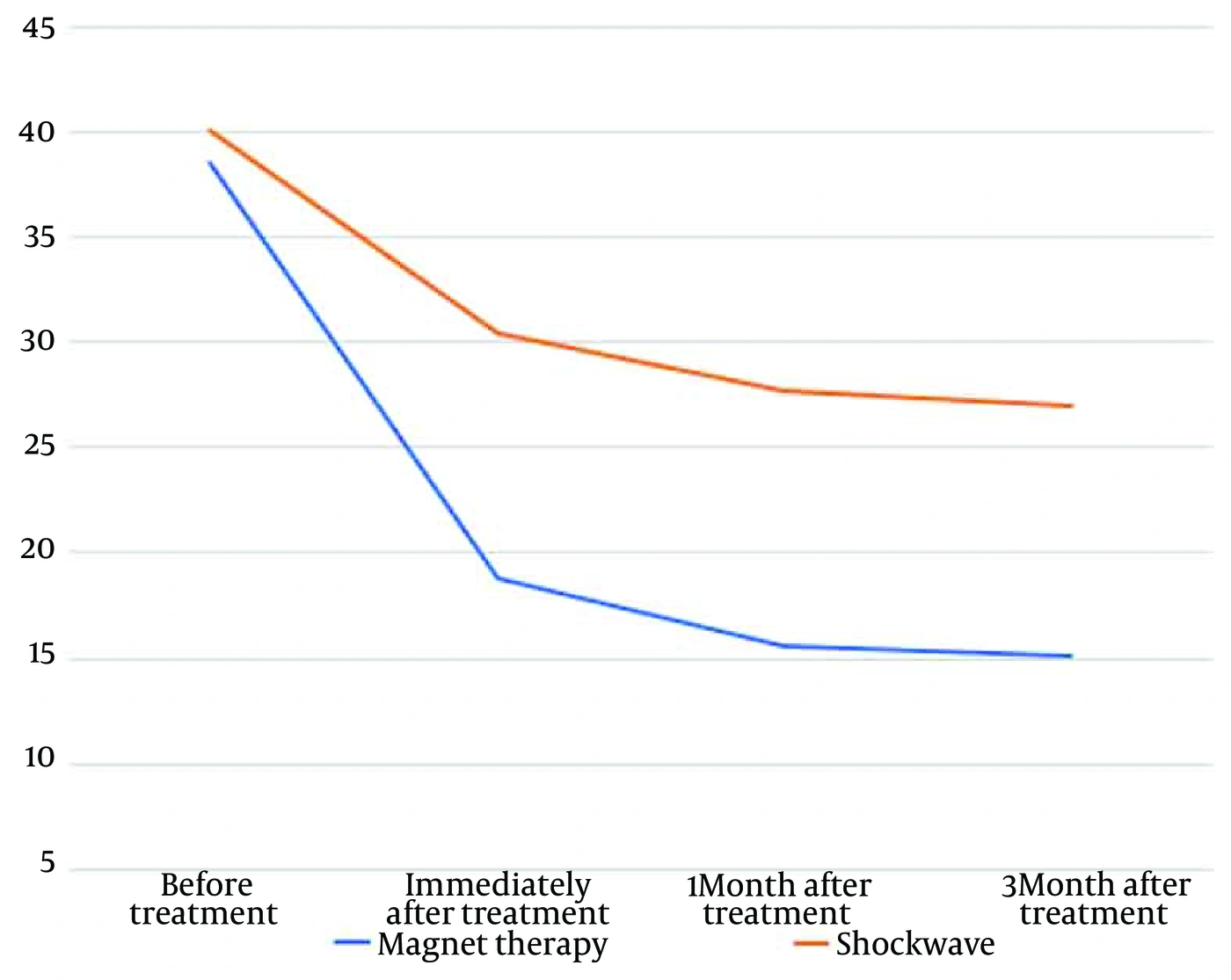
Figure 1.
Line plot of mean DASH scores over assessment time points for the two groups.
4.3. Pain Outcomes (VAS)
Baseline pain intensity, measured by the Visual Analog Scale (VAS), did not differ significantly between the groups (P = 0.157). ANCOVA revealed significantly lower pain scores in the PEMF group than in the ESWT group at all post-intervention assessments, including immediately after treatment (P = 0.001), at one month (P = 0.001), and at three months (P = 0.001). Repeated-measures ANOVA demonstrated a significant time effect within both groups (P < 0.001) (Table 2). In the PEMF group, post hoc comparisons showed significant reductions in pain from baseline to each follow-up time point; however, no further significant change was observed between the one-month and three-month assessments (P = 0.999). Similarly, the ESWT group exhibited significant reductions in pain compared with baseline, although differences among post-treatment time points were not statistically significant (P > 0.05). Effect size estimates indicated moderate-to-large treatment effects favoring PEMF therapy, accounting for approximately 21 – 27% of the variance in pain outcomes (Figure 2).
Table 2.
Mean VAS Scores Over the Assessment Time Points and Their Comparison Between the Two Groups a
| Timepoint | Group | Adjusted Mean Difference (95% CI)b | P-Value | |
|---|---|---|---|---|
| ESWT Group | PEMF Group | |||
| Before treatment | 7.35 ± 1.77 | 6.62 ± 1.90 | — | 0.157 c |
| Immediately after treatment | 5.23 ± 1.75 | 3.15 ± 2.20 | −1.54 (−2.37, −0.70) | < 0.001 b |
| After one month | 4.88 ± 1.77 | 2.73 ± 2.11 | −1.69 (−2.59, −0.79) | < 0.001 b |
| After three months | 5.08 ± 1.88 | 2.62 ± 2.10 | −2.03 (−3.00, −1.07) | < 0.001 b |
a Values are expressed as mean ± SD unless otherwise indicated. Repeated-measures ANOVA time effect within ESWT and PEMF groups both P < 0.001.
b ANCOVA models adjusting for respective baseline values (PEMF relative to ESWT; negative values favor PEMF).
c Independent-Samples t test at baseline.
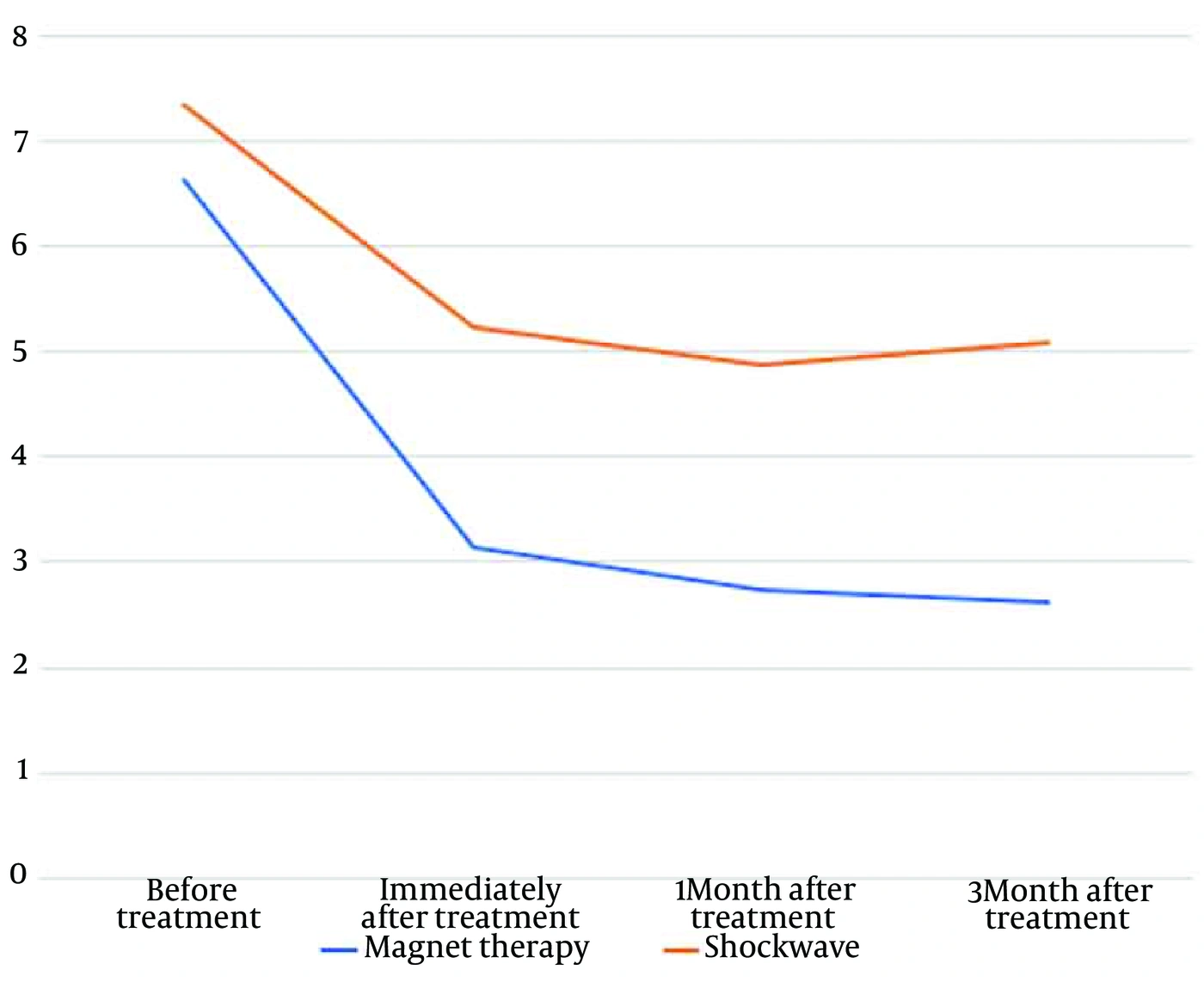
Figure 2.
Line plot of mean VAS scores over assessment time points for the two groups
Baseline comparisons showed no significant between-group differences in shoulder flexion and abduction (P > 0.05). The PEMF group had higher baseline external- and internal-rotation values than the ESWT group (both P < 0.001). After adjustment for baseline values, ANCOVA demonstrated significantly greater improvements in shoulder flexion (P < 0.001) and abduction (P < 0.001) in the PEMF group than in the ESWT group. A significant between-group difference was also observed for external rotation (P < 0.001) and internal rotation (P < 0.001) (Table 3). Within-group analyses indicated improvements in all measured ROM parameters after treatment in both groups (P < 0.001). The magnitude of improvement was greater in the PEMF group for flexion and abduction.
Table 3.
Comparison of Shoulder Flexion, Abduction, External Rotation, and Internal Rotation Between the PEMF and ESWT Groups Before and After Treatment a
| Variables | Group | Adjusted Mean Difference (95% CI)b | P-Valueb | |
|---|---|---|---|---|
| ESWT Group | PEMF Group | |||
| Flexion | 11.79 (6.93, 16.65) | < 0.001 | ||
| Before treatment | 158.70 ± 26.08 | 148.80 ± 22.42 | ||
| After treatment | 162.63 ± 23.20 | 166.80 ± 17.31 | ||
| Abduction | 12.49 (7.16, 17.81) | < 0.001 | ||
| Before treatment | 147.48 ± 30.04 | 141.92 ± 25.51 | ||
| After treatment | 153.78 ± 27.20 | 161.60 ± 22.99 | ||
| External rotation | 8.07 (4.65, 11.49) | < 0.001 | ||
| Before treatment | 46.56 ± 13.35 | 51.88 ± 10.30 | ||
| After treatment | 51.81 ± 13.49 | 65.04 ± 12.49 | ||
| Internal rotation | 9.20 (4.90, 13.49) | < 0.001 | ||
| Before treatment | 42.22 ± 11.15 | 50.64 ± 10.86 | ||
| After treatment | 48.15 ± 12.00 | 63.60 ± 9.43 | ||
a Values are expressed as mean ± SD (degrees). Abbreviations: CI, confidence interval; ESWT, extracorporeal shock wave therapy; PEMF, pulsed electromagnetic field therapy; ROM, range of motion; SD, standard deviation.
b Adjusted mean difference represents the PEMF group relative to the ESWT group (PEMF – ESWT), estimated via ANCOVA adjusting for the respective baseline ROM value.
5. Discussion
This randomized controlled trial compared the efficacy of PEMF and ESWT in patients with SIS. Both interventions produced significant improvements in pain intensity (VAS), upper-limb function (DASH), and shoulder range of motion (ROM). Compared with ESWT, PEMF produced significantly greater improvements in pain and functional outcomes at all post‑intervention time points. The superiority of PEMF was sustained at the one‑month and three‑month follow‑up assessments. Gains in ROM, particularly in flexion and abduction, were significantly greater in the PEMF group. Collectively, these findings suggest that, although both modalities are clinically beneficial in SIS, PEMF may confer a more robust and sustained therapeutic effect.
The within‑group improvements observed in both arms are consistent with previous studies demonstrating the efficacy of ESWT and PEMF as non‑invasive interventions for shoulder tendinopathies and impingement syndromes (6, 17). Our findings align with those of Kandemir et al. (18), who reported that PEMF combined with exercise resulted in superior improvements in pain, ROM, function, and quality of life compared with sham PEMF at one and three months (18). The sustained benefits observed in our study further reinforce the hypothesis that PEMF exerts biologically meaningful effects. In contrast, Afzalifard et al. did not observe additional benefit when PEMF (18 Hz or 100 Hz) was added to routine electrotherapy and exercise (19). Several factors may explain this discrepancy. Protocol heterogeneity, including differences in frequency, intensity, waveform characteristics, and session duration, may substantially influence the biological response. In Afzalifard’s study, the control group received active electrotherapy and structured exercise, representing a high therapeutic baseline. In addition, our protocol (intensity 55, frequency 70 Hz, 30 minutes/session, 8 sessions) may have delivered a higher cumulative biostimulatory exposure. These variations underscore the importance of parameter optimization in PEMF research.
The effectiveness of ESWT in reducing pain and improving function observed in our study is consistent with previous reports, such as that by Circi et al., who demonstrated early improvements in pain and function in patients with SIS (20). However, the magnitude and persistence of benefit in our ESWT group were lower than those in the PEMF group at medium-term follow-up. One plausible explanation relates to wave characteristics and treatment dose. Radial ESWT, which was used in our study, produces more superficial energy dispersion than focused ESWT. The number of treatment sessions also differed from that in some prior trials, and the mechanisms underlying the effects of ESWT, namely mechanotransduction, microtrauma-induced neovascularization, and nociceptor modulation, may require longer remodeling periods to translate into sustained functional gains. Thus, protocol variability likely contributes to inter-study heterogeneity.
The sustained superiority of PEMF may be explained by its biological mechanisms, which include enhancement of mitochondrial ATP synthesis, modulation of inflammatory mediators (eg, cytokine regulation), improved microvascular circulation, and potential effects on collagen synthesis and soft-tissue repair (21). Unlike ESWT, which relies on mechanical stimulation and controlled microtrauma, PEMF induces electromagnetic modulation at the cellular level (22). This may result in reduced inflammatory persistence, faster restoration of tendon homeostasis, and more stable functional recovery (23). The greater improvements in flexion and abduction support the hypothesis that PEMF may positively influence periarticular soft-tissue recovery, facilitating earlier and more sustained mobility (24). Additionally, evidence from Klüter et al. demonstrating superior outcomes when ESWT is combined with electromagnetic transduction therapy (EMTT) suggests a potential synergistic role of electromagnetic stimulation in musculoskeletal healing (25).
Both PEMF and ESWT are viable non-invasive options for the management of SIS. When sustained medium-term functional recovery is prioritized, PEMF may be preferable. The moderate-to-large effect sizes observed in this trial indicate that the between-group differences are not merely statistically significant but potentially clinically meaningful. Importantly, treatment selection in clinical practice should consider device availability, treatment cost, patient tolerance, and the severity and chronicity of symptoms; further cost-effectiveness analyses would help refine clinical decision-making.
5.1. Strengths and Limitations
A critical methodological consideration in our comparative evaluation is the substantial divergence in treatment frequency and total therapeutic exposure between the two arms (eight 30-minute sessions totaling 240 minutes for PEMF vs three sessions for ESWT). This disparity is grounded in the distinct physiological mechanisms governing each modality: ESWT generates high-energy mechanical pressure waves that initiate micro-disruption and cellular remodeling, requiring inter-session tissue recovery intervals of 5 to 7 days, whereas PEMF relies on non-thermal, cumulative membrane-polarizing signals that require frequent repeated exposure. Nonetheless, this difference in cumulative exposure and clinic visit frequency cannot be overlooked. The greater contact frequency and extended interaction with clinical staff in the PEMF group may have augmented contextual and non-specific placebo responses, potentially influencing patient-reported subjective parameters such as VAS pain scores and DASH functional ratings. Future comparative trials that standardize therapist contact time or incorporate sham-placebo controls are warranted to disentangle true biophysical efficacy from contact-related therapeutic effects.
Limitations of this study included the single-center design, a relatively modest sample size, the absence of a sham-control group, the lack of long-term follow-up beyond three months, baseline differences in some ROM parameters (although statistically adjusted), and the inclusion of a broad age range (18 to 70 years) without age-stratified subgroup analyses (eg, separating younger adults, middle-aged individuals, and seniors). Additionally, imaging-based structural assessment (eg, MRI or ultrasound) was not performed to correlate clinical improvements with tissue-level changes, and the reasons for withdrawal/loss to follow-up should be further detailed. Finally, no ITT or multiple-imputation sensitivity analysis was performed.
Future high‑quality randomized trials should include larger, multicenter cohorts to enhance generalizability, directly compare focused and radial ESWT protocols, and standardize PEMF dosing parameters to clarify dose–response relationships. Incorporating imaging modalities and biological markers would help elucidate the underlying tissue‑level mechanisms, and follow‑up periods extending beyond six months are needed to assess the durability of treatment effects. Additionally, combined PEMF and ESWT protocols may warrant investigation, given emerging evidence suggesting potential synergistic therapeutic effects.
5.2. Conclusions
This randomized controlled trial demonstrated that both pulsed electromagnetic field (PEMF) therapy and extracorporeal shock wave therapy (ESWT) are clinically effective non-invasive modalities for reducing pain, improving upper-extremity functional performance, and restoring shoulder range of motion in patients with shoulder impingement syndrome. Although both interventions conferred meaningful clinical benefits, PEMF yielded significantly greater and more sustained improvements in pain intensity (VAS), functional disability (DASH), and mobility (flexion and abduction) throughout the 3-month post-intervention follow-up. However, given the inherent disparities in treatment exposure (8 sessions totaling 240 minutes for PEMF vs 3 sessions for ESWT) and the potential contribution of contextual therapist-contact effects, these findings should be interpreted with appropriate caution rather than as definitive evidence of unconditional biophysical superiority. Future multicenter, sham-controlled trials that standardize provider contact time, incorporate objective tissue-level imaging, and evaluate long-term durability are warranted to optimize parameter selection and guide evidence-based clinical decision-making.