
Dear Editor,
As described by the World Health Organization (WHO), mass gatherings are spontaneous or planned events involving large numbers of participants, which can strain the existing local resources and capacities of a community. Examples include protests, political marches, military parades, street festivals, sports matches, concerts, and religious ceremonies (1).
Most mass gatherings do not target a specific age group and typically involve participants ranging from children to the elderly. This is especially true for religious ceremonies, which pose significant challenges in managing and maintaining security and order. The high population density at such events, often with limited access points, can lead to irreparable incidents and disasters, such as the 2015 Mina disaster in Saudi Arabia (2).
Mass gatherings present various hazards, including the spread of epidemics, physical injuries, terrorism, bioterrorism, property theft, or individuals becoming lost. While all attendees are exposed to these risks, certain groups—including the elderly, pregnant women, young girls, children, and individuals with physical or mental disabilities—are more vulnerable. Among these, children are particularly at risk. Anatomically, physiologically, and psychologically, children are more susceptible compared to adults. Their physical abilities, cognitive and perceptual skills, decision-making capacity, and functional independence are significantly less developed. Furthermore, their weaker immune systems make them more vulnerable to diseases (3).
Becoming lost is one of the most common risks faced by children during mass gatherings. This often results from their natural curiosity and playfulness, overcrowding, or lapses in attention from parents or caregivers. It is crucial to establish an effective and intelligent framework for real-time monitoring and tracking of children in such settings.
One of the most effective solutions for preventing children from getting lost in mass gatherings is tracking their movements and behavior using radio frequency identification (RFID) wearable devices.
Radio frequency identification is a wireless technology used to identify, track, and control access to individuals or objects. This technology has versatile applications in various aspects of people's lives and their surrounding environments.
Each RFID system consists of three primary components:
(1) Tag: This component contains data about the target item (object or human).
(2) Reader: It reads the stored data in the tag.
(3) Database: It processes the collected data and sends a response to the reader.
Each RFID tag is assigned a unique identifier (UID) that can be recognized by the reader. The data embedded in the tag are gathered by the reader through radio signals. This information includes the tag's UID, encrypted data, and the physical location of the person or object. Tags are typically low-cost and small in size, allowing them to be attached to various objects or individuals.
On the other hand, readers employ specialized algorithms to extract data from the tags. They are capable of connecting to a computer or the internet, enabling efficient data processing. Additionally, the integration of RFID tools with wireless sensors enhances real-time data analysis capabilities. These sensors expand the functional range of RFID systems, making them operable even in areas without internet coverage (4, 5).
Radio frequency identification technology can be incorporated into a variety of wearable items such as bracelets, wristbands, or other objects, providing versatile applications for monitoring and tracking.
In recent years, RFID technology has been extensively utilized in managing various mass gatherings worldwide. In 2019, Hidayat et al. conducted a study aimed at designing an RFID-based system to predict the disappearance of Hajj pilgrims. In this study, RFID tags were attached to the pilgrims' identification cards. If a pilgrim became separated from their group, the system sent an SMS alert along with the group's location information to the detached pilgrim (6). This approach can also be adapted for tracking children in mass gatherings or even in their daily activities, such as going to school. Parents can attach Wi-Fi-enabled tags to their children via bracelets. If the children become lost or separated, parents can track their exact location by sending a text message from their mobile phones (5).
In 2023, Bhatt et al. conducted a review of research from the past decade on the application of RFID-based children security management systems. The findings indicated that RFID-based systems significantly enhance the safety and security of children while improving the accuracy and speed of tracking them (7). (Figure 1)
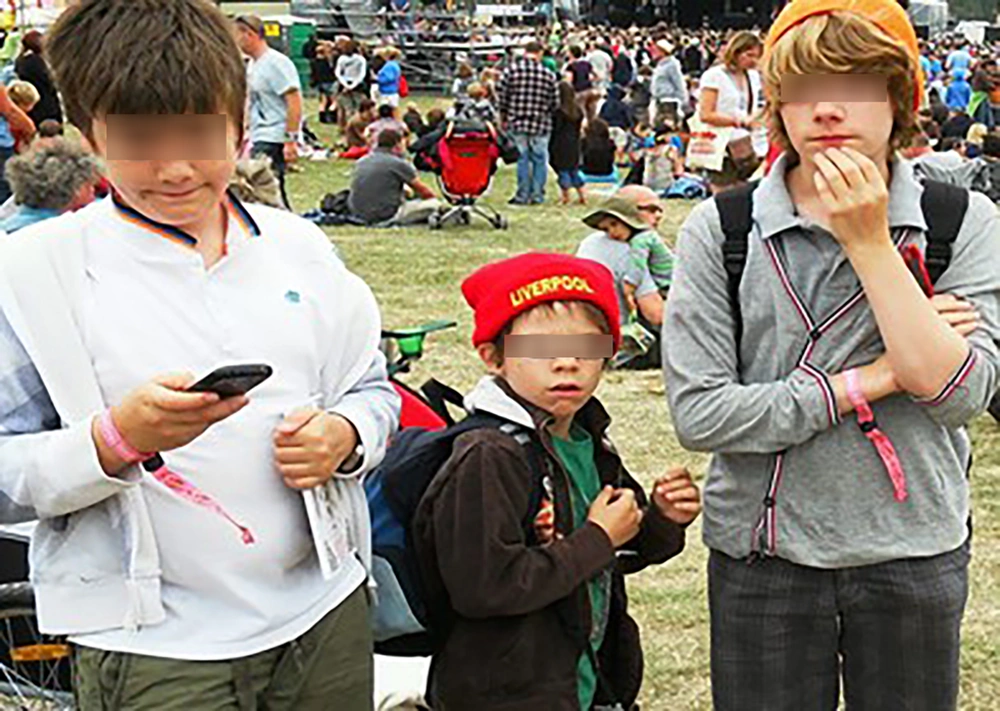
Figure 1.
Children wearing radio frequency identification (RFID) bracelets at a mass event (8)
The question may arise: How far can RFID bracelets identify a child’s position? The answer depends on the "reading range" of each RFID system. The reading range refers to the maximum distance at which an RFID tag can detect radio waves from an RFID reader. This range is determined by the frequency of the RFID tag (9).
Higher frequencies correspond to a wider reading range. Under ideal conditions, the reading range of standard RFID tags typically extends up to 30 meters. However, by utilizing active transponders with higher frequencies, the reading range can be significantly increased, reaching up to 100 meters or more (9).
Radio frequency identification technology has its own advantages and disadvantages, which include the following (10):
Advantages
- Reducing information processing time
- Concurrent reading and writing on multiple tags
- Decreasing human errors
- Possibility of updating the data in the tag memory
- Providing “just-in-time” information
- Frequent updates to stored data
- Rapid data transfer between readers and tags
- Data encryption to enhance data security
- Lowering data storage time
Disadvantages
- High cost
- Limited range
- Possibility of signal blocking
- Data security vulnerabilities
- Reliance on battery power
- Risk of privacy breaches
- Potential health-related concerns (10)
Like any other technology, the implementation and use of RFID technology come with challenges and limitations. The most pressing issue in this field is raising awareness among societies about the benefits and capabilities of this technology while engaging key stakeholders to support and invest in its widespread adoption. The ultimate goal of employing this technology is to enhance the security and safety of vulnerable groups, especially children, during mass gatherings.
This letter encourages managers and policymakers involved in managing mass gatherings to intensify their efforts toward implementing RFID technology. By providing the necessary infrastructure and addressing existing challenges, they can ensure the optimal protection of children and other vulnerable groups during such events.