
1. Context
According to the World Health Organization (WHO), mass gatherings are planned or spontaneous events in which the number of participants may place substantial pressure on local planning and response resources. Large religious events (eg, Hajj and Arbaeen), sporting, political, and cultural events, as well as spontaneous gatherings, refugee camps, and transportation hubs, involve large populations, diverse settings (both indoor and outdoor), and complex health, medical, and security logistics, thereby creating unique vulnerabilities (1). Among these, CBRNe (chemical, biological, radiological, nuclear, and explosive) threats represent a significant risk at any mass gathering (2). Widespread and largely unregulated access, via online platforms and social media, to formulas and instructions for producing numerous chemicals with potential military or terrorist applications, together with the routine production, transportation, and storage of large quantities of hazardous chemicals for industrial and household purposes, have further increased the scope of this risk (3).
Because CBRNe incidents can result in mass casualties, social disruption, or environmental damage, the potential for their deliberate use by terrorists remains a persistent concern (4). The growing access of terrorist groups to artificial intelligence tools has also created opportunities for previously undiscovered knowledge and capabilities to be developed more rapidly within the framework of available resources (5). Prevention, risk reduction, preparedness, response, and recovery for CBRNe incidents therefore constitute key components of mass gathering medicine (1). The inherent characteristics of mass gatherings, including high population density, variable environmental conditions, event duration, and event type, may increase the likelihood of CBRNe threats (6). Moreover, the resulting consequences and vulnerabilities can have detrimental effects on human life and health-system capacity (7). Mass gatherings may facilitate rapid disease transmission or result in mass casualties following a CBRNe attack and may therefore represent potential targets for terrorists employing CBRNe means. Historical incidents, such as the 1995 Tokyo sarin attack, the Olympic bombing, and the Boston Marathon bombing, as well as near-miss events, including anthrax hoaxes and disrupted terrorist plots, demonstrate that terrorists may target virtually any mass gathering (8, 9). Mass gatherings can be particularly attractive to terrorist groups seeking to carry out disruptive acts and draw attention to their cause (8).
Environmental factors, including weather conditions and venue ventilation, as well as crowd dynamics during mass gatherings, can further amplify the effects of a CBRNe incident (10). In addition to causing direct harm to participants, CBRNe incidents can generate widespread fear and anxiety among the community, emergency response personnel, and the health system. This response may be driven by limited familiarity with these low-frequency but high-consequence events and by widespread misconceptions regarding their actual risk (11). Mass gatherings can have severe consequences in the event of CBRNe agent release; high population density and restricted collective egress may increase casualties and complicate evacuation operations (12). Chemical attacks, as one of the major methods of attack, have accounted for nearly 300 terrorist incidents to date, resulting in more than 13,500 deaths and injuries (13). Biological attacks create a risk of secondary transmission among participants and their household communities (2). Psychological impacts and fear, including surges of asymptomatic but concerned individuals seeking medical evaluation, can overwhelm healthcare systems, as observed during the 2001 anthrax attacks, when thousands of people sought preventive care (14).
Although radiological and nuclear incidents have been relatively rare to date, studies have shown that healthcare personnel may be reluctant to respond to such incidents and may experience heightened concerns regarding their safety (15). Furthermore, in such attacks, public fear of contamination and radiation exposure can extend far beyond the physical effects, resulting in widespread disruption and panic. Therefore, radiological and nuclear incidents should be regarded as serious threats (16). Explosive attacks, including the bombing at Centennial Olympic Park during the 1996 Olympic Games in Atlanta, Georgia, as well as attacks targeting nontraditional mass gatherings, such as the 2004 Madrid train bombings, the 2013 Westgate shopping mall attack in Kenya, and the Boston Marathon bombing in the same year, demonstrate the significant potential for such incidents to occur in mass gathering settings (17).
In mass gatherings, large crowds and vulnerable individuals, together with geographic location and event characteristics, can substantially influence the delivery of health and medical services (18). Consequently, triage, decontamination, and treatment become more challenging in crowded and chaotic environments (19). Therefore, robust preparedness, including chemical agent detection devices, radiation monitoring systems, laboratory networks, surge medical capacity, and risk communication regarding CBRNe incidents at mass gatherings, is essential (9, 20). Accordingly, the present review aims to identify the types of CBRNe threats at mass gatherings and examine the pathways of vulnerability associated with these threats.
2. Evidence Acquisition
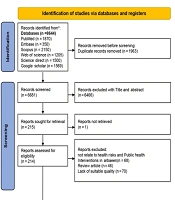
A narrative review focusing on CBRNe threats in mass gatherings was conducted. The search strategy included the terms CBRNe (chemical, biological, radiological, nuclear, explosive, CBRN) combined with terms related to mass gatherings, including mass gathering, mass, gathering, gather*, public demonstration, crowding, crowd, stampede, religious, pilgrimage, sporting, political, and cultural events; refugee camps; and transit hubs. The databases searched included PubMed and Scopus, as well as official sources, including the WHO, the Centers for Disease Control and Prevention (CDC), the Government Accountability Office (GAO), and national security reports. Boolean operators AND/OR were used to combine the search terms.
The inclusion criteria comprised English-language articles, guidelines, or official reports, and historically significant case reports, with publications from 2000 to 2026 prioritized. No specific geographical or historical restrictions were imposed; however, greater emphasis was placed on recent evidence. Various study designs were considered, including original and review studies, empirical studies addressing health hazards associated with mass gatherings, and established textbooks or recognized guidelines. Sources were excluded if they were unrelated to CBRNe threats or mass-gathering health and preparedness; focused exclusively on laboratory, military, or technical issues without relevance to public-health preparedness or mass-gathering vulnerabilities; were duplicate records; lacked sufficient accessible information for data extraction; or consisted of non-authoritative commentaries, conference abstracts, news items, editorials, and informal webpages.
Titles and abstracts of retrieved sources were screened according to the predefined criteria, and full texts of eligible sources were reviewed to extract relevant findings. Data on the characteristics of mass gatherings, pathways of CBRNe agent entry, and specific threats within the chemical, biological, radiological, nuclear, and explosive domains were purposively extracted and categorized into comparative tables. Given the heterogeneous nature of the available sources, quantitative meta-analysis was not feasible. Accordingly, findings were synthesized using a narrative synthesis and thematic classification approach, organized around two principal domains: “characteristics and vulnerability pathways of mass gatherings” and “types of threats across the CBRNe domains.”
3. Results
3.1. Characteristics of Mass Gatherings
3.1.1. Size and Density
3.1.2. Duration
Longer events place greater demands on medical and security resources, whereas multi-day or around-the-clock events, such as the Hajj, extend the windows of vulnerability (23).
3.1.3. Venue and Environment
Enclosed and confined settings, such as stadiums and metro systems, may facilitate the retention of airborne agents, whereas outdoor events allow greater natural dispersion but are subject to meteorological hazards, as wind can transport contaminants. Ventilation quality is particularly important for airborne CBRNe agents; inadequate ventilation can increase inhalational exposure (1, 2).
3.1.4. Infrastructure and Services
The adequacy of sanitation, drinking water, shelter, medical facilities, and emergency response capacity varies considerably across mass gatherings. Established venues may have dedicated emergency medical services (EMS) stations and adequate personal protective equipment (PPE), whereas spontaneous events often lack such infrastructure (24).
3.1.5. Security
Some gatherings, such as heads-of-state summits and the Olympic Games, are designated as special national security events and are subject to enhanced security measures, which may deter less capable adversaries. Other events, including Arbaeen, street protests, and spontaneous gatherings, may involve minimal screening. Security measures, such as bag checks and detection systems, directly influence CBRNe risk (9, 25).
3.1.6. Participants
Demographic characteristics, including age, health status, mobility, and behavior, are important determinants of vulnerability. Events that attract vulnerable populations, such as older pilgrims or children, may have more severe health consequences (26). Alcohol or drug use at concerts or festivals may also impair individual and crowd responses (27).
3.1.7. Purpose and Timing
Mass gatherings may represent symbolic targets for terrorism. Timing, including holiday periods and anniversaries, may increase attendance while simultaneously complicating evacuation (28).
3.2. Pathways of CBRNe Agent Entry into Mass Gatherings
3.2.1. Deliberate Release
The most overt pathway involves the deliberate dissemination of CBRNe agents by a hostile actor. Such an actor may be a terrorist, including a radical group or cult, or a rogue state. Dissemination methods may include contaminated objects, such as contaminated mail envelopes; contaminated food or beverages; aerosol sprays; dispersal devices; drones; or exploitation of infrastructure through manipulation of ventilation systems or water supplies (8). For example, a terrorist could release a nerve agent within an enclosed concert venue or disperse small radioactive sources within a mass gathering (29).
3.2.2. Accidental Release
CBRNe agents may also be released unintentionally during, or in proximity to, an event. This may include industrial incidents, such as chemical plant explosions or the derailment of trains transporting hazardous materials, occurring near a mass gathering (30, 31). If an industrial incident occurs in a city hosting a mass gathering, radioactive fallout, toxic plumes, or other hazardous releases may affect participants (32). Similarly, if a chemical release occurs near an outdoor concert, wind may transport the agent into the crowd and expose a large number of individuals (33). Accidental releases of biological agents through aerosols, water, food, and vector-borne pathways, together with globalization, urban crowding, and mass gatherings, can further contribute to the potential for disease outbreaks (34).
3.2.3. Secondary Contamination
A person, animal, or object contaminated with a CBRNe agent may introduce the agent into a mass gathering (35). A participant who is unknowingly infected with an infectious disease, such as measles, influenza, or COVID-19, may initiate transmission within a mass gathering (36). Similarly, contaminated equipment, supplies, water, food, or other materials may expose large numbers of individuals. Inadequate adherence to safety and hygiene principles in the provision of food and other services at mass gatherings may provide a pathway for biotoxin transmission (37). Secondary contamination may also affect responders; if decontamination is inadequate, emergency personnel may become vectors for further transmission or contamination (38).
3.2.4. Environmental Sources
Natural or environmental events may also generate relevant hazards. For example, algal toxins in water used during an event, a naturally occurring radioactive hot spring near a festival venue, or elevated ambient air pollution, such as wildfire smoke, may adversely affect the population (39, 40) (Table 1).
Table 1.
Comparison of Mass Gathering Types in Relation to CBRNe Hazards and Recommended Interventions
| Mass Gathering Type | CBRNe Risk Factors | Recommended Interventions | Historical Evidence/Documented Cases |
|---|---|---|---|
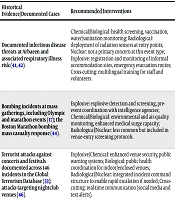
| Religious (pilgrimage) (41, 42, 43) | Very high population density; prolonged duration; shared accommodation, including informal accommodation sites such as Mawkebs (volunteer-run pilgrimage service stations) without registration systems; vulnerable participants (older adults and patients); pressure on water and sanitation resources. Potentially high-sensitivity targets due to ideological motivations. Potential for outbreaks of communicable diseases (eg, respiratory diseases and meningitis). Moderate security. | Chemical/Biological: health screening, vaccination, water/sanitation monitoring; Radiological: deployment of radiation sensors at entry points; Nuclear: not a primary concern at this event type; Explosive: registration and monitoring of informal accommodation sites, emergency evacuation routes; Cross-cutting: multilingual training for staff and volunteers. | Documented infectious disease threats at Arbaeen and associated respiratory illness risk (41, 42). |
| Sporting (20, 44, 45) | Large but managed crowds; enclosed stadiums susceptible to the accumulation of airborne particles; high media visibility. Typically, strong security measures (bag inspection and surveillance), but multiple entry points. Risk is primarily associated with explosives or fire; chemical or biological agents are less common but remain possible, eg, through smoke grenades. Such events may attract activist or extremist threats. | Explosive: explosive detection and screening, pre-event coordination with intelligence agencies; Chemical/Biological: environmental and air-quality monitoring, enhanced medical surge capacity; Radiological/Nuclear: less common but included in venue-entry screening protocols. | Bombing incidents at mass gatherings, including Olympic and marathon events (17); the Boston Marathon bombing mass casualty response (44). |
| Political/Cultural (gatherings, concerts) (46, 47) | Variable security; alcohol consumption and altered crowd behavior; potential for chemical or explosive attacks. Transmission risk is lower for one-day events; however, indoor concerts may facilitate the transmission of respiratory infections. If targeted, these events may attract substantial media attention. | Explosive/Chemical: enhanced venue security, public warning systems; Biological: public health coordination for indoor/enclosed venues; Radiological/Nuclear: integrated incident command structure to enable rapid escalation if needed; Cross-cutting: real-time communication (social media and text alerts). | Terrorist attacks against concerts and festivals documented across 146 incidents in the Global Terrorism Database (33); attacks targeting nightclub venues (46). |
| Spontaneous (protests) (24, 48) | Minimal planning; limited security; unpredictable crowd size and duration. Hazards include improvised explosive devices (IEDs), tear gas, and crowd crush. Threat detection is more difficult in the absence of fixed screening checkpoints. High vulnerability to local hazards, including nearby chemical hazards and industrial sites. | Explosive: rapid response teams, portable detection kits; Chemical: rapid information sharing regarding tear gas or chemical irritant exposure; Biological/Radiological/Nuclear: lower relative priority given event unpredictability, but included in rapid-response protocols; Cross-cutting: legal framework balancing security measures with civil rights. | Documented health and security incidents during riots, civil unrest, and protest events in North America (24, 48). |
| Refugee/Displaced-person camps (49, 50, 51) | Severe overcrowding; limited sanitation; vulnerability to nearby environmental hazards; minimal security. | Biological: mass vaccination, staff training in decontamination and triage; Chemical: site assessment for proximity to industrial hazards; Radiological/Nuclear/Explosive: guard posts and perimeter security. | COVID-19 outbreak in the Dadaab Refugee Camp Complex (49); documented water contamination risk in refugee settlements (50). |
| Transportation hubs (terminals, stations) (52, 53, 54, 55, 56) | Multiple entry points; concentration of populations during peak hours. Historically targeted (eg, the 2005 London bombings). Risks include explosives, toxic gas releases (eg, derailment of a train carrying hazardous materials near a station), and radiological dispersal devices (“dirty bombs”). High passenger and baggage turnover complicates detection; however, continuous security presence, including surveillance cameras and law enforcement, is typically maintained. Communicable diseases can readily spread in confined transportation environments (eg, influenza on aircraft and in metro systems). | Radiological: radiological detectors, stockpiled antidotes; Chemical: chemical detectors, decontamination showers and protective clothing for first responders; Explosive: access control, surveillance cameras, coordination with transportation authorities; Biological: communicable-disease surveillance given confined environments. | The 2005 London Underground bombings (52); metro-system attacks and associated mitigation measures (53). |
3.3. Synthesis and Implications
This review aimed to identify the types of CBRNe event threats at mass gatherings and to characterize the associated vulnerability pathways. The findings indicate that, regardless of mass gathering type, a set of common risk factors, including high population density, limited evacuation routes, participant diversity and high population mobility, and constrained emergency resources, creates conditions conducive to CBRNe incidents. This finding aligns with the primary objective of the review, namely, to identify shared vulnerabilities across different types of mass gatherings.
When considered across the five CBRNe domains, chemical and explosive attacks remain the most plausible forms of attack at mass gatherings, largely because of the relative accessibility of relevant materials and methods. In contrast, radiological and nuclear threats, although less frequent, warrant particular attention in preparedness planning because of their potentially extensive psychosocial consequences and the complexity of specialized response operations.
Mass gatherings, whether held in open or enclosed environments, can facilitate the rapid dissemination of biological agents through airborne or contact-mediated routes. Prolonged event duration increases the exposure period, while international participants may introduce or carry infectious agents or hazardous chemicals across geographical boundaries. For example, religious mass gatherings such as the Hajj or Kumbh Mela routinely bring together millions of people, and their high population density and global reach make them particularly vulnerable to outbreaks of communicable infectious diseases (18). The findings also highlight the dual role of Mawkebs in religious mass gatherings as a prominent source of vulnerability. On the one hand, the absence of formal registration and record-keeping systems in these community-based accommodation and service centers may hinder the identification and location of individuals and increase opportunities for the infiltration or concealment of threat agents, including potential perpetrators of terrorist attacks. On the other hand, the central role of Mawkebs in the direct and large-scale distribution of water, food, and other essential services to pilgrims, in the absence of standardized laboratory and public health oversight, may make these facilities potential points of entry for chemical and biological agents into a mass gathering. This finding is consistent with previous evidence regarding the role of water and food supply chains in bioterrorism (40) and the specific vulnerabilities of large-scale religious mass gatherings (41, 42), underscoring the need to integrate Mawkebs into formal CBRNe preparedness and response frameworks.
Mass gatherings may be attractive targets for CBRNe terrorism because of their high visibility and global media attention. Sporting events concentrate large populations in stadiums or along marathon routes. Previous attacks, including the 2013 Boston Marathon bombings and the 2017 Manchester Arena bombing, demonstrate how explosives can be employed in such settings. Studies have also specifically modeled radiological incidents at mass gatherings, including scenarios associated with the Olympic Games in the United Kingdom, to highlight potential radiological threats (2). These findings diverge from Patel et al., whose systematic review addressed CBRNe preparedness specifically for sporting event mass gatherings (2). Whereas Patel et al. focused on countermeasure and preparedness frameworks within a single event type, the broader scope of the present review indicates that vulnerability pathways relevant to sporting events, such as reliance on fixed-venue security, do not generalize well to less structured settings such as spontaneous gatherings or refugee camps.
Spontaneous mass gatherings, such as political events and protests, are also particularly important because they may lack robust physical security barriers and therefore provide opportunities for adversarial infiltration. For example, surveillance footage from protests in recent years has identified security gaps in which chemical or biological agents could potentially be released without immediate detection. Spontaneous gatherings, including riots and large-scale assemblies, often involve limited prior planning, which may expose responders to unanticipated hazards (24).
Although refugee and internally displaced-person camps are not, strictly speaking, mass gatherings in themselves, they involve large concentrations of people in settings with limited sanitation, making them susceptible to biological disease outbreaks, such as cholera and measles, while also raising concerns regarding potential deliberate contamination in environments in which healthcare resources are already scarce (51). Transportation hubs, including airports and railway stations, may likewise function as de facto mass gatherings. The 2005 London Underground bombings, which resulted in 56 deaths and 775 injuries, illustrate how readily passengers in such environments can become targets (52).
Responding to CBRNe incidents at mass gatherings also entails distinct operational challenges. Early agent detection is difficult in crowded settings, and decontamination and triage capacity are frequently strained, as observed following the Tokyo subway sarin attack and the London bombings (52, 55). Interagency coordination and communication failures have repeatedly been identified as limiting factors in the prehospital response to major terrorist attacks (9, 52). Responder-level barriers, including limited training and reluctance to enter contaminated zones, further constrain operational effectiveness (15, 38). These findings support the need for pre-established, interoperable response protocols rehearsed in advance of mass gatherings.
No mass gathering type can be considered immune to CBRNe threats, although contextual characteristics and vulnerability profiles may differ. Whether the setting is an enclosed stadium, an open-air festival, or a confined metro station, adversaries may exploit vulnerabilities inherent to each environment. Potential pathways include aerosol dissemination, such as the spraying of chemical agents; release of biological spores; contamination of food or water supplies; placement of explosive devices incorporating chemical or radiological agents; or concealment of contaminated objects, including contaminated mail or other delivery items. Despite differences in specific pathways, many vulnerabilities are common across mass gatherings, including high participant mobility, language barriers, and transient interpersonal interactions across and within events. A comprehensive review of previous exercises and incidents concluded that “public health hazards, including CBRNe incidents, require further consideration and integration into all aspects of mass gathering planning.” No mass gathering type can be regarded as entirely free from risk. Although some events, such as religious pilgrimages, may implement more stringent health screening measures, others, including spontaneous gatherings and protests, may have virtually no formal screening. In the absence of event-specific probabilistic risk estimates, a precautionary approach is to assume that CBRNe hazards may occur at any mass gathering and, consequently, that CBRNe preparedness should constitute an integral component of mass gathering preparedness planning.
3.4. Limitations
To the best of the authors’ knowledge, few studies have explicitly addressed CBRNe threats in mass gatherings; therefore, evidence from related domains, such as biological disease outbreaks at events and CBRNe public security, was used to inform the analysis. Many real-world incidents may have been underreported or classified. Descriptions of historical attacks are often derived from media reports or after-action reports, with considerable variation in the level of detail provided. The narrative nature of this review precluded quantitative assessment of publication bias or systematic evaluation of the methodological quality of the included sources. In addition, restricting the search to English-language sources may have excluded relevant regional evidence, case reports, or guidelines published in other languages, particularly for mass gatherings occurring in non-English-speaking regions, which may limit the generalizability of the findings. Nevertheless, efforts were made to enhance the credibility of the findings by prioritizing authoritative sources, including publications from the WHO, CDC, and National Institutes of Health (NIH), and by integrating expert analyses.
4. Conclusions
Mass gatherings of all types represent potential targets for CBRNe incidents. Although the available evidence is fragmented, it consistently indicates that no event type can be considered exempt from this threat. Large crowds and complex logistical arrangements mean that the release of a chemical agent, the introduction and transmission of a biological pathogen, or radiological dispersal may result in disproportionate consequences. CBRNe threats may exploit inherent vulnerabilities of mass gatherings, including the mixing and diversity of densely populated groups, international participation, and often limited emergency resources.
Although CBRNe incidents at mass gatherings may have a relatively low probability of occurrence, their potential consequences can be catastrophic. Accordingly, a rigorous and comprehensive approach is warranted, including the integration of CBRNe planning into standard mass-gathering preparedness protocols and the strengthening of surveillance and responder training across relevant sectors. In this regard, the continuous integration of health security into mass-gathering planning, rather than reliance on reactive measures, appears essential. To address existing gaps in CBRNe preparedness for mass gatherings, future research could prioritize three key directions. First, risk-scoring tools specific to different gathering typologies could be developed and empirically tested. Second, systematic after-action reviews of both simulated exercises and real-world incidents would help evaluate the effectiveness of interagency coordination mechanisms. Third, the feasibility and accuracy of low-cost, portable detection devices could be piloted in spontaneous or resource-constrained settings, including protests and refugee camps.