Fulltext
-
Image Credit:Med Surg Nurs J
Authors
Background: Multiple sclerosis (MS) is one of the chronic diseases of the central nervous system, management and treatment of which are hinged upon proper treatment adherence. In this study, we sought to determine the effect of self-management program on treatment adherence in patients with MS.
Methods: In this clinical trial study was conducted on 78 patients with MS referred to MS Association of Zahedan, Iran, in 2016. The participants were selected through convenience sampling and randomly divided into two groups of intervention and control. The educational program was implemented for the intervention group in the form of five 90-minute in-person sessions based on problem solving. Treatment adherence of patients was measured before and two months after the last educational session using Multiple Sclerosis Treatment Adherence Questionnaire (MS-TAQ). Data analysis was performed in SPSS, version 16, using Chi-square test, as well as paired and independent t-tests.
Results: After the intervention, mean score of treatment adherence deteriorated in dimensions of barriers to treatment adherence (P=0.004) and disease side effects (P<0.0001), compared to pre-intervention, while this score increased in the dimension of Coping strategies (P<0.0001). The difference between the groups was significant in all the three dimensions (P<0.0001).
Conclusion: Self-management program reduced side effects and barriers to treatment adherence, while enhancing Coping and treatment adherence in patients with MS. Therefore, applying this method as a nursing intervention is recommended to promote patient health.
© 2030, Author(s). This open-access article is available under the Creative Commons Attribution 4.0 (CC BY 4.0) International License (https://creativecommons.org/licenses/by/4.0/), which allows for unrestricted use, distribution, and reproduction in any medium, provided that the original work is properly cited.
Dahmardeh H, kianian T, Vagharseyyedin SA. Effect of Orem-based self-care education program on disease-related problems in patients with multiple sclerosis: A clinical trial. Med Surg Nurs J. 2030;6(1):e67854. doi:
Dahmardeh H, Vagharseyyedin SA, Rahimi H, Amirifard H, Akbari O, et al. Effect of a Program Based on the Orem Self-Care Model on Sleep Quality of Patients With Multiple Sclerosis. Jundishapur J Chronic Dis Care. 2016;5(3):e36764. doi: https://doi.org/10.17795/jjcdc-36764
Abbasi Dashtaki S, Majdinasab N, Ghanbari S, Moradi Kalboland M. The Relationship Between Self-care Ability and Health-Promoting Behaviors of Patients with Multiple Sclerosis. Jundishapur J Chronic Dis Care. 2024;13(4):e140345. doi: https://doi.org/10.5812/jjcdc-140345
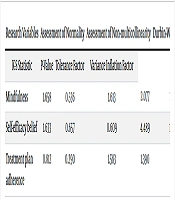
Shokrgozar A, Ghadirian Niyari M. Predicting Treatment Plan Adherence Based on Mindfulness and Self-efficacy Beliefs in Patients with Chronic Pain. Thrita J Neu. 2023;12(2):e146427. doi: https://doi.org/10.5812/thrita-146427
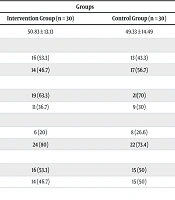
Ghatani S, Najafi F. The Effects of a Self-management Program on Fatigue, Treatment Adherence and Sleep Quality in Patients Undergoing Hemodialysis: A Quasi-Experimental Study. Med Surg Nurs J. 2024;13(1):e160929. doi: https://doi.org/10.5812/msnj-160929
More by these authors
Last Update: 2 days ago
Last Update: 2 days ago
Last Update: 2 days ago
Last Update: 3 hours ago
Last Update: 7 hours ago
Last Update: 4 days ago