Fulltext
.
Image Credit:Med Surg Nurs J
Authors
Background and Objective: The aim of anticoagulant therapies is maintaining the blood level of drug for prevention of thrombotic accident without bleeding. One of the main components in coagulation system management after cardiac valve replacement surgery is to increase patients’ knowledge about thess drugs. The aim of this study was to compare the effectiveness of two methods of follow-up: short message service and telephone follow-up care on prothrombin time in patients after cardiac valve replacement surgery. Materials and Method: This clinical trial study was done on patients admitted for valve replacement in Tehran selected hospitals in 2011. 99 patients were selected through purposive sampling and then were randomly allocated to telephone, short message services and control groups. In each group 33 patients were studied. After completing the demographic questionnaire, patients’ prothrombin time was measured and recorded at discharge time and 3 months later. The booklet and oral training were presented to all of the patients before discharge. Telephone follow-up group were called within the first month twice a week and in the second and third month once a week. One message was sent daily to the patients in Short message services follow-up group. For data analysis SPSS 17, descriptive statistical test, Chi-square, paired T-Test and one way ANOVA were used. Results: The one way ANOVA test showed no significant difference between the means of prothrombin time in telephone follow-up, short message services follow-up and control groups after intervention (P=0.87). Conclusion: Results showed that the effect of two methods in controlling the prothrobin time was the same, but according to low cost and easiness of SMS, the application of this method should be considered in cardiac center.
© 2013, Author(s). This open-access article is available under the Creative Commons Attribution 4.0 (CC BY 4.0) International License (https://creativecommons.org/licenses/by/4.0/), which allows for unrestricted use, distribution, and reproduction in any medium, provided that the original work is properly cited.
Raziani F, Naderipour A, Jalali R, Rezaie M, Sabour B, et al. The Effect of Nurse Telephone Follow up Care on Quality of Life in Patients with Acute Coronary Syndrome after Discharge. J Clin Res Paramed Sci. 2017;6(2):e81362. doi:
nehrir B. Comparison of patient education and follow up by nurse on anxiety in heart failure patients. Med Surg Nurs J. 2014;3(1):e87738. doi:
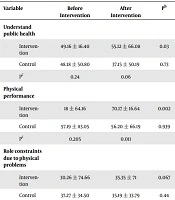
Borzou SR, Babaei N, Gholyaf M, Molavi Vardanjani M, Tapak L. The Effect of Telephone Follow-Up on Quality of Life in Hemodialysis Patients. Nephro-Urol Mon. 2020;12(2):e104178. doi: https://doi.org/10.5812/numonthly.104178
lashkari T. Effect of phone follow-up on quality of life in type II. Med Surg Nurs J. 2014;3(2):e87907. doi:
Fariborz Farsad B, Golpira R, Najafi H, Totonchi Z, Salajegheh S, et al. Comparison between Prothrombin Complex Concentrate (PCC) and Fresh Frozen Plasma (FFP) for the Urgent Reversal of Warfarin in Patients with Mechanical Heart Valves in a Tertiary Care Cardiac Center. Iran J Pharm Res. 2015;14(3):e125319. doi: https://doi.org/10.22037/ijpr.2015.1699
Last Update: 1 week ago
Last Update: 1 week ago
Last Update: 1 week ago
Last Update: 6 hours ago
Last Update: 10 hours ago
Last Update: 5 days ago