Fulltext
.
Image Credit:Med Surg Nurs J
Authors
Background and Objective: Disclosure of disease is one of the most complex challenges for individuals who live with thalassemia. This issue is associated with being stigmatized. It is usually associated with anxiety, fear, and negative reactions of other people. Exploring the experience of concealment resulting from thalassemia-related stigma and designing effective interventions is the key to effective treatment and caring of these patients. The present study was conducted to explain the experiences of thalassemia patients and their caregivers concerning disease concealment due to stigmatization. Materials and Method: This qualitative study performed through conventional content analysis approach. The 21 participants with major thalassemia and their caregivers were selected through purposive sampling. The research was performed in the medical facility of Samen Alhojaj, Kerman, Iran, during 2012-2013. Data were gathered through unstructured interviews and field notes. Data analysis was done using conventional content analysis approach Results: The concept of concealment experienced by patients and their caregivers included the reasons for concealment (disease as a barrier for goal achievement, patient’s personal traits as a barrier for disease disclosure, parents tendency for disease concealment, wrong behaviors and beliefs of the society due to stigmatization of the disease), strategies for concealment (secret caring and lying), and concealment outcomes (physical exhaustion, mental stress, deprivation of support). Conclusion: Patients’ experiences related to thalassemia stigmatization indicated that these patients not only experience adverse physical and mental outcomes of the disease, but also deal with the disease concealment resulting from social stigmatization. The results of the current study can be an introduction to planning interventions to resolve social problems of these patients and help promote their quality of life.
© 2014, Author(s). This open-access article is available under the Creative Commons Attribution 4.0 (CC BY 4.0) International License (https://creativecommons.org/licenses/by/4.0/), which allows for unrestricted use, distribution, and reproduction in any medium, provided that the original work is properly cited.
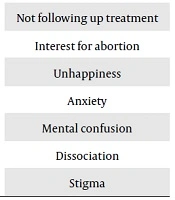
Heidari H, Ahmadi A. Explaining Consequences of Parents Having Child with Thalassemia: Qualitative Study. Med Surg Nurs J. 2020;9(2):e106312. doi: https://doi.org/10.5812/msnj.106312
Zamanzadeh V, Valizadeh L, Ghahramanian A, Hasani Narenjbaghi S. Personal social factors influential on the self-efficacy of the patients with thalassemia: A qualitative study. J Nurs Midwifery Sci. 2021;8(2):e140750. doi: https://doi.org/10.4103/jnms.jnms_124_20
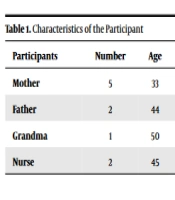
Heidari H, Ahmadi A. Lack of Supportive Systems for Parents of Children with Thalassemia: Forgotten Part of Health System. Jundishapur J Chronic Dis Care. 2022;11(4):e123191. doi: https://doi.org/10.5812/jjcdc-123191
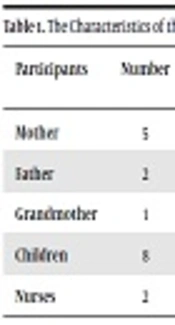
Heidari H, Ahmadi A. Change in the Health System Structure is a Way to Support Parents Having Children with Thalassemia: A Qualitative Study. Jundishapur J Chronic Dis Care. 2019;8(3):e86095. doi: https://doi.org/10.5812/jjcdc.86095
Behdani F, Badiee Z, Hebrani P, Moharreri F, Badiee AH, et al. Psychological Aspects in Children and Adolescents With Major Thalassemia: A Case-Control Study. Inn J Pediatr. 2015;25(3):-. doi: https://doi.org/10.5812/ijp.25(3)2015.322
Last Update: 1 week ago
Last Update: 1 week ago
Last Update: 1 week ago
Last Update: 5 hours ago
Last Update: 9 hours ago
Last Update: 5 days ago