1. Background
The clinical manifestations of COVID-19 vary widely, ranging from asymptomatic infection to severe disease requiring intensive care unit (ICU) admission and mechanical ventilation and potentially resulting in death. Common symptoms include fever, dry cough, shortness of breath, fatigue, and gastrointestinal problems (1). The origin and history of COVID-19 have been extensively studied, with evidence suggesting a zoonotic spillover event (1). According to the World Health Organization, as of November 2023, more than 771 million confirmed cases and nearly 7 million deaths attributed to COVID-19 had been reported globally.
The high prevalence of COVID-19 led to substantial changes in community lifestyles and disruptions of daily life. Although various treatments were proposed to combat COVID-19, no approved antiviral treatment was available at the time described in the cited literature (2). In the absence of definitive evidence-based treatment, appropriate nutrient selection through balanced diets and dietary supplements was considered a potential supportive approach (3). Dietary supplements (DSs) contain one or more dietary compounds, such as vitamins, minerals, amino acids, or other substances with nutritional or physiological effects. The use of DSs had already been increasing because of growing health awareness and interest in preventive nutrition. Consumers use DSs for various reasons related to age, sex, physical activity, health status, and overall health and wellness, including disease prevention and correction of dietary deficiencies (4).
The COVID-19 pandemic introduced an additional reason for DS use. Scientists and consumers showed substantial interest in information about DSs and COVID-19, and media advertisements increasingly promoted DSs believed to help treat or prevent COVID-19 (5). Sales of dietary supplements increased substantially after the onset of the pandemic in many countries (6). Although vitamins and minerals such as vitamins C and D and bioactive compounds such as ginger and turmeric have immune-related, anti-inflammatory, antioxidant, and antiviral properties, COVID-19 treatment guidelines did not routinely recommend DSs (7). Given the potential roles of vitamins C and D in inflammatory and respiratory conditions and public concern about COVID-19, consumption of vitamin C and vitamin D supplements increased (8, 9). However, self-administered supplementation, particularly with vitamin D, may cause serious adverse effects. The reasons for increased supplement consumption and the characteristics of individuals who increased their use had not been thoroughly examined (10, 11).
2. Objectives
This study investigated the distribution of supplement use across population groups in Larestan, Fars Province, Iran, and examined reasons for increased supplement use and its associations with occupation, education, gender, underlying diseases, and income. The study aimed to improve understanding of the factors associated with increased supplement use and to inform planning and policy-making for disease prevention and treatment.
3. Methods
3.1. Study Design and Setting
This descriptive cross-sectional study was conducted in Larestan, Fars Province, Iran, among adults aged 20 to 60 years during the COVID-19 pandemic in 2022 - 2023. The age range of 20 to 60 years was selected because reliable health information was considered more difficult to obtain from individuals younger than 20 years, whereas individuals older than 60 years were excluded to reduce potential confounding due to polypharmacy and age-related conditions that could influence supplement intake patterns.
3.2. Participants and Sampling
A total of 347 questionnaires were completed. For random sampling, a list of eligible individuals aged 20 to 60 years was extracted from the SIB system, and participants were selected using a random number table. The questionnaire was initially distributed via an electronic link. Because of insufficient community participation, trained nutritionists also completed questionnaires through individual interviews with participants. Of the 347 questionnaires, 89 (25.6%) were completed in person and 258 (74.4%) were completed online. Only names, ages, and contact numbers were extracted from the SIB system to facilitate communication and invitations to participate; all other demographic and clinical variables were collected using the study-specific questionnaire. The inclusion criteria were membership in the SIB system in the Larestan region, willingness to complete the questionnaire, and age between 20 and 60 years. The exclusion criterion was unwillingness to participate or to complete the questionnaire.
3.3. Data Collection and Instruments
The electronic questionnaire collected demographic information, including age, gender, education level, occupation, and income. It also assessed a history of chronic diseases and disabilities, history of COVID-19 infection, hospitalization among participants who had been infected, history of COVID-19 infection among acquaintances, and awareness of the benefits of vitamins during the COVID-19 pandemic. The final section included 6 questions on the dose, frequency, and reasons for using vitamin C and vitamin D supplements.
3.4. Statistical Analysis
Based on a similar study by Alyami et al. (12), which reported a 14.9% vitamin C consumption rate during the COVID-19 pandemic, and assuming a margin of error of 0.05 and E = 0.25p, the calculated sample size was 351 participants. Questionnaire reliability was assessed using the test-retest method. The questionnaire was administered to 15 participants and readministered to the same participants after 2 weeks. The correlation between responses yielded a reliability coefficient of 0.86. For validity, the questionnaire was developed after a comprehensive review of similar studies, and the items were reviewed and approved by the research team.
3.5. Ethical Considerations
The study protocol received ethical approval from the Ethics Committee of Larestan University of Medical Sciences (ethical code: IR.LARUMS.REC.1400.011). Participants were informed about the study aims and procedures, and written informed consent was obtained in accordance with the guidelines of the medical ethics committee. Online participants confirmed an "I agree" checkbox at the beginning of the electronic questionnaire before proceeding. In-person participants signed a physical informed consent form.
4. Results
4.1. Sample Characteristics
The effect of COVID-19 on vitamin C and vitamin D supplement consumption was investigated in 347 residents of Larestan County. Participant characteristics are presented in Table 1. The mean ± SD age was 34.53 ± 13.04 years, and the mean ± SD BMI was 24.31 ± 5.65. Overall, 62.6% of participants were female, and 54.6% had tertiary education. Hypertension was reported by 7.5% of participants, diabetes by 8.0%, heart disease by 5.7%, disability by 0.6%, respiratory disease by 8.6%, obesity by 7.2%, kidney stones by 18.4%, and COVID-19 infection by 62.4%. Overall, 53.7% of participants were aware of the benefits of vitamin D, whereas 32.5% were aware of the benefits of vitamin C.
Table 1.
Demographic and Clinical Characteristics of the Participants a
| Variables | Values |
|---|---|
| Age | 34.53 ± 13.04 |
| BMI | 24.31 ± 5.65 |
| Weight | 67.71 ± 18.94 |
| Height | 163.34 ± 26.60 |
| Number of family members | 3.22 ± 0.74 |
| Gender | |
| Male | 117 (33.6) |
| Female | 218 (62.6) |
| Education | |
| Illiterate | 6 (1.7) |
| Elementary | 13 (3.7) |
| Secondary education | 36 (10.3) |
| Associate degree | 101 (29.0) |
| Tertiary education | 190 (54.6) |
| Job | |
| Ministry of Health | 69 (19.8) |
| Government employee | 45 (12.9) |
| Self-employed | 69 (19.8) |
| Housekeeper | 92 (26.4) |
| Private-sector employee | 10 (2.9) |
| Other | 9 (2.6) |
| Not mentioned | 41 (11.8) |
| Hypertension | |
| Yes | 26 (7.5) |
| No | 321 (92.5) |
| Diabetes | |
| Yes | 28 (8.0) |
| No | 319 (91.7) |
| Heart disease | |
| Yes | 20 (5.7) |
| No | 327 (94.0) |
| Disability | |
| Yes | 2 (0.6) |
| No | 345 (99.1) |
| Respiratory disease | |
| Yes | 30 (8.6) |
| No | 317 (91.1) |
| BMI obesity | |
| Yes | 25 (7.2) |
| No | 322 (92.5) |
| Kidney stones | |
| Yes | 64 (18.4) |
| No | 281 (80.7) |
| Smoking | |
| Yes | 58 (16.7) |
| No | 288 (82.8) |
| COVID-19 infection | |
| Yes | 217 (62.4) |
| No | 129 (37.1) |
| Respiratory symptoms of COVID-19 | |
| Yes | 95 (27.3) |
| No | 174 (50.0) |
| Awareness of the benefits of vitamin D | |
| Yes | 187 (53.7) |
| No | 158 (45.4) |
| Awareness of the benefits of vitamin C | |
| Yes | 113 (32.5) |
| No | 232 (66.7) |
a Values are expressed as mean ± SD or No. (%).
4.2. Patterns of Vitamin C and Vitamin D Supplement Use
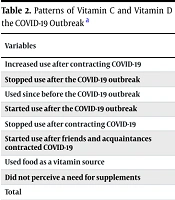
According to participant reports, 72 (20.46%) increased their vitamin D supplement intake and 154 (44.3%) increased their vitamin C supplement intake during the COVID-19 outbreak. Patterns of vitamin C and vitamin D supplement use are shown in Table 2.
Table 2.
Patterns of Vitamin C and Vitamin D Supplement Use During the COVID-19 Outbreak a
| Variables | Vitamin C | Vitamin D |
|---|---|---|
| Increased use after contracting COVID-19 | 28.57 | 14.71 |
| Stopped use after the COVID-19 outbreak | 0.00 | 0.00 |
| Used since before the COVID-19 outbreak | 18.37 | 41.18 |
| Started use after the COVID-19 outbreak | 14.97 | 14.71 |
| Stopped use after contracting COVID-19 | 2.72 | 1.47 |
| Started use after friends and acquaintances contracted COVID-19 | 2.04 | 7.35 |
| Used food as a vitamin source | 21.09 | 10.29 |
| Did not perceive a need for supplements | 12.24 | 10.29 |
| Total | 100.00 | 100.00 |
a Values are expressed as percentage.
The 0.00% value for "stopped use after the COVID-19 outbreak" indicates that none of the participants discontinued supplementation after the onset of the pandemic.
4.3. Factors Associated with Increased Supplement Intake
Increased vitamin D consumption was significantly associated with a higher education level, COVID-19 infection in second-degree relatives, specific occupations, and awareness of its benefits. No significant associations were observed with obesity, hypertension, heart disease, diabetes, respiratory disease, kidney stones, respiratory symptoms, income, or family size. Table 3 presents the relationships between increased supplement intake and participant characteristics.
Table 3.
Relationship Between Increased Supplement Intake and Participant Characteristics a
| Variables | Vitamin C | Vitamin D | ||||
|---|---|---|---|---|---|---|
| Yes | No | P-Value | Yes | No | P-Value | |
| Gender | 0.250 | 0.470 | ||||
| Male | 49 (32.9) | 65 (37.1) | 23 (33.3) | 87 (34.8) | ||
| Female | 100 (67.1) | 110 (62.9) | 46 (66.7) | 163 (65.2) | ||
| Income | 0.118 | 0.091 | ||||
| Under 3 million Toman | 20 (13.2) | 37 (20.8) | 12 (16.9) | 45 (17.6) | ||
| 3 - 6 million Toman | 40 (26.3) | 55 (30.9) | 17 (23.9) | 79 (30.9) | ||
| 6 - 9 million Toman | 32 (21.1) | 27 (15.2) | 13 (18.3) | 47 (18.4) | ||
| 9 - 12 million Toman | 24 (15.8) | 15 (8.4) | 13 (18.3) | 25 (9.8) | ||
| More than 12 million Toman | 23 (15.1) | 29 (16.3) | 14 (19.7) | 34 (13.3) | ||
| Unknown | 13 (8.6) | 15 (8.4) | 2 (2.8) | 26 (10.2) | ||
| Family size | 0.077 | 0.127 | ||||
| Living alone | 4 (2.6) | 3 (1.7) | 3 (4.2) | 4 (1.6) | ||
| 2 people | 17 (11.0) | 13 (7.3) | 9 (12.5) | 20 (7.8) | ||
| 3 - 4 people | 93 (60.4) | 100 (55.9) | 35 (48.6) | 153 (59.3) | ||
| 5 - 7 people | 32 (20.8) | 59 (33.0) | 20 (27.8) | 74 (28.7) | ||
| More than 7 people | 8 (5.2) | 4 (2.2) | 5 (6.9) | 7 (2.7) | ||
| Education | 0.032 b | 0.010 b | ||||
| Illiterate | 2 (1.3) | 4 (2.2) | 0 (0.0) | 6 (2.3) | ||
| Elementary | 2 (1.3) | 10 (5.6) | 2 (2.8) | 11 (4.2) | ||
| Secondary education | 11 (7.2) | 24 (13.3) | 8 (11.3) | 26 (10.0) | ||
| Associate degree | 42 (27.5) | 54 (30.0) | 10 (14.1) | 85 (32.8) | ||
| Tertiary education | 96 (62.7) | 88 (48.9) | 51 (71.8) | 131 (50.6) | ||
| Job | 0.032 b | 0.009 b | ||||
| Ministry of Health | 34 (22.1) | 32 (17.8) | 14 (19.4) | 52 (20.1) | ||
| Government employee | 27 (17.5) | 16 (8.9) | 10 (13.9) | 32 (12.4) | ||
| Self-employed | 27 (17.5) | 42 (23.3) | 14 (19.4) | 55 (21.2) | ||
| Housekeeper | 37 (24.0) | 52 (28.9) | 14 (19.4) | 75 (29.0) | ||
| Private-sector employee | 5 (3.2) | 4 (2.2) | 0 (0.0) | 9 (3.5) | ||
| Other | 4 (2.6) | 5 (2.8) | 5 (6.9) | 4 (1.5) | ||
| Not mentioned | 19 (12.3) | 18 (10.0) | 14 (19.4) | 21 (8.1) | ||
| Hypertension | 0.319 | 0.138 | ||||
| Yes | 13 (8.4) | 10 (5.6) | 4 (5.6) | 20 (7.7) | ||
| No | 141 (90.0) | 170 (94.4) | 67 (93.1) | 239 (92.3) | ||
| Diabetes | 0.490 | 0.560 | ||||
| Yes | 13 (8.4) | 14 (7.8) | 6 (8.3) | 21 (8.1) | ||
| No | 141 (91.6) | 166 (92.2) | 66 (91.7) | 238 (91.9) | ||
| Heart disease | 0.205 | 0.252 | ||||
| Yes | 11 (7.1) | 8 (4.4) | 6 (8.3) | 14 (5.4) | ||
| No | 143 (92.9) | 172 (95.6) | 66 (91.7) | 245 (94.6) | ||
| Disability | 0.290 | 0.612 | ||||
| Yes | 0 (0.0) | 2 (1.1) | 0 (0.0) | 2 (0.8) | ||
| No | 154 (100.0) | 178 (98.9) | 72 (100.0) | 257 (99.2) | ||
| Respiratory disease | 0.003 b | 0.126 | ||||
| Yes | 21 (13.6) | 8 (4.4) | 9 (12.5) | 19 (7.3) | ||
| No | 133 (86.4) | 172 (95.6) | 63 (87.5) | 240 (92.7) | ||
| BMI obesity | 0.034 b | 0.064 | ||||
| Yes | 10 (8.1) | 27 (18.5) | 3 (5.0) | 34 (16.5) | ||
| No | 114 (92.0) | 129 (91.5) | 57 (95.0) | 182 (93.5) | ||
| Favism | 0.376 | 0.196 | ||||
| Yes | 7 (4.6) | 145 (95.4) | 1 (1.4) | 69 (98.6) | ||
| No | 6 (3.3) | 174 (96.7) | 12 (4.6) | 247 (95.4) | ||
| Kidney stones | 0.280 | 0.463 | ||||
| Yes | 26 (17.0) | 127 (83.0) | 13 (18.3) | 44 (17.1) | ||
| No | 36 (20.1) | 143 (79.9) | 58 (81.7) | 214 (82.9) | ||
| Smoking | 0.390 | 0.276 | ||||
| Yes | 24 (15.6) | 31 (17.3) | 10 (13.9) | 46 (17.8) | ||
| No | 130 (84.4) | 148 (82.7) | 62 (86.1) | 212 (82.2) | ||
| COVID-19 infection | 0.003 b | 0.359 | ||||
| Yes | 110 (71.4) | 101 (56.4) | 47 (65.3) | 160 (62.0) | ||
| No | 44 (28.6) | 78 (43.6) | 25 (34.7) | 98 (38.0) | ||
| Awareness of the benefits of vitamin C | 0.001 b | 0.470 | ||||
| Yes | 120 (77.9) | 109 (61.2) | 50 (69.4) | 82 (31.9) | ||
| No | 34 (22.1) | 60 (38.8) | 22 (31.6) | 175 (68.1) | ||
| Awareness of the benefits of vitamin D | 0.450 | 0.042 b | ||||
| Yes | 82 (53.2) | 97 (54.5) | 32 (44.4) | 146 (56.8) | ||
| No | 72 (46.8) | 81 (45.5) | 40 (55.6) | 111 (44.2) | ||
a Values are expressed as No. (%).
b Indicates statistical significance.
5. Discussion
This descriptive cross-sectional study examined changes in vitamin C and vitamin D supplement intake among adults in Larestan during the COVID-19 pandemic and described demographic characteristics, supplement use, and factors associated with changes in use.
A substantial proportion of participants increased supplement intake during the outbreak: 44.3% increased vitamin C use and 20.46% increased vitamin D use. These findings suggest that the pandemic influenced participants’ health behaviors, particularly vitamin supplementation. Bae and Kim reported increased interest in supplements during the COVID-19 pandemic, consistent with our findings (3). In a systematic review and meta-analysis, Olczak-Pruc et al. reported that although ICU stay was longer among patients treated with vitamin C, in-hospital mortality was lower among those who received vitamin C supplementation (8). Vitamin C plays an important role in responses to oxidative stress and has shown potential benefits in acute conditions. Requirements for vitamin C may increase during infection, and in severe acute cases, it may be administered intravenously. Vitamin D also affects immune function and acts as an immunomodulator, and low serum vitamin D levels have been associated with acute respiratory infections, including influenza. The potential benefits of vitamins C and D in COVID-19 prevention and reduction in disease incidence may have contributed to increased use during the pandemic. Because vitamin D supplementation had been recommended as part of complementary therapy by the Iranian Ministry of Health before the COVID-19 outbreak, the increase in vitamin D use may have been smaller than the increase in vitamin C use. Changes in dietary patterns during quarantine may also have contributed to altered nutritional behavior.
Our findings were partly similar to those of Mayasari et al. (13) regarding increased vitamin C consumption; however, unlike their study, vitamin D consumption also increased in our study. This difference may reflect variations in the study period and geographic setting. In a study conducted in Saudi Arabia (12), all participants who used nutritional supplements also used vitamin C during the COVID-19 pandemic.
Many studies have investigated vitamin C, vitamin D, turmeric, garlic, and other supplements in relation to COVID-19 (14, 15). Despite the limited number of clinical studies and inconsistent findings, Borges et al. (16) described vitamin C as a potential therapeutic adjunct in COVID-19, possibly through reduced inflammation and improved oxygenation. Vitamin C contributes to regulation of the immune response and chronic inflammation. Similar findings were discussed by Vollbracht and Kraft (17).
COVID-19 has been associated with cytokine storm, pneumonia, acute respiratory distress syndrome, C-reactive protein elevation, and heart failure (18). Studies have suggested that sufficient serum levels of vitamins D and C may reduce COVID-19 severity and infection risk by helping prevent a cytokine storm (19-21). This relationship may be more evident in individuals with lung disorders (22). Vitamin D and vitamin C intake has been recommended for at-risk populations (23). On the basis of the cited evidence, vitamin C and vitamin D intake may be important for maintaining normal blood levels, particularly in older adults, individuals with obesity, and those with underlying diseases such as diabetes and heart disease (24). Vitamin C has also been reported to have beneficial effects in critically ill patients. It is an antioxidant that affects cellular immunity and serves as a cofactor in endogenous catecholamine production (25). Vitamin C has a broad range of antiviral actions against several viral infections (26), and reduced vitamin C levels have been observed in viral infections and sepsis (27). In viral infection, vitamin C contributes to neutrophil clearance by macrophages and promotes T-cell maturation (28, 29), thereby supporting apoptosis and phagocytosis (27). Vitamin C has been associated with reduced mortality from H1N1-associated pneumonia (30). Vitamin C supplementation at 300 mg/day in influenza-induced pneumonia has been reported to protect against severe infection and reduce hospital stay (26). In another study of 133 patients, vitamin C supplementation was associated with protection against herpes simplex keratitis (odds ratio, 0.25) (31). Some studies have also reported vitamin C as a potentially effective intervention for COVID-19 (32, 33). Accordingly, vitamin C supplementation has been hypothesized to reduce COVID-19 severity.
One contributor to severe COVID-19 may be increased free-radical production and oxidative stress associated with impaired immune function. Vitamin C reduces oxidative stress and neutralizes free radicals. An imbalance between antioxidants and oxidants can contribute to tissue damage; therefore, vitamin C may improve antioxidant status and reduce the effects of infectious and viral diseases (34, 35).
These biological mechanisms provide a plausible explanation for the increased supplement use observed in our population, as individuals with greater awareness and specific health conditions may have sought these perceived immune-related benefits during the pandemic.
Observational studies have reported associations between vitamin D deficiency and increased mortality among people with COVID-19 (36). Other evidence has associated vitamin D supplementation with improved COVID-19 outcomes (37-39), although some clinical studies have not confirmed these effects or have reported opposing findings (40, 41). Several studies have also reported associations between vitamin D deficiency and increased risk of COVID-19 infection and mortality (42-44). In a retrospective study of 191,779 people, COVID-19 positivity was significantly associated with vitamin D deficiency (45). Vitamin D induces cathelicidin 37, which is active against enveloped and nonenveloped viruses. Increased cathelicidin 37 is associated with reduced circulating interleukin-17, which may contribute to COVID-19-related thrombosis and acute respiratory distress (46, 47). Another proposed mechanism linking vitamin D and COVID-19 is reduced cytokine secretion. Vitamin D increases the anti-inflammatory cytokine interleukin-10 and decreases the proinflammatory cytokines interleukin-6, interleukin-1, and tumor necrosis factor alpha (48). Vitamin D also modulates the renin-angiotensin-aldosterone system and angiotensin-converting enzyme 2, which has protective and antioxidant roles in the lungs during acute respiratory distress (49, 50).
Raising public awareness about the benefits of supplements may be a useful step in managing respiratory pandemics and reducing the financial burden on healthcare systems; however, definitive confirmation requires future interventional studies.
5.1. Strengths, Limitations, and Future Research
This study has several strengths, including the use of data from the integrated SIB system for sampling, an acceptable sample size of 347 participants, and the collection of detailed demographic and clinical data. Several limitations should also be acknowledged. First, the cross-sectional design precludes establishing causal relationships between the studied factors and supplement use. Second, self-reported supplement intake may be subject to recall and social desirability bias. Third, the study was conducted in a single region, Larestan, which may limit generalizability to populations with different cultural and socioeconomic characteristics. Future prospective cohort studies and interventional trials are recommended to confirm the observed associations and evaluate the effectiveness of awareness campaigns in improving supplement use and health outcomes during infectious disease outbreaks.
5.2. Conclusions
Vitamin C and vitamin D supplementation increased during the COVID-19 pandemic among adults in Larestan and was associated with education level, occupational status, and awareness of supplement benefits. Although these findings suggest that public awareness may play a role in health behavior change during pandemics, the cross-sectional design limits causal inference. Increasing public knowledge about supplement benefits may be beneficial, but further longitudinal and interventional studies are required to confirm direct effects on disease prevention and healthcare cost reduction.