
1. Context
Transplantation is a medical procedure to transfer an organ or tissue from a healthy individual to an individual with one or some diseases that damaged his/her organ or tissue to benefit from the transplanted organ function. Kidney transplantation is a gold standard treatment performed on patients with chronic kidney failure. Patients with kidney failure require hemodialysis, which should be continually performed after a while throughout their entire life; therefore, the adoption of kidney transplantation procedures for these patients will improve their quality of life (1, 2). Despite its advantages, this procedure is not entirely safe because there are chances of some complications to occur following the procedure, such as cardiovascular risk and the emergence of malignancy that can cause death. However, the 5-years survival rate of patients who underwent kidney transplants has been increasing to 70% in recent years, resulting from improvement in knowledge and surgical procedure (2).
Delayed graft function (DGF) is a condition that can be a clue for kidney transplant failure, which means that the kidney does not function properly in the initial phase after transplantation. This failure can be caused by insufficient blood flow, resulting in ischemia that further triggers immunological responses. Acute tubular necrosis is often encountered in DGF due to increased oxidative stress shortly after the transplantation of renal graft. Consequently, careful observations need to be made before a failure or rejection following a kidney transplant because effective treatment for DGF has not been discovered. Several risk factors that might increase the risk of DGF and can be predictive factors of its incidence are donor’s age, second transplantation, blood transfusion, and urine volume (3).
The kidneys will immediately function once blood enters the kidney’s vessel; therefore, the diuresis function will run immediately. A large volume of urine on the first day after the transplantation becomes a predictor or parameter to predict the transplant outcome. The number of reports stated that the volume of the first 24-hour urine output (UOP1) is within the range of 2 - 10 L. The volume of urine that comes out in the initial phase after the transplantation will also be correlated with the short-term and long-term survival of the transplanted kidney, despite its controversy. Ideally, the urine output will later decrease and reach stability within the first 1 month following a successful kidney transplantation procedure (4).
2. Objectives
As previous studies gave supporting proof to strengthen the theory of failure in the kidney transplant process due to a faulty kidney function, the direct association between the UOP1 after transplantation and the incidence of DGF is still unclear and remains a prediction. Therefore, this study intended to look for the significance of the correlation between the UOP1 after transplantation and the incidence of DGF.
3. Data Sources
3.1. Description of Condition and Intervention
This systematic review targeted studies that involve individuals with a history of kidney transplantation from either living or deceased donors. Each individual was followed postoperatively in the first 24 hours to obtain initial urine output (i.e., the UOP1) and creatinine levels. For the determination of the functional status of the kidney (graft) implanted in the patient, follow-up was carried out for up to 1 week. At the end of the first postoperative week, the need for dialysis was assessed as a DGF parameter. There are no restrictions on the types of surgical techniques performed on patients.
3.2. Database Searching and Literature Screening
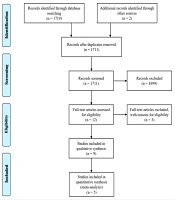
A literature search based on population, intervention, control, and outcomes was conducted in September 2021 on five electronic databases, namely MEDLINE, Cochrane, Proquest, EBSCO, and Scopus (ScienceDirect). Table 1 shows the literature search results, and Figure 1 illustrates the literature search scheme. Keywords were adjusted in each database. Screening based on the title and abstract was performed on all articles that appeared on the search. The preferred reporting items for systematic reviews and meta-analyses flowchart was used in this study.
Table 1.
Literature Searching Results
| Database | Keywords | Hit | Selected | Comments |
|---|---|---|---|---|
| MEDLINE | (((urine output AND (clinical trial [Filter])) AND ((((kidney transplantation [MeSH Terms]) OR (kidney transplantation [Title/Abstract])) OR (kidney transplantations [Title/Abstract])) OR (kidney transplantations [MeSH Terms]) AND (clinical trial [Filter]))) AND (((delayed graft function) OR (delayed graft function [MeSH Terms])) OR (delayed graft function [Title/Abstract]) AND (clinical trial [Filter])) Filters: Clinical Trial | 9 | 1 | 1 pilot study, 7 studies did not match PICO |
| Cochrane | "kidney transplantation" OR "transplanted kidney" OR "kidney transplantations" in All Text AND "delayed graft function" OR "kidney function" in All Text AND "prediction" OR "predict" OR "AUC" in All Text AND "urine output" in All Text - (Word variations have been searched) | 3 | 1 | 2 studies did not match PICO |
| EBSCO | (delayed graft function) AND (kidney transplantation OR renal transplantation OR kidney transplantations OR renal transplantations) AND (urine output OR diuresis) Limited to clinical study; English only | 19 | 3 | 16 studies did not match PICO, 3 review studies |
| Scopus | (urine output) AND (delayed graft function) AND (kidney transplantation OR renal transplantation OR kidney transplantations OR renal transplantations) | 17 | 2 | 15 studies did not match PICO |
| ProQuest | (urine output OR diuresis) AND (delayed graft function) AND (renal transplantation OR kidney transplantation) | 1671 | 6 | 1664 studies did not match PICO |
Abbreviation: PICO, population, intervention, control, and outcomes.

Figure 1.
PRISMA flowchart describing the process for identifying included articles
4. Study Selection
The type of included studies was comparative or correlative, comparing the UOP1 after renal transplant surgery with the occurrence of DGF (creatinine level parameters and dialysis requirement in the first postoperative week). The inclusion criteria applied in this study were (1) cohort/randomized controlled trial/case-control studies linking the first 24-hour postoperative diuresis with DGF, (2) studies conducted on humans, (3) English/Indonesian written articles, (4) available full-text articles, and (5) studies published in the last 15 years. The exclusion criteria were studies in the form of systematic or meta-analysis, literature review, case reports, case series, editorial letters, studies on animals, and/or studies in the peer review process (not yet published).
There were no restrictions regarding each study’s participants and the types of operating techniques performed on each participant. Organs donated to patients were not limited to organs originating from living donors. The article selection was made by full-text analysis to assess article eligibility, and the selected studies proceeded to the critical review.
5. Data Extraction and Outcomes of Interest
Data extraction on each included article was carried out by each author independently. The extracted data were the dependent variable (i.e., DGF incidence [assessed based on creatinine level or dialysis requirement at the end of the first postoperative week]) and independent variables (i.e., postoperative diuresis volume in the first 24 hours). The identification of each study’s characteristics was also made in the form of the author, study design, year of publication, place of research, number of samples, intervention, outcomes, and effect estimate. The primary clinical outcome assessed in this review was the incidence of DGF. The DGF definitions in the literature are still sporadic (5). The authors did not apply restrictions on the DGF definition adopted for each study.
5.1. Assessment of Methodologic Quality
The quality of the included studies was assessed to reduce the risk of performance bias in this systematic review. Study quality assessment was carried out by evaluating each study’s method using the Quality in Prognostic Studies (QUIPS) assessment tool, following Hayden et al.’s recommendations (6). Studies with a moderate minimum quality were included in the pooled effect estimate calculation.
6. Results
6.1. Literature Search
There were 1719 studies obtained at the first hit through database searching, and 2 more additional studies were obtained from other sources. Moreover, 10 duplications were obtained of 1721 studies. A total of 1711 studies were screened for titles and abstractions. Finally, 12 studies that matched the current systematic review’s objectives were obtained. The full-text analysis of 12 studies resulted in obtaining 9 observational studies. Among these nine studies, five studies described the outcomes obtained with a uniform effect estimate and could be analyzed quantitatively. Figure 1 illustrates the literature search results.
6.2. Study Characteristics
Nine studies were involved in this systematic review, as shown in Table 2 and Appendix 1 (see Supplementary File). Two of them were retrospective studies; however, the rest were prospective studies. Two of the seven prospective studies were multicentre studies. Most studies have been published in the last 10 years. The total number of patients involved in this systematic review was 1427. Five of the nine studies did not restrict the type of allograft transplanted in patients. Nevertheless, the remaining four studies were only limited to deceased donors.
Table 2.
Characteristics of Studies Included in This Systematic Review
| Author | Publication Year | Country/Region | No. | Population | Donor’s Age (y) | Recipient’s Age (y) | Design |
|---|---|---|---|---|---|---|---|
| Kim et al. (7) | 2019 | South Korea | 291 | DD and LD | NA | NA | Retrospective study |
| Nielsen et al. (8) | 2019 | Europe | 225 | DD | 58 (51 - 65) | 59 (49 - 66) | Multicenter prospective study |
| Maier et al. (9) | 2018 | Austria | 170 | DD and LD | 54 ± 16 | 55 ± 14 | Prospective study |
| Mojtahedzadeh et al. (10) | 2016 | Iran | 69 | DD | 32 ± 12 | 42 ± 12 | Prospective study |
| Pajek et al. (11) | 2014 | Slovenia | 71 | DD and LD | 48 ± 12 | 50 ± 12 | Prospective study |
| Hollmen et al. (12) | 2011 | Finland | 176 | DD | NA | 52 ± 13 | Prospective study |
| Sainz et al. (13) | 2009 | Chile | 95 | DD and LD | 38 ± 14 | 40 ± 12 | Retrospective study |
| Schnuelle et al. (14) | 2006 | Germany | 300 | DD | 49 ± 13 | 44 ± 16 | Prospective study |
| Parikh et al. (15) | 2006 | USA | 30 | DD and LD | NA | NA | Multicenter prospective study |
Abbreviations: NA, not available or presented in another way; DD, deceased donor; LD, living donor.
In general, the definition of DGF (i.e., the need for dialysis in the first 7 days after a kidney transplant) in each study was similar. Only in one study that adhered to a different definition of DGF, which is the need for dialysis in the first 7 days or serum creatinine level, dialysis need decreased ≤ 10% per day. The limit values for urine output also differed in each study. Because there is no consensus on the normal urine output of patients after renal transplantation within the first 24 hours, the included studies determined the optimum cut-off using the area under the curve-receiver operating characteristic (AUC-ROC) curve.
Each study had a similar outcome measure. Five of the nine studies reported the sensitivity and specificity of the UOP1 in predicting DGF. Six out of the nine studies reported the AUC as an outcome measure, and some studies only reported the AUC without sensitivity and specificity. Some of the studies reported the relationship between the UOP1 and the incidence of DGF as an odds ratio (OR). A systematic review of the studies is shown in Table 3.
Table 3.
Systematic Review of Studies Reporting the First 24-Hour Urine Output Association with Delayed Graft Function
| Author | UOP1 DGF | UOP1 Non - DGF | OR | 95% CI | Quality |
|---|---|---|---|---|---|
| Nielsen et al. (8) | NR | NR | 803.4 | 44.78 - 14,414.02 | Good |
| Mojtahedzadeh et al. (10) | 2.775 ± 0.553 | 7.943 ± 2.819 | 1.000 | 1.0 - 1.0 | Good |
| Pajek et al. (11) | 50 (0 - 325) a | 390 (20 - 950) a | 146.28 | 8.28 - 2584.28 | Good |
| Hollmen et al. (12) | 2.406 ± 0.8092 | 2.544 ± 1.5265 | 41.76 | 17.00 - 102.63 | Good |
| Sainz et al. (13) | 1.772 ± 1.521 | 7.486 ± 6.469 | 0.999 | 0.999 - 1.000 | Fair |
| Schnuelle et al. (14) | NR | NR | 15.68 | 8.78 - 28.00 | Good |
| Parikh et al. (15) | NR | NR | 11.7 | 0.1 - 913 | Fair |
Abbreviations: DGF, delayed graft function; UOP1 DGF, urine output (L) of DGF patients in the first 24 hours after surgery, presented in mean ± standard deviation or median (range); UOP1 non-DGF, urine output (L) of non-DGF patients in the first 24 hours after surgery, presented in mean ± standard deviation or median (range); NR, not reported.
aUrine output (mL) per hour in the first 24 hours.
6.3. Risk of Bias Assessment
Study quality assessment was carried out by evaluating the method of each study using the QUIPS assessment tool, following Hayden et al.’s recommendations (6). Table 4 shows the results of the study quality assessment included in this systematic review.
Table 4.
Quality Assessment of Selected Studies Using the Quality in Prognostic Studies
| Author | Study Participation | Study Attrition | Prognostic Factor Measurement | Outcome Measurement | Study Confounding | Statistical Analysis and Reporting | Overall Risk of Bias |
|---|---|---|---|---|---|---|---|
| Kim et al. (7) | Low | Low | Mod | Low | Mod | Mod | Mod |
| Nielsen et al. (8) | Low | Low | Low | Low | Mod | Low | Low |
| Maier et al. (9) | Low | Low | Mod | Low | Mod | Mod | Mod |
| Mojtahedzadeh et al. (10) | Low | Mod | Mod | Low | Low | Low | Low |
| Pajek et al. (11) | Low | Mod | Low | Low | Mod | Low | Low |
| Hollmen et al. (12) | Low | Low | Low | Low | Low | Low | Low |
| Sainz et al. (13) | Low | Low | Mod | Low | Mod | Mod | Mod |
| Schnuelle et al. (14) | Low | Low | Low | Low | Mod | Mod | Low |
| Parikh et al. (15) | Low | Mod | High | Low | Low | Mod | Mod |
Abbreviation: Mod, moderate.
6.4. Association of First 24-Hour Postoperative Output Urine with DGF
Four of the nine studies performed a multivariate analysis of the relationship of the postoperative UOP1 with DGF. Three of the four studies showed a significant relationship between the UOP1 and DGF. Only a study performed by Sainz et al. (13) demonstrated this relationship as insignificant. Parikh et al.’s (15) study even showed that low UOP1 was a risk factor for DGF, with an OR of 11.7 (0.1-913). The obtained data were quite heterogeneous (Table 4).
6.5. Urine Output Accuracy in the First 24 Hours After Operation in Predicting DGF
After finding a significant relationship between the UOP1 and DGF, this study continued to find out how accurate the value of the UOP1 was in predicting DGF, as shown in Table 5. Six of the nine studies reported the AUC of the UOP1 as a predictive factor for DGF. All studies reported an AUC of > 0.75. Three of the six studies even reported an AUC above 0.9. This indicates that the UOP1 has good sensitivity with a low false-positive rate.
Table 5.
Systematic Review of Studies Reporting First 24-Hour Urine Output Accuracy
| Author | DGF Definition | Sens | Spec | AUC | Cut-off | Quality |
|---|---|---|---|---|---|---|
| Kim et al. (7) | Haemodialysis performed within 1 week after surgery | NR | NR | 0.913 | NR | Fair |
| Nielsen et al. (8) | Haemodialysis performed within 1 week after surgery | 87% | 100% | 0.98 ± 0.01 | 47 mL/hour | Good |
| Maier et al. (9) | Haemodialysis performed within 1 week after surgery | NR | NR | 0.875 (0.815 - 0.934) | NR | Fair |
| Mojtahedzadeh et al. (10) | Need for dialysis within 1 week or serum creatinine level decreased ≤10% per day immediately. | NR | NR | 0.782 (0.629 - 0.934) | NR | Good |
| Pajek et al. (11) | Haemodialysis performed within 1 week after surgery | 100% | 57% | 0.87 (0.77 - 0.94) | 325 mL/hour | Good |
| Hollmen et al. (12) | Haemodialysis performed within 1 week after surgery | 91% | 80% | 0.931 (0.894 - 0.967) | 1035 mL/hour | Good |
| Schnuelle et al. (14) | Haemodialysis performed within 1 week after surgery | 77.5% | 82% | NR | 630 mL/24 hours | Good |
| Parikh et al. (15) | Haemodialysis performed within 1 week after surgery | 80% | 35% | NR | 1000 mL/24 hours | Fair |
Abbreviations: DGF, delayed graft function; Sens, sensitivity; Spec, specificity; AUC, area under the curve; NR, not reported.
However, not all studies that reported the AUC announced each value for sensitivity and specificity in detail. On the other hand, studies that reported this parameter, not all of them, announced AUC values. The cut-off value for low UOP1 has not been standardized by consensus, causing the minimum threshold value of the UOP1 to vary between studies. This cut-off was determined based on the optimum value of the AUC-ROC curve obtained from each study.
Five out of the nine studies presented the sensitivity and specificity of the UOP1 as a predictive factor for DGF, although not all of them were explicitly presented. All the studies agreed that the UOP1 has good sensitivity in predicting DGF. Pajek et al. (11) even showed a UOP1 sensitivity of 100%. The specificity of the UOP1 in determining which patients have DGF or will need dialysis within 1 week postoperatively varies between the studies. Nielsen et al. (8) demonstrated that the specificity of the UOP1 in predicting the incidence of DGF was 100%. However, Parikh et al. (15), with a much smaller number of samples, showed the specificity of the UOP1 at only 35%.
7. Discussion
The DGF is a major challenge for allograft survival as it potentially leads to acute rejection and chronic allograft nephropathy. The DGF is a manifestation of acute kidney injury (AKI) following a renal transplantation procedure. As it is an acute clinical incidence, patients will experience a 10% increase in serum creatinine levels in the first 48 hours postoperatively and require hemodialysis within the first week after transplantation (16). This is often used as the basis for the diagnosis of DGF in posttransplant patients. Although the definition of DGF is sporadic among studies, it still reflects the AKI process that occurs in patients (17).
In a literature review, the DGF mechanism has been described as a failure of the reperfusion process (i.e., ischemia) or renal reperfusion success, followed by the activation of immune cells, which causes an acute rejection event (16). This process causes AKI, which manifests as a glomerular filtration rate decrease, accompanied by an increase of serum creatinine levels. A decreased rate of kidney filtration that occurs in DGF patients causes low urine production. This event has been documented in various clinical studies (18).
A meta-analysis showed a 41% increased risk of long-term graft failure in DGF patients. The DGF was also associated with a 38% increased risk of acute rejection in the first year and resulted in higher serum creatinine concentrations at 3.5 years of follow-up (18). In this case, DGF is an essential clinical outcome after a kidney transplant, which requires the attention of patients and physicians before performing a transplant. The early detection of DGF patients is necessary to be conducted.
This study systematically reviewed the relationship between the UOP1 and DGF. Almost all studies which reported the relationship between these two variables showed a significant relationship between the UOP1 and DGF. Patients with the UOP1 lower than the optimum cut-off in each study were at a higher risk of developing DGF, with an OR of 29.61 (8.07 - 108.60). Multivariate analysis by Parikh et al. (15) also demonstrated that low UOP1 was a risk factor for DGF, with an OR of 11.7 (0.1 - 13). All studies published after 2010 reported the OR ≥ 40. Nielsen et al. analyzed the incidence of DGF with the primary risk factor assessed as plasma neutrophil gelatinase-associated lipocalin in the first 24-hour postoperative urine. The aforementioned clinical trial study used a deceased donor with a median age of 58 (51 - 65) years and showed that all patients with low urine output (based on the optimum cut-off) experienced DGF. Only 7 out of 65 patients with normal urine output (based on optimum cut-off) required dialysis in the first postoperative week (8). This finding makes the aforementioned study have a huge effect estimate, compared to others.
In predicting patients experiencing DGF, the UOP1 has good sensitivity and specificity. All the studies agreed that the sensitivity of the UOP1 was high, and no study reported it below 70%. Pajek et al., prospectively assessing patients after renal transplantation from deceased and living donors, demonstrated that all patients with DGF had the UOP1 lower than the optimum cut-off (sensitivity of 100%) (11). Hollmen et al., with a total of 71 patients and homogeneous (only deceased donors) treatment, showed a UOP1 sensitivity of 91% (0.83 - 0.96) (12). The aforementioned two studies had the most prominent effect estimate among the three other studies in the current meta-analysis.
The UOP1 performance in ruling-in DGF patients was not as good as the performance in ruling-out DGF patients. The specificity reported by the examined studies varies greatly. The use of optimum cut-off in each study is considered to be the cause of this variability. Each study was more concerned with high sensitivity, as in clinical settings false positive is regarded to be better than false negative (i.e., misdiagnosis). Nevertheless, the specificity value in this study was still high and quite helpful in ruling-in DGF patients.
Several factors observed to confound this systematic review are the heterogeneity of study designs, sample size, publication years, and optimum cut-offs that vary between the studies. This study involved two retrospective studies indicating that the obtained data were only based on medical records. The number of samples between studies also varied within tens to hundreds. Additionally, the number of studies with similar effect estimates was also small; therefore, the number of studies that can be analyzed quantitatively was small. Furthermore, some studies did not report the criteria used to establish which patients needed hemodialysis. Different optimum cut-offs for each study also contributed to the performance bias of this meta-analysis.
7.1. Conclusions
In conclusion, the UOP1 has a strong and significant association with DGF events and is a good parameter in predicting the incidence of DGF in patients after renal transplantation, with high sensitivity and specificity.