Full Text
Full text is available in PDF
Authors
Background and Aims: Surgery and radiotherapy continue to be the treatments of choice for localised and locally advanced prostate cancer. In recent years, we have witnessed significant development in radiotherapy techniques in order to increase the dose on the target volume and diminish side effects. In the following work, we describe the technique of insertion of gold fiducial markers (gold seeds) as well as their application and usefulness in the treatment of locallizedand locally advanced prostate adenocarcinoma with image guided radiotherapy (IGRT) by means of the ExacTrac® system.
Methods: We did a prospective descriptive study including consecutive patients undergoing IGRT in our hospital. Patients were reviewed one week after the insertion of the markers and in each radiothrapic session. Between October 2005 and June 2007 we carried out a total of 126 procedures using this technique. Each patient was interviewed in each radiotherapic session. Three or four gold intraprostatic fiducial markers were implanted in each patient by transrectally and ultrasound guided. We reported patients tolerance of this technique by a satisfaction questionaire, as well as the early and late complications derived from the insertion of the markers in the clinical interview. We collected the movements of the gold seeds.
Results: Complications observed were: urinary infection in 4 cases (3.2%), prostatitis in 2 cases (1.6%), slight pelvic pain in 6 patients (4.8%) and self-limited rectal bleeding in 8 patients (6.4%). None of the patients presented haematuria. Loss of 1 marker was registered in 7 patients (5.5%) and loss of 2 markers in 2 patients (1.6%).
Conclusions: Insertion of fiducial markers for prostate cancer treatment is a technique of very simple execution, easy to reproduce almost free of adverse effects, which is able to reduce toxicity derived from radiotherapy and allows dose escalation in radiotherapy.
© 2010, Author(s). This open-access article is available under the Creative Commons Attribution 4.0 (CC BY 4.0) International License (https://creativecommons.org/licenses/by/4.0/), which allows for unrestricted use, distribution, and reproduction in any medium, provided that the original work is properly cited.

Spartacus R, Dana R, Gaur P, Gupta D, Paliwal R, et al. Ultrasound Image Based High Dose Rate (HDR) Brachytherapy in Locally Advanced Cancer Cervix. Int J Cancer Manag. 2017;10(8):e7392. doi: https://doi.org/10.5812/ijcm.7392
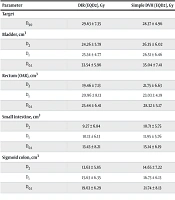
Eslamizadeh M, Dosaranian-Moghadam M, Shojadini SV, Raeis Dana S. Can Deformable Image Registration Improve Cumulative Dose Assessment and Enable Safer Dose Escalation in Rectal Cancer Radiotherapy? A Retrospective Cohort Study. Int J Cancer Manag. 2026;19(1):e168776. doi: https://doi.org/10.5812/ijcm-168776
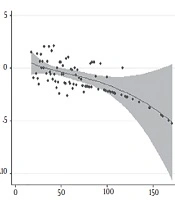
Lashey A, Sehri SY, Aghai Meibodi A, Ghafari M, Gholivandan J, et al. Level of Prostate Cancer Diagnosis Using MRI-TRUS Fusion Biopsy in Patients with a Negative History of TRUS Biopsy. Nephro-Urol Mon. 2019;11(3):e93596. doi: https://doi.org/10.5812/numonthly.93596
Ghafoori M. Imaging Evaluation of Recurrence in Treated Prostate Cancer. I J Radiol. 2014;11(30th Iranian Congress of Radiology):e21413. doi: https://doi.org/10.5812/iranjradiol.21413
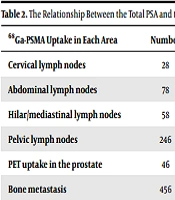
Doroudinia A, Darvishian N, Bakhshayesh Karam M, Emami H. Evaluation of the Relationship Between Prostate-Specific Antigen Levels, Gleason Scores, and 68Ga-PSMA PET/CT Scan Findings in Prostate Cancer Patients. I J Radiol. 2022;19(1):e122440. doi: https://doi.org/10.5812/iranjradiol-122440
Last Update: 4 days ago
Last Update: 4 days ago
Last Update: 4 days ago
Last Update: 4 days ago
Last Update: 2 days ago
Last Update: 1 day ago
