Fulltext
Fulltext is availale in the PDF.
Zahedan Journal of Research in Medical Sciences
The Official Journal of Zahedan University of Medical Sciences
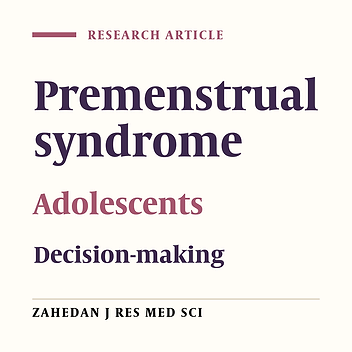
Image Credit:Zahedan J Res Med Sci
Authors
Background: In this study, the existing challenge about the association of construal level and temporal distance was examined. Doing so, the effect of two types of educational intervention on progress of decision making stages in students with premenstrual syndrome (PMS) was studied, based on theoretical concepts of construal level.
Materials and Methods: The present study is a randomized field trial research conducted on 1578 high school students. A total of 255 students in the second stage of the precaution adoption process model were chosen randomly. They then went through educational intervention based on either low or high construal levels of relaxation method.
Results: Subjects in the intervention group showed a higher decision-making stage progression than in control group (p<0.001). The two-stage progression was significantly salient in low construal level-based intervention group (p=0.012). None of the demographic, premenstrual, and premenstrual syndrome severity characteristics were related to this progression.
Conclusions: Inducing low construal level causes an individual shift toward desired action more rapidly. That is, there is a correlation between construal level and temporal distance. To accelerate the adoption of any health behavior, temporal distance can be taken as a basic and essential topic.
© 2013, Author(s). This open-access article is available under the Creative Commons Attribution 4.0 (CC BY 4.0) International License (https://creativecommons.org/licenses/by/4.0/), which allows for unrestricted use, distribution, and reproduction in any medium, provided that the original work is properly cited.

Rezaei M, Solaimani L, Mohammadinia N. Effect of Educational Intervention Based on PRECEDE Model on Improving Menstrual Health Behaviors Among Female Students. Shiraz E-Med J. 2022;23(12):e123461. doi: https://doi.org/10.5812/semj-123461
Sanaenasab H, Ghofranipour F, Kazemnejad A, Khavanin A, Tavakoli R. The Effect of Composed Precede-Proceed Model, Social Cognitive and Adult Learning Theories to Promote Safety Behaviors in Employees. J Kermanshah Univ Med Sci. 2008;12(1):e80105. doi:
Mohammadi Zeidi I, Ziaeiha M, Safari variyani A, Khalaj M, Mohammadi Zeidi B, et al. Predicting the stages of change in physical activity behavior of QUMS students with Pender’s model. J Inflamm Dis. 2024;14(3):e155554. doi:
Sedighian M, Babazadeh T, Asghari Jafarabadi M, Allahverdipour H. Comparison of cognitive - emotional determinants of sexual high-risk behaviors amongst youth: An application of prototype willingness model. koomesh. 2017;19(3):e152899. doi:
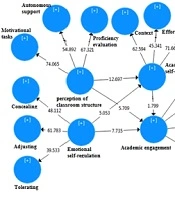
Babajani M, Erfani N, Yarahamdi Y, Ahmadian H. Developing a Causal Model of Academic Engagement Based on the Perception of Classroom Structure and Emotional Self-regulation with the Mediating Role of Academic Self-efficacy. J Clin Res Paramed Sci. 2022;11(2):e133180. doi: https://doi.org/10.5812/jcrps-133180
Last Update: 1 week ago
Last Update: 1 week ago
Last Update: 1 week ago
Last Update: 5 hours ago
Last Update: 8 hours ago
Last Update: 5 days ago