Fulltext
Fulltext is availale in the PDF.
Zahedan Journal of Research in Medical Sciences
The Official Journal of Zahedan University of Medical Sciences
Image Credit:Zahedan J Res Med Sci
Authors
In some studies, it is suggested that a number of dietary factors including essential fatty acid, iron and zinc deficiency, may be linked to attention-deficit/hyperactivity-disorder (ADHD). However, the exact mechanism of this relationship is yet unclear. The purpose of this study is to investigate the relationship between omega-3 fatty acids, zinc, and iron in etiopathology and management of ADHD. For the purpose of this study, Science Direct, PubMed, and Medline databases were explored and thirty-four relevant articles in english language were collected. Eighteen out of twenty-two studies confirmed the relationship between omega-3 fatty acid and ADHD. In addition, the role of insufficient store of iron in developing ADHD symptoms and the positive effect of iron supplement in improvement of ADHD behavioral symptoms have been shown. Also, plasma zinc concentration in children with ADHD was lower than the normal population, and the effect of zinc supplement on reducing on attentive-deficit symptoms was contradictory. Although polyunsaturated fatty acids (PUFA) and iron supplements are not suggested as main treatment for ADHD, but if future studies confirm the positive results of that, use of these supplements as complementary treatment will affect ADHD symptoms. Considering the little amount of studies on zinc, more research is necessary.
© 2014, Author(s). This open-access article is available under the Creative Commons Attribution 4.0 (CC BY 4.0) International License (https://creativecommons.org/licenses/by/4.0/), which allows for unrestricted use, distribution, and reproduction in any medium, provided that the original work is properly cited.
Dashti N, Hekmat H, Soltani HR, Rahimdel A, Javaherchian M. Comparison of Therapeutic Effects of Omega-3 and Methylphenidate (Ritalin®) in Treating Children With Attention Deficit Hyperactivity Disorder. Iran J Psychiatry Behav Sci. 2014;8(4):. doi:
Zahedi Avval F, Soltanifar A, Moharreri F, Kamrani M, Mohamadi Rad MM. Assessment of Serum Levels of Iron and Zinc in Children with ADHD Compared to Healthy Controls: A Case-Control Study. Iran J Psychiatry Behav Sci. 2019;13(3):e66332. doi: https://doi.org/10.5812/ijpbs.66332
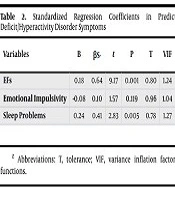
Yousefianpour A, Rezapur R. Investigating the Role of Sleep Problems, Emotional Impulsivity, and Hot and Cold Executive Functions in Students with Attention-Deficit/Hyperactivity Disorder Symptoms in Zanjan City, Iran. J Health Rep Technol. 2025;11(4):e166708. doi: https://doi.org/10.5812/jhrt-166708
Azadbakht L, Rouhani MH, Esmaillzadeh A. Dietary Patterns and Attention Deficit Hyperactivity Disorder among Iranian Children. Zahedan J Res Med Sci. 2012;14(2):e93576. doi:
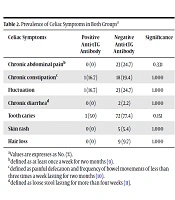
Honar N, Barkhordarian M, Ghanizadeh A, Radanfar R. Association of Celiac Disease with Attention Deficit Hyperactivity Disorder. J Compr Ped. 2019;11(1):e97114. doi: https://doi.org/10.5812/compreped.97114
Last Update: 1 week ago
Last Update: 1 week ago
Last Update: 1 week ago
Last Update: 7 hours ago
Last Update: 10 hours ago
Last Update: 5 days ago