
1. Background
Sleep and seizures are closely interconnected and mutually influential. Poor sleep quality can make seizures more difficult to control (1), while seizures may also disrupt sleep patterns (2). Previous research indicates that patients with epilepsy are two to three times more likely than individuals without epilepsy to experience sleep problems (3), with insomnia being particularly common, affecting 36% to 74% of patients (4). The high prevalence of clinical insomnia among patients with epilepsy can substantially impair cognitive function, emotional regulation, pain perception, and overall quality of life, potentially leading to poorer psychiatric and neurological outcomes. Two studies in individuals without epilepsy reported that those with clinical insomnia performed worse than control groups on cognitive tasks, including attention and concentration (5). However, one of these studies did not identify a significant difference in pain severity, likely because it used a simple measure from the SF-8 Health Survey (6). Another study associated poorer cognitive performance—measured by the Quality of Life in Epilepsy Inventory—with insomnia (3). Similarly, numerous studies report that clinical insomnia frequently co-occurs with depression and anxiety (7), although some studies in nonepileptic samples did not observe this association (6).
In addition, several epilepsy-related clinical markers have been associated with insomnia, including focal epilepsy (8), nocturnal seizures (9), seizure frequency and presence (4, 9-12), uncontrolled epilepsy (8, 13), disease duration (8, 10, 11), use of multiple antiepileptic drugs (AEDs) (3, 14), and comorbid physical or mental health conditions (3, 12). However, findings across studies are inconsistent and occasionally contradictory. For example, some studies underscore an association between uncontrolled seizures and insomnia (8, 13), whereas others report no such association (3, 14). Similarly, some research suggests that longer disease duration is related to insomnia (8, 11), but other studies do not support this relationship (10, 13). A study by Jo et al. (15) found no significant association between epilepsy-related factors and clinical insomnia, even after accounting for depression and anxiety. These mixed findings underscore the need for further research on the relationship between insomnia and epilepsy.
Although evidence indicates a strong association between insomnia and psychiatric symptoms such as depression and anxiety in patients with epilepsy, most studies have focused primarily on these two domains. Many studies also rely on self-report questionnaires rather than comprehensive clinical interviews. This approach limits understanding of other mental health conditions associated with insomnia in epilepsy. Moreover, many studies do not adequately control for variables that may bias results. Previous research has reported significant associations between clinical insomnia and factors such as age (16), sex (12, 16), marital status (16, 17), educational level (16), employment status (18), seizure type (19), AED use and type (3, 12), treatment approach (12, 14), and alcohol or substance use (20). Failure to account for these variables may reduce the validity of the findings.
Given these limitations, a comprehensive examination of the associations between clinical insomnia and key health domains, including cognitive function, psychiatric conditions, pain, and seizure activity, is clinically important. First, insomnia has been linked to impairments in memory, attention, and executive function (21). Determining whether sleep disturbances contribute to, or result from, cognitive deficits is particularly important in vulnerable populations such as individuals with epilepsy. This information could inform the development of sleep-focused strategies to improve cognitive performance. Second, because insomnia often co-occurs with mood disorders such as depression and anxiety (7), this study may help clarify whether insomnia functions as a risk factor, a symptom, or both, thereby informing targeted interventions. Third, the well-documented bidirectional relationship between insomnia and pain, in which sleep problems exacerbate pain and pain disrupts sleep (22), suggests that integrated pain and sleep management may improve quality of life. Finally, sleep problems are associated with increased seizure frequency (4, 9-12); thus, clarifying this relationship may reinforce the importance of addressing sleep within comprehensive epilepsy care. Improved sleep quality may enhance seizure control and overall health outcomes.
2. Objectives
This study aimed to examine cognitive issues, the prevalence and types of non-psychotic psychiatric disorders, pain severity, and epilepsy-related factors among patients with and without clinically diagnosed insomnia.
3. Methods
3.1. Study Design, Setting, and Data Collection
The present study was an analytical cross-sectional study conducted in 2019 at Namazi Hospital, Shiraz, Iran. Because all variables were assessed at a single time point and participants were categorized based on ISI scores after assessment, the study was cross-sectional in nature. The target population comprised all patients with epileptic and nonepileptic seizures residing in Shiraz who were referred to the epilepsy and seizure ward of Namazi Hospital for treatment follow-up. Of these, 68 patients who met the inclusion criteria were recruited through consecutive sampling. The sample size was determined based on the accessibility and availability of eligible patients during the study period rather than an a priori power calculation. Recruitment was further limited by the onset of the COVID-19 pandemic, which substantially reduced patient access and interrupted continued enrollment. Consequently, the final sample reflects the number of patients who were available and met the inclusion criteria within the feasible recruitment period. The inclusion criteria included a definitive diagnosis established by a fellowship-trained epileptologist and clinical neurophysiologist. Diagnoses were made using diagnostic protocols based on International League Against Epilepsy (ILAE) criteria and electroencephalography (EEG). Additional inclusion criteria were the absence of seizures during the previous 24 hours and age older than 18 years. The exclusion criteria were an educational level below grade 3 of middle school (as reported by the patient), a self-reported history of traumatic brain injury (TBI), psychotic symptoms or psychotic disorders diagnosed using the Structured Clinical Interview for DSM-5 Disorders—Clinician Version (SCID-5-CV), intellectual disability based on DSM-5 criteria, clinically observed or reported sensory deficits such as blindness or deafness, and refusal to participate. Data collection and evaluation were conducted after obtaining institutional approval from Shiraz University of Medical Sciences. A trained assessor visited the epilepsy ward daily from November to March 2019 to recruit participants and collect data. Patients were recruited consecutively from individuals referred to the epilepsy ward of Namazi Hospital during the study period. Patients were initially evaluated by a fellowship-trained epileptologist and clinical neurophysiologist and were subsequently referred for eligibility screening. Inclusion and exclusion criteria were assessed at recruitment, and eligible participants were enrolled consecutively. All questionnaires and clinical assessments were administered under the direct supervision of a PhD candidate in clinical psychology who was present at the study site to minimize incomplete responses and missing data. Ethical procedures included providing detailed explanations of the study objectives and procedures to patients and their families, assuring confidentiality, and informing patients that refusal to participate would not affect their clinical care. Written informed consent was obtained from participants or their legal guardians. The study protocol was approved by the Ethics Committee of Shiraz University of Medical Sciences. Participants were categorized into two groups (clinical insomnia and non-clinical insomnia) based on ISI scores (≥ 15 vs < 15) after assessment of all study variables. Given the relatively small sample size, the epileptic and psychogenic nonepileptic seizure (PNES) groups were analyzed together in the primary analysis. However, descriptive subgroup analyses were also performed by seizure type.
3.2. Measures
3.2.1. Comprehensive Demographic and Clinical Variables Checklist
Demographic and clinical data were collected, including age, gender, marital status, employment status, educational level (number of successfully completed years of formal education), age at disease diagnosis (years, self-reported), disease duration since diagnosis (months, calculated from the diagnosis date to the assessment date), age at first seizure (years, self-reported), time elapsed since last seizure (days, self- and caregiver-reported), seizure frequency (self- and caregiver-reported), duration of the last seizure (seconds, reported by the medical team, including neurologists or nurses, or caregivers if unavailable), seizure control status (evaluated by an epileptology fellow or neurologist familiar with the patient), involved brain region (based on patient records), magnetic resonance imaging (MRI) findings (patient records or neurologist/epileptologist reports), hospitalization history and number of admissions (self-reported), comorbid physical illnesses (from medical records or self-report), history of psychiatric diagnoses (medical records or self-report), use of AEDs and psychotropic medications (medical records and self-report), and age at first AED consumption (self-reported).
3.2.2. Insomnia Severity Index (ISI)
The ISI is a brief self-report screening tool that assesses patients’ perceptions of insomnia severity. It includes seven items evaluating difficulty initiating sleep, maintaining sleep (including nocturnal awakenings and early morning awakening), satisfaction with current sleep patterns, daytime functional impairment, perceived noticeability of sleep-related difficulties, and distress caused by sleep problems. Responses are rated on a 5-point Likert scale (0 = none to 4 = very severe), yielding a total score ranging from 0 to 28, with higher scores indicating greater perceived insomnia severity. The ISI corresponds to DSM-IV insomnia criteria, with the following cut-off scores: 0 - 7 (no clinically significant insomnia), 8 - 14 (subthreshold insomnia), 15 - 21 (moderate clinical insomnia), and 22 - 28 (severe clinical insomnia). Psychometric properties indicate acceptable internal consistency (Cronbach’s α = 0.74 - 0.78) and item-total correlations ranging from 0.32 to 0.71 (23). The Persian version also demonstrates good reliability (α = 0.78) and discriminant validity between patients with sleep disorders and healthy controls (24). In the current study, a cut-off score of ≥ 15 was used to define clinical insomnia.
3.2.3. Montreal Cognitive Assessment (MoCA)
The MoCA is a widely used cognitive screening instrument with high sensitivity and specificity for detecting cognitive impairment. It evaluates multiple domains, including visuospatial and executive functions, naming, attention, language, abstraction, memory, and orientation. Scores range from 0 to 30, with a score of ≥ 26 indicating normal cognition (25). In an Iranian validation study, the Persian version of the MoCA demonstrated good internal consistency (Cronbach’s α = 0.86) and acceptable diagnostic accuracy. ROC analysis yielded an optimal cutoff score of 22 for mild cognitive impairment, with a sensitivity of 86.4% and a specificity of 70%, whereas a cutoff score of 20 for Alzheimer’s disease showed a sensitivity of 94.9% and a specificity of 90.5% (26).
3.2.4. Structured Clinical Interview for DSM-5 Disorders – Clinician Version (SCID-5-CV)
The SCID-5-CV is a semi-structured diagnostic interview based on DSM-5 criteria and is widely used in psychiatric research and clinical settings. It supports the determination of study eligibility, diagnostic classification, and clinical decision-making (27). In the present study, the clinician-administered version of the SCID-5-CV was used to diagnose psychiatric disorders. Its psychometric properties have been supported by studies showing inter-rater reliability ranging from good to excellent (k = 0.62 - 1.00) and test–retest reliability also in the good to excellent range (k = 0.59 - 1.00) (27). In a Persian validation study, kappa coefficients exceeded 0.40 for all diagnoses except anxiety disorders, which showed moderate agreement (k = 0.34); sensitivity values above 80% supported its validity as a diagnostic tool (28).
3.2.5. McGill Pain Questionnaire (MPQ)
The MPQ is a multidimensional pain assessment instrument that evaluates sensory, affective, evaluative, and miscellaneous dimensions of pain using 78 pain descriptors organized into subclasses (29). It is designed to provide a comprehensive assessment of pain perception. Psychometric evaluations conducted in Iran have confirmed its reliability, with a Cronbach’s α of 0.85 and test–retest reliability exceeding 0.80 across all dimensions.
3.2.6. Visual Analog Scale (VAS)
Pain intensity was measured using the VAS, a 10-cm horizontal line anchored by "no pain" (0) and "worst imaginable pain" (10). Participants marked their perceived pain level, which was categorized as mild (1-3), moderate (4-7), or severe (8-10) (30). The VAS is a simple, widely used, and validated instrument for pain assessment, with evidence supporting its reliability and validity in both paper-based and electronic formats (31, 32).
3.2.7. Body Mass Index (BMI)
BMI was calculated by measuring weight (with light clothing and without shoes) using a calibrated digital scale and height using a wall-mounted stadiometer. BMI was computed as weight (kg) divided by height squared (m2).
3.3. Statistical Analysis
Data were analyzed using SPSS version 27. Participants were classified into two groups based on ISI cutoff scores: clinical insomnia (ISI ≥ 15; n = 31) and non-clinical insomnia (ISI < 15; n = 37). Descriptive statistics, including frequency, percentage, mean, and standard deviation, were used to summarize the study variables. Inferential analyses included the independent-samples t-test, multivariate and univariate analyses of covariance (ANCOVA/MANCOVA), the chi-square test, Fisher’s exact test, and the Mann–Whitney U test, as appropriate. Continuous variables that violated normality assumptions were analyzed using nonparametric methods and reported as mean ranks, whereas categorical variables were analyzed using chi-square or Fisher’s exact tests and reported as frequencies and percentages. No formal correction for multiple comparisons was applied; therefore, results from multiple outcome analyses were interpreted as exploratory and with caution regarding potential Type I error. Regarding covariate and confounder selection, based on prior literature and clinical reasoning, a limited number of variables with established or plausible associations with both clinical insomnia and the main outcome measures (cognitive performance and pain outcomes) were considered potential confounders. These included age, seizure type, antiepileptic drug use, and psychiatric comorbidity. However, given the relatively small sample size and the risk of model overfitting in multivariable analyses, the final adjusted ANCOVA/MANCOVA models included age as the primary covariate. Other clinically relevant variables were reported descriptively but were not included in the adjusted models. It is important to note that confounder selection was not based solely on statistical significance in baseline comparisons, as nonsignificant differences do not exclude potential confounding effects. A significance threshold of P < 0.05 was adopted for all statistical tests.
4. Results
Table 1 presents the comparison of demographic and clinical characteristics between patients with seizure disorders with and without clinical insomnia.
Table 1.
Demographic and Clinical Characteristics of Patients with Seizure Disorders with and Without Clinical Insomnia a
| Variables | Insomnia | P-Value | |
|---|---|---|---|
| Yes (n = 31) | No (n = 37) | ||
| Age (y) c | 37.32 ± 10.60 | 31.51 ± 11.35 | 0.034 b |
| Education (y) c | 13.13 ± 2.32 | 13.16 ± 1.80 | 0.947 |
| Gender d | 1.000 | ||
| Female | 17 (54.8) | 20 (54.1) | 1.000 |
| Male | 14 (45.2) | 17 (45.9) | 1.000 |
| Marital Status d | 1.000 | ||
| Single | 16 (51.6) | 19 (51.4) | 1.000 |
| Married | 15 (48.4) | 18 (48.6) | 1.000 |
| Employment Status Before Illness d | 0.084 | ||
| Employed | 4 (12.9) | 5 (13.5) | 0.084 |
| Homemaker | 6 (19.4) | 5 (13.5) | 0.084 |
| Student | 11 (35.5) | 23 (62.2) | 0.084 |
| Unemployed | 10 (32.3) | 4 (10.8) | 0.084 |
| Employment Status After Illness d | 0.253 | ||
| Employed | 17 (54.8) | 17 (45.9) | 0.253 |
| Homemaker | 10 (32.3) | 11 (29.7) | 0.253 |
| Student | 0 (0.0) | 3 (8.1) | 0.253 |
| Unemployed | 4 (12.9) | 6 (16.2) | 0.253 |
| Seizure Type d | 0.187 | ||
| Focal (Temporal) | 12 (38.7) | 18 (48.6) | 0.187 |
| Generalized | 8 (25.8) | 13 (35.1) | 0.187 |
| Psychogenic | 11 (35.5) | 6 (16.2) | 0.187 |
| AED e | 1.000 | ||
| Yes | 27 (87.1) | 32 (86.5) | 1.000 |
| No | 4 (12.9) | 5 (13.5) | 1.000 |
| Carbamazepine e | 0.071 | ||
| Yes | 14 (45.2) | 8 (21.6) | 0.071 |
| No | 17 (54.8) | 29 (78.4) | 0.071 |
| Sodium Valproate e | 0.067 | ||
| Yes | 9 (29.0) | 20 (54.1) | 0.067 |
| No | 22 (71.0) | 17 (45.9) | 0.067 |
| Phenobarbital e | 1.000 | ||
| Yes | 4 (12.9) | 4 (10.8) | 1.000 |
| No | 27 (87.1) | 33 (89.2) | 1.000 |
| Clobazam e | 0.069 | ||
| Yes | 7 (22.6) | 2 (5.4) | 0.069 |
| No | 24 (77.4) | 35 (94.6) | 0.069 |
| Lamotrigine e | 0.346 | ||
| Yes | 6 (19.4) | 12 (32.4) | 0.346 |
| No | 25 (80.6) | 25 (67.6) | 0.346 |
| Levetiracetam e | 0.959 | ||
| Yes | 12 (38.7) | 13 (35.1) | 0.959 |
| No | 19 (61.3) | 24 (64.9) | 0.959 |
| Lacosamide e | 0.069 | ||
| Yes | 7 (22.6) | 2 (5.4) | 0.069 |
| No | 24 (77.4) | 35 (94.6) | 0.069 |
| AED Type d | 0.406 | ||
| Conventional | 5 (16.1) | 12 (32.4) | 0.406 |
| New | 6 (19.4) | 7 (18.9) | 0.406 |
| Combination | 16 (51.6) | 13 (35.1) | 0.406 |
| No medication | 4 (12.9) | 5 (13.5) | 0.406 |
| Drug Reaction d | 0.053 | ||
| Yes | 21 (67.7) | 16 (43.2) | 0.053 |
| No | 10 (32.3) | 21 (56.8) | 0.053 |
| AED Treatment Type d | 0.607 | ||
| Monotherapy | 7 (22.6) | 12 (32.4) | 0.607 |
| Dual therapy | 7 (22.6) | 10 (27.0) | 0.607 |
| Triple therapy | 13 (41.9) | 10 (27.0) | 0.607 |
| No AED treatment | 4 (12.9) | 5 (13.5) | 0.607 |
| Smoking History e | 0.167 | ||
| Yes | 7 (22.6) | 3 (8.1) | 0.167 |
| No | 24 (77.4) | 34 (91.9) | 0.167 |
| Substance or Alcohol Use History (self-report or medical record) e | 0.124 | ||
| Yes | 8 (25.8) | 4 (10.8) | 0.124 |
| No | 23 (74.2) | 33 (89.2) | 0.124 |
| Alcohol Use Disorder (SCID-5-CV) e | 0.233 | ||
| Yes | 5 (16.1) | 2 (5.4) | 0.233 |
| No | 26 (83.9) | 35 (94.6) | 0.233 |
| Substance Use Disorder except Alcohol (SCID-5-CV) e | 0.653 | ||
| Yes | 3 (9.7) | 2 (5.4) | 0.653 |
| No | 28 (90.3) | 35 (94.6) | 0.653 |
a Values are expressed as mean ± SD or No. (%).
b P < 0.05 was considered statistically significant.
c Independent samples t-test.
d Chi-square test.
e Fisher’s exact test.
A comparison of these variables showed a statistically significant difference only in age, with patients with clinical insomnia being older than those without insomnia.
A descriptive subgroup analysis was conducted to explore the distribution of clinical insomnia, cognitive performance, and pain scores across seizure subtypes. As shown in Table 2, clinical insomnia prevalence, total MoCA scores, and total pain scores were reported for the focal (temporal), generalized, and PNES groups. To examine group differences in cognitive functioning between patients with and without clinical insomnia, a MANCOVA was performed, controlling for age. The assumption of homogeneity of variance-covariance matrices across groups was confirmed by a non-significant Box’s M test (F(1, 66) = 1.212, P = 0.203), indicating that the covariance matrices of the MoCA subdomains did not differ significantly between the insomnia and non-insomnia groups. Levene’s test revealed unequal error variances for visuospatial functioning (F(1, 66) = 4.296, P = 0.042) and language (F(1, 66) = 4.709, P = 0.034), but no significant differences for attention (F(1, 66) = 4.192, P = 0.050), delayed recall (F(1, 66) = 3.784, P = 0.056), naming (F(1, 66) = 0.383, P = 0.538), abstraction (F(1, 66) = 0.005, P = 0.941), or orientation (F(1, 66) = 1.871, P = 0.176). Thus, the assumption of variance equality was violated for the visuospatial and language subdomains but met for the others. Additionally, an ANCOVA was conducted to examine differences in total MoCA scores between patients with and without clinical insomnia, controlling for age. Levene’s test indicated homogeneity of error variances (F(1, 66) = 1.875, P = 0.176), supporting the assumption of equal variances across groups.
Table 2.
Descriptive Comparison of Clinical Insomnia Prevalence, Cognitive Performance, and Pain Scores Across Seizure Subtypes a
| Variables | Temporal | Generalized | PNES |
|---|---|---|---|
| Clinical Insomnia | 12 (38.7) | 8 (25.8) | 11 (35.5) |
| Total MoCA Score | 18.10 ± 5.29 | 19.76 ± 3.82 | 15.06 ± 4.52 |
| Total Pain Score | 37.47 ± 20.99 | 25.38 ± 14.58 | 46.29 ± 19.58 |
a Values are expressed as No. (%) or mean ± SD. Abbreviations: PNES, psychogenic nonepileptic seizure
Table 3 summarizes the multivariate and univariate ANCOVA results, including overall model significance and group differences in cognitive domains between patients with and without clinical insomnia.
Table 3.
Multivariate and Univariate ANCOVA Comparing Cognitive Function in Patients with Seizure Disorders with and Without Clinical Insomnia
| Subscales and Insomnia | Mean ± SD | df | F | P-Value | Mean Difference | 95% CI | ηp2 |
|---|---|---|---|---|---|---|---|
| Visuospatial/Executive | 1 | 1.681 | 0.199 | -0.472 | -1.199, 0.255 | 0.025 | |
| Yes | 2.52 ± 1.73 | ||||||
| No | 3.16 ± 1.21 | ||||||
| Naming | 1 | 2.033 | 0.159 | -0.209 | -0.503, 0.084 | 0.030 | |
| Yes | 2.03 ± 0.66 | ||||||
| No | 2.27 ± 0.51 | ||||||
| Attention | 1 | 1.459 | 0.231 | -0.372 | -0.987, 0.243 | 0.022 | |
| Yes | 3.42 ± 1.57 | ||||||
| No | 4.05 ± 1.05 | ||||||
| Language | 1 | 3.151 | 0.081 | -0.360 | -0.765, 0.045 | 0.046 | |
| Yes | 1.35 ± 0.98 | ||||||
| No | 1.86 ± 0.71 | ||||||
| Abstraction | 1 | 9.096 | 0.004 a | -0.460 | -0.765, -0.155 | 0.123 | |
| Yes | 0.68 ± 0.60 | ||||||
| No | 1.19 ± 0.62 | ||||||
| Memory | 1 | 3.510 | 0.066 | -0.602 | -1.243, 0.040 | 0.051 | |
| Yes | 0.61 ± 1.12 | ||||||
| No | 1.40 ± 1.46 | ||||||
| Orientation | 1 | 7.067 | 0.010 a | -0.448 | -0.717, -0.178 | 0.098 | |
| Yes | 4.45 ± 1.23 | ||||||
| No | 5.27 ± 0.93 | ||||||
| Total MoCA Score b | 1 | 8.605 | 0.005 a | -3.107 | -5.223, -0.992 | 0.117 | |
| Yes | 15.64 ± 5.33 | ||||||
| No | 19.70 ± 3.77 |
a P < 0.05 was considered statistically significant.
b Univariate ANCOVA was used for analysis.
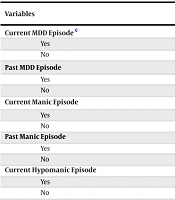
As shown in Table 3, the F-ratios were significant for two cognitive components (abstraction and orientation) and for the total MoCA score (P < 0.05). Considering the group means, this finding indicates that the mean scores of these cognitive components and the total MoCA score were lower in patients with seizure disorders and clinical insomnia than in their counterparts (P = 0.084; F = 1.907; λ = 0.815). Furthermore, to compare the frequency of psychiatric disorders based on SCID-5-CV between patients with seizure disorders with and without clinical insomnia, Fisher’s exact and chi-square tests were employed. The findings of this analysis are presented in Table 4.
Table 4.
Comparison of Psychiatric Disorders Based on SCID-5-CV Between Patients with Seizure Disorders with and Without Clinical Insomnia a
| Variables | Insomnia | P-Value | Cramér’s V | |
|---|---|---|---|---|
| Yes (n = 31) | No (n = 37) | |||
| Current MDD Episode c | 0.037 b | 0.285 | ||
| Yes | 13 (41.9) | 6 (16.2) | ||
| No | 18 (58.1) | 31 (83.8) | ||
| Past MDD Episode | 0.030 b | 0.273 | ||
| Yes | 9 (29.0) | 3 (8.1) | ||
| No | 22 (71.0) | 34 (91.9) | ||
| Current Manic Episode | 0.003 b | 0.370 | ||
| Yes | 7 (22.6) | 0 (0.0) | ||
| No | 24 (77.4) | 37 (100.0) | ||
| Past Manic Episode | 0.090 | 0.235 | ||
| Yes | 3 (9.7) | 0 (0.0) | ||
| No | 28 (90.3) | 37 (100.0) | ||
| Current Hypomanic Episode | 0.456 | 0.133 | ||
| Yes | 1 (3.2) | 0 (0.0) | ||
| No | 30 (96.8) | 37 (100.0) | ||
| Past Hypomanic Episode | 1.000 | 0.112 | ||
| Yes | 0 (0.0) | 1 (2.7) | ||
| No | 31 (100.0) | 36 (97.3) | ||
| Cyclothymia | 1.000 | 0.015 | ||
| Yes | 1 (3.2) | 1 (2.7) | ||
| No | 30 (96.8) | 36 (97.3) | ||
| PDD | 0.233 | 0.176 | ||
| Yes | 5 (16.1) | 2 (5.4) | ||
| No | 26 (83.9) | 35 (94.6) | ||
| Panic Disorder | 0.090 | 0.235 | ||
| Yes | 3 (9.7) | 0 (0.0) | ||
| No | 28 (90.3) | 37 (100.0) | ||
| Agoraphobia | 0.090 | 0.235 | ||
| Yes | 3 (9.7) | 0 (0.0) | ||
| No | 28 (90.3) | 37 (100.0) | ||
| Social Anxiety Disorder | 0.324 | 0.148 | ||
| Yes | 3 (9.7) | 1 (2.7) | ||
| No | 28 (90.3) | 36 (97.3) | ||
| GAD c | < 0.001 b | 0.620 | ||
| Yes | 26 (83.9) | 8 (21.6) | ||
| No | 5 (16.1) | 29 (78.4) | ||
| OCD | 0.722 | 0.078 | ||
| Yes | 5 (16.1) | 4 (10.8) | ||
| No | 26 (83.9) | 33 (89.2) | ||
| PTSD | 0.129 | 0.216 | ||
| Yes | 6 (19.4) | 2 (5.4) | ||
| No | 25 (80.6) | 35 (94.6) | ||
| ADD a | 0.330 | 0.156 | ||
| Yes | 8 (25.8) | 5 (13.5) | ||
| No | 23 (74.2) | 32 (86.5) | ||
| HD | 0.170 | 0.195 | ||
| Yes | 4 (12.9) | 1 (2.7) | ||
| No | 27 (87.1) | 36 (97.3) | ||
| Adjustment Disorder | 0.400 | 0.132 | ||
| Yes | 4 (12.9) | 2 (5.4) | ||
| No | 27 (87.1) | 35 (94.6) | ||
a Values are expressed as No. (%). Abbreviations: MDD, major depressive disorder; PDD, Persistent Depressive Disorder; GAD, generalized anxiety disorder; PTSD, Post-Traumatic Stress Disorder; ADD, Attention Deficit Disorder; HD, Hyperactivity/Impulsivity Disorder.
b P < 0.05 was considered statistically significant.
c Chi-square test the other comparisons were performed using Fisher’s exact test.
As shown in Table 4, the majority of patients in the study exhibited comorbidity across multiple psychiatric disorders. However, when examined separately, significant differences between patients with seizure disorders with and without clinical insomnia were observed only in the frequency of current and past major depressive disorder (MDD) episodes, current mania, and generalized anxiety disorder (GAD). Specifically, patients with insomnia had higher frequencies of current MDD episodes (41.9% vs. 16.2%), past MDD episodes (29% vs. 8.1%), current manic episodes (22.6% vs. 0%), and GAD (83.9% vs. 21.6%). No significant differences were found between the two groups for other examined psychiatric disorders (P > 0.05).
To examine group differences in pain quality between patients with and without clinical insomnia, a MANCOVA was conducted, controlling for age. The assumption of homogeneity of the variance-covariance matrices, evaluated using Box’s M test, was not significant (P = 0.300; F = 1.178), indicating that the observed covariance matrices of the dependent variables (pain perception subscales) were equivalent between patients with and without clinical insomnia. Levene’s test was used to evaluate the equality of error variances for the dependent variables. The results showed no significant differences in error variance for the MPQ sensory dimension (P = 0.361; F = 0.846), MPQ affective dimension (P = 0.818; F = 0.053), MPQ evaluative dimension (P = 0.392; F = 0.741), and MPQ miscellaneous dimension (P = 0.300; F = 1.091). Thus, error variances for these variables were equal across the two groups. Additionally, an ANCOVA, controlling for age, was conducted to examine group differences in total MPQ scores and the frequency of selected pain descriptors between patients with and without clinical insomnia. Levene’s test indicated significant error variance for the frequency of selected pain descriptors (P = 0.038; F = 4.469), but not for the total MPQ score (P = 0.223; F = 1.514). Accordingly, only the error variance of the total MPQ score was equal between patients with and without clinical insomnia.
Table 5 presents the results of multivariate and univariate covariance analyses, illustrating the significance of the overall model and the association of the independent variable with each dependent variable.
Table 5.
Multivariate and Univariate ANCOVA Results Comparing Pain Quality Dimensions Between Patients with and Without Clinical Insomnia
| Dimensions and Insomnia | Mean ± SD | df | F | P-Value a | Mean Difference | 95% CI | ηp2 |
|---|---|---|---|---|---|---|---|
| Sensory | 1 | 17.209 | < 0.001 | 10.444 | 5.416, 15.473 | 0.209 | |
| Yes | 24.26 ± 11.32 | ||||||
| No | 12.35 ± 9.35 | ||||||
| Affective | 1 | 6.687 | 0.012 | 2.744 | 0.625, 4.863 | 0.093 | |
| Yes | 8.61 ± 4.61 | ||||||
| No | 5.22 ± 4.14 | ||||||
| Evaluative | 1 | 9.286 | 0.003 | 0.997 | 0.343, 1.650 | 0.087 | |
| Yes | 3.74 ± 1.26 | ||||||
| No | 2.57 ± 1.38 | ||||||
| Miscellaneous | 1 | 6.197 | 0.015 | 3.118 | 0.617, 5.619 | 0.125 | |
| Yes | 10.35 ± 5.03 | ||||||
| No | 6.56 ± 5.14 | ||||||
| Total Pain Score b | 1 | 16.371 | < 0.001 | 17.303 | 8.762, 25.844 | 0.201 | |
| Yes | 46.97 ± 19.87 | ||||||
| No | 26.71 ± 15.77 | ||||||
| Pain Descriptors a | 1 | 17.034 | < 0.001 | 14.612 | 7.541, 21.683 | 0.208 | |
| Yes | 34.71 ± 17.37 | ||||||
| No | 17.59 ± 12.09 |
a P < 0.05 was considered statistically significant.
b Univariate ANCOVA was used for analysis.
As shown in Table 5, the F-ratios indicated significant group differences across all pain quality components between patients with and without clinical insomnia (P < 0.05). Considering the group means, this indicates that the mean scores of all pain-related dimensions were higher in patients with seizure disorders and clinical insomnia than in their counterparts (F = 4.996; P = 0.001; λ = 0.756). Finally, to examine the association between insomnia and clinical and hospitalization findings, Mann–Whitney U, independent-samples t test, Fisher’s exact test, and chi-square tests were employed; the results are summarized in Table 6.
Table 6.
Comparison of Clinical and Hospitalization Characteristics Between Patients with Seizure Disorders with and Without Clinical Insomnia a
| Variables | Insomnia | P-Value | Effect Size d | |
|---|---|---|---|---|
| Yes | No | |||
| VAS b | 45.74 | 25.08 | < 0.001 | -0.53 |
| Age of diagnosis (y) c | 17.03 ± 14.30 | 16.92 ± 10.30 | 0.971 | -0.009 |
| Disease duration (mo) c | 245.45 ± 132.73 | 181.57 ± 142.79 | 0.062 | -0.47 |
| Last seizure duration (s) c | 144.84 ± 134.98 | 143.38 ± 118.47 | 0.962 | -0.01 |
| Age of first seizure (y) c | 16.77 ± 14.44 | 16.43 ± 10.39 | 0.913 | -0.03 |
| Days since last seizure c | 8.68 ± 11.73 | 51.38 ± 104.89 | 0.019 | 0.60 |
| Age at first AED use c | 16.83 ± 14.13 | 17.62 ± 9.99 | 0.798 | -0.01 |
| Number of hospitalizations c | 1.74 ± 1.29 | 0.97 ± 1.12 | 0.011 | 0.06 |
| BMI | 25.21 ± 5.33 | 23.85 ± 3.36 | 0.225 | -0.30 |
| Seizure frequency in the past (y) d | 0.013 | 0.322 | ||
| ≤ 1 in the past | 0 (0.0) | 1 (2.7) | 0.013 | 0.322 |
| 1 - 9 in the past | 5 (16.1) | 16 (43.2) | ||
| ≥ 10 | 26 (83.9) | 20 (54.1) | ||
| Disease control status d | 0.008 | 0.348 | ||
| Well-controlled | 0 (0.0) | 2 (5.4) | ||
| Partially controlled | 2 (6.5) | 11 (29.7) | ||
| Uncontrolled | 29 (93.5) | 24 (64.9) | ||
| Involved brain region d | 0.301 | 0.231 | ||
| Amygdala | 2 (6.5) | 2 (5.4) | ||
| Hippocampus | 4 (12.9) | 2 (5.4) | ||
| Others | 6 (19.4) | 3 (8.1) | ||
| None | 19 (61.3) | 30 (81.1) | ||
| MRI findings d | 0.029 | 0.321 | ||
| Major abnormality | 7 (22.6) | 7 (18.9) | ||
| Mild abnormality | 5 (16.1) | 0 (0.0) | ||
| Normal | 19 (61.3) | 30 (81.1) | ||
| History of hospitalization d | 0.214 | 0.182 | ||
| Yes | 23 (74.2) | 21 (56.8) | ||
| No | 8 (25.8) | 16 (43.2) | ||
| Physical comorbidity d | 0.013 | 0.331 | ||
| Yes | 22 (71.0) | 14 (37.8) | ||
| No | 9 (29.0) | 23 (62.2) | ||
| Past psychiatric diagnosis d | 0.000 | 0.593 | ||
| Yes | 26 (83.9) | 9 (24.3) | ||
| No | 5 (16.1) | 28 (75.7) | ||
| Type of previous psychiatric diagnosis d | 0.000 | 0.633 | ||
| Mood disorders | 8 (25.8) | 6 (16.2) | ||
| Anxiety disorders | 1 (3.2) | 2 (5.4) | ||
| Comorbidity of both | 17 (54.8) | 2 (5.4) | ||
| No previous diagnosis | 5 (16.1) | 27 (73.0) | ||
| AED + psychotropic medications d | 0.000 | 0.566 | ||
| Yes | 19 (61.3) | 3 (8.1) | ||
| No | 12 (38.7) | 34 (91.9) | ||
a Values are expressed as mean ± SD or No. (%).
b VAS scores were analyzed using Mann–Whitney U test and are presented as mean ranks due to non-normal distribution
c Independent-samples t test;
d Fisher’s exact test and chi-square test (for AED + psychotropic medications); Effect sizes: Cohen’s d for t tests, Cramér’s V for Fisher’s exact tests and chi-square tests, and r for Mann–Whitney U tests.
As shown in Table 6, patients with seizure disorders and clinical insomnia differed significantly from those without insomnia across several clinical variables. Specifically, patients with insomnia demonstrated higher mean ranks for pain intensity (VAS), indicating greater perceived pain severity than patients without insomnia. In addition, the insomnia group showed a higher frequency of recent seizure episodes and higher hospitalization rates. Seizure frequency was also greater (83.9% vs. 54.1%), and disease control was more often poor (93.5% vs. 64.9%). A higher proportion of patients in the insomnia group showed neuroimaging abnormalities ranging from mild to major (38.7% vs. 18.9%). Moreover, comorbid physical illnesses (71.0% vs. 37.8%) and previous psychiatric diagnoses (83.9% vs. 24.3%) were more common among patients with insomnia. Rates of comorbid mood and anxiety disorders were also markedly higher in this group (54.8% vs. 5.4%). Finally, a larger percentage of patients with insomnia were receiving both AEDs and psychotropic medications concurrently (61.3% vs. 8.1%).
5. Discussion
The present study aimed to investigate the associations between clinical insomnia and cognitive impairment, non-psychotic psychiatric disorders, pain quality, and clinical characteristics in patients with seizure disorders. Multivariate and univariate analyses of covariance, controlling for age, indicated that patients with seizure disorders and clinical insomnia had significantly lower mean scores on the abstraction and orientation subscales, as well as on the total MoCA score, compared with those without insomnia. However, no significant between-group differences were found in other cognitive domains. Importantly, although these differences were statistically significant, both groups scored below the commonly used Persian MoCA cutoff of < 22 (26), suggesting that cognitive impairment may be present in both groups. Therefore, the observed differences are better interpreted as reflecting variation in the severity of cognitive dysfunction rather than a clear distinction between normal and impaired cognitive status. In this context, research on insomnia in patients with seizure disorders remains limited. However, a study by Vignola et al. (5) was among the first to report that patients with insomnia exhibited poorer performance in attention/concentration factors; nonetheless, findings for visual and verbal memory, psychomotor speed, and executive functions were not significant, and their sample consisted solely of older adults. Vendrame et al. (3) also demonstrated that the cognitive function subscale (assessed via the Quality of Life in Epilepsy questionnaire) correlated with the Insomnia Severity Index scores; however, these findings were reported solely as correlations. Additionally, Aasvik et al. (6) found no significant difference between patients with and without clinical insomnia regarding everyday memory problems, although those with insomnia scored lower in visuospatial working memory.
While these findings are insufficient for definitive comparisons and warrant further research, discrepancies may stem from differences in patient sample characteristics. Furthermore, variation in the sensitivity and quality of the cognitive assessment tools used across studies may contribute to divergent outcomes. Notably, evidence suggests that the MoCA has higher sensitivity than other cognitive tests for detecting cognitive impairment in patients with seizure disorders (33). Insomnia may impair abstraction ability and orientation through multiple pathways. First, insomnia can exacerbate cognitive deficits and disrupt critical cognitive processes essential for abstract thinking and orientation, such as cognitive mapping (21). Second, research indicates an association between insomnia and reduced gray matter volume in the brain (34), potentially affecting cognitive functions including abstraction. Third, insomnia may compromise white matter integrity (35), adversely affecting cognitive performance and potentially impairing abstract thinking. Fourth, insomnia can negatively influence emotional processing, potentially increasing anxiety and rumination that further disrupt sleep (36), ultimately leading to spatial orientation and cognitive mapping difficulties. Finally, insomnia reduces overall alertness and cognitive function (37), making spatial orientation and navigation more challenging.
Furthermore, psychiatric diagnostic results indicated that a substantial proportion of patients had comorbid psychiatric conditions. Specifically, patients with seizure disorders and co-occurring clinical insomnia showed higher frequencies of current and past MDD episodes, current manic episodes, and GAD compared with their counterparts without insomnia. However, differences observed in other psychiatric disorders were not statistically significant. These findings should be interpreted with caution, particularly for categorical comparisons such as current manic episodes, because of small cell sizes; thus, they should be considered exploratory in nature. To date, limited evidence has systematically examined psychiatric comorbidities in patients with seizure disorders and clinical insomnia using structured clinical interviews, as most prior research has relied primarily on self-report measures of depressive and anxiety symptoms. Consistent with this, a recent study by Lee et al. (12) found that the frequency of depression (assessed by PHQ-9) was higher in patients with clinical insomnia than in those without (64.9% vs. 12.9%); similarly, the frequency of patients with seizure disorders exhibiting GAD symptoms (assessed by GAD-7) was higher among those with insomnia compared with those without (57.9% vs. 17.8%). Zhong et al. (7), in their examination of 79 patients with seizure disorders, showed elevated levels of depressive and GAD symptoms (measured by GAD-7) in patients with seizure disorders and insomnia compared with those without insomnia. Lee et al. (38) also reported significant associations and predictive value of insomnia for the depression/anxiety and depression/elation subscales. Quigg et al. (10) similarly reported depression in relation to clinical insomnia. In contrast, Aasvik et al. (6) found no significant difference in depressive and anxiety symptoms between patients with and without insomnia; however, their sample consisted of non-seizure patients. Overall, insomnia may occur as a direct consequence of the underlying disease or secondarily through depression, mania, and anxiety. It is hypothesized that psychological distress is the most significant factor associated with insomnia in patients with seizure disorders (8, 15). Dysregulation of the hypothalamic-pituitary-adrenal (HPA) axis in patients with seizure disorders may impair serotonergic transmission in the raphe-hippocampal pathway, increasing susceptibility to depression (39). Furthermore, alterations in sleep-wake cycles are characteristic of mania and can exacerbate insomnia. Conversely, the interaction between insomnia and seizures may contribute to mood instability and increased manic symptoms. Research has demonstrated a significant correlation between insomnia and emotional instability (38), with emotional instability being a hallmark feature of psychiatric disorders (40) and associated with adverse outcomes such as suicide attempts, aggressive behaviors, and impaired interpersonal relationships (41). Additionally, insomnia may represent a behavior stemming from interactions among brain activities that maintain brain wave states and respond to psychosocial and medical stressors, thereby reinforcing maladaptive behaviors. For example, emotional stress and sleep deprivation play key roles in the development and persistence of chronic insomnia (42). According to the hyperarousal hypothesis, HPA axis dysfunction related to stress may underlie certain psychiatric disorders linked to emotional dysregulation, such as GAD (43).
The findings of the present study indicate that clinical insomnia was significantly associated with pain characteristics in patients with seizure disorders. Patients with seizure disorders and clinical insomnia reported higher sensory and affective pain experiences on the MPQ, endorsed a greater variety of pain descriptors, and showed higher overall pain quality compared with their counterparts without insomnia. Regarding pain intensity, as assessed by the VAS, patients with insomnia demonstrated higher mean ranks, indicating a greater perceived pain burden compared with the non-insomnia group. It is important to note that VAS results were derived from rank-based comparisons; therefore, these findings reflect relative differences in pain severity rather than absolute pain intensity values. Overall, although these differences were statistically significant, their clinical interpretation should be made with caution, and statistical significance does not necessarily imply clinically meaningful differences in pain experience. Previous studies have demonstrated a strong bidirectional relationship between insomnia and pain, with both conditions frequently co-occurring and exacerbating each other; insomnia increases the likelihood of chronic pain, whereas chronic pain can disrupt sleep and lead to insomnia. This vicious cycle complicates the independent management of either condition. For instance, studies by Alessandri-Bonetti et al. (44) and Wei et al. (45) found that clinical insomnia predicts pain intensity even after controlling for confounding variables. Additionally, Alföldi Wiklund and Gerdle (46) reported a significant correlation between pain severity and insomnia. Individuals with chronic pain commonly experience difficulty falling asleep, difficulty maintaining sleep, or non-restorative sleep. Although one study reported no significant differences in bodily pain between patients with and without clinical insomnia, that study did not include patients with seizure disorders and assessed pain through a single item in the SF-8 health survey (6).
Several mechanisms contribute to the interplay between insomnia and pain. First, sleep deprivation can lower pain thresholds and increase sensitivity to painful stimuli. During sleep, the body releases endorphins and other pain-relieving chemicals; insufficient or disrupted sleep impairs these processes, resulting in heightened pain perception. Second, both pain and insomnia are linked to inflammatory responses. Inflammation in the brain, particularly in the hippocampus, can exacerbate both pain and sleep disturbances. Third, dysfunction in neurotransmitter systems such as serotonin, dopamine, and norepinephrine, which play critical roles in regulating both sleep and pain, may contribute to the development and persistence of pain and insomnia (47). Fourth, cognitive factors, such as increased focus on pain or sleep-related cues, can amplify both problems and promote their coexistence. Fifth, insomnia is commonly characterized by hyperarousal, in which overactivation of brain arousal systems disrupts the natural sleep process. Sixth, pain can interfere with dopamine signaling (48), a key neurotransmitter in sleep regulation (49), leading to prolonged sleep deprivation or fragmented sleep. Finally, sleep deprivation can alter the functioning of opioid receptors in the brain (50), which are involved in pain and sleep regulation, potentially impairing the body’s natural pain-relief mechanisms.
The findings also indicated that patients with seizure disorders who had clinical insomnia, compared with their counterparts without insomnia, had more recent seizure episodes, a higher number of hospitalizations, increased seizure frequency, and a predominantly uncontrolled disease status. Neuroimaging abnormalities were more frequent and ranged from mild to major in these patients. They also presented with a higher burden of physical comorbidities, a greater history of psychiatric diagnoses, higher comorbidity of mood and anxiety disorders, and a larger proportion simultaneously used AEDs and psychotropic medications. Consistent with our findings, Lee et al. (12) reported that the frequency of uncontrolled seizures was higher in epileptic patients with clinical insomnia than in those without (45.6% vs. 19.1%), and the history of psychiatric disorders was more frequent in the insomnia group (33.3% vs. 8.93%). Planas-Ballvé et al. (4) divided patients’ seizure control status into two categories, well-controlled (no seizures in the past month) and poorly controlled (at least one seizure in the past month), and demonstrated that seizures were associated with clinical insomnia. Insomnia remained a significant predictor of seizure frequency after controlling for confounders. Quigg et al. (10) found in a cohort of 207 patients with frequent seizures over the past four weeks that these patients had a higher prevalence of insomnia than seizure-free patients. Their study linked shorter epilepsy duration, use of sedative/hypnotic drugs, and medical comorbidities to more severe insomnia. Im et al. (11) reported in a cross-sectional study that seizure improvement in the previous year was associated with lower insomnia prevalence. Piperidou et al. (13) identified the association between insomnia and poor seizure control in 124 patients, showing a positive correlation between insomnia and high seizure frequency. However, Yang et al. (14), in a prospective study of 90 epileptic patients, found no association between insomnia and seizure control; they noted that polytherapy was the only epilepsy-related factor increasing the risk of moderate to severe insomnia. Vendrame et al. (3), in a retrospective study of 152 epileptic patients, found no significant difference between patients with and without clinical insomnia in seizure frequency; medical and psychiatric comorbidity counts and disease duration (years since epilepsy onset) also showed no correlation with insomnia. However, insomnia was significantly correlated with the number of AEDs (polytherapy), and 48% of patients had a history of mood disorders. Some of these discrepancies may be attributed to differences in study design and methodology. Most previous studies used the ISI to measure insomnia and considered seizure frequency either as a continuous variable (number of seizures in the past month) or as a categorical variable (no seizures versus presence of seizures). Yang et al. (14) and Vendrame et al. (3) treated seizures as a continuous variable and found no relationship between seizure frequency and clinical insomnia, whereas other studies, including the present one, assessed seizures categorically.
Several mechanisms may explain these findings. First, sleep deprivation can increase cortical excitability, making the brain more susceptible to seizures. Second, insufficient sleep can lower the seizure threshold, thereby increasing the likelihood of seizure occurrence. Third, sleep deprivation may alter the balance of neurotransmitters such as gamma-aminobutyric acid (GABA) (51), which plays a key role in inhibiting neuronal activity and promoting sleep. Reduced GABAergic inhibition can contribute to increased neuronal excitability and seizure susceptibility (52). Fourth, seizures and interictal epileptiform discharges (IEDs) are often facilitated by non-rapid eye movement (NREM) sleep; deeper stages of NREM can activate IEDs, whereas lighter stages may exacerbate seizures (53). These consequences can lead to increased hospitalizations, worse disease status, higher medical and psychiatric comorbidities, and greater consumption of AEDs and psychotropic medications.
The findings of this study may have important clinical implications: 1) Our research may contribute to a deeper understanding of the shared underlying mechanisms between sleep and seizures, which is critical for developing more effective therapeutic strategies. For instance, tailoring cognitive behavioral therapy for insomnia (CBT-I) to simultaneously address comorbid psychiatric disorders could potentially mitigate some of the adverse effects on cognitive functioning—even when mental health conditions are not fully stabilized; 2) The current study underscores the value of a multidisciplinary approach, involving both sleep specialists and mental health professionals, to effectively manage co-occurring insomnia, psychiatric conditions, and cognitive impairments; 3) Finally, the findings emphasize the necessity of a comprehensive assessment of sleep patterns in patients with seizure disorders, as insomnia may substantially affect treatment outcomes.
5.1. Study Limitations
This study had several limitations. First, owing to its cross-sectional design, causal or temporal relationships could not be established. Second, our data were prone to referral bias because hospital-based samples were used; thus, cognitive impairment, psychiatric disorders, pain quality, and clinical characteristics may not be generalizable to other populations with seizures, especially those attending primary care clinics. Third, consecutive sampling was employed due to time and logistical constraints, which may have influenced the findings. Fourth, we did not use polysomnography to objectively assess insomnia parameters; therefore, the self-reported nature of the data could increase the risk of bias and response distortion. Future studies could complement our findings by incorporating objective insomnia assessments and detailed subjective analyses of prior sleep quality. Fifth, detailed screening and recruitment-flow records (e.g., number of excluded or declined participants) were not systematically documented during recruitment, which may limit a full evaluation of potential selection bias. Sixth, although age was included as a covariate in the multivariate and univariate analyses of covariance, other clinically relevant variables were not incorporated into the final adjusted models due to sample size constraints. Therefore, residual confounding from factors such as seizure type, antiepileptic drug use, psychotropic medication use, psychiatric history, and physical comorbidities cannot be excluded. Seventh, some categorical variables in the psychiatric and clinical assessments were characterized by small cell counts, particularly for specific psychiatric diagnoses (e.g., current manic episode) and seizure-related clinical categories (e.g., disease control status). This limitation may have affected the stability of chi-square estimates and increases the risk of type I error. Therefore, these findings should be interpreted with caution and considered exploratory. Eighth, the relatively modest sample size and the absence of an a priori power analysis may have limited the statistical power to detect smaller between-group differences. Future studies with larger sample sizes and formal power calculations are required to improve generalizability and statistical precision. Finally, an additional limitation concerns the inclusion of patients with both epileptic seizures and PNES seizures within a single analytic group. Due to the restricted sample size during the COVID-19 pandemic and related clinical constraints, we were compelled to analyze these subgroups together. Additionally, our preliminary comparisons revealed no significant differences between seizure groups with respect to clinical or sleep-related variables. We fully acknowledge the fundamental distinctions in underlying mechanisms and clinical implications between epileptic seizures and PNES. Nevertheless, descriptive subgroup comparisons demonstrated broadly similar patterns in insomnia prevalence, overall cognitive performance, and pain scores across seizure types. However, these findings should be interpreted cautiously due to the limited subgroup sample sizes and the exploratory nature of these analyses. Similar approaches have also been reported in the literature. A review reported that many studies, often constrained by limited diagnostic tools such as video-EEG or by small sample sizes, have examined PNES and epileptic seizures along a shared spectrum (54). Similarly, another study highlighted PNES as an important comorbidity in patients with epilepsy and emphasized that these groups are frequently studied together in clinical research (55). More recent investigations have even employed machine learning techniques to differentiate between the two conditions, underscoring that combined analyses remain common in contemporary studies (56). Accordingly, while this limitation may reduce the precision of subgroup-specific conclusions, the findings remain valuable in demonstrating that insomnia is similarly associated with pain perception, cognitive function, and psychiatric features across both seizure types. In this sense, the results may reflect real-world clinical settings, where patients with diverse seizure presentations are often encountered simultaneously. Future research with larger samples is recommended to analyze these seizure types separately, enhancing interpretive clarity and diagnostic precision. Moreover, we suggest that future studies use advanced neuroimaging techniques such as functional magnetic resonance imaging (fMRI) to explore the shared and distinct neural mechanisms between insomnia and seizures more comprehensively. This approach may provide deeper insights into the pathophysiology and facilitate the development of targeted therapeutic interventions.
5.2. Conclusions
In conclusion, our findings suggest that patients with seizure disorders and comorbid clinical insomnia exhibit distinct clinical and neuropsychological profiles compared with those without insomnia. They demonstrated poorer performance in specific cognitive domains, a higher prevalence of mood and anxiety disorders, and greater pain severity and complexity. Moreover, this group experienced more frequent seizures, increased hospitalizations, and more severe disease markers, often accompanied by neuroimaging abnormalities and comorbid physical illnesses. These results highlight the need for comprehensive management strategies that address not only seizure control but also sleep disturbances, psychiatric comorbidities, and pain in this vulnerable population.