
1. Background
Musculoskeletal structures can undergo maladaptive changes because of reduced physical activity and poor postural habits in daily life (1). Rounded shoulder posture (RSP) refers to forward displacement of the acromion relative to the line of gravity and is associated with shoulder protraction, downward scapular rotation, and anterior tilting (1, 2). According to Kendall's postural criteria (1, 3), vertical alignment between the acromion and the mastoid process should be maintained; anterior deviation of the acromion indicates RSP or forward shoulder posture.
RSP is commonly observed among students and young adults because of prolonged sitting and studying and frequent use of digital devices such as smartphones and laptops. This condition alters normal musculoskeletal alignment and contributes to compensatory deviations such as forward head posture and increased thoracic kyphosis (4). These postural deviations impose additional stress on the cervical and thoracic regions, resulting in muscular imbalances, limited range of motion (ROM), shoulder and neck pain, and respiratory dysfunctions such as shallow chest breathing and decreased lung volumes (2, 4).
Various conservative interventions have been proposed to correct RSP, including manual therapy, postural retraining, therapeutic exercise, and taping techniques (1, 5, 6). Among these, Kinesio taping (KT) and myofascial release (MFR) have received considerable attention in clinical and athletic rehabilitation settings (5, 7). KT, developed by Kase et al. in 1973, is widely used to facilitate normal movement, improve circulation, reduce pain and swelling, and prevent injuries during physical activity (8). This technique provides continuous sensory stimulation that enhances proprioceptive feedback and contributes to postural correction (5, 8).
Similarly, MFR, first introduced by Leahy in 1985, is designed to release soft-tissue restrictions, restore normal muscle length, and improve flexibility through sustained, low-load pressure applied to targeted muscles (9). Clinical studies have demonstrated that MFR increases fascial extensibility, reduces muscle stiffness and spasms, and promotes relaxation (10). Despite these potential benefits, few studies have directly compared the efficacy of MFR and KT on RSP-related variables (11). To the best of our knowledge, no previous research has simultaneously examined their immediate effects on shoulder posture and ROM in individuals with RSP (9).
Given the functional importance of the shoulder in daily activities such as dressing, bathing, studying, and reaching, postural deviations in this region can substantially affect functional capacity and quality of life (12). The shoulder complex plays a central role in upper-extremity mobility and stability, allowing a wide range of motion while maintaining precise neuromuscular control. Even mild alterations in shoulder alignment can disrupt scapulohumeral rhythm, increase mechanical loading on surrounding muscles and joints, and predispose individuals to chronic pain syndromes and movement dysfunctions (2, 4, 12).
2. Objectives
Understanding the immediate biomechanical and functional responses to corrective interventions is clinically relevant for both preventive and rehabilitative purposes. This study aimed to compare the acute effects of MFR and KT on postural alignment and shoulder mobility and to provide evidence-based guidance for clinicians, corrective exercise specialists, and rehabilitation practitioners seeking efficient, noninvasive strategies to restore optimal shoulder function and postural balance.
3. Methods
3.1. Study Design and Participants
This applied, quasi-experimental study used a pretest-posttest design with three parallel groups (MFR, KT, and control) to compare the immediate effects of two corrective interventions on shoulder posture and ROM in young women with RSP. A total of 36 female students aged 18 - 28 years from the University of Tehran voluntarily participated. Participants were recruited by convenience sampling through campus announcements and classroom invitations. Eligibility screening was conducted by a trained examiner before enrollment.
The required sample size was determined using G*Power software based on previous studies, with α = 0.05, power = 0.80, and an effect size = 0.4. Participants were nonrandomly assigned to three equal groups (n = 12 per group). The study followed a 3 × 2 mixed factorial design (three groups × two time points). This article was derived from the first author's master's thesis at the Faculty of Physical Education and Sport Sciences, University of Tehran, Iran.
3.2. Ethical Considerations and Eligibility Criteria
This study was derived from a master's thesis at the University of Tehran and was conducted in accordance with the Declaration of Helsinki. Ethical approval was obtained from the University of Tehran Research Ethics Committee. All participants provided written informed consent before data collection. Because this study used a quasi-experimental, nonrandomized design, allocation to the intervention and control groups was not randomized. Therefore, it was not subject to mandatory registration in clinical trial databases (e.g., ClinicalTrials.gov), and a clinical trial registration code was not applicable.
Eligible participants were women aged 18 - 28 years with rounded shoulder posture, defined as a forward shoulder angle greater than 52 degrees or anterior displacement of the acromion by more than 1 - 2 cm relative to a vertical plumb line. Participants were required to have no history of shoulder, cervical, or thoracic spine injury, surgery, or pain within the previous 6 months and no participation in corrective exercise, resistance training, or manual therapy programs during the previous 3 months (1).
Exclusion criteria included musculoskeletal or neurological disorders affecting the upper extremities, a known allergy or sensitivity to adhesive tape, current use of postural braces, and failure to complete the intervention or assessment procedures.
3.3. Postural Screening and Baseline Measurements
Participants were screened for RSP using a plumb line and a postural grid. Anatomical landmarks (acromion and mastoid process) were marked, and lateral photographs were taken for postural analysis. An anterior deviation of the acromion greater than 1 - 2 cm from the vertical line was considered RSP (Figure 1). Anthropometric data (age, height, and weight) were recorded. At pretest, postural indices, including acromion-to-wall distance and scapular distance from the spine, were measured using a grid board and a digital caliper (Figure 2). Shoulder ROM (flexion, abduction, internal rotation, and external rotation) was assessed using a standard goniometer (Figure 3).
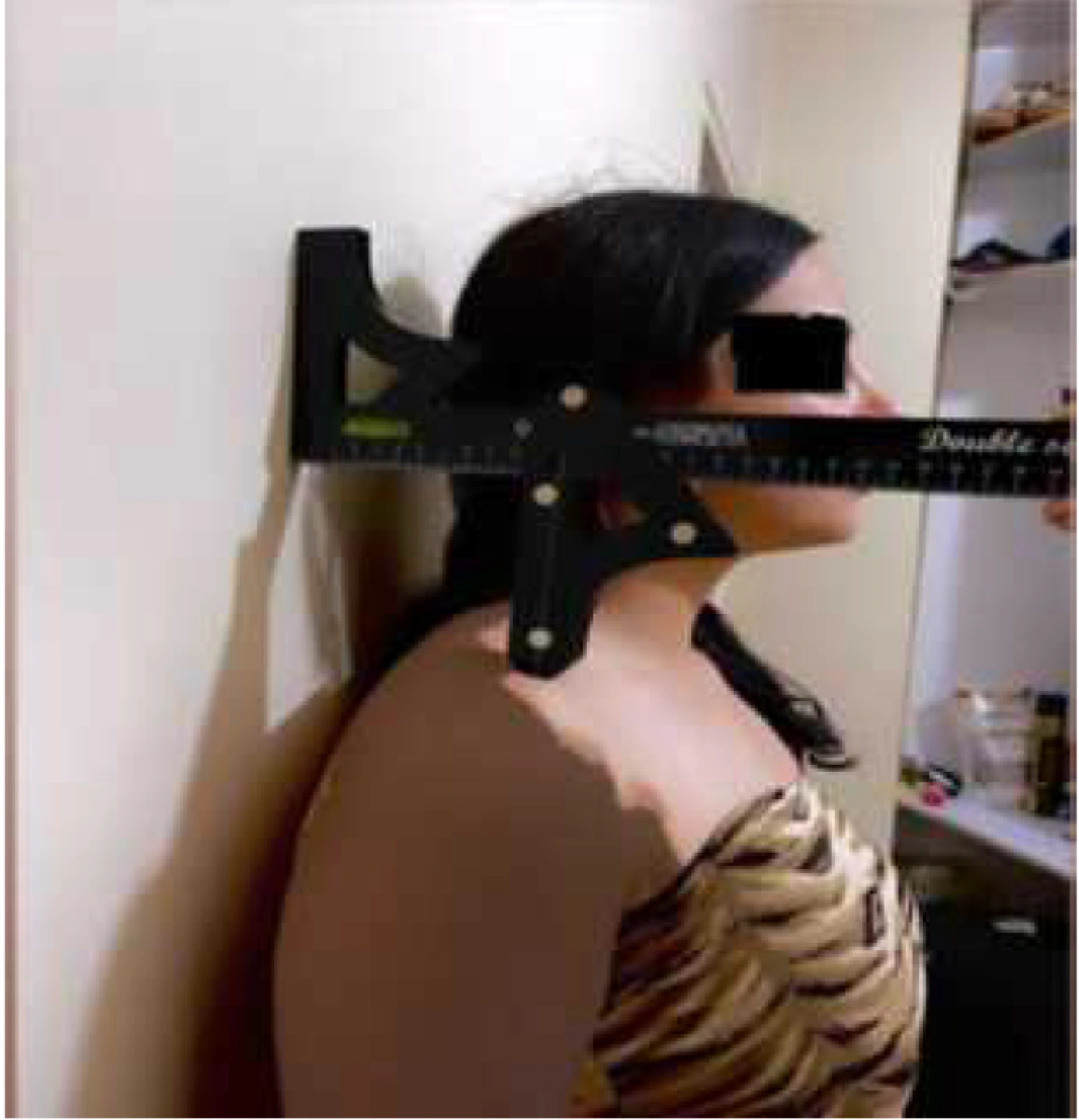
Figure 1.
Assessment of rounded shoulder posture (RSP) using a plumb line and double-score postural grid.
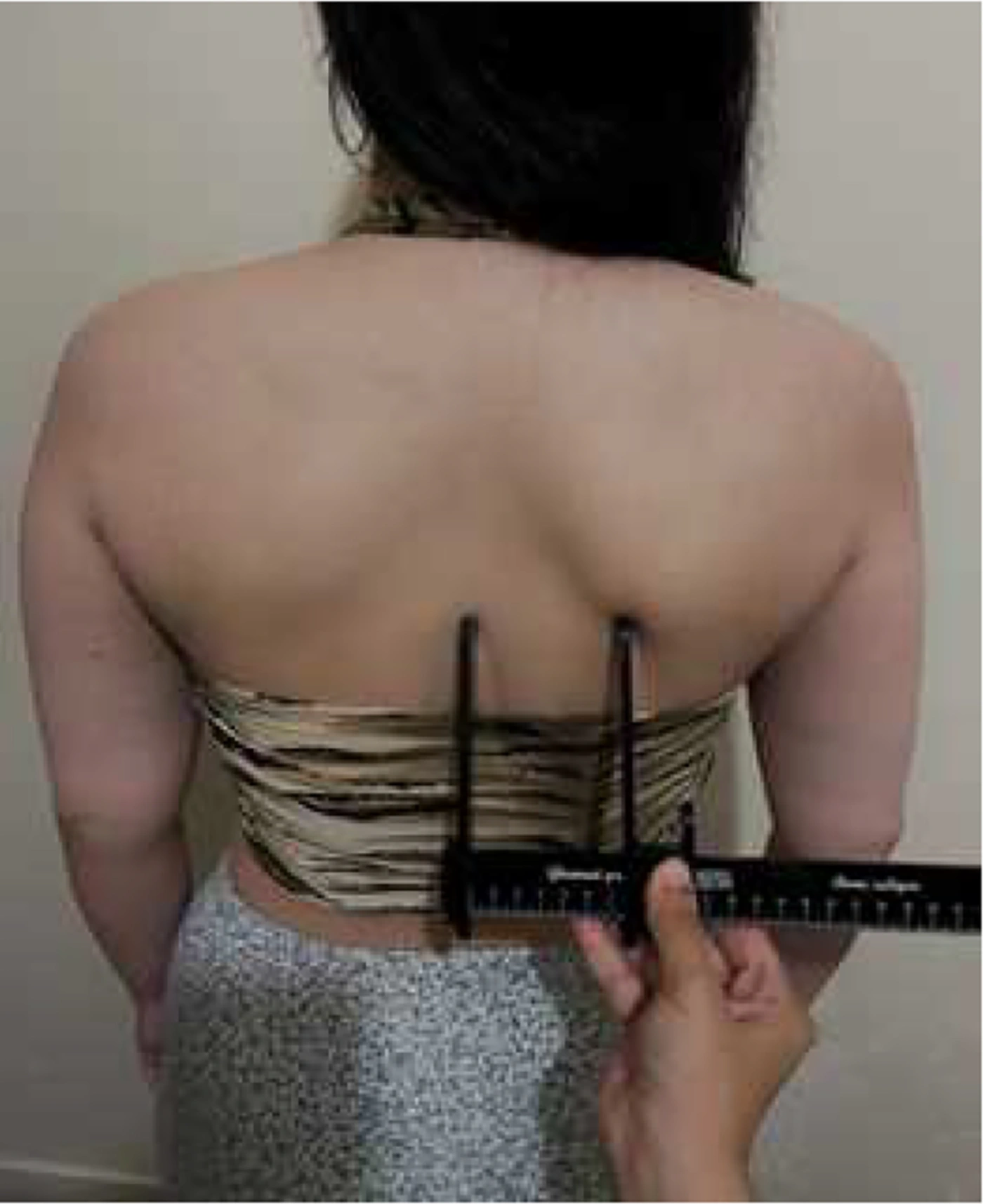
Figure 2.
Measurement of the scapular distance from the spine.
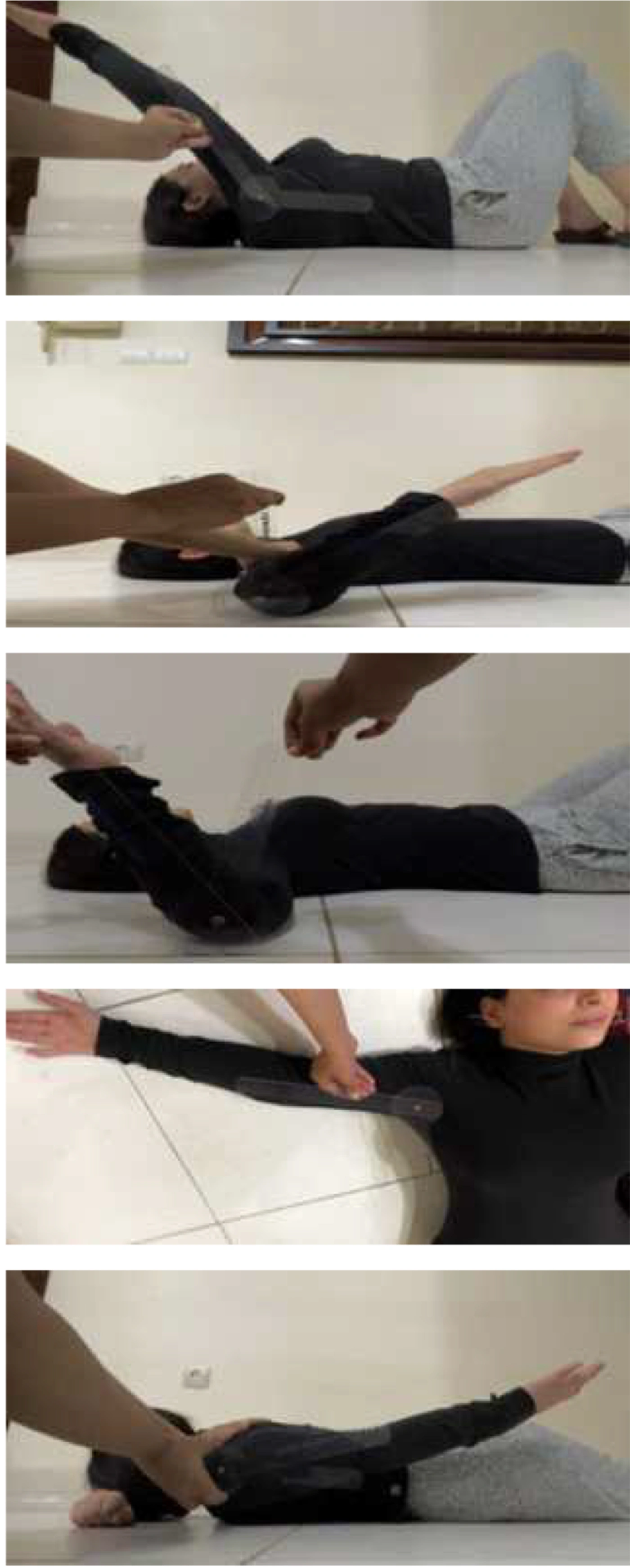
Figure 3.
Shoulder range of motion (flexion, abduction, internal rotation, and external rotation) was assessed using a standard goniometer.
3.4. Definition of Study Variables
The primary outcome variables were shoulder posture indices, including FSH and LSST, as well as shoulder ROM (flexion, abduction, internal rotation, and external rotation). The exposure variables were the corrective interventions, namely MFR and KT. Potential confounding variables, including age, body mass index (BMI), and baseline physical activity level, were minimized through participant homogeneity and statistically controlled using ANCOVA. No effect modifiers were specifically examined.
3.5. Intervention Protocols
In the MFR group, self-myofascial release was applied to the pectoralis major, pectoralis minor, upper trapezius, and levator scapulae muscles using a tennis ball and a plastic self-massage hook. Each muscle was released for 1 minute per side using controlled rolling motions with body weight or manual pressure. The procedure was repeated twice, with 30 seconds of rest between trials. Total treatment time per side was approximately 8 minutes (13).
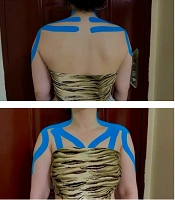
In the KT group, four muscles (pectoralis minor, upper trapezius, lower trapezius, and serratus anterior) were taped using Kinesio Tex Gold tape at 25% tension. The pectoralis minor was taped in a Y-shape from the coracoid process to ribs 3 - 5 to inhibit overactivity; the upper trapezius was taped from the acromion to the occiput to reduce tension; the lower trapezius was taped from the thoracic spinous processes to the scapular spine to facilitate activation; and the serratus anterior was taped from the upper ribs to the medial border of the scapula to assist control of scapular protraction. The tape was left in place for 24 hours (Figure 4).
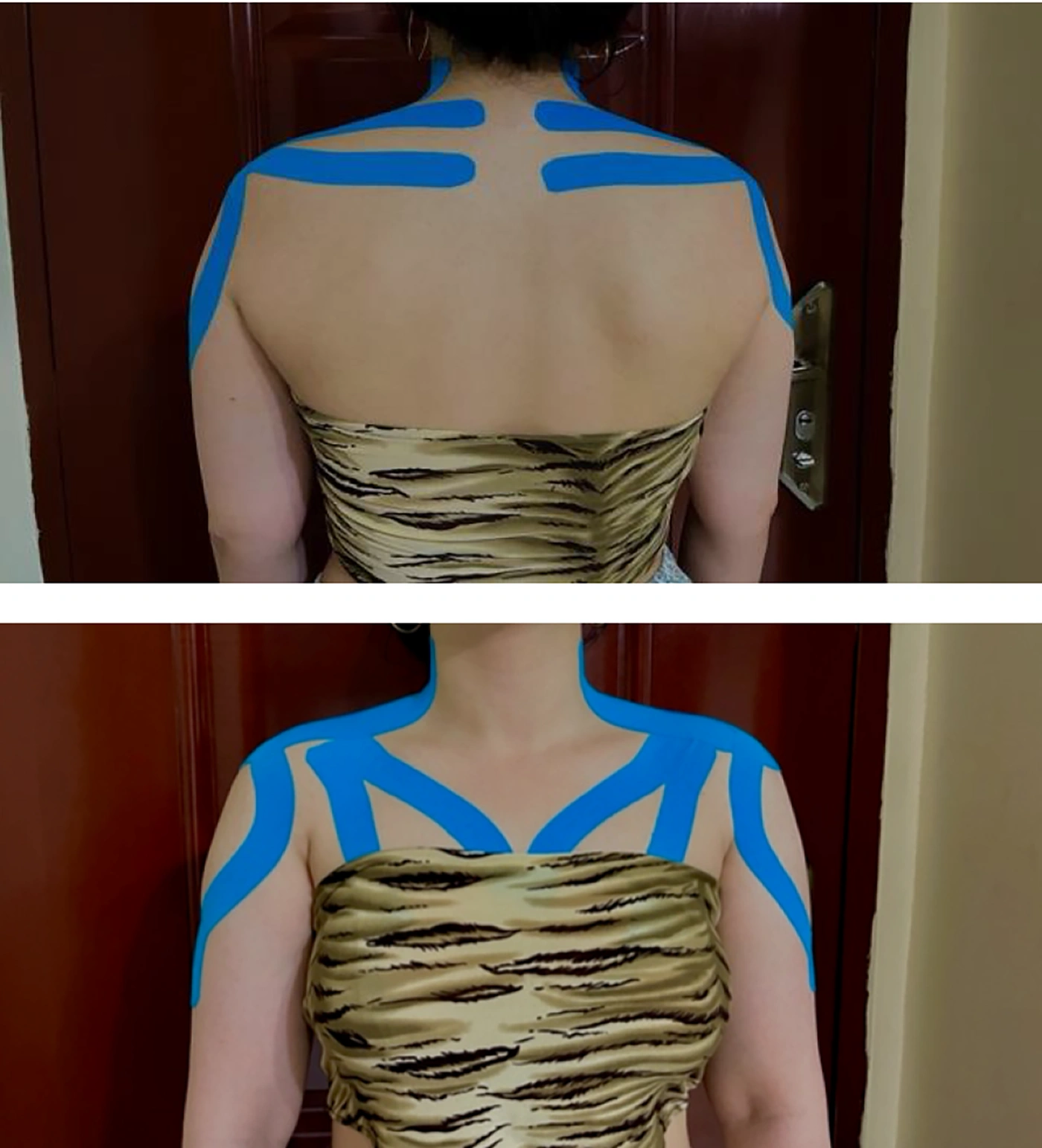
Figure 4.
Area of Kinesio tape application on the shoulder.
The control group received no intervention but underwent identical pre- and post-intervention measurements.
3.6. Statistical Analysis
Data were analyzed using SPSS version 22. Descriptive statistics (mean ± SD) were computed for all variables. Between-group differences were assessed using one-way ANCOVA while controlling for pretest scores. Pairwise comparisons were adjusted using the Bonferroni correction. Within-group differences were tested using paired-sample t tests. Statistical significance was set at P < 0.05. Effect sizes were calculated as partial eta squared (η2p) for ANCOVA and Cohen's d for t tests, with η2p > 0.14 and d > 0.8 considered large effects.
4. Results
4.1. Descriptive Statistics
Thirty-six participants (mean age = 22.4 ± 2.3 years; BMI = 22.1 ± 1.9 kg/m2) completed the study. No significant baseline differences were observed among the control, MFR, and KT groups for any primary variables, including FSH, LSST, and shoulder ROM (P > 0.05). These descriptive data are summarized in Table 1.
Table 1.
Baseline Characteristics of Participants a
| Variables | Control (n = 12) | MFR (n = 12) | KT (n = 12) | P-Value |
|---|---|---|---|---|
| Age (years) | 22.6 ± 2.2 | 22.1 ± 2.5 | 22.4 ± 2.3 | 0.78 |
| BMI (kg/m2) | 22.4 ± 1.7 | 21.8 ± 2.0 | 22.2 ± 2.1 | 0.66 |
| FSH (cm) | 4.82 ± 0.41 | 4.79 ± 0.38 | 4.85 ± 0.44 | 0.91 |
| LSST (cm) | 16.34 ± 0.87 | 16.29 ± 0.82 | 16.37 ± 0.90 | 0.88 |
| Shoulder flexion (°) | 151.3 ± 5.4 | 150.9 ± 5.8 | 151.6 ± 6.1 | 0.95 |
| Shoulder abduction (°) | 146.8 ± 6.2 | 147.5 ± 6.0 | 147.1 ± 5.7 | 0.89 |
a Values are expressed as mean ± SD. No significant baseline differences were observed among groups (P > 0.05). Abbreviations: BMI, body mass index; FSH, forward shoulder height; KT, Kinesio taping; LSST, lateral scapular slide test; MFR, myofascial release.
4.2. Effects on Shoulder Posture
Post-intervention comparisons showed that both MFR and KT significantly reduced FSH and LSST compared with the control group, whereas no significant differences were observed between MFR and KT (P > 0.05). Adjusted post-test means and effect sizes are presented in Table 2.
Table 2.
ANCOVA and Bonferroni Post Hoc Results for Shoulder Posture Variables (Adjusted Post-Test Means) a
| Variables and Groups | Pretest | Post-test | Mean Difference | P Value | Partial η2 | Cohen's d |
|---|---|---|---|---|---|---|
| FSH (cm) | ||||||
| Control | 4.82 ± 0.41 | 4.60 ± 0.38 | -0.22 | — | — | — |
| MFR | 4.79 ± 0.38 | 2.99 ± 0.41 | -1.80 | < 0.001 | 0.54 | 0.92 |
| KT | 4.85 ± 0.44 | 3.25 ± 0.47 | -1.60 | < 0.001 | 0.49 | 0.85 |
| LSST (cm) | ||||||
| Control | 16.34 ± 0.87 | 16.12 ± 0.82 | -0.22 | — | — | — |
| MFR | 16.29 ± 0.82 | 15.09 ± 0.64 | -1.20 | < 0.001 | 0.51 | 0.88 |
| KT | 16.37 ± 0.90 | 15.23 ± 0.68 | -1.14 | < 0.001 | 0.50 | 0.86 |
a Values are expressed as mean ± SD. Both interventions significantly improved shoulder posture compared with the control group (P < 0.001). Abbreviations: FSH, forward shoulder height; KT, Kinesio taping; LSST, lateral scapular slide test; MFR, myofascial release; η2, eta squared.
As shown in Table 2, FSH decreased by approximately 1.8 cm in the MFR group and 1.6 cm in the KT group, compared with 0.2 cm in the control group. Similarly, LSST decreased by 1.2 cm and 1.1 cm in the MFR and KT groups, respectively, indicating large effects (partial η2 = 0.50 - 0.54; Cohen's d = 0.85 - 0.92).
4.3. Effects on Shoulder Range of Motion
Significant improvements were observed in flexion, abduction, internal rotation, and external rotation following both MFR and KT interventions (P < 0.001). ANCOVA indicated strong group effects for flexion, abduction, and internal and external rotation (F = 9.84 - 15.67, partial η2 = 0.45 - 0.56). Detailed ANCOVA and post hoc results are presented in Table 3. The MFR and KT groups showed the greatest increases in flexion and abduction (10.4° and 12.2° for MFR; 9.7° and 11.5° for KT), whereas moderate improvements were observed in internal and external rotation (6° - 8°). No statistically significant differences were detected between MFR and KT for any reported ROM measure (P > 0.05; Cohen's d < 0.20).
Table 3.
ANCOVA and Post Hoc Comparisons for Shoulder ROM Variables a
| Variables and Groups | Pretest | Post-test | Mean Difference | P-Value | Partial η2 | Cohen's d |
|---|---|---|---|---|---|---|
| Flexion (°) | ||||||
| Control | 151.3 ± 5.4 | 152.1 ± 5.7 | +0.8 | — | — | — |
| MFR | 150.9 ± 5.8 | 161.3 ± 4.9 | +10.4 | < 0.001 | 0.56 | 0.95 |
| KT | 151.6 ± 6.1 | 161.3 ± 5.1 | +9.7 | < 0.001 | 0.52 | 0.89 |
| Abduction (°) | ||||||
| Control | 146.8 ± 6.2 | 147.5 ± 5.9 | +0.7 | — | — | — |
| MFR | 147.5 ± 6.0 | 159.7 ± 5.2 | +12.2 | < 0.001 | 0.55 | 0.92 |
| KT | 147.1 ± 5.7 | 158.6 ± 5.3 | +11.5 | < 0.001 | 0.53 | 0.88 |
| Internal rotation (°) | ||||||
| Control | 56.4 ± 3.8 | 56.9 ± 3.9 | +0.5 | — | — | — |
| MFR | 56.1 ± 3.6 | 63.9 ± 3.7 | +7.8 | < 0.01 | 0.47 | 0.71 |
| KT | 56.5 ± 3.9 | 63.1 ± 3.5 | +6.6 | < 0.01 | 0.45 | 0.68 |
| External rotation (°) | ||||||
| Control | 67.8 ± 4.1 | 68.4 ± 4.2 | +0.6 | — | — | — |
| MFR | 68.0 ± 4.0 | 74.1 ± 3.9 | +6.1 | < 0.01 | 0.46 | 0.64 |
| KT | 67.9 ± 4.3 | 74.0 ± 3.7 | +6.1 | < 0.01 | 0.45 | 0.64 |
a Values are expressed as mean ± SD. Both interventions produced significant and comparable ROM improvements compared with the control group (P < 0.001). Abbreviations: KT, Kinesio taping; MFR, myofascial release; ROM, range of motion; η2, eta squared.
5. Discussion
The present study demonstrated that both MFR and KT produced significant, immediate improvements in shoulder posture and ROM in women with RSP. Both interventions significantly decreased FSH and LSST values and enhanced ROM in flexion, abduction, and rotational movements, with large effect sizes (Cohen's d = 0.82 - 0.95 for flexion and abduction). These findings indicate that short-term interventions targeting soft-tissue extensibility and neurosensory regulation can induce measurable postural correction and mobility gains.
From a biomechanical perspective, RSP is characterized by shortening of the anterior shoulder musculature, notably the pectoralis minor and upper trapezius, with concurrent weakness or lengthening of posterior stabilizers, including the lower trapezius and rhomboids. This imbalance leads to anterior tilting and protraction of the scapula, subsequently reducing the subacromial space and limiting glenohumeral motion. By addressing distinct aspects of this dysfunction, both MFR and KT may restore a more neutral scapulothoracic alignment and facilitate optimal shoulder kinematics.
The immediate improvements observed after MFR are consistent with the known mechanical and neurophysiological effects of fascial release. MFR reduces fascial densification, increases local blood flow, and modulates muscle tone via Golgi tendon organ activation and mechanoreceptor stimulation (9, 14). This may explain the rapid increases in ROM and reductions in FSH and LSST observed in the MFR group. Similarly, KT exerts its influence primarily through cutaneous mechanoreceptor activation, enhancing proprioceptive feedback, altering motor unit recruitment, and promoting postural awareness (15-17).
Comparable short-term results were reported by Mazloum et al. (13), who found that self-myofascial release with or without Kinesio taping produced similar immediate improvements in cervical pain and range of motion. Their findings support the present results, suggesting that both mechanical tissue mobilization and neurosensory stimulation can yield equivalent short-term functional benefits, even in different body regions (13).
These neurosensory adaptations may modify central motor control and improve dynamic scapular stability even in the absence of structural changes (18). The absence of statistically significant differences between MFR and KT (P > 0.05; d < 0.20) suggests that both interventions yield comparable short-term outcomes, albeit via different mechanistic pathways.
KT facilitates sensorimotor integration by providing continuous tactile input, thereby guiding postural correction and enhancing neuromuscular coordination (17, 18). In contrast, MFR acts directly on connective tissue and myofascial tension, improving muscle extensibility and reducing passive stiffness, thereby enhancing the efficiency of scapulohumeral rhythm. This convergence of mechanical and neurosensory effects may account for the similar magnitudes of postural and functional gains in both groups.
These results are consistent with previous reports. Yun et al. (15) and Swati et al. (16) confirmed that KT application significantly improves scapular alignment and shoulder elevation, whereas Pathan et al. (14) highlighted the ability of MFR to restore shoulder mechanics by reducing myofascial restrictions. Guduru et al. (19) identified that pectoralis minor tightness contributes to scapular protraction and recommended soft-tissue release to improve posture. Additionally, Hajibashi et al. (17) and Banerjee et al. (18, 20) demonstrated that KT applied with moderate tension from T12 to the acromion effectively reduces shoulder protraction and enhances upper-limb alignment. The present findings align with these observations, reinforcing that both KT and MFR can rapidly correct postural deviations and improve mobility through modulation of the myofascial-neural interface.
From a clinical perspective, these findings are particularly relevant to the rehabilitation of postural syndromes and preventive interventions in sedentary populations (21). Rounded shoulder posture is prevalent among young women because of prolonged sitting and forward-head activities, such as computer use and smartphone interaction (1). Rapid, noninvasive methods such as KT and MFR may serve as effective adjuncts to physiotherapy and ergonomic correction programs, offering clinicians practical strategies to improve posture and shoulder mechanics within a single session (15, 16).
Future research should explore the longitudinal effects of these interventions because short-term improvements may not directly translate into sustained postural correction (22). Integrating MFR and KT within a multimodal rehabilitation framework, including corrective exercise, motor control training, and ergonomic education, could potentially yield additive benefits. Furthermore, investigations using electromyography and ultrasound elastography would help elucidate the neuromuscular activation patterns and fascial property changes underlying these outcomes (23).
5.1. Conclusions
Both MFR and KT produced significant, immediate improvements in shoulder posture and range of motion in women with RSP. The large effect sizes in flexion and abduction indicate meaningful clinical impact. Although no significant difference was found between the two methods, both may be used as effective, accessible, and low-cost interventions for rapid postural correction. Further studies with larger samples and longer follow-up periods are recommended to evaluate long-term effects.