Fulltext
Fulltext is availale in the PDF.
Zahedan Journal of Research in Medical Sciences
The Official Journal of Zahedan University of Medical Sciences
Image Credit:Zahedan J Res Med Sci
Authors
Background: Since liver is a gland which has an important role in drug metabolism, the present study was conducted to evaluate the effect of a single dose and repeated administration of morphine on LFT, blood sugar and fasting insulin resistance index in fructose- fed male rats.
Materials and Methods: The experiment was performed on 36 Wistar-Albino male rats, which were divided into a control (A) and three tests groups (B, C and D). The control group consumed tap water, but the test groups consumed fructose-enriched water (10%, w/v) and received null, single, and repeated doses of morphine, respectively. At the end, animals were anesthetized and blood samples were collected. Liver enzymes, insulin and insulin resistance were measured. Data were analyzed by SPSS-11, using ANOVA and Tukey tests as post hoc test. Results were expressed as mean±SD and Statistical differences were recognized significant by p<0.05.
Results: The results showed that all test groups were insulin resistant; alanine aminotransferase (ALT) and asparatate aminotransferase (AST) activity values in group D significantly increased compared to other groups while its plasma glucose and insulin values showed a significant decrease in comparison to other test groups.
Conclusion: It seems that repeated morphine administration can affect liver function test (LFT) and fasting Insulin resistance index (FIRI) in fructose- fed male rats.
© 2014, Author(s). This open-access article is available under the Creative Commons Attribution 4.0 (CC BY 4.0) International License (https://creativecommons.org/licenses/by/4.0/), which allows for unrestricted use, distribution, and reproduction in any medium, provided that the original work is properly cited.
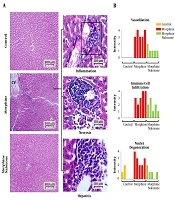
Peirouvi T, Mirbaha Y, Fathi-Azarbayjani A, Shalizar Jalali A. Co-Administration of Morphine and Naloxone: Histopathological and Biochemical Changes in the Rat Liver. Int J High Risk Behav Addict. 2020;9(3):e100594. doi: https://doi.org/10.5812/ijhrba.100594
Azadbakht A, Saremi A, khansooz M. Evaluation of P53 and Nrf2 protein levels in kidney tissue after 8 weeks of endurance training in diabetic rats with morphine withdrawal syndrome. koomesh. 2023;25(6):e152863. doi:
Shahraki MR, Mirshekari H, Samadi Z, Shahraki AR, Shahraki E. Effects of Artemisia dracunculus Aqueous Extract on Blood Sugar, Serum Insulin, Triglyceride and Liver Enzymes in Fructose Drinking Water Male Rats. Zahedan J Res Med Sci. 2017;19(2):e4402. doi: https://doi.org/10.5812/zjrms.4402
Ghowsi M, Yousofvand N, Pourmotabbed A. Effects of morphine dependency and its abstinence on serum concentrations of sex hormones and reproductive system in male rats. J Kermanshah Univ Med Sci. 2013;17(1):e77138. doi:
Amniattalab A, Malekinejad H, Rezabakhsh A, Rokhsartalab-Azar S, Alizade-Fanalou S. Silymarin: A Novel Natural Agent to Restore Defective Pancreatic β Cells in Streptozotocin (STZ)-induced Diabetic Rats. Iran J Pharm Res. 2016;15(3):e125153. doi: https://doi.org/10.22037/ijpr.2016.1879
Last Update: 1 week ago
Last Update: 1 week ago
Last Update: 1 week ago
Last Update: 5 hours ago
Last Update: 8 hours ago
Last Update: 5 days ago