
1. Background
Schizophrenia is a severe, chronic psychiatric disorder characterized by a complex interplay of cognitive, emotional, and behavioral dysfunctions (1). Although psychotic manifestations such as hallucinations and delusions are hallmarks of the illness, for many individuals the most debilitating and persistent aspect is profound impairment in social functioning (2). Patients often struggle to navigate routine social interactions, maintain employment, or sustain meaningful relationships, which severely hinders their community integration (3). These pervasive psychosocial deficits not only impose substantial emotional and financial burdens on caregivers but also contribute significantly to the high rates of relapse and psychiatric rehospitalization observed in this population (4). Consequently, addressing psychosocial impairments in individuals with schizophrenia remains a critical priority in contemporary psychiatric rehabilitation (5).
A prominent manifestation of impaired social functioning in schizophrenia is interpersonal conflict. Cognitive deficits, impaired theory of mind, and paranoid ideation often lead individuals to misinterpret social cues, resulting in friction with family members, peers, and society at large (6). Furthermore, the home environment plays a critical role; families exhibiting high levels of “expressed emotion,” characterized by hostility, criticism, and overinvolvement, may inadvertently exacerbate interpersonal tensions (7). This creates a detrimental feedback loop in which familial conflict triggers patient distress, which in turn worsens psychiatric symptoms and provokes further interpersonal disputes (8). If left unaddressed, chronic interpersonal conflict not only fractures the patient’s immediate support system but also serves as a robust predictor of symptomatic relapse (9).
Social isolation is another major vulnerability among individuals with schizophrenia. Negative symptoms, including avolition, anhedonia, and blunted affect, can markedly reduce motivation to participate in social activities (10). Social support has also been associated with quality of life and depression in other chronic conditions, including multiple sclerosis (11). As individuals withdraw from their communities to avoid judgment or interpersonal failure, they may experience chronic social deprivation. Severe isolation can accelerate cognitive decline, reduce quality of life, and is associated with depression and premature mortality in this population (12, 13).
Recent qualitative evidence highlights the challenges experienced by family caregivers of individuals with schizophrenia and underscores the need for family-centered interventions. Although standard pharmacotherapy is effective in managing positive symptoms, it has limited effects on negative symptoms and psychosocial deficits (14). Family interventions for schizophrenia can complement pharmacotherapy and support relapse prevention (15). Family-focused therapy has also shown benefits for impulsivity in individuals with bipolar II disorder, supporting the broader applicability of family-based approaches across psychiatric conditions (16). Multifamily group approaches combine psychoeducation, behavioral problem-solving, communication practice, and mutual emotional support (17, 18). By bringing together families facing similar challenges, these interventions may reduce internalized stigma, normalize caregiving experiences, and provide a structured setting in which patients and relatives can practice communication skills.
Despite support for family-oriented interventions, MFPGT remains underused in many clinical settings, particularly in developing regions where psychiatric care relies heavily on medical models. This quasi-experimental study was designed to provide culturally relevant evidence from Iran.
2. Objectives
The present study aimed to evaluate the effects of multi-family psychoeducational group therapy on interpersonal conflict and social isolation among individuals with schizophrenia.
3. Methods
3.1. Study Design and Participants
This study employed a quasi-experimental design with pretest, posttest, and 3-month follow-up assessments. This design was selected because random assignment was not feasible in the clinical setting due to ethical and practical constraints related to patient discharge planning and family availability; therefore, purposive sampling was used to ensure that participants met strict eligibility criteria while maintaining ecological validity.
The statistical population comprised all individuals diagnosed with schizophrenia who received outpatient or inpatient care at the psychiatric ward of Golestan Hospital in Ahvaz, Iran, during 2025. Using purposive sampling, 16 eligible patients were selected and allocated to an experimental group (n = 8) or a control group (n = 8) using a nonrandomized procedure after eligibility screening. The sample size was determined based on feasibility in the local clinical setting and prior similar studies in family psychoeducation. Given the small sample, the findings should be considered preliminary, and the study was not powered to detect small-to-moderate effects with high precision. No clinical trial registration was required because this was a quasi-experimental educational intervention rather than a regulated clinical trial.
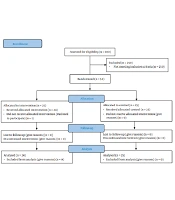
Inclusion criteria were a formal diagnosis of schizophrenia confirmed by a board-certified psychiatrist according to DSM-5 criteria, an age range of 18 - 50 years, and the active involvement of at least one primary family caregiver. Exclusion criteria were severe comorbid neurological disorders, intellectual disabilities, active substance use disorders, or inability to provide informed consent. A participant flow diagram (Figure 1) tracked progression from eligibility assessment (n = 23 screened) through allocation, intervention, and follow-up. No participants withdrew, missed more than two sessions, or were excluded from analysis after allocation. Written informed consent was obtained from all patients and their family members before study initiation, ensuring confidentiality and the right to withdraw at any time without affecting standard care.
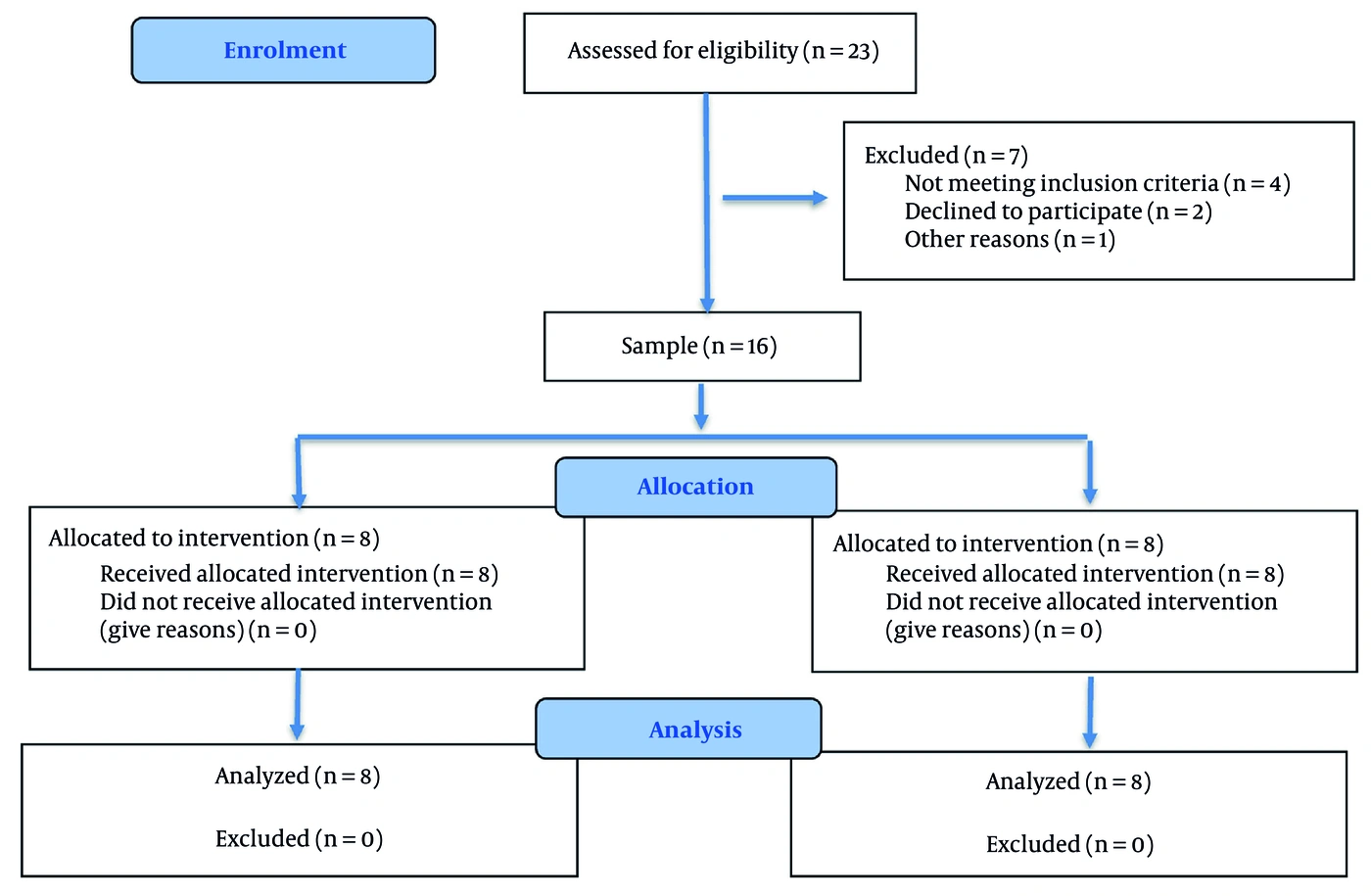
Figure 1.
CONSORT flowchart of the study process
3.2. Instruments
The Persian version of the Interpersonal Relationship Inventory (IRI), developed by Tilden and colleagues (19), was used to assess interpersonal tension and conflict. This 25-item self-report instrument uses a 5-point Likert scale ranging from 1 (strongly disagree) to 5 (strongly agree), with total scores from 25 to 125; higher scores indicate greater conflict. In this study, Cronbach α was 0.85. The Persian version of the Social Isolation Scale (SIS) (20) was administered to quantify social withdrawal and limited social networks. This 20-item instrument also uses a 5-point Likert format, with scores from 20 to 100; higher scores indicate greater isolation. In the current sample, Cronbach α was 0.87. Higher scores on both scales indicate worse outcomes. Schizophrenia-specific validation data remain limited.
3.3. Procedure and Intervention
Baseline (pretest) data were collected from all participants. The experimental group participated in the MFPGT program, delivered over 24 weekly 90-minute sessions by an experienced clinical psychologist. Session delivery was guided by a detailed manual; fidelity was monitored using session checklists completed by the facilitator and through weekly supervision sessions. Average attendance was 92% for patients and 88% for family caregivers. The control group received standard pharmacological treatment and routine hospital care, including regular psychiatrist visits and medication management, but no additional structured psychosocial interventions. No significant medication changes or additional psychotherapy occurred in either group during the study period. Posttest assessments were conducted immediately after the 24-week program, and a 3-month follow-up assessment evaluated maintenance of gains. The structure of the MFPGT program is summarized in Table 1.
Table 1.
Summary of Multi-Family Psychoeducational Group Therapy (MFPGT)
| Sessions | Topics | Contents | Objectives |
|---|---|---|---|
| 1 | Introduction and Group Formation | Member introductions, goals, group rules, creating a safe space | Enhancing group cohesion and trust |
| 2 | Understanding the Illness | Introduction to the disorder, its course, and consequences | Increasing foundational awareness |
| 3 | Bio-Psycho-Social Model | Explaining the multifactorial nature of the illness | Reducing stigma and blame |
| 4 | Family’s Role in the Illness | Examining patient-family interactions | Enhancing the family’s supportive role |
| 5 | Pharmacotherapy (Part 1) | Introduction to medications and therapeutic effects | Increasing treatment acceptance |
| 6 | Pharmacotherapy (Part 2) | Side effects, administration management, adherence | Improving medication adherence |
| 7 | Warning Signs (Part 1) | Identifying early signs of relapse | Relapse prevention |
| 8 | Warning Signs (Part 2) | Developing a personalized symptom list for each patient | Personalizing psychiatric care |
| 9 | Stress and Illness | The relationship between stress and symptom exacerbation | Mitigating risk factors |
| 10 | Stress Management Skills | Practical stress management techniques | Increasing psychological resilience |
| 11 | Problem-Solving (Part 1) | Training in the fundamental steps of problem-solving | Enhancing cognitive skills |
| 12 | Problem-Solving (Part 2) | Practical exercises using real-life scenarios | Applying skills practically |
| 13 | Problem-Solving (Part 3) | Collaborative problem-solving within the group | Strengthening decision-making |
| 14 | Communication Skills (Part 1) | Active listening techniques | Improving social interactions |
| 15 | Communication Skills (Part 2) | Expressing feelings and personal needs | Reducing interpersonal conflict |
| 16 | Communication Skills (Part 3) | Role-playing exercises | Consolidating communication skills |
| 17 | Conflict Management (Part 1) | Identifying triggers of family conflicts | Reducing domestic tension |
| 18 | Conflict Management (Part 2) | Strategies for effective conflict resolution | Improving relational dynamics |
| 19 | Crisis Management | Coping with acute psychiatric crises | Increasing emergency preparedness |
| 20 | Social Support | Identifying and accessing support resources | Strengthening the support network |
| 21 | Family Collaboration | Exchanging experiences among participating families | Facilitating social learning |
| 22 | Advanced Coping | Integrating learned skills in real-world conditions | Enhancing self-efficacy |
| 23 | Relapse Prevention | Designing an individualized prevention plan | Minimizing future relapse risk |
| 24 | Conclusion and Termination | Reviewing all sessions and consolidating achievements | Stabilizing changes and final cohesion |
3.4. Data Analysis
All analyses were performed using SPSS version 26. Repeated-measures ANOVA was conducted with time (pretest, posttest, follow-up) as the within-subject factor, group (MFPGT vs. control) as the between-subject factor, and the Group × Time interaction as the primary effect of interest. Dependent variables were interpersonal conflict (IRI) and social isolation (SIS) scores. Assumptions were assessed using the Shapiro-Wilk test for normality, Levene’s test for homogeneity of variance, and Mauchly’s test for sphericity (with Greenhouse-Geisser correction applied when violated). No missing data occurred; all cases were analyzed using complete data. Baseline demographic and clinical variables (age, sex, education, illness duration, medication status) were examined for imbalance and considered as potential covariates; however, no significant group differences were observed (P > 0.05), and inclusion of these variables did not alter the results. Confidence intervals (95%) were calculated for mean differences and effect sizes. Statistical significance was set at P < 0.05, with Bonferroni correction for post hoc comparisons.
4. Results
4.1. Baseline Characteristics
Participants’ demographic and clinical characteristics were comparable across groups at baseline. The experimental group had a mean age of 34.6 years (SD = 7.2), whereas the control group had a mean age of 35.1 years (SD = 6.8). Both groups were predominantly male (experimental: 62.5%; control: 75.0%), and most participants had completed a high school education or equivalent. The mean duration of illness was 8.4 years (SD = 4.1) in the experimental group and 7.9 years (SD = 3.7) in the control group. No significant baseline differences were observed between groups in demographic variables, illness duration, or clinical characteristics (all P > 0.05), supporting group equivalence before the intervention.
4.2. Changes in Interpersonal Conflict and Social Isolation
As shown in Table 2, baseline (pretest) scores for interpersonal conflict and social isolation were closely aligned between the MFPGT and control groups. After the intervention, the MFPGT group showed marked reductions in both outcome measures at posttest, and these gains were largely maintained at the 3-month follow-up. By contrast, the control group showed only minimal changes over time that were not clinically meaningful.
Table 2.
Descriptive Statistics for Interpersonal Conflict and Social Isolation Across Assessment Phases a
| Variables and Groups | Pretest | Posttest | 3-Month Follow-up | Mean Change (Pretest to Follow-up) with 95% CI |
|---|---|---|---|---|
| Interpersonal conflict | ||||
| MFPGT | 72.40 ± 8.15 | 58.27 ± 7.94 | 56.93 ± 8.10 | −15.47 [−20.96, −9.98] |
| Control | 71.93 ± 7.88 | 69.80 ± 8.02 | 68.47 ± 7.95 | −3.46 [−8.12, 1.20] |
| Social isolation | ||||
| MFPGT | 64.13 ± 6.92 | 51.60 ± 6.45 | 50.28 ± 6.71 | −13.85 [−18.45, −9.25] |
| Control | 63.87 ± 7.11 | 62.40 ± 6.98 | 61.93 ± 7.05 | −1.94 [−6.78, 2.90] |
a Values are expressed as mean ± SD unless otherwise indicated. Abbreviations: MFPGT, multi-family psychoeducational group therapy; CI, confidence interval.
Repeated-measures ANOVA showed statistically significant main effects of time and group, as well as a significant Group × Time interaction for both outcomes (Table 3). The interaction effects were particularly robust (ηp2 = 0.47 for conflict; ηp2 = 0.50 for isolation).
Table 3.
Repeated-Measures Analysis of Variance for Interpersonal Conflict and Social Isolation
| Variables and Sources | df | F | P | η2 | 95% CI for Effect |
|---|---|---|---|---|---|
| Interpersonal conflict | |||||
| Time | 2 | 28.74 | 0.001 | 0.51 | - |
| Group | 1 | 19.62 | 0.001 | 0.41 | |
| Group × Time | 2 | 24.88 | 0.001 | 0.47 | [0.22, 0.68] |
| Social isolation | |||||
| Time | 2 | 31.45 | 0.001 | 0.53 | |
| Group | 1 | 21.18 | 0.001 | 0.43 | |
| Group × Time | 2 | 27.96 | 0.001 | 0.50 | [0.26, 0.71] |
Post-hoc pairwise comparisons with Bonferroni correction (Table 4) clarified the pattern of change. In the MFPGT group, interpersonal conflict decreased significantly from pretest to posttest (mean difference = 14.13, 95% CI [8.92, 19.34], P < 0.001) and from pretest to follow-up (mean difference = 15.47, 95% CI [9.98, 20.96], P < 0.001), with no significant rebound from posttest to follow-up (P = 0.420). Similarly, social isolation scores declined substantially from pretest to posttest (mean difference = 12.53, 95% CI [7.85, 17.21], P < 0.001) and from pretest to follow-up (mean difference = 13.85, 95% CI [8.92, 18.78], P < 0.001), with no significant change from posttest to follow-up (P = 0.514). No significant temporal changes were observed in the control group.
Table 4.
Bonferroni Post Hoc Comparisons for Significant Interaction Effects
| Variables and Times | Mean Difference | SE | P | 95% CI |
|---|---|---|---|---|
| Interpersonal conflict | ||||
| Pretest – Posttest | 14.13 | 2.31 | 0.001 | [8.92, 19.34] |
| Pretest – Follow-up | 15.47 | 2.45 | 0.001 | [9.98, 20.96] |
| Posttest – Follow-up | 1.34 | 1.62 | 0.420 | [−2.85, 5.53] |
| Social isolation | ||||
| Pretest – Posttest | 12.53 | 2.08 | 0.001 | [7.85, 17.21] |
| Pretest – Follow-up | 13.85 | 2.19 | 0.001 | [8.92, 18.78] |
| Posttest – Follow-up | 1.32 | 1.48 | 0.514 | [−2.45, 5.09] |
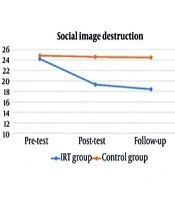
Figure 2 illustrates the trajectories of interpersonal conflict (Figure 2A) and social isolation (Figure 2B) across the three assessment phases (pretest, posttest, and 3-month follow-up). As shown, the MFPGT group demonstrated a steep decline in both variables immediately after the intervention, with scores showing slight further improvement or stability at follow-up. In contrast, the control group showed relatively flat trajectories with minimal fluctuation over time.
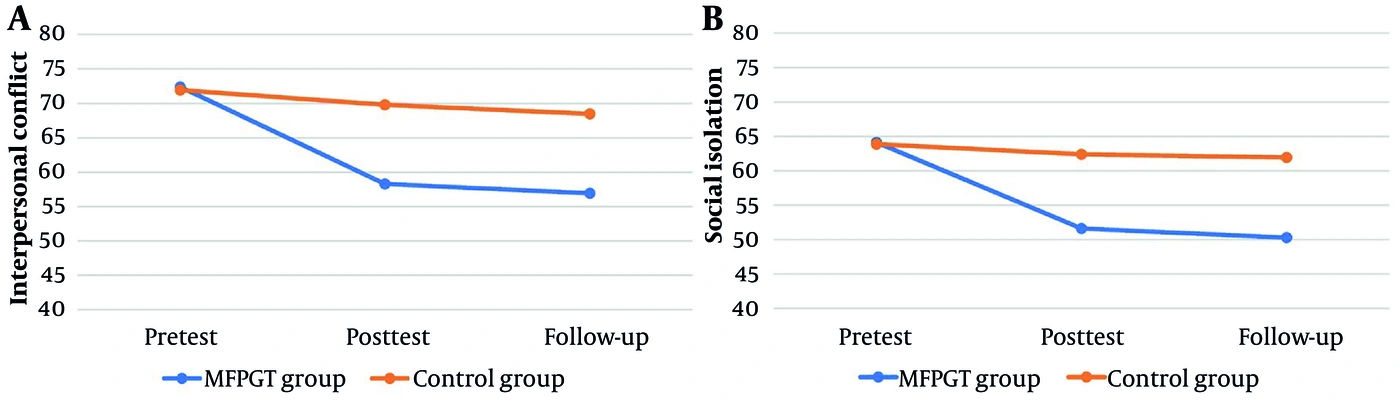
Figure 2.
Changes in interpersonal conflict (A) and social isolation (B) scores over time in the MFPGT and control groups
5. Discussion
The present study suggests that MFPGT may meaningfully reduce interpersonal conflict and social isolation among individuals diagnosed with schizophrenia. These findings contribute to the growing body of evidence supporting family-centered psychosocial interventions as essential adjuncts to pharmacotherapy in addressing persistent social functioning deficits.
The significant reduction in interpersonal conflict observed in the experimental group can be largely attributed to the core components of MFPGT, including structured training in communication skills, conflict resolution strategies, and collaborative problem-solving. By providing a shared psychoeducational framework, the intervention helped families reduce high levels of expressed emotion, such as criticism and over-involvement, which are well-established triggers of relational tension and symptomatic relapse. These results are consistent with recent culturally diverse studies demonstrating the benefits of family psychoeducation in lowering domestic conflict (21, 22). Moreover, the multi-family format created opportunities for vicarious learning and the normalization of experiences, further decreasing interpersonal friction.
Parallel improvements in social isolation highlight the unique strengths of this group-based approach. Schizophrenia often leads to profound withdrawal due to negative symptoms, stigma, and diminished social competence. The 24-session MFPGT program functioned as a supportive social laboratory, enabling participants to practice interpersonal skills in a nonjudgmental environment with peers and families facing similar challenges. This process likely reduced internalized stigma and facilitated the gradual expansion of social networks beyond the group setting. Contemporary research on loneliness and group interventions in psychosis supports this mechanism (23-25). Importantly, the magnitude of score reductions exceeded established thresholds for clinically meaningful change, suggesting tangible benefits in daily functioning and quality of life.
The maintenance of therapeutic gains at the 3-month follow-up is particularly encouraging, indicating that MFPGT may foster durable psychosocial adaptations rather than transient effects. By empowering family members as active agents of change, the intervention appears to create a reinforcing ecosystem in which newly acquired skills are practiced and strengthened in real-life contexts.
5.1. Study Limitations
Nevertheless, the results must be interpreted in light of important limitations. The small sample size (N = 16) and nonrandomized allocation, although ethically and practically justified in this clinical context, reduce statistical power and increase vulnerability to selection bias. Although the groups were balanced on key variables, including illness duration, larger trials are needed to improve precision and generalizability. The relatively short 3-month follow-up period provides preliminary evidence of sustainability but cannot address longer-term outcomes. Additionally, although Persian versions of the IRI and SIS demonstrated good reliability, further validation work specific to schizophrenia populations would strengthen confidence in these measures. Finally, the localized sample from a single center in Ahvaz limits broader applicability across diverse socioeconomic and cultural settings in Iran and beyond.
5.2. Conclusions
In conclusion, this quasi-experimental study provides preliminary evidence that MFPGT may help alleviate interpersonal conflict and social isolation among individuals with schizophrenia by strengthening family communication, problem-solving skills, and supportive networks. The intervention produced statistically significant and clinically meaningful improvements that were largely maintained at the 3-month follow-up. However, given the small sample size, nonrandomized design, and localized nature of the study, these findings should be interpreted with caution. Although MFPGT shows promise as a beneficial adjunctive treatment in resource-limited settings, further large-scale, randomized controlled trials with longer follow-up periods and more diverse populations are essential to confirm its long-term efficacy, mechanisms of change, and generalizability.