
1. Background
Epidermal growth factor receptor (EGFR) is a membrane protein that belongs to the family of receptor tyrosine kinases (RTKs). This receptor is responsible for receiving growth signals from the extracellular environment and transmitting them into the cell. Mutations in the EGFR cause uncontrolled cell proliferation, inhibition of apoptosis, and increased invasiveness by continuously activating intracellular signaling pathways such as RAS-RAF-MEK-ERK and PI3K-AKT-mTOR. These changes contribute to the development of several types of cancer (including lung, pancreatic, and colorectal) (1-4).
In an effort to inhibit cancers that originate from mutations in EGFR, the drug erlotinib received U.S. Food and Drug Administration (FDA) approval in 2004 and was marketed under the brand name TARCEVA (5). Erlotinib is an anticancer drug from the class of epidermal growth factor receptor tyrosine kinase inhibitors (EGFR-TKIs) that selectively targets the EGFR. By binding to the tyrosine kinase domain of EGFR, the drug prevents phosphorylation and activation of intracellular signaling pathways. As a result, cell proliferation, survival, and migration of tumor cells are inhibited, and the process of programmed cell death (apoptosis) is facilitated. Erlotinib is particularly effective in tumors that harbor activating mutations in EGFR (such as deletions in exon 19 or the L858R point mutation in exon 21) (6, 7).
Like erlotinib, icotinib is a tyrosine kinase inhibitor. Icotinib was developed as an EGFR-TKI in China but has not yet received US FDA approval. However, the FDA has granted authorization for clinical studies of icotinib (8). If icotinib is proven to be more effective than erlotinib in future studies, it can be expected that icotinib will receive final FDA approval and replace erlotinib. Given the above, there is a need to compare erlotinib and icotinib in all clinical phases, as well as the in silico phase. One of the applicable tools in drug analysis and comparison is molecular docking. This computational method allows for the investigation of how the ligand binds to the active site of the target protein, the identification of hydrophobic and hydrogen interactions, and the calculation of the binding energy (9).
2. Objectives
The present study aims to evaluate the potential of icotinib, a drug developed in China but not yet FDA-approved, as an effective targeted therapy for cancers with activating EGFR mutations, by assessing its interaction and binding strength in relation to the widely used and FDA-approved erlotinib. This comparison provides foundational insight that may support future experimental and clinical evaluations of icotinib’s efficacy in cancer treatment.
3. Methods
3.1. Ligand Preparation
The three-dimensional (3D) structures of erlotinib (DB00530) and icotinib (DB11737) were obtained from the DrugBank online database in the Protein Data Bank (PDB) file format. These structures provide detailed molecular information necessary for computational analysis. To prepare the molecules for docking studies, all hydrogen atoms were added to the structures using Discovery Studio 4.5 software, ensuring that the molecules reflected realistic chemical states. After this addition, the updated structures were saved again in the PDB format. Subsequently, AutoDock Tool version 1.5.7 (ADT) was used to process these files further. During this step, Gasteiger partial charges were assigned to each atom to represent the molecular electrostatics properly. Nonpolar hydrogens were merged to simplify the molecular structure and reduce computational complexity. Additionally, flexible bonds within the molecules were identified, and rotatable bonds were selected using ADT, which allows the docking program to explore different conformations of the ligands. Finally, the fully prepared ligand files were saved in the pdbqt format, which is compatible with molecular docking simulations.
3.2. Receptor Preparation
The receptor structure of the EGFR with the accession number 1M17 was downloaded from the Research Collaboratory for Structural Bioinformatics Protein Data Bank (RCSB-PDB) online database. The PDB file contains the kinase domain of EGFR bound to the inhibitor erlotinib. To prepare the receptor for docking studies, the structure was processed using Discovery Studio 4.5 software. First, all water molecules and heteroatoms were removed from the receptor structure to avoid interference in docking simulations. The cleaned structure was then saved again in the PDB format. Next, the AutoDock Tools (ADT) software was employed for further preparation. Kollman charges were added to the receptor, which is necessary for accurate representation of electrostatic interactions during docking. Following that, all hydrogen atoms were added to complete the structure, and nonpolar hydrogens were merged to simplify the model and improve computational efficiency. Finally, the prepared receptor structure was saved in the pdbqt format, suitable for use in AutoDock Vina docking simulations.
3.3. Docking Method
In this study, molecular docking was performed using AutoDock Vina (10) software on a Windows 10 operating system with a five-core processor. The docking calculations aimed to identify the optimal ligand-receptor interaction energy. The grid box parameters, which define the docking search space, were determined based on the crystallographic binding site of the erlotinib ligand in the receptor structure with PDB ID 1M17. Using ADT, the center coordinates and dimensions of the grid box were identified and recorded in a configuration file saved in .txt format. The grid box center was set to the coordinates: x = 23.777, y = -0.45, and z = 56.917, while the box size was fixed at 50 units along each axis (x, y, and z). The spacing between grid points was set to the default value of 1 Å. AutoDock Vina was configured to perform eight docking runs per ligand. For each ligand, nine possible conformations were generated and ranked based on their calculated binding affinities measured in kcal/mol. The conformation exhibiting the lowest binding energy was selected as the best docking pose. The maximum allowed energy difference between modes was set to 4 kcal/mol. Scoring functions and related parameters were maintained at their default settings to ensure consistent evaluation. The interactions between the ligands and receptor, including hydrogen bonds and hydrophobic contacts, were examined in detail. This analysis was conducted using a combination of ADT, LigPlot+ (11), and Discovery Studio 4.5 software.
3.4. Visualization and Interpretation of Docking Results
Based on the AutoDock Vina docking results, the ligand conformation with the best binding affinity (kcal/mol) was chosen for both erlotinib and icotinib. To visualize the exact binding sites of these ligands on the receptor, LigPlot+ software was used. The Java version of LigPlot+ helped identify the precise types of interactions at the binding site. Interaction types such as hydrogen bonds and hydrophobic interactions were clearly mapped. The results from LigPlot+ were saved in PostScript (PS) format. These files were then converted into .jpeg format.
3.5. Validation of Results
The erlotinib ligand was initially present in the PDB structure of the receptor molecule EGFR (PDB ID: 1M17). For the docking study, erlotinib was first separated from the receptor structure. After separation, erlotinib was redocked with the receptor to simulate the binding interaction again. Using LigPlot+ software, the precise binding site of erlotinib within the EGFR active site was identified. The software also determined the specific amino acids and atoms involved in the binding interactions. These detailed results were then used as a reference to investigate and validate the binding behavior of icotinib with the same receptor. This approach ensured accuracy in comparing ligand interactions at the EGFR active site.
4. Results
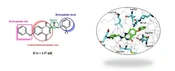
Figure 1 shows the two-dimensional structures of erlotinib and icotinib. The key structural features of icotinib include a quinazoline core similar to erlotinib but with a distinctive closed-ring side chain, which contributes to its unique pharmacological properties such as enhanced hydrophobicity. In contrast, erlotinib also contains the quinazoline core but features an open side chain, which affects its binding and pharmacokinetic profile differently. These differences in side-chain structure are crucial in defining their respective interaction with the EGFR and influence their effectiveness and drug behaviors (12-15).
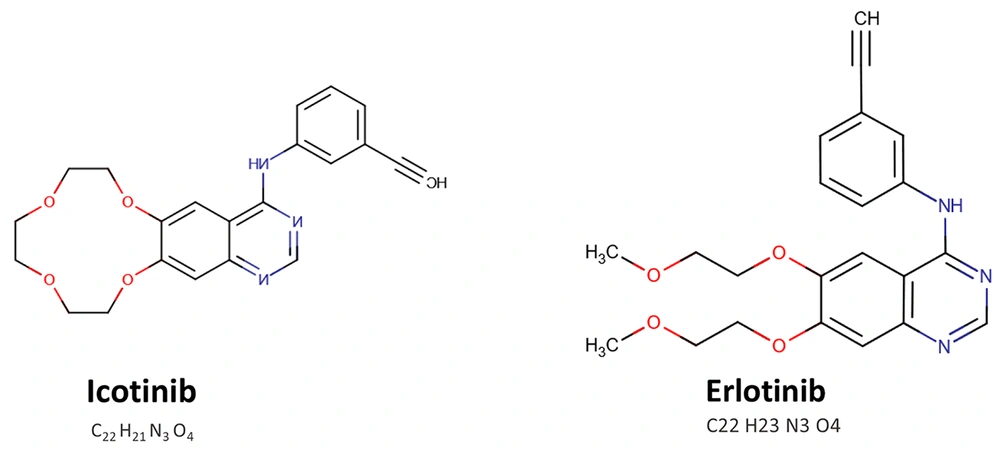
Figure 1.
The 2D structure of erlotinib and icotinib based on the Drug Bank online database
The molecular docking analysis demonstrated that both erlotinib and icotinib precisely occupy the same binding site within the EGFR kinase domain. As illustrated in Figure 2, erlotinib forms a critical hydrogen bond with the methionine residue at position 769 (Met769). This interaction is similarly observed with icotinib, as shown in Figure 3, confirming that both inhibitors engage the same key residue within the ATP-binding pocket of EGFR. In addition to hydrogen bonding, hydrophobic interactions play a significant role in stabilizing the ligand-receptor complexes. Erlotinib exhibits hydrophobic contacts at several amino acid residues, including Leu694, Arg817, Asp831, Phe699, Lys721, Thr766, Ala719, Leu764, Leu820, and Leu768. Meanwhile, icotinib interacts hydrophobically with residues such as Ala719, Leu694, Leu768, Leu820, Thr766, Lys721, Glu738, Asp831, Thr830, Met742, Val702, and Gly772. Notably, both drugs share common hydrophobic interaction sites at Leu694, Asp831, Lys721, Thr766, Ala719, Leu820, and Leu768, underscoring the similarity in their binding modes (Figures 2 and 3).
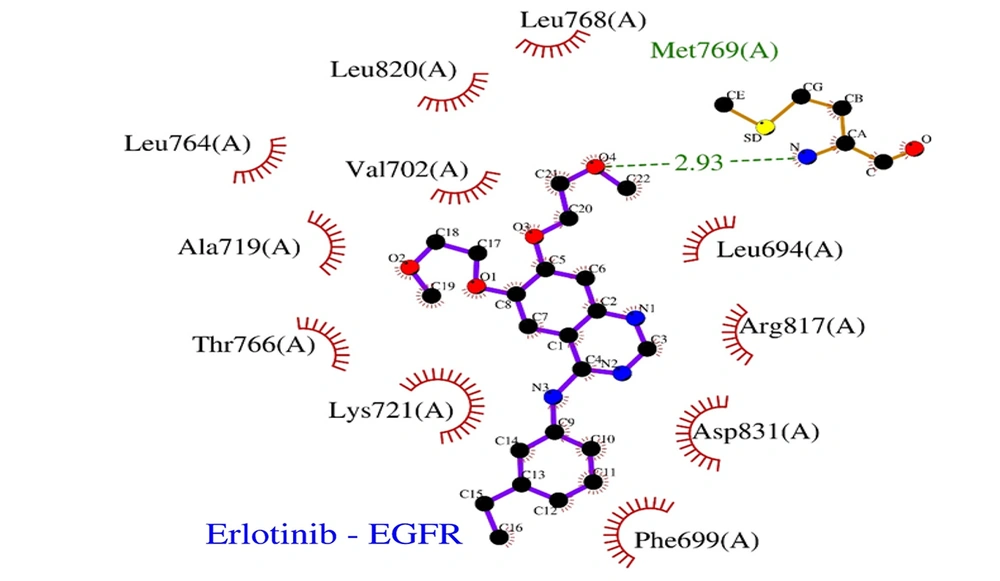
Figure 2.
Amino acids and atoms involved in the binding site of erlotinib and epidermal growth factor receptor (EGFR). Analysis of the binding site of erlotinib with EGFR was performed using LigPlot+ software. Hydrogen bonds are shown with green dashed lines, and hydrophobic forces are depicted with bright red spheres.
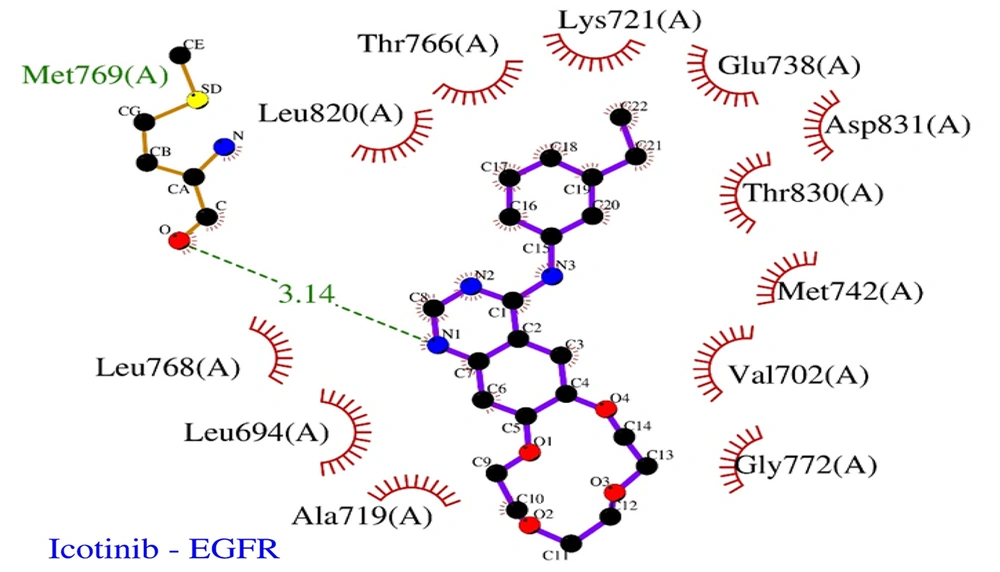
Figure 3.
Amino acids and atoms involved in the binding site of icotinib and epidermal growth factor receptor (EGFR). Analysis of the binding site of icotinib with EGFR was performed using LigPlot+ software. Hydrogen bonds are shown with green dashed lines, and hydrophobic forces are depicted with bright red spheres.
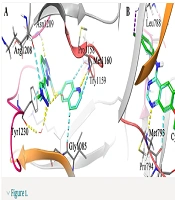
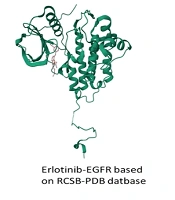
This binding pocket corresponds closely with the erlotinib binding site on EGFR documented in the Protein Data Bank (PDB ID: 1M17), as displayed in Figure 4. This concordance affirms the reliability and precision of the AutoDock Vina docking protocol in predicting ligand binding sites within the receptor. Further validation using Discovery Studio software revealed that spatially, both ligands occupy analogous positions within the EGFR binding domain, reinforcing the structural consistency between the two inhibitors (Figure 4).
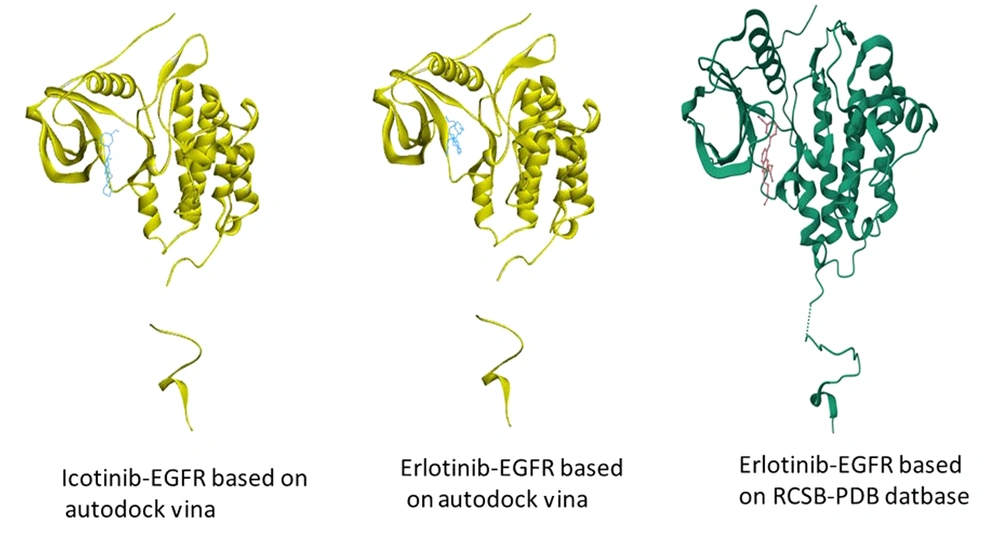
Figure 4.
This image shows the binding sites of ligands to epidermal growth factor receptor (EGFR) using Discovery Studio 4.5 software. The green ligand-receptor on the right of the figure is the binding of erlotinib to EGFR in the RCSB-PDB database, which was obtained based on crystallographic data. The two yellow images are from analyses of the ligands erlotinib and icotinib in binding to EGFR, which were analyzed using AutoDock Vina software. The visualization of these interactions was done using Discovery Studio 4.5 software.
Energetic assessment of the ligand-receptor interactions through docking scores showed that icotinib has a more favorable binding affinity, with a calculated binding energy of -8.7 kcal/mol compared to erlotinib’s -7.3 kcal/mol. Table 1 consolidates these findings, presenting both the quantitative binding affinities obtained from docking simulations and the qualitative interaction profiles extracted using LigPlot+.
Table 1.
Hydrophobic Interactions and Hydrogen Bonds Between Ligands and Epidermal Growth Factor Receptor
| Compound Name | Ligand-Receptor Binding Energy Based on AutoDock Vina | Hydrogen Bonds | Hydrophobic Interactions |
|---|---|---|---|
| Erlotinib | -7.3 kcal/mol | Met769(2.93A) | Leu694, Arg817, Asp831, Phe699, Lys721, Thr766, Ala719, Leu764, Leu820, Leu768. |
| Icotinib | -8.7 kcal/mol | Met769(3.14A) | Ala719, Leu694, Leu768, Leu820, Thr766, Lys721, Glu738, Asp831, Thr830, Met742, Val702, Gly772. |
5. Discussion
The EGFR, a prominent member of the tyrosine kinase receptor family, plays an essential role in regulating critical cellular processes, including growth, proliferation, differentiation, and survival. Activation of EGFR occurs upon ligand binding, primarily epidermal growth factor (EGF), which induces dimerization of the receptor and reciprocal phosphorylation of tyrosine residues in its intracellular kinase domains. This phosphorylation event triggers the activation of multiple downstream signaling cascades, notably the MAPK/ERK and PI3K/AKT pathways, which are intricately involved in promoting cell cycle progression and inhibiting apoptosis (16). Dysregulation of EGFR, often through mutations or overexpression, has been closely associated with the pathogenesis of various cancers, including non-small cell lung cancer (NSCLC), and correlates with poor clinical outcomes and decreased patient survival (17).
Given the pivotal role of EGFR in oncogenesis, it has become a critical target for molecular therapies aimed at disrupting aberrant signaling. Small molecule tyrosine kinase inhibitors (TKIs) such as erlotinib (18) and icotinib (19) have been developed to selectively bind to and inhibit the kinase activity of EGFR, thereby blocking phosphorylation and downstream signaling. Erlotinib, approved by the U.S. FDA and marketed under the trade name TARCEVA, is widely used in clinical practice. In contrast, icotinib, which shares significant structural similarity to erlotinib, has gained regulatory approval in China and is currently undergoing clinical evaluation in other regions, with promising potential as an alternative or superior therapeutic agent.
Structurally, the similarity between erlotinib and icotinib suggests that these inhibitors engage the same ATP-binding site within the EGFR kinase domain. This mechanistic premise underlies the rationale for directly comparing these compounds using in silico methodologies such as molecular docking, which predict binding modes and affinities based on the receptor-ligand interactions. In this study, AutoDock Vina was employed to comprehensively analyze and compare the binding characteristics of erlotinib and icotinib with the EGFR active site. The docking simulations revealed that both inhibitors occupy the identical binding pocket within EGFR, forming critical hydrogen bonds with the methionine residue at position 769 (Met769). This residue is well known to be crucial for kinase activity and stability of receptor-inhibitor complexes (Figures 2 and 3).
Further investigation into the nature of ligand-receptor interactions showed that both drugs also engage in hydrophobic contacts with several amino acid residues, including Leu694, Asp831, Lys721, Thr766, Ala719, Leu820, and Leu768. These hydrophobic interactions complement the hydrogen bonding and contribute significantly to the stability of the drug-receptor complex, affecting both binding affinity and inhibitory potency. Notably, the binding site determined by AutoDock Vina aligns with the crystallographically resolved binding site of erlotinib on EGFR (PDB ID: 1M17), attesting to the reliability and accuracy of the docking predictions (Figure 4). Visualization and analysis tools such as Discovery Studio 4.5 and LigPlot+ further confirmed the analogous binding poses and interaction profiles for icotinib and erlotinib.
A comparison of binding affinities estimated by AutoDock Vina indicated that icotinib exhibits a more favorable binding energy (-8.7 kcal/mol) compared to erlotinib (-7.3 kcal/mol). This suggests that icotinib may bind more tightly and inhibit EGFR more effectively than erlotinib. One plausible explanation for this superior binding affinity is the increased number of hydrophobic interactions that icotinib forms (twelve residues) relative to erlotinib (eleven residues). Structural analysis attributes this to the presence of a 12-crown-4 cycle in icotinib’s molecular structure, which stabilizes its engagement with the receptor kinase domain.
Another contributing factor to the superior binding affinity of icotinib compared to erlotinib could be the distinct types of amino acid residues with which icotinib interacts within the EGFR active site. As depicted in Figure 3, icotinib establishes hydrophobic interactions with several amino acids, specifically Glu738, Thr830, Met742, and Gly772 that are not involved in erlotinib’s interaction profile. These unique contacts may enhance icotinib’s binding stability and contribute to its stronger overall affinity for EGFR. This observation aligns with previous reports showing that minor chemical modifications can significantly alter the binding interactions and affinities of tyrosine kinase inhibitors, influencing both their potency and selectivity profiles. The cumulative effect of these interactions potentially translates into increased efficacy in inhibiting EGFR-driven oncogenic signaling pathways.
5.1. Conclusions
In conclusion, the molecular docking analysis in this study provides compelling evidence that icotinib and erlotinib share a common binding site and mechanism of action in targeting EGFR. However, the enhanced binding affinity and extensive hydrophobic interactions observed for icotinib may confer therapeutic advantages, supporting its continued clinical development and possible future approval in broader markets. Given these findings, further experimental and clinical investigations are warranted to fully delineate the comparative efficacy and safety profiles of these two tyrosine kinase inhibitors in cancer therapy.