
1. Background
Diabetes is a severe chronic disease that occurs when the body does not produce enough insulin or when the insulin it produces is not used effectively, resulting in a long-term metabolic disorder. Diabetes is estimated to affect 537 million adults worldwide between the ages of 20 and 79 years (10.5% of all adults in this age range). By 2030, 643 million people worldwide will have diabetes, increasing to 783 million by 2045 (1).
Type 1 diabetes (T1D) is one of the most common chronic diseases in childhood and adolescence (2), and its incidence is increasing worldwide (3). The International Pediatric and Adolescent Diabetes Association estimated that the global incidence of T1D among people under 15 years of age was 20/100,000 in 2013 (4). Approximately 500,000 children worldwide are diagnosed with T1D (5). The T1D requires a complex, daily self-management regimen, including carbohydrate counting, balancing insulin with physical activity (PA), and frequent blood glucose (BG) monitoring (6). The T1D management involves multiple daily insulin injections, measuring BG levels 4 - 6 times per day, adjusting carbohydrate intake, engaging in regular PA, and preventing acute and long-term complications (7).
Adolescents with T1D need diabetes care knowledge and skills to engage in diabetes self-management (8). A qualitative study found that complex knowledge about diabetes management often causes confusion and misunderstanding and is a barrier to diabetes self-management (8). Studies have shown that adolescents, in particular, find diabetes management difficult and overwhelming (2, 9-11). They struggle with incorporating diabetes management into their daily lives (12-14) and with feeling different from their peers (10-15). Furthermore, during adolescence, the responsibility for diabetes management slowly shifts from the parents to the adolescent (16). This often causes complex changes in roles within the family (17), potentially leading to intra-family conflicts (16, 17).
Many studies have attempted to treat different aspects of T1D. Therefore, many psychotherapies have been used to influence different psychological aspects of diabetic patients, including acceptance and commitment therapy (ACT) (18). The ACT is a psychotherapeutic technique that promotes psychological flexibility and enables patients to change behaviors based on value-based goals (18). The ACT has been successfully used in the treatment of many health conditions, for example, obesity (19), chronic pain (20), epilepsy (21), and cardiovascular disease (22), as well as for adults with type 2 diabetes (18, 23). Wang et al.’s meta-analysis suggested the effectiveness of ACT on self-care behaviors, diabetes acceptance, self-efficacy, anxiety, and depression in type 2 diabetic patients. However, research on T1D is scarce (18). Bendig et al. included adults with type 1 and type 2 diabetes in their study (24). They used a mobile-based ACT intervention and reported a reduction in diabetes distress. Stefanescu et al. (2024) found that ACT significantly reduced levels of stress and psychological inflexibility in adult T1D patients and increased diabetes acceptance and psychological resilience (25). Wijk et al. found that the ACT intervention had a consistent beneficial effect on psychological resilience in the intervention group (26).
Empirical evidence suggests a relationship between spirituality and self-management of chronic diseases such as hypertension (27) and diabetes (28). Spiritual therapy (ST) is a mind-body-spirit approach to healing that supports individuals in looking at the spiritual, metaphysical, and existential meaning behind their experiences and provides spiritually aware insights and tools for personal growth and development. Spirituality therapy is also known as existential therapy (29). The ST offers the individual a holistic approach to healing. It focuses on improving mental and emotional health through exploring spiritual beliefs, values, and practices (30). Studies have shown that people with strong spiritual beliefs and values have better adaptation to illness, fewer acute episodes of illness, and reduced complications (31, 32). Spiritual skills are essential for enhancing problem-solving abilities and understanding the meaning of life (29). Yildirım Usenmez and Budak stated that ST has a positive effect on the acceptance of diabetes among sufferers (33). The effect of ST and spiritual beliefs on various aspects of T1D has been investigated. Onyishi et al. reported a positive effect of spiritual beliefs on diabetes management (28). Fallahi et al. evaluated the effect of ST on the adaptation of adolescents with T1D as positive (34).
Despite the growing body of research on the relationship between psychological variables and T1D, as well as effective interventions to influence psychological variables associated with this disease, there are still many challenges in this area. The present study adds to our knowledge in this area to address some of these challenges and also to outline future studies. The ACT has been applied to specific aspects of adolescent T1D patients. The ACT has received international attention in recent years. The ACT aims to increase psychological resilience using acceptance and mindfulness strategies combined with commitment and behavior change strategies. Relatively brief ACT interventions have shown promising results across a wide range of problems. These studies also showed that improvements in treatment groups were explained by a common mechanism of action, a reduction in emotional and cognitive avoidance. There is also some support for ACT among people with T1D, showing changes in coping acceptance, self-management, and HbA1c. However, the number of these studies is minimal, and in particular, no study focuses on the effect of ACT on diabetes self-management in adolescents with T1D, despite the relationship between these variables and T1D that has been mentioned.
Also, despite the studies that exist in the field of the relationship between spirituality and T1D, as well as the effectiveness of ST on aspects of T1D in adolescents with diabetes, no study focuses on the effect of ST on diabetes self-management in adolescents with T1D. The importance of spiritual beliefs in therapeutic practice has been demonstrated by various professional organizations in social work, psychology, and counseling, such as the Council for Social Work Education, which added it to the core aspect of humanistic behavioral interventions (28). However, very few articles have addressed the issue of spirituality in diabetes management in depth. Effectiveness studies have separately shown the effectiveness of ACT and ST on psychological variables related to T1D in adolescents. However, no study has been conducted to compare these two treatment approaches. At the same time, it is crucial to achieve practical treatment approaches on the psychological aspects of these patients, which are very important in the management of this disease.
2. Objectives
Despite such discussions, the present study was designed and implemented to answer the question of whether there is a difference between the effectiveness of ST and ACT on diabetes self-management in adolescents with T1D.
3. Methods
The present study is a quasi-experimental study with a pre-test-post-test-follow-up (3 months) design and random replacement of subjects using a control group. The population of the present study includes all adolescents aged 14 - 18 years in Tabriz who have been diagnosed with T1D and have a fixed file for treatment of T1D at Imam Reza Hospital in Tabriz during the 6 months from June 21, 2024, to December 21, 2024. From the above population, 45 individuals were selected through purposive sampling according to the inclusion criteria and then randomly assigned to three groups: The ACT, ST, and a control group. It should be noted that this selection was made in cooperation with the hospital's medical staff, and all necessary permits and coordination were obtained. All ethical principles of the research, including the principles of confidentiality, informed consent, and least harm, were observed. In addition, a research ethics code was obtained for conducting clinical interventions (IR.IAU.URMIA.REC.1403.219). Interventions were conducted in the designated environment of the hospital management at Imam Reza Hospital.
The inclusion criteria for the study sample included having T1D, being in the age range of 14 - 18 years, full consent to be included in the intervention process in the experimental groups, not being exposed to a similar intervention program at the same time, and not having another specific disease that was diagnosed by a specialist or was listed in the medical record. The exclusion criteria included unwillingness to continue cooperation and missing more than two sessions in the treatment sessions.
3.1. Research Instruments
3.1.1. Diabetes Self-management Questionnaire
The 27-item Diabetes Self-management Questionnaire (DSMQ) was designed by Schmitt et al. to assess the self-management of diabetic patients in the four domains of glucose management (GM), dietary control (DC), PA, and medical visits (PC) (35). The questionnaire questions are scored as two questions with 0 and 1, and higher scores indicate higher self-management in the domains in question. This questionnaire has been evaluated in several studies, has shown good psychometric quality, and can be used in both types of diabetes (type 1 and 2). Evaluation of the questionnaire has shown excellent psychometric properties, satisfactory reliability, and good validity. Therefore, the DSMQ is a reliable and valid tool that enables efficient assessment of self-management behaviors related to glycemic control. Hosseinzadegan et al. evaluated and confirmed the psychometric indices of this questionnaire using an Iranian sample (36). According to the results of the confirmatory factor analysis, the factor loading values of the items were all significant, and the four dimensions introduced in the original instrument were confirmed with acceptable values. The reliability of the instrument using the internal consistency method (Cronbach's alpha) was 0.88 for the entire instrument and between 0.66 and 0.85 for the dimensions of the instrument.
3.2. Acceptance and Commitment Therapy
In the present study, the ACT protocol of Eifert et al. was used to influence self-management of T1D (37). The training was conducted in 12 sessions of 1.5 hours each. The following table summarizes the ACT package based on the perspective of Eifert et al. (Table 1) (37).
Table 1.
Summary of Acceptance and Commitment Therapy Treatment
| Sessions | Sessions Content |
|---|---|
| Sessions 1 | It focuses on psychoeducation, experiential exercises, and discussion about acceptance and valuable practices. |
| Sessions 2 and 3 | Sessions explored creative frustration, whether previous attempts to control anxiety had been effective, and how these efforts had led to a reduction in value-oriented and receptive life activities. |
| Sessions 4 and 5 | Emphasis on mindfulness, acceptance, and cognitive disintegration |
| Sessions 6 to 11 | Continuing to refine mindfulness, mindfulness, and disintegration, exploring added values, clarifying goals, and increasing willingness to pursue value-based life activities; behavioral, internal, imaginative, and real-life exposures were used to practice space for accepting, observing, and paying attention to anxiety and practicing engaging in value-based activities while experiencing anxiety. |
| Session 12 | Reviewing of what has been done so far and how to continue it |
3.3. Spirituality Therapy
In the present study, the spiritual skills training package of Bolhari and Mohsenikabir was used to apply ST (38). This training package was developed and validated by Bolhari and Mohsenikabir using the curriculum and training program development method in several stages and utilizing various conventional methods in needs assessment and development of training programs for teaching spirituality with therapeutic purposes to adolescents (38). The training was applied in 8 sessions, each lasting 1.5 hours.
3.3.1. Spirituality Therapy
In the present study, the spiritual skills training package of Bolhari and Mohsenikabir was used to apply ST (38). This training package was developed and validated by Bolhari and Mohsenikabir using the curriculum and training program development method in several stages and utilizing various conventional methods in needs assessment and development of training programs for teaching spirituality with therapeutic purposes to adolescents (38). The training was applied in 8 sessions, each lasting 1.5 hours. The summary and content of the ST sessions are listed in Table 2.
Table 2.
Summary of Spiritual Therapy Sessions
| Sessions | Sessions Content | Goals |
|---|---|---|
| 1 | What is spirituality? | Concepts of spirituality and characteristics of spiritual man, religion, and overlap of spirituality with religion |
| 2 | Life skills, the foundation of spiritual skills | Definition of life skills, history, approach to life skills training program, application of life skills, and types of life skills |
| 3 | Spiritual approach in medical and humanities education | The concept of spiritual health, the history of mental illness and medical science, the spiritual dimension of clients, the current position of spirituality in education and clinical work, the limits of authority of clinical professionals, spiritual care in clinical work, and a brief overview of its history |
| 4 | Religious and spiritual counseling and psychotherapy | The need for religious and spiritual counseling and psychotherapy, the need for a coherent theory, methods for identifying spiritual harms and planning for their treatment, and assessing spiritual characteristics |
| 5 | Harnessing the depths of spiritual awareness | Self-awareness, types of self-awareness including physical self-awareness, mental self-awareness, and the relationship of self-awareness with spirituality and health |
| 6 | Problem-solving with a spiritual approach | Difference between problem-solving and coping, problem-solving with a spiritual approach, religious spiritual orientation system, and problem-solving styles with a spiritual approach |
| 7 | The skill of forgiveness in repairing relationships | Definition of forgiveness, different concepts from forgiveness and forgiving, theoretical foundations of forgiveness and forgiving, stages of forgiveness, and stages of forgiveness according to Ann Wright |
| 8 | Dhikr as a Spiritual Skill | What is dhikr? Types of dhikr, method of saying dhikr, place and time of dhikr, levels of dhikr, conditions of dhikr, effects of dhikr, obstacles to dhikr, dhikr and confrontation, and meditation and dhikr. |
Raw data were presented in the form of descriptive statistics of mean and standard deviation. After observing the necessary assumptions, the resulting data were analyzed using a mixed analysis of variance with repeated measures in SPSS 27 statistical software.
4. Results
The sample studied in the present study included 45 adolescents with T1D in Tabriz city, with a mean age of 15.95 ± 3.09 years. The mean age of the spirituality therapy experimental group was 15.78 ± 4.02, while the mean and standard deviation of the ACT group were 16.11 ± 3.36. The mean age of the control group was 15.89 ± 2.98.
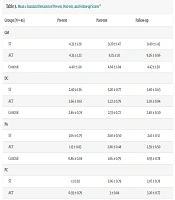
Table 3 presents the descriptive statistics of the variables studied in the experimental and control groups across the three stages: Pre-test, post-test, and follow-up.
Table 3.
Mean ± Standard Deviation of Pre-test, Post-test, and Follow-up Scores a
| Groups (N = 45) | Pre-test | Post-test | Follow-up |
|---|---|---|---|
| GM | |||
| ST | 4.33 ± 1.29 | 9.20 ± 1.47 | 9.40 ± 1.45 |
| ACT | 4.35 ± 1.23 | 9.35 ± 1.11 | 9.26 ± 0.96 |
| Control | 4.40 ± 1.18 | 4.66 ± 1.04 | 4.47 ± 1.30 |
| DC | |||
| ST | 2.40 ± 1.36 | 5.20 ± 0.77 | 5.40 ± 0.63 |
| ACT | 2.66 ± 0.61 | 5.22 ± 0.79 | 5.20 ± 0.94 |
| Control | 2.46 ± 0.74 | 2.33 ± 0.72 | 2.40 ± 0.50 |
| PA | |||
| ST | 1.06 ± 0.79 | 2.60 ± 0.50 | 2.61 ± 0.51 |
| ACT | 1.13 ± 0.83 | 2.66 ± 0.48 | 2.59 ± 0.50 |
| Control | 0.86 ± 0.84 | 1.06 ± 0.79 | 0.93 ± 0.78 |
| PC | |||
| ST | 1 ± 0.92 | 3.06 ± 0.79 | 3.07 ± 0.78 |
| ACT | 0.93 ± 0.79 | 3 ± 0.84 | 3.20 ± 0.77 |
| Control | 1.20 ± 0.77 | 1 ± 0.92 | 0.86 ± 0.83 |
Abbreviations: GM, glucose management; ST, spiritual therapy; ACT, acceptance and commitment therapy; DC, dietary control; PA, physical activity; PC, medical visits.
a Values are expressed as mean ± SD.
A mixed analysis of variance with repeated measures was used to draw statistical inferences. Before conducting the test, all assumptions were checked and met. These assumptions included normality of the data, homogeneity of variance-covariance matrices, homogeneity of variances, and equality of variances between groups. Ensuring that these assumptions were met was crucial for the validity of the statistical inferences drawn from the analysis.
To examine specific hypotheses, the results of the mixed analysis of covariance with repeated measures are initially presented for further analysis. In Table 4, the results of the mixed analysis of covariance with repeated measures are presented using the Wilks Lambda statistic.
Table 4.
Multivariate Analysis of Covariance for Between-Group Interaction Effects (Wilks Lambda)
| Factors | Indicator Values | F-Statistic | P-Value | Sig. |
|---|---|---|---|---|
| Time | Wilks' Lambda | 76.245 | 0.012 | 0.001 |
| Group | Wilks' Lambda | 14.832 | 0.022 | 0.001 |
| Time × group | Wilks' Lambda | 6.097 | 0.032 | 0.001 |
The results of Table 4 indicate that the multivariate analysis of covariance with repeated measures for the criterion variables is significant. This means that there is a significant difference between at least one of the criterion variables resulting from the treatment interventions. To examine the differences in each criterion variable resulting from the interventions in the experimental groups compared to the control group, a univariate mixed repeated measures analysis of the covariance test was employed, with the results presented in Table 5.
Table 5.
Mixed Univariate Analysis of Covariance Test with Repeated Measures
| Variables | Sum of Squares | df | Mean Squares | F-Statistic | Sig. | Eta Squared |
|---|---|---|---|---|---|---|
| GM | ||||||
| Time | 340.044 | 2 | 227.724 | 169.216 | 0.001 | 0.801 |
| Time × group | 154.222 | 4 | 51.640 | 38.373 | 0.001 | 07646 |
| DC | ||||||
| Time | 94.993 | 2 | 47.496 | 93.606 | 0.001 | 0.690 |
| Time × group | 53.719 | 4 | 13.430 | 24.467 | 0.001 | 0.558 |
| PA | ||||||
| Time | 33.524 | 2 | 16.763 | 37.405 | 0.001 | 0.471 |
| Time × group | 12.830 | 4 | 3.207 | 7.157 | 0.001 | 0.254 |
| PC | ||||||
| Time | 52.459 | 2 | 26.230 | 44.782 | 0.001 | 0.516 |
| Time × group | 38.341 | 4 | 9.585 | 15.365 | 0.001 | 0.438 |
Abbreviations: GM, glucose management; DC, dietary control; PA, physical activity; PC, medical visits.
The results of the univariate analysis of covariance with repeated measures show that the effectiveness of ST and ACT on the dimensions of diabetes self-management in adolescents with T1D is significant. Moreover, the groups affected by ST and ACT demonstrated better diabetes self-management compared to the control group.
In the continuation of the analyses, and to examine the persistence of the effects of the interventions applied over time, the stability of these effects was examined in a three-month follow-up using a post hoc Bonferroni correction test. The results of this analysis are presented in Table 6.
Table 6.
Results of the Bonferroni Correction in the Follow-up
| Variables; Time | Mean Difference | Std. Error | Sig. |
|---|---|---|---|
| GM | |||
| Pre-test post-test | -3.378 | 0.233 | 0.001 |
| Pre-test follow-up | -3.356 | 0.246 | 0.001 |
| Post-test follow-up | 0.022 | 0.138 | 0.100 |
| DC | |||
| Pre-test post-test | -1.733 | 0.138 | 0.001 |
| Pre-test follow-up | -1.822 | 0.160 | 0.001 |
| Post-test follow-up | -0.089 | 0.151 | 0.100 |
| PA | |||
| Pre-test post-test | -1.089 | 0.159 | 0.001 |
| Pre-test follow-up | -1.022 | 0.143 | 0.001 |
| Post-test follow-up | 0.067 | 0.119 | 0.100 |
| PC | |||
| Pre-test post-test | -1.311 | 0.166 | 0.001 |
| Pre-test follow-up | -1.333 | 0.371 | 0.001 |
| Post-test follow-up | 0.111 | 0.143 | 0.100 |
Abbreviations: GM, glucose management; DC, dietary control; PA, physical activity; PC, medical visits.
Based on the results of Table 6, it was determined that the effectiveness of ST interventions and ACT on the criterion variables remained stable during the follow-up period, indicating a permanent effect. Through pairwise comparisons and the Bonferroni test, the results of which are presented in Table 7, we compared the differences in the effectiveness of ST and ACT on the variable dimensions of diabetes self-management.
Table 7.
Comparison of the Effectiveness of Spiritual Therapy and Acceptance and Commitment Therapy
| Variables; Group I | Group J | Mean Differences (i-j) | Sig. |
|---|---|---|---|
| GM | |||
| ST | ACT | 0.001 | 0.100 |
| ST | Control | 3.133 | 0.001 |
| ACT | Control | 3.135 | 0.001 |
| DC | |||
| ST | ACT | -0.022 | 0.100 |
| ST | Control | 1.933 | 0.001 |
| ACT | Control | 1.956 | 0.001 |
| PA | |||
| ST | ACT | -0.044 | 0.100 |
| ST | Control | 1.133 | 0.001 |
| ACT | Control | 1.178 | 0.001 |
| PC | |||
| ST | ACT | 0.001 | 0.100 |
| ST | Control | 1.356 | 0.001 |
| ACT | Control | 1.358 | 0.001 |
Abbreviations: GM, glucose management; ACT, acceptance and commitment therapy; ST, spiritual therapy; DC, dietary control; PA, physical activity; PC, medical visits.
Based on the results in Table 7, it was found that there is no significant difference between the two therapeutic interventions in terms of the effectiveness of diabetes self-management.
5. Discussion
The results showed that ST is effective in improving the dimensions of diabetes self-management in adolescents with T1D. These results were in line with the findings of some previous research (28, 29, 33). In explaining this finding, it can initially be stated that diabetes is a chronic disorder that causes numerous metabolic problems (1), thus necessitating a complex and daily self-management diet, including carbohydrate counting, insulin-balanced BG activity, and blood monitoring.
On the other hand, as one of the paths of ST to managing T1D, it should be said that spirituality can interfere with coping sources, especially when patients neglect their care activities and rely on prayer and/or meditation to manage their illness (29). In this way, spirituality seeks to enhance and strengthen the patient's coping resources and proposes strategies such as prayer or meditation along this path.
The second point is that spirituality can even make and distinguish people's acute activities of existing diseases. Spirituality refers to the meaning or purpose of life, the search for integrity, and the relationship with a creature or spiritual reality. Spirituality involves the search for meaning and purpose, through which one establishes one's relationship with time, oneself, others, and God (28). Moreover, this therapeutic effect of spirituality is another path in which spirituality can be beneficial. This path of ST can help to deal with chronic diseases by providing support, confidence, and hope (29). Here, managing the symptoms of illness or work that can exacerbate or worsen the disease itself is very valuable.
Another thing is that T1D is specific to adolescents, and they include diabetes management in their daily lives (12-14) and fight with the feeling of being different from their peers (15, 29). Therapeutic therapy enables this struggle by facilitating adaptation to the disease and its symptoms. Studies have shown that individuals with strong spiritual beliefs and values are more resilient to disease, experience fewer acute periods of illness, and have reduced complications (31, 32). In this way, this struggle becomes a very valuable and meaningful adaptation.
The final point is that ST is not merely stimulating spiritual beliefs but also involves some useful and effective activities. The spiritual beliefs of an individual may be expressed through religion or religious participation, which encompasses involvement in an organized system of beliefs, rituals, and accumulated traditions (33). Thus, spirituality for adolescents with T1D encompasses not only new spiritual beliefs that can be very useful and effective in combating the disease but also a set of activities that can both embody these spiritual beliefs and create efficient daily activities rather than inefficient and unconstructive involvement.
The results showed that the effectiveness of ACT, based on the dimensions of diabetes self-management, was significant in adolescents with T1D, with some research findings aligning (23, 24, 26). To explain these findings, it is essential to note that ACT has foundations and principles within its content that facilitate diabetes self-management in patients. Diabetes-related self-care requires that the patient, with the help of doctors, make lifestyle, nutritional, and dietary changes that lead to successful behavioral and attitudinal changes, fostering self-confidence in managing diabetes (23).
Compared to previous treatment methods, the most important feature of ACT is the improvement of patients' psychological flexibility, which enables them to actively overcome their problems by consciously making changes to become more aware and in touch with their abilities. Patients attempt to modify their behavior momentarily, actively, and intentionally or make continuous efforts to achieve their goals and values (24). Therefore, ACT facilitates individual characteristics in patients to act and take action to achieve their goals. The ACT encourages the patient to take committed action regarding the problem at hand. With the help of ACT, patients can ground themselves (i.e., see themselves from an objective perspective, observing everything, including their perceptions, feelings, and will), clarify their values (through constructed language aspirations and chosen life directions), and commit to action (choosing behavioral changes that are consistent with values, taking responsibility for actions, and supporting an effective life based on values) (26). Of course, it must be acknowledged that the context for such committed action is the acceptance of the current situation, including the disease of T1D and its implications.
Acceptance of a diagnosis of T1D, especially in adolescents and young adults, can be a challenging process that significantly affects quality of life and mental health. Research shows that greater acceptance is associated with better adaptation to the disease, improved quality of life, and reduced distress (26)). Conversely, difficulty accepting the disease can lead to negative emotions that potentially affect mental health and general well-being. In this regard, a meta-analysis by Wang et al. indicated the effectiveness of ACT on self-care behaviors, diabetes acceptance, self-efficacy, anxiety, and depression in type 2 diabetic patients (18).
The ACT emphasizes the acceptance of unwanted experiences while encouraging value-based behaviors to help individuals resist unwanted emotions, change their perception and response to unwanted thoughts, and control external actions to achieve their valued goals (23). The ACT provides the context for accepting the disease as a significant challenge for people with T1D and further encourages them to take committed action to combat and treat this significant life challenge.
It was found that despite the effectiveness of ST and ACT on the variable of diabetes self-management, there is no significant difference between the two therapeutic interventions in this effectiveness. There are no similar findings to compare with the current ones, so these findings lead to several important explanations.
First, both therapeutic approaches were effective in improving diabetes self-management in patients with T1D for different reasons that lie at the heart of these therapeutic approaches and were explained. Despite the differences in the content of these two therapeutic approaches, there are also similarities in their content that have led to relatively similar results in working with patients with T1D.
On the one hand, spirituality can interfere with coping resources, especially when patients neglect self-care activities and rely on prayer and/or meditation to manage their illness (28). On the other hand, ACT is an improvement in patients' psychological flexibility that enables them to actively overcome their problems, where they consciously make changes to become more aware and in touch with their abilities. Patients attempt to modify their behavior momentarily, actively, and intentionally or make continuous efforts to achieve established goals and values (23).