

Full Text
Full text is available in PDF
Authors
Hip fracturerelated pain both before and after surgery is generally reported as severe by most patients. Various regional pain control modalities have been described in order to reduce pain in these patients.
Because of the challenges of lumbar plexus block (LPB) and the fact that the effect of combined femoral nerve block/spinal anesthesia in controlling pain after orthopedic surgeries has not been investigated, in this study, we compared the feasibility and efficacy of the 2 techniques in the perioperative management of proximal hip fractures.
The study included 32 patients with femoral intertrochanteric fracture who were randomly divided into the following 2 groups of 16 patients each: combined femoral nerve block/spinal anesthesia group (group I) and LPB group (group II). Patients in group I received 0.17% bupivacaine with 0.7% lidocaine, 2025 mL for femoral nerve block and bupivacaine 0.5% plus 0.5 mL pethidine (25 mg) for spinal block and patients in group II received 0.17% bupivacaine with 0.7% lidocaine, 3035 mL.
The time for performing the block (12.2 3.3
This study confirms that the combination of femoral nerve block with spinal anesthesia is safe and comparable with LPB and can provide more effective anesthesia and longer lasting analgesia for intertrochanteric surgery.
© 2012, Author(s). The Author(s) retain copyright in the Article. Upon acceptance, the Author(s) grant Brieflands the non-exclusive right of first publication and a worldwide, perpetual, royalty-free, non-exclusive license to copyedit, format, publish, reproduce, distribute, display, preserve, archive, index, promote, and make the Version of Record available in all formats and media. Brieflands and the relevant journal will be identified as the original publisher of the Version of Record. The Article will be published under the [Creative Commons Attribution 4.0 International License (CC BY 4.0)](https://creativecommons.org/licenses/by/4.0/). The Author(s) may immediately deposit and share the Version of Record in any repository or platform. No separate permission or fee is required for uses permitted under CC BY 4.0. CCC may provide optional customized reprint services.
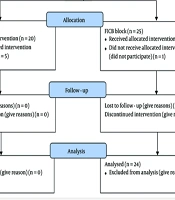
Derakhshan P, Bari E, Entezari SR, Faiz SHR, Alebouyeh M. A Comparative Study of the Effect of Pericapsular Nerve Block (PENG) and Ultrasound-guided Fascia Iliaca Blocks on Postoperative Pain of Intertrochanteric Fractures. J Cell Mol Anesth. 2024;9(3):e146830. doi: https://doi.org/10.5812/jcma-146830
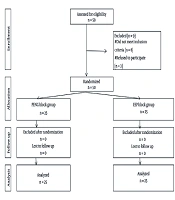
Ehab A, Fathy Azzam A, F Nady R. A Comparative Analysis of Ultrasound-Guided Erector Spinae Plane Block Versus Combined Ultrasound-Guided Pericapsular Nerve Group (PENG) and Lateral Femoral Nerve Block Following Total Hip Arthroplasty: A Randomized Double-Blind Controlled Clinical Trial. J Cell Mol Anesth. 2025;10(2):e160851. doi: https://doi.org/10.5812/jcma-160851

Amiri HR, Zamani MM, Safari S. Lumbar Plexus Block for Management of Hip Surgeries. Anesth Pain Med. 2014;4(3):e19407. doi: https://doi.org/10.5812/aapm.19407
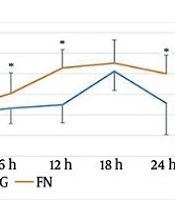
Mahmoud Fakhry D, Elmoutaz Mahmoud H, NegmEldeen AbdElAzeem H, Mansour MA. Pericapsular Nerve Group (PENG) Block Versus Femoral Nerve Block: Impact on Quadriceps Muscle Strength in Patients with Hip Fracture — A Prospective Randomized Controlled Trial. J Cell Mol Anesth. 2025;10(4):e167787. doi: https://doi.org/10.5812/jcma-167787
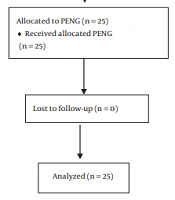
Karami T, Shokouhi S, Fathollahzadeh H. Comparison of the Analgesic Effect of Pericapsular Ultrasound-Guided Nerve Group Block and Fascia Iliaca Block in Patients with Femoral Head Fracture for Neuraxial Block: A Pilot Study. Interv Pain Med Neuromod. 2023;3(1):e138901. doi: https://doi.org/10.5812/ipmn-138901
Last Update: 2 weeks ago
Last Update: 2 weeks ago
Last Update: 2 weeks ago
Last Update: 7 hours ago
Last Update: 6 hours ago
Last Update: 5 days ago