
1. Background
Obstructive sleep apnea (OSA) is a common, often underdiagnosed disorder characterized by recurrent partial or complete airway obstruction, intermittent hypoxia, and sleep fragmentation (1, 2). Globally, approximately one billion adults aged 30 - 69 years are estimated to have OSA, of whom 425 million have moderate-to-severe disease requiring treatment (3). OSA is associated with cardiovascular disease (4), hypertension (5), stroke (6), type 2 diabetes (7), and psychological disorders (8, 9). Furthermore, intermittent hypoxia and sleep fragmentation may impair executive function, attention, and retrospective and prospective memory (10), compromising overall sleep-related health and daytime functioning (11, 12). Because non-rapid eye movement and rapid eye movement (REM) sleep play essential roles in memory processing and consolidation, OSA-related sleep disturbances may also impair learning and memory retention (13, 14).
Obstructive sleep apnea may impair autobiographical memory, which is essential for personal identity and emotional well-being, potentially contributing to psychological and social difficulties (15). It may also compromise prospective and retrospective memory, adversely affecting daily functioning and quality of life (10).
2. Objectives
This study examined the associations between OSA and cognitive function, including autobiographical, prospective, and retrospective memory, as well as sleep quality and psychological symptoms, including anxiety, stress, and depression. By investigating these interrelationships, the study aimed to clarify the cognitive and psychological burden of OSA and its potential implications for mental health and quality of life. The findings may inform evidence-based strategies to improve OSA assessment and management and guide interventions to address its cognitive and emotional consequences (17).
3. Methods
3.1. Study Design
This observational analytical study employed a cross-sectional design and was conducted over a three-month period, from March 20 to June 20, 2024. Previously recorded polysomnography (PSG) data were combined with questionnaire-based assessments of sleep quality and memory performance to investigate the association between OSA severity, sleep quality, and cognitive function.
The study aimed to explore the relationships between sleep-related parameters and cognitive and memory outcomes in patients with OSA. Written consent was obtained from patients during clinical examinations, permission to access their polysomnography data was secured, and questionnaires were completed at the clinic in the patients’ presence.
3.2. Study Population
This observational, analytical, cross-sectional study included 60 individuals aged 25 - 65 years who were referred to the Sleep Laboratory at Baqiyatallah Hospital, Tehran, Iran. Based on polysomnographic findings, participants were classified into an OSA group (n = 40) and an age- and sex-matched control group without OSA (n = 20). The OSA group was further stratified according to the apnea-hypopnea index (AHI) into mild (5 - 14.9 events/h; n = 9), moderate (15 - 29.9 events/h; n = 14), and severe (≥30 events/h; n = 17) subgroups (Table 1).
Table 1.
Demographic Characteristics of the Study Participants a
| Characteristic | OSA Group (n = 40) | Control Group (n = 20) | Total (n = 60) |
|---|---|---|---|
| Age, y | 25 - 65 | 25 - 65 | 25 - 65 |
| Gender | |||
| Female | 19 (47.5) | 6 (30.0) | 25 (41.7) |
| Male | 21 (52.5) | 14 (70.0) | 35 (58.3) |
| OSA severity | |||
| Mild (AHI 5 - 14.9 events/h) | 9 (22.5) | — | 9 (15.0) |
| Moderate (AHI 15 - 29.9 events/h) | 14 (35.0) | — | 14 (23.3) |
| Severe (AHI ≥ 30 events/h) | 17 (42.5) | — | 17 (28.3) |
| No OSA (AHI < 5 events/h) | — | 20 (100) | 20 (33.3) |
a Values are expressed as No. (%). Abbreviations: AHI, apnea-hypopnea index; OSA, obstructive sleep apnea.
Eligible participants were male or female, aged 25 - 65 years, and either had OSA or had no evidence of OSA (AHI < 5 events/h). Individuals with significant comorbid medical conditions were excluded, including those with cancer, diabetes mellitus, or a history of organ transplantation, as well as those with other medical conditions potentially affecting the study outcomes.
3.3. Polysomnography
Sleep data were recorded in a controlled sleep laboratory using the Alice 6 Diagnostic Sleep System. Standard polysomnographic monitoring included electroencephalography (EEG; F3, F4, C3, C4, O1, O2, M1, and M2), electrooculography (EOG), chin and anterior tibialis electromyography (EMG), electrocardiography (ECG), respiratory effort and airflow monitoring using chest/abdominal belts, a nasal pressure transducer, and a thermistor, as well as continuous peripheral oxygen saturation (SpO2) measurement by finger pulse oximetry.
3.4. Questionnaires
Trained personnel administered validated questionnaires to assess memory, sleep quality, and psychological symptoms. These included the Survey of Autobiographical Memory (SAM-26), Pittsburgh Sleep Quality Index (PSQI), Depression Anxiety Stress Scales (DASS-21), and Prospective and Retrospective Memory Questionnaire. The STOP-BANG questionnaire was used exclusively to screen for OSA risk. The psychometric properties of the questionnaires used in this study have been investigated in previous research (18-21).
3.5. Apnea-Hypopnea Index and Classification of Obstructive Sleep Apnea Severity
The AHI was calculated as the number of apnea events (complete cessation of airflow) and hypopnea events (partial reduction in airflow accompanied by oxygen desaturation) per hour of sleep. OSA severity was classified as normal (AHI < 5 events/h), mild (5 - 14.9 events/h), moderate (15 - 29.9 events/h), or severe (≥30 events/h).
3.6. Statistical Analysis
Data were analyzed using SPSS software (version 26). Continuous variables were compared using independent t-tests (two groups) or one-way ANOVA with Tukey’s post hoc tests (≥3 groups). Categorical data were assessed using chi-square tests. A significance level of 5% was used. In graphical representations, significance levels are indicated by stars: P < 0.05 (*), P < 0.01 (**), and P < 0.001 (***).
4. Results
Reported means are accompanied by standard deviations.
4.1. Depression
Depression scores were significantly higher in patients with OSA (6.18 ± 3.46, range: 1 - 15) than in controls (4.15 ± 2.08, range: 0 - 15). The Mann-Whitney U test showed a significant between-group difference (P = 0.034; Figure 1A).
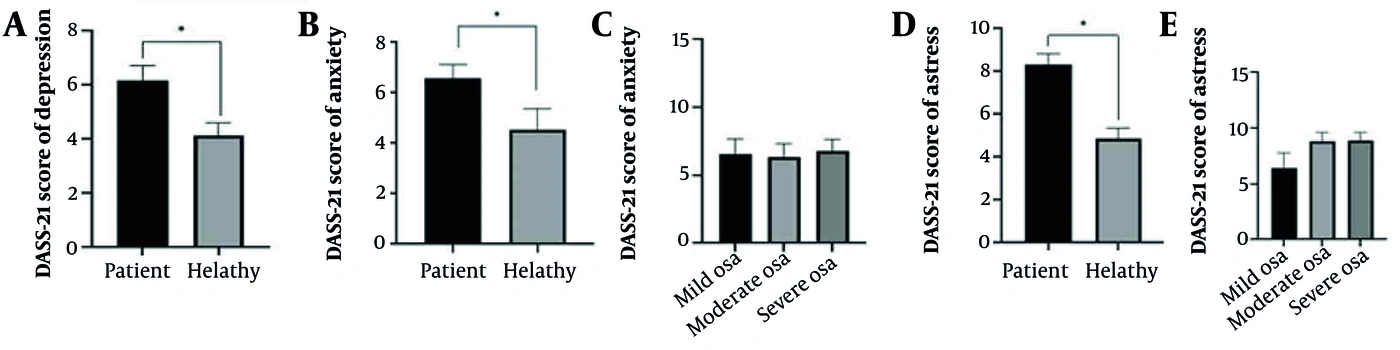
Figure 1.
Patients with obstructive sleep apnea had significantly higher depression (A), anxiety (B), and stress (D) scores on the Depression Anxiety Stress Scales (DASS-21) than controls (P < 0.05). Anxiety (C) and stress (E) scores did not differ significantly among the mild, moderate, and severe OSA groups.
Subsequent analysis of variance showed significant differences in depression scores among the mild, moderate, and severe OSA groups (P = 0.001). Tukey’s post hoc analysis showed that depression scores were significantly higher in the severe OSA group than in the mild (P = 0.001) and moderate OSA groups (P = 0.035). The mild and moderate groups did not differ significantly (P = 0.206).
4.2. Anxiety
Mean anxiety scores were significantly higher in patients with OSA (6.58 ± 3.45, range: 1 - 15) than in controls (4.55 ± 3.69, range: 0 - 15). The Mann-Whitney U test showed a significant between-group difference (P = 0.034; Figure 1B). Anxiety scores did not differ significantly among the mild, moderate, and severe OSA groups (P = 0.95; Figure 1C).
4.3. Stress
Stress scores were significantly higher in patients with OSA (8.3 ± 3.36, range: 2 - 15) than in controls (4.85 ± 2.25, range: 1 - 8; P < 0.001; Figure 1D; independent t-test). Stress scores did not differ significantly among the mild, moderate, and severe OSA groups (P = 0.171; Figure 1E; analysis of variance).
4.4. Pittsburgh Sleep Quality Index
Patients with OSA had significantly poorer sleep quality (9.27 ± 3.43, range: 4 - 17) than controls (5.8 ± 1.76, range: 3 - 9; P < 0.001; Figure 2A and B).
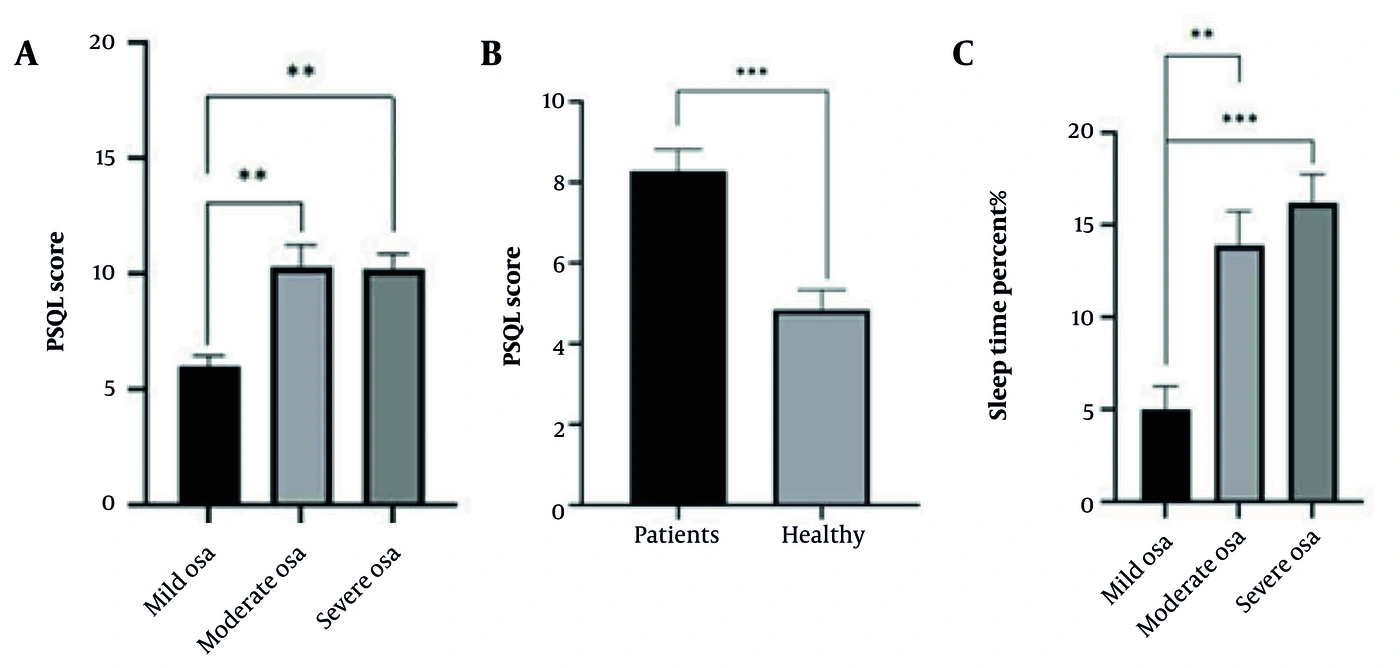
Figure 2.
Pittsburgh Sleep Quality Index (PSQI) scores in obstructive sleep apnea (OSA). Moderate and severe OSA were associated with poorer sleep quality (higher PSQI scores) than mild OSA (A). Patients with OSA overall had poorer sleep quality than controls (B; P < 0.001). PSQI scores differed significantly across OSA severity groups (C; P = 0.001).
PSQI scores also differed significantly across OSA severity groups (P = 0.001; Figure 2C; independent t-test).
4.5. Survey of Autobiographical Memory
Patients with OSA had significantly lower scores than controls across all SAM-26 domains (P < 0.001). Mean episodic memory, semantic memory, spatial memory, and future-prospection scores were highest in controls (29.45, 21.05, 23.00, and 22.75, respectively) and lowest in patients with severe OSA (11.06, 10.94, 8.82, and 8.29, respectively).
Post hoc analysis confirmed significant differences between controls and each OSA severity group (P < 0.001), as well as between the severe OSA group and the mild and moderate groups across all domains (Figure 3).
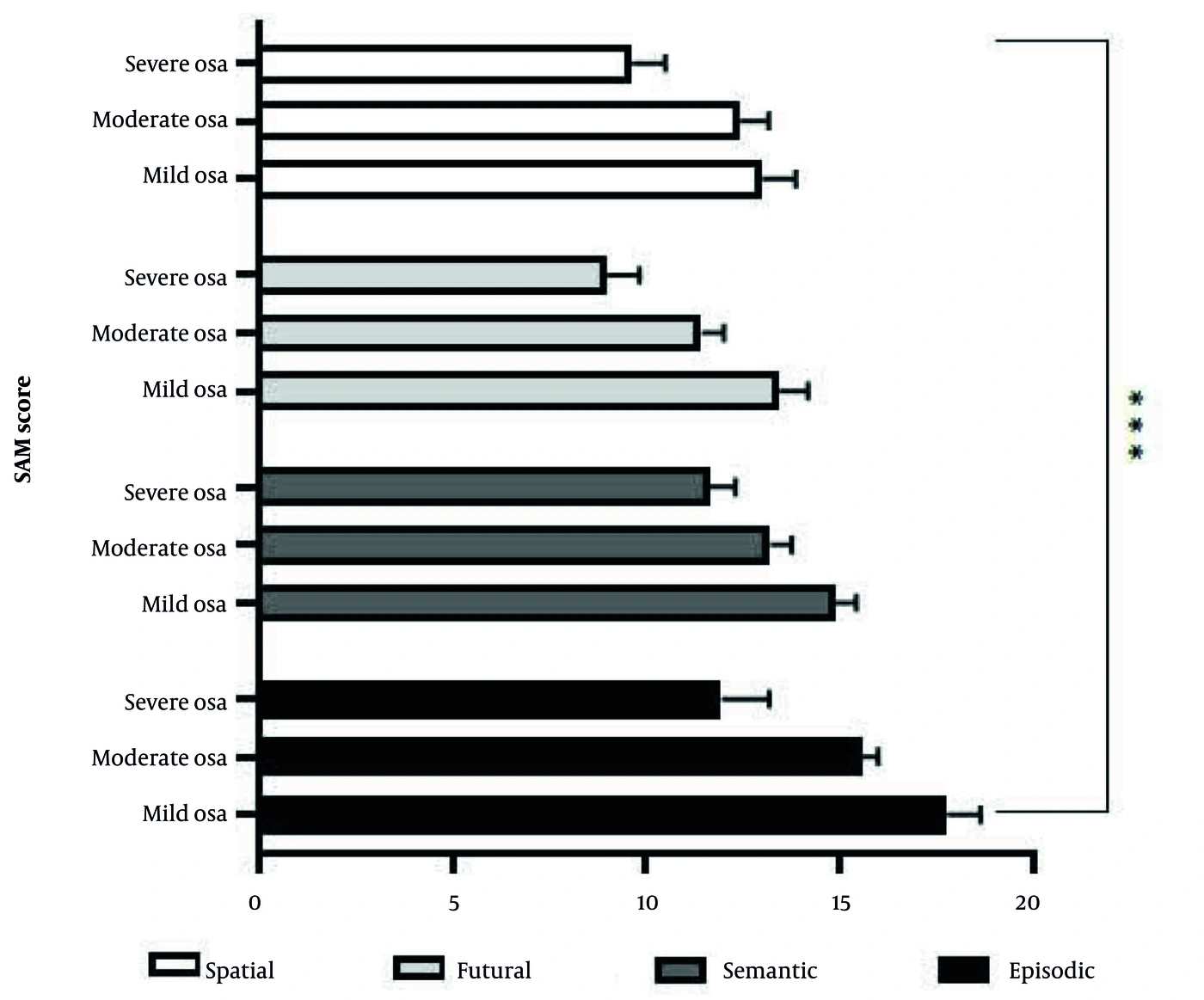
Figure 3.
Survey of Autobiographical Memory scores for episodic memory, semantic memory, spatial memory, and future prospection in the mild, moderate, and severe obstructive sleep apnea groups. Scores were significantly lower across all domains with increasing OSA severity (P < 0.001).
4.6. Pearson Correlation Analysis
AHI was negatively correlated with all SAM-26 domain scores in the patient group: episodic memory (r = −0.585, P < 0.001; Figure 4A), semantic memory (r = −0.538, P < 0.001; Figure 4B), spatial memory (r = −0.499, P < 0.001; Figure 4C), and future prospection (r = −0.518, P < 0.001; Figure 4D).

Figure 4.
Survey of Autobiographical Memory scores for episodic memory, semantic memory, spatial memory, and future prospection in patients with obstructive sleep apnea (OSA), indicating that greater OSA severity is associated with poorer overall memory function (A-D).
Similarly, PSQI scores were negatively correlated with episodic, semantic, and spatial memory scores in the patient group (Figure 5): episodic memory (r = −0.512, P < 0.001; Figure 5A), semantic memory (r = −0.527, P < 0.001; Figure 5B), and spatial memory (r = −0.487, P < 0.001; Figure 5C). PSQI scores were also negatively correlated with future-prospection scores (r = −0.473, P < 0.001; Figures 6 and 7).
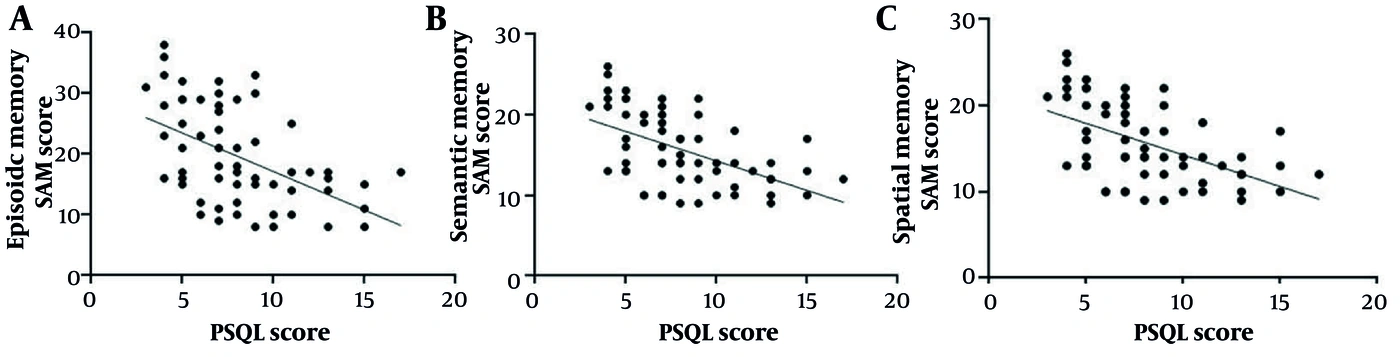
Figure 5.
Higher Pittsburgh Sleep Quality Index (PSQI) scores, indicating poorer sleep quality, were significantly associated with lower memory performance across episodic, semantic, and spatial domains (A-C).
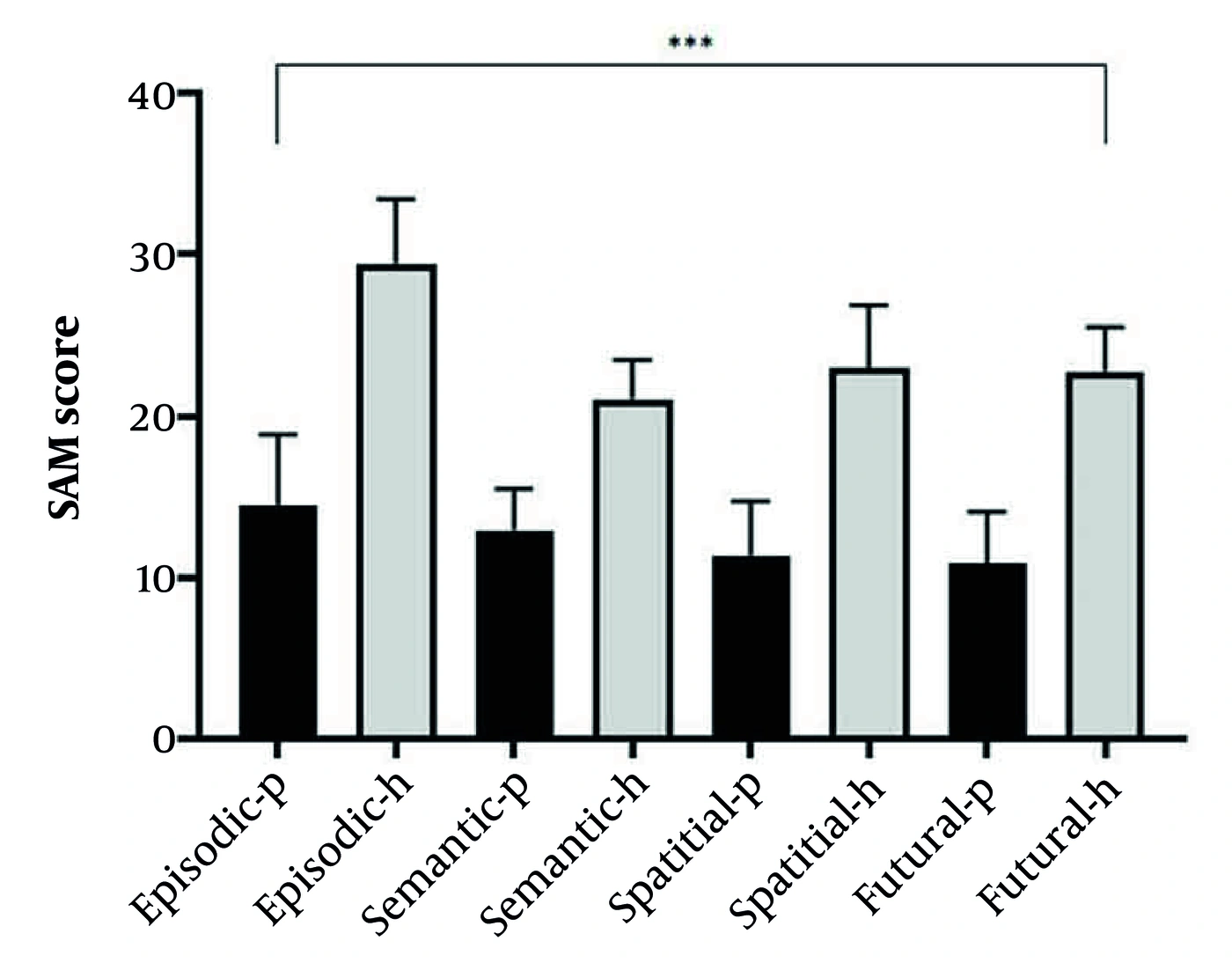
Figure 6.
Comparison of SAM scores across different memory domains (episodic, semantic, spatial, and prospective) between OSA patients (p) and healthy controls (h). The results indicate significantly higher memory performance in the control group compared to the patients with OSA (P < 0.001).
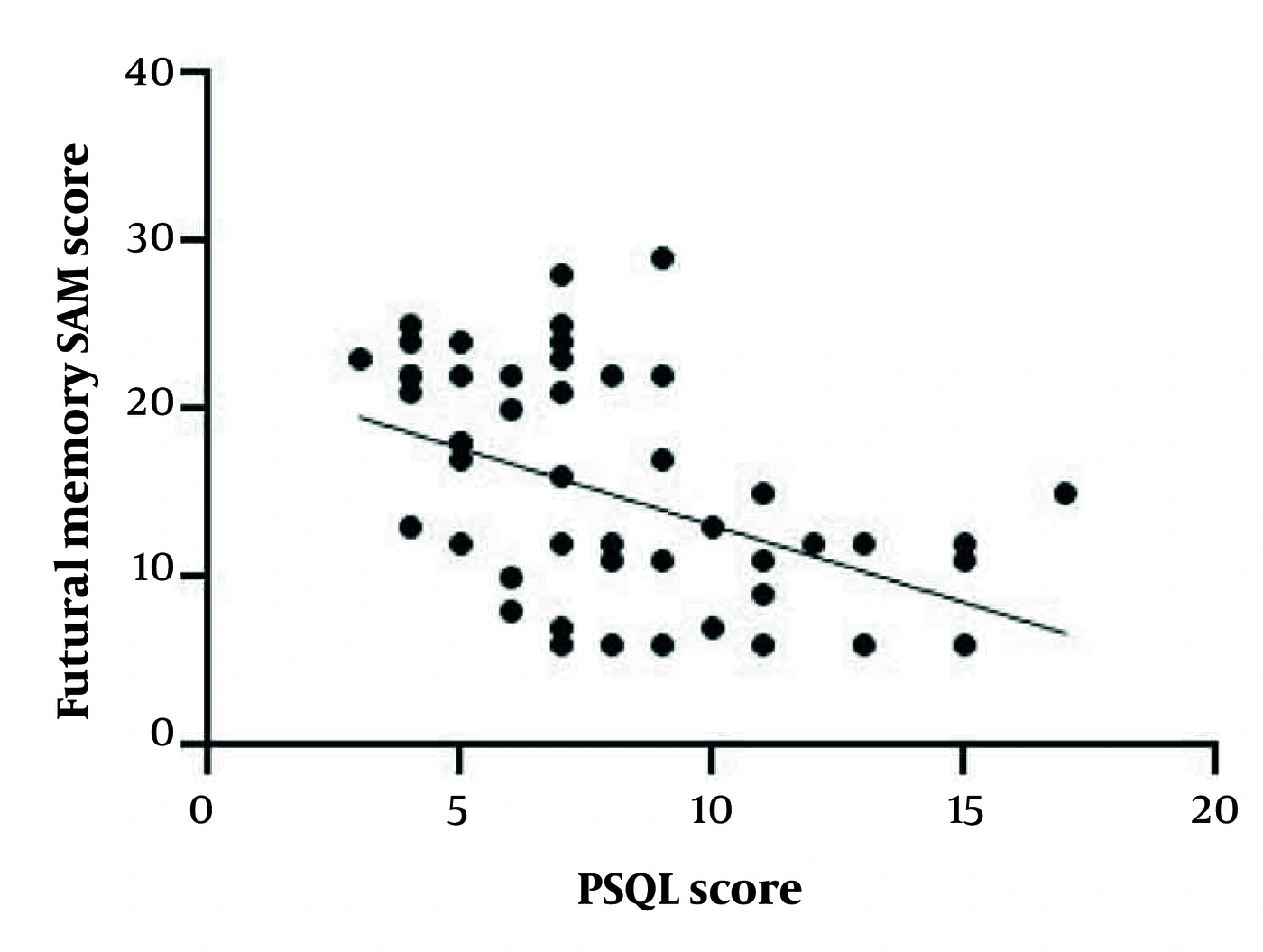
Figure 7.
Correlation between Pittsburgh Sleep Quality Index scores and Survey of Autobiographical Memory future-prospection scores in the patient group. The significant negative correlation indicates that poorer sleep quality was associated with lower self-reported future-prospection scores.
4.7. Percentage of Sleep Time with Oxygen Saturation Below 90%
The percentage of sleep time with oxygen saturation below 90% (T90) was significantly greater in the severe OSA group than in the mild (P < 0.001) and moderate OSA groups (P < 0.001). The mild and moderate groups did not differ significantly (P = 0.062; Figure 8A).
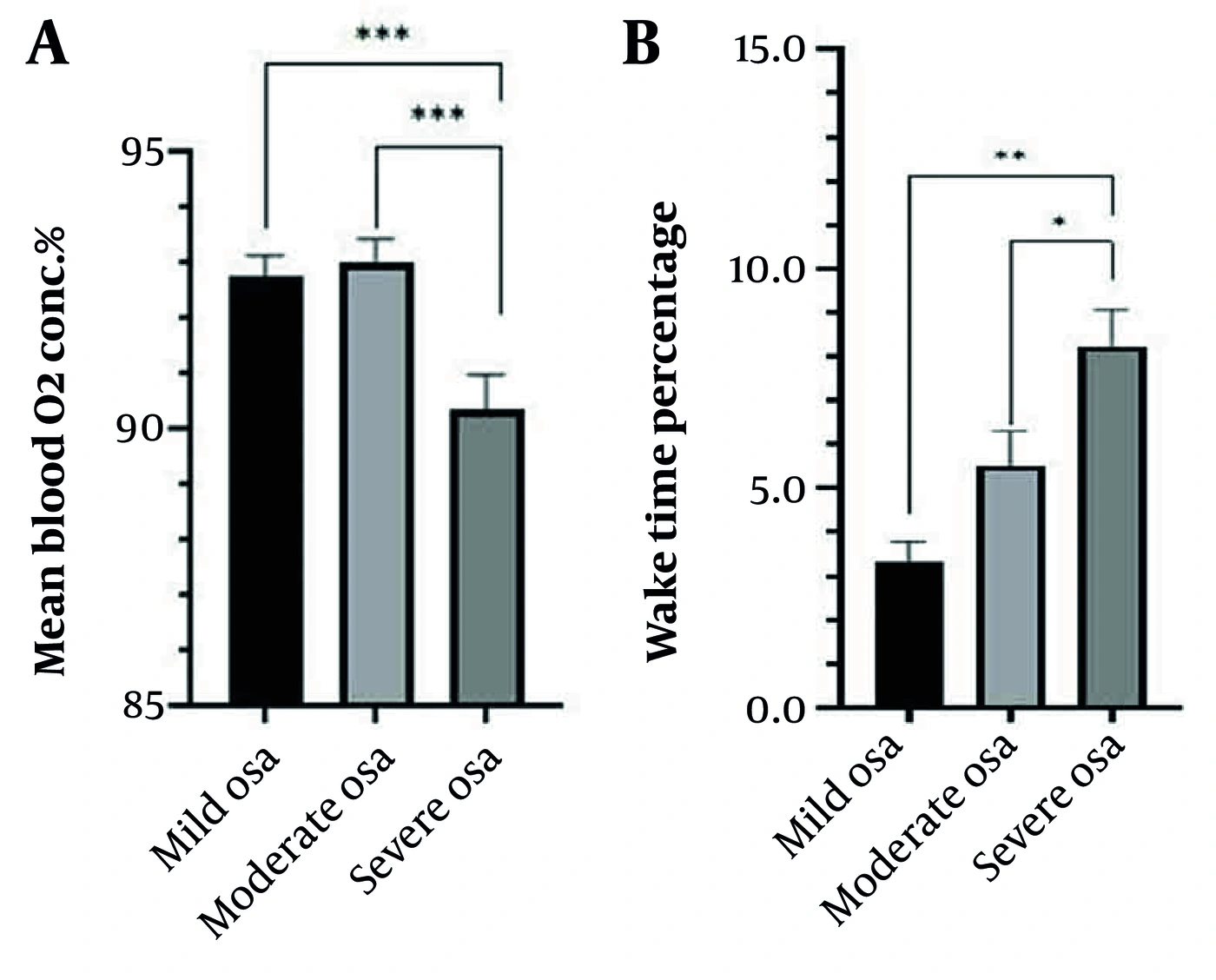
Figure 8.
Oxygenation and wakefulness in obstructive sleep apnea (OSA). The percentage of sleep time with oxygen saturation below 90% (T90) was significantly greater in severe OSA than in mild and moderate OSA (A; P < 0.001 for both comparisons). Wake time percentage was significantly higher in severe OSA than in mild (P < 0.001) and moderate OSA (P < 0.004), with no significant difference between mild and moderate OSA (B; P = 0.534).
4.8. Sleep Fragmentation
The percentage of wake time during sleep was significantly higher in the severe OSA group than in the mild (P < 0.001) and moderate OSA groups (P < 0.004). The mild and moderate groups did not differ significantly (P = 0.534; Figure 8B).
5. Discussion
Obstructive sleep apnea is associated with cognitive and psychological impairments that may adversely affect quality of life (22, 23). Understanding the relationships among OSA severity, autobiographical memory, sleep quality, oxygen saturation, and psychological symptoms, including anxiety, depression, and stress, may help improve clinical management (24, 25). Accordingly, this study investigated these cognitive and psychological outcomes and their associations with sleep-related parameters in patients with OSA.
5.1. Effects of Obstructive Sleep Apnea on Memory
Compared with controls, patients with OSA had significantly lower scores in all survey of Autobiographical Memory (SAM) domains: episodic memory, semantic memory, spatial memory, and future prospection. AHI was inversely correlated with these scores, indicating an association between greater OSA severity and poorer self-reported memory function. Uninterrupted sleep, especially REM sleep, is vital for hippocampal-dependent memory processing, and its disruption in OSA may underlie these deficits. These findings are consistent with research by Palombo et al. (26) and Liu et al. (27), who linked poor sleep quality to hippocampal dysfunction.
Episodic memory was the most severely affected domain in patients with OSA, followed by semantic memory, spatial memory, and future prospection, suggesting that hippocampal-dependent processes may be especially vulnerable to hypoxia and sleep disruption.
5.2. Sleep Quality and Related Outcomes
Sleep quality was impaired in both groups but was significantly poorer in patients with OSA, particularly those with severe disease. This finding is consistent with Lusic Kalcina et al. (28), who linked poor sleep quality to nocturnal awakenings, hypoxemia, and increased respiratory effort. Furthermore, T90 increased with OSA severity, indicating prolonged nocturnal hypoxia, which may contribute to systemic dysfunction and impaired cognitive performance. These findings are consistent with those of Zhang et al. (29), who highlighted the importance of managing nocturnal oxygen desaturation in OSA.
5.3. Relationship Between Sleep and Memory
PSQI scores were strongly inversely correlated with scores in all SAM domains, indicating that poorer sleep quality was associated with poorer self-reported memory function. These findings are consistent with research by Diezig et al. (30) and Piber (31), who emphasized the importance of good sleep in maintaining cognitive function. Despite the limitations of these correlations, the findings highlight the potential value of interventions to improve sleep quality and alleviate cognitive impairments in individuals with OSA (31).
Future prospection was negatively correlated with PSQI scores (r = −0.473, P < 0.001), consistent with Browning et al. (32), suggesting that poor sleep quality may impair future-oriented memory. Spatial memory was also negatively correlated with AHI (r = −0.499, P < 0.01), supporting evidence that sleep disturbances, particularly REM sleep deprivation, can impair spatial learning and memory (33).
Episodic memory was strongly inversely correlated with AHI (r = −0.585, P < 0.001), consistent with Kerner et al. (34), whereas semantic memory was negatively correlated with OSA severity (r = −0.538, P < 0.001), in agreement with Diezig et al. (30). These findings suggest that OSA-related hypoxia and sleep fragmentation may disrupt memory consolidation and impair the processing and retrieval of personal experiences and general knowledge (35).
Future prospection was negatively correlated with AHI (r = −0.518, P < 0.01), consistent with Chien et al. (36), suggesting that OSA-related hypoxia and sleep fragmentation may impair future-oriented planning and task execution. Collectively, these findings highlight the potential impact of OSA on multiple memory domains and the importance of interventions that improve sleep quality and oxygenation to mitigate cognitive impairment and preserve daily functioning.
5.4. Effects of Obstructive Sleep Apnea on Psychological Symptoms
Patients with OSA had significantly higher depression, anxiety, and stress scores than controls, consistent with Rezaeitalab et al. (37). Chronic intermittent hypoxia and sleep fragmentation may contribute to emotional dysregulation through alterations in the hypothalamic-pituitary-adrenal axis (22). Karaca et al. (38) reported relative morning hypocortisolemia and reduced cortisol responses to stimulation tests in patients with OSA.
Participants with severe OSA had significantly higher depression scores than those with mild or moderate OSA, suggesting an association between OSA severity and depressive symptoms. Stress scores did not differ significantly across severity groups. These findings emphasize the importance of integrating psychological interventions into the long-term management of adults with OSA to mitigate adverse mental health effects.
5.5. Conclusions
Obstructive sleep apnea has substantial multisystem effects, including psychological, cognitive, and physiological consequences. Our findings indicate that greater OSA severity is associated with poorer mental health, sleep architecture, and self-reported memory function. These results underscore the importance of early diagnosis and comprehensive therapeutic intervention to reduce the sequelae of OSA. Improving sleep quality and optimizing oxygenation may enhance quality of life and cognitive performance in affected individuals. Given the multifactorial nature of OSA, a multidisciplinary approach that incorporates pulmonary, neurological, and psychological care is essential for effective management.