
1. Background
To date, three coronavirus outbreaks have been reported, the most recent being the emergence and spread of the 2019 novel coronavirus, which causes coronavirus disease 2019 (COVID-19) (1). Severe acute respiratory syndrome coronavirus 2 (SARS-CoV-2) has posed a global health challenge characterized not only by respiratory failure but also by a marked prothrombotic state (2). COVID-19-induced coagulopathy affects the vasculature of multiple organs and is a key driver of multiorgan failure and mortality in severe cases (2). The incidence of venous thromboembolism (VTE), comprising deep vein thrombosis (DVT) and pulmonary embolism (PE), is clearly elevated in hospitalized patients with COVID-19, with rates reaching 25% - 30% in critically ill individuals despite standard thromboprophylaxis (2, 3). This thrombotic tendency is thought to result from a complex interplay of endothelial inflammation, platelet activation, and a hypercoagulable state, often described as thromboinflammation (2, 4-7).
Magnesium (Mg), the fourth most abundant cation and the second most prevalent intracellular cation, serves as a cofactor in more than 600 enzymatic reactions (8). Beyond its well-known roles in muscle and neural function, magnesium exerts a significant influence on vascular tone and coagulation homeostasis. A growing body of evidence underscores its potent antithrombotic and antiplatelet properties (9). The mechanisms are multifaceted: magnesium reduces platelet aggregation by interfering with fibrinogen binding to the glycoprotein IIb/IIIa complex, inhibits the synthesis of the proaggregatory thromboxane A2, and simultaneously promotes the release of the platelet-inhibiting prostacyclin (PGI2) (10, 11). In addition, magnesium enhances endothelial nitric oxide (NO) production, promoting vasodilation and exerting antithrombotic effects, whereas magnesium deficiency fosters a proinflammatory, prothrombotic endothelial phenotype (12).
The intersection of magnesium biology and COVID-19 pathogenesis is particularly compelling. Hypomagnesemia is prevalent in many comorbidities associated with severe COVID-19, such as diabetes, cardiovascular disease, and hypertension (13). Moreover, magnesium deficiency exacerbates the inflammatory response to SARS-CoV-2, potentially fueling the cytokine storm and contributing to endothelial dysfunction and coagulopathy (4, 13). Latent magnesium deficiency, common in older adults because of malnutrition and polypharmacy, may thus create a permissive environment for the virus to trigger thrombotic events (14).
2. Objectives
Given the established antithrombotic role of magnesium and the high burden of thrombotic events in COVID-19, we hypothesized that hypomagnesemia would be associated with an increased risk of thrombosis in hospitalized patients with COVID-19. This study aimed to examine the association between serum magnesium levels and the incidence of thrombotic events in this patient population.
3. Methods
3.1. Study Design and Participants
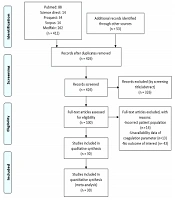
This observational cross-sectional study was conducted at Faghihi and Namazi hospitals, affiliated with Shiraz University of Medical Sciences. Of 332 screened individuals, 105 were excluded because of pre-existing antiplatelet or anticoagulant therapy or other predefined criteria, yielding a final analytic cohort of 227 patients admitted between 2019 and 2020.
Inclusion criteria were: 1) age over 18 years, 2) admission to one of the study hospitals, and 3) confirmed COVID-19 infection by polymerase chain reaction (PCR) testing. Exclusion criteria included: 1) use of antiplatelet or anticoagulant medication, 2) acquired or primary hypercoagulable states, and 3) incomplete medical records.
Hospitalization followed national management guidelines, with intensive care unit admission reserved for severe respiratory or hemodynamic compromise. Although preadmission anticoagulant use was an exclusion criterion, standard in-hospital thromboprophylaxis was initiated for all participants immediately upon admission; therapeutic-dose anticoagulation was administered only after confirmed thrombotic events and, therefore, did not conflict with the exclusion criteria. The study was approved by the Institutional Review Board (Ref: IR.SUMS.MED.REC.1402.074).
3.2. Data Collection and Definitions
Baseline serum magnesium was measured upon admission, before both the initiation of thromboprophylaxis and the occurrence of any in-hospital thrombotic events. Serum magnesium was analyzed as a continuous variable rather than using a predefined cutoff value for hypomagnesemia. This approach was chosen because dichotomization of continuous biomarkers may reduce statistical power, lead to a loss of information, and obscure clinically meaningful dose-response relationships. Additional laboratory parameters included serum calcium, complete blood count, D-dimer, fibrinogen, prothrombin time (PT), activated partial thromboplastin time (aPTT), and international normalized ratio (INR).
In this study, thrombotic events referred to both venous and arterial thrombotic complications. Thrombotic outcomes, comprising myocardial infarction (MI), pulmonary embolism (PE), deep vein thrombosis (DVT), superficial venous thrombosis (SVT), cerebrovascular accident (CVA), and cerebral venous thrombosis (CVT), were identified based on clinical suspicion rather than systematic screening. Suspected events were confirmed using indicated diagnostic modalities, including computed tomography pulmonary angiography, Doppler ultrasonography, neuroimaging, or cardiac enzymes/electrocardiography. To minimize bias, outcome ascertainment was performed independently of admission magnesium status.
3.3. Statistical Analysis
Continuous variables are reported as mean ± SD and were compared between two groups using independent t tests or Mann-Whitney U tests, as appropriate; for comparisons across more than two groups, one-way analysis of variance or Kruskal-Wallis tests were applied based on distributional assumptions. Categorical variables are presented as frequencies (%) and were analyzed using chi-square or Fisher exact tests. No a priori sample size calculation was performed. Univariate and multivariable logistic regression models were used to identify independent predictors of thrombotic events after adjustment for confounders. Results are reported as ORs with 95% CIs, with significance set at a two-sided P < 0.05.
4. Results
4.1. Baseline Characteristics of the Study Population
A total of 227 hospitalized patients with COVID-19 were included in the study; 85 (37.4%) were female and 142 (62.6%) were male. Overall, 68 patients (30.0%) developed thrombotic events, whereas 159 (70.0%) did not. Documented thrombotic events included MI in 26 patients (11.5%), PE in 24 (10.6%), DVT in 9 (4.0%), CVA in 6 (2.6%), SVT in 2 (0.9%), and CVT in 1 (0.4%). The overall in-hospital mortality rate was 11.5%. Hypertension (HTN) was the most common comorbidity, affecting 127 patients (55.9%), followed by diabetes mellitus (DM) in 65 (28.6%), chronic kidney disease (CKD) in 27 (11.9%), and ischemic heart disease (IHD) in 25 (11.0%).
A comparative analysis of patients with and without thrombotic events is presented in Table 1. Mean age did not differ significantly between the groups (61.32 ± 2.33 vs. 62.23 ± 0.83 years, P = 0.640). Male sex was significantly more frequent among patients with thrombotic events than among those without thrombosis (76.5% vs. 56.6%, P = 0.005). Patients with thrombosis had a significantly longer hospital stay (17.74 ± 0.75 vs. 10.33 ± 0.22 days, P < 0.001) and were more likely to require ventilator support (23.5% vs. 11.3%, P = 0.020). No significant differences were observed between the groups with respect to DM, HTN, IHD, or CKD. In-hospital mortality also did not differ significantly between patients with and without thrombotic events.
Table 1.
Comparison of Clinical, Laboratory, and Outcome Parameters in Patients with and Without Thrombotic Events a
| Variables | Without Thrombotic Events | With Thrombotic Events | P-Value |
|---|---|---|---|
| Clinical comorbidities and characteristics | |||
| Age (y) | 62.23 ± 0.83 | 61.32 ± 2.33 | 0.640 |
| Gender | 0.005 | ||
| Female | 69 (43.4) | 16 (23.5) | |
| Male | 90 (56.6) | 52 (76.5) | |
| Clinical outcome | 0.140 | ||
| Discharged | 144 (90.6) | 57 (83.8) | |
| Expired | 15 (9.4) | 11 (16.2) | |
| Length of hospital stay (d) | 10.33 ± 0.22 | 17.74 ± 0.75 | < 0.001 |
| Type of thrombotic event | |||
| MI | - | 26 (38.2) | - |
| PE | - | 24 (35.3) | - |
| DVT | - | 9 (13.2) | - |
| CVA | - | 6 (8.8) | - |
| SVT | - | 2 (2.9) | - |
| CVT | - | 1 (1.5) | - |
| Comorbidities (yes) | |||
| DM | 44 (27.7) | 21 (30.9) | 0.620 |
| HTN | 90 (56.6) | 37 (54.4) | 0.740 |
| IHD | 17 (10.7) | 8 (11.8) | 0.670 |
| CKD | 21 (13.2) | 6 (8.8) | 0.350 |
| Anticoagulant prophylaxis/treatment | |||
| None | 17 (10.7) | 1 (1.5) | - |
| Standard-dose prophylactic low-molecular-weight heparin | 1 (0.6) | 0 (0.0) | - |
| Standard-dose prophylactic unfractionated heparin | 141 (88.7) | 0 (0.0) | - |
| Standard-dose therapeutic low-molecular-weight heparin | 0 (0.0) | 18 (26.5) | - |
| Standard-dose therapeutic unfractionated heparin | 0 (0.0) | 49 (72.1) | - |
| Ventilator assistance (yes) | 18 (11.3) | 16 (23.5) | 0.020 |
| Laboratory data | |||
| Hemoglobin (g/dL) | 11.62 ± 0.17 | 11.99 ± 0.36 | 0.300 |
| White blood cells (103/µL) | 8.05 ± 0.18 | 8.07 ± 0.35 | 0.950 |
| Neutrophils (103/µL) | 6.73 ± 0.19 | 6.96 ± 0.35 | 0.540 |
| Platelets (103/µL) | 194.49 ± 4.95 | 197.34 ± 7.17 | 0.740 |
| Calcium (mg/dL) | 9.13 ± 0.70 | 8.46 ± 0.11 | < 0.001 |
| Prothrombin time (sec) | 17.02 ± 0.22 | 17.84 ± 0.24 | 0.001 |
| Activated partial thromboplastin time (sec) | 37.85 ± 0.53 | 38.14 ± 0.33 | 0.370 |
| International normalized ratio | 1.48 ± 0.02 | 1.57 ± 0.03 | 0.003 |
| D-dimer (ng/mL) | 1045.13 ± 7.21 | 1529.16 ± 42.22 | < 0.001 |
| Fibrinogen (mg/dL) | 614.93 ± 14.78 | 697.65 ± 5.76 | < 0.001 |
a Values are expressed as No. (%) or mean ± SD.
4.2. D-Dimer and Fibrinogen
As shown in Table 1, D-dimer and fibrinogen levels were significantly higher in patients with thrombotic events than in those without thrombosis. Mean D-dimer levels were 1529.16 ± 42.22 ng/mL versus 1045.13 ± 7.21 ng/mL, and mean fibrinogen levels were 697.65 ± 5.76 mg/dL versus 614.93 ± 14.78 mg/dL, respectively (both P < 0.001).
4.3. Magnesium and Thrombotic Events
Serum magnesium levels were significantly lower in patients who developed thrombotic events than in those who did not (1.82 ± 0.20 vs. 1.93 ± 0.39 mg/dL, P = 0.006). In the univariate logistic regression analysis, each 0.1 mg/dL decrease in serum magnesium was associated with a 28% increase in the odds of thrombotic events (OR = 1.28, 95% CI: 1.07 - 1.53, P = 0.007). However, after adjustment for age, serum calcium, D-dimer, fibrinogen, and length of hospitalization, serum magnesium was no longer independently associated with thrombotic events (adjusted OR = 1.14, 95% CI: 0.91 - 1.42, P = 0.259). In the multivariable model, D-dimer, lower serum calcium, and longer hospitalization remained independently associated with thrombotic events (Tables 2 and 3).
Table 2.
Univariate Logistic Regression Analysis of Factors Associated with Thrombotic Events in Hospitalized Patients with COVID-19
| Variables | Crude OR | 95% CI | P-Value |
|---|---|---|---|
| Serum magnesium (per 0.1 mg/dL decrease) | 1.28 | 1.07 - 1.53 | 0.007 |
| D-dimer (per 100 ng/mL increase) | 1.012 | 1.008 - 1.016 | < 0.001 |
| Fibrinogen (per 1 mg/dL increase) | 1.006 | 1.002 - 1.010 | 0.004 |
| Calcium (per 1 mg/dL increase) | 0.58 | 0.41 - 0.82 | 0.002 |
| Length of hospital stay (per day increase) | 1.34 | 1.21 - 1.49 | < 0.001 |
| Age (per year increase) | 1.01 | 0.98 - 1.04 | 0.540 |
Table 3.
Multivariable Logistic Regression Analysis of Factors Associated with Thrombotic Events in Hospitalized Patients with COVID-19
| Variables | Adjusted OR | 95% CI | P-Value |
|---|---|---|---|
| Age (per year increase) | 1.01 | 0.96 - 1.06 | 0.663 |
| Length of hospitalization (per day increase) | 1.72 | 1.35 - 2.19 | < 0.001 |
| Serum calcium (per 1 mg/dL increase) | 0.30 | 0.13 - 0.71 | 0.006 |
| Serum magnesium (per 0.1 mg/dL decrease) | 1.14 | 0.91 - 1.42 | 0.259 |
| D-dimer (per 100 ng/mL increase) | 1.014 | 1.008 - 1.019 | < 0.001 |
| Fibrinogen (per 1 mg/dL increase) | 1.004 | 0.999 - 1.009 | 0.102 |
4.4. Comorbidities and Thrombotic Events Among Deceased Patients
Table 4 summarizes the clinical characteristics and comorbid conditions of the 26 deceased patients. Within this subgroup, 11 (42.3%) experienced a thrombotic event before death. HTN (53.8%) and DM (34.6%) were the most prevalent comorbidities in the overall deceased cohort. Among patients who experienced thrombotic events, the distribution of comorbidities was similar, with HTN (54.5%) and DM (36.4%) remaining the most frequent conditions. In contrast, CKD was observed exclusively among deceased patients who did not experience thrombotic events (26.7%). These descriptive data highlight the high burden of cardiovascular risk factors among deceased patients with COVID-19, regardless of thrombotic status.
Table 4.
Comorbidities Among Deceased Patients with COVID-19 According to Thrombotic Event Status a
| Medical Condition | Without Thrombotic Events (n = 15) | With Thrombotic Events (n = 11) | Total (n = 26) |
|---|---|---|---|
| HTN | 8 (53.3) | 6 (54.5) | 14 (53.8) |
| DM | 5 (33.3) | 4 (36.4) | 9 (34.6) |
| CKD | 4 (26.7) | 0 (0.0) | 4 (15.4) |
| IHD | 1 (6.7) | 2 (18.2) | 3 (11.5) |
| CVA | 1 (6.7) | 1 (9.1) | 2 (7.7) |
| Chronic obstructive pulmonary disease | 0 (0.0) | 1 (9.1) | 1 (3.8) |
| Human immunodeficiency virus | 0 (0.0) | 1 (9.1) | 1 (3.8) |
| Multiple myeloma | 1 (6.7) | 0 (0.0) | 1 (3.8) |
a Values are expressed as No. (%).
4.5. Characteristics of Patients with Thrombotic Events
In the overall study population, thrombotic events were significantly more frequent in men than in women (36.6% vs. 18.8%, P = 0.005). Among the 68 patients who developed in-hospital thrombotic events, serum magnesium levels were not significantly associated with sex (P = 0.077). Furthermore, 35.3% (n = 24) of these patients had a history of prior thrombotic-related conditions, most commonly IHD (n = 8) and CVA (n = 6).
4.6. Hospitalization Duration
The mean duration of hospitalization for the cohort was 12.35 ± 4.98 days. No significant association was observed between serum magnesium levels and length of hospitalization (P = 0.336).
5. Discussion
This cross-sectional study suggests a potential inverse association between serum magnesium levels and the incidence of thrombotic events in hospitalized patients with COVID-19.
The biological plausibility of this association is supported by experimental evidence. In vitro and animal studies have consistently demonstrated that magnesium exerts potent antiplatelet effects. Another study showed that magnesium at pharmacological concentrations inhibits fibrinogen-mediated platelet aggregation and adhesion (15). Similarly, another study found that dietary magnesium deficiency in swine led to significant increases in adenosine diphosphate (ADP)- and collagen-induced platelet aggregation, alongside a procoagulant shift in hemostatic variables (16). Our findings demonstrated that lower serum magnesium was significantly associated with thrombotic events in univariate analysis, but this association was attenuated after multivariable adjustment. Thus, magnesium may serve as a marker of disease severity rather than an independent predictor. To maximize statistical power and avoid obscuring dose-response relationships through arbitrary categorization, magnesium was analyzed as a continuous variable, enabling a precise evaluation across its entire physiological range.
The mechanisms underlying this association are multifactorial. Magnesium is known to compete with calcium at binding sites on the glycoprotein IIb/IIIa receptor, thereby preventing fibrinogen binding and subsequent platelet aggregation (10, 11). This mechanism is reminiscent of the action of synthetic GPIIb/IIIa inhibitors; indeed, Levi et al. demonstrated that magnesium’s antithrombotic efficacy in reducing stent thrombosis was comparable to that of tirofiban and eptifibatide (17). In addition, magnesium deficiency promotes endothelial dysfunction by reducing endothelial NO production and upregulating prothrombotic factors, such as von Willebrand factor and plasminogen activator inhibitor-1 (12, 13). In the context of COVID-19, where endothelialitis is a hallmark of severe disease (18), pre-existing or acquired hypomagnesemia could exacerbate this endothelial injury, creating conditions favorable to thrombosis.
Our observation of elevated D-dimer and fibrinogen in the thrombosis group is consistent with the presence of a hypercoagulable and hyperfibrinolytic state in these patients, which is a well-documented feature of COVID-19 coagulopathy (2). The finding that magnesium levels were lower in this hypercoagulable subgroup suggests a potential link between magnesium homeostasis and overall coagulation dysregulation in this disease. This is supported by human studies, such as that by Na et al., which found that intravenous magnesium sulfate reduced blood hypercoagulability, as measured by rotational thromboelastometry, in patients undergoing cancer surgery (9).
The substantial male predominance in thrombotic events observed in our study aligns with broader epidemiological data on COVID-19, in which male sex is an established predisposing factor for critical disease and thrombosis (19). The reasons are presumably multifactorial, involving differences in immune response, a higher prevalence of cardiovascular comorbidities, and possibly hormonal factors. Our data indicate that this sex-based risk persists in the context of magnesium status. Interestingly, unlike some other studies (20, 21), serum magnesium levels were not significantly associated with the length of hospitalization in our study. This may reflect limited statistical power, particularly among deceased patients, or the cross-sectional design. Magnesium may therefore play a more prominent role in thrombotic pathways than in overall mortality outcomes in COVID-19.
5.1. Study Limitations
Several limitations should be acknowledged. First, the cross-sectional design precludes causal inference between serum magnesium levels and thrombotic events. Second, serum magnesium was measured only upon hospital admission, and serial measurements were not available; moreover, serum measurements may not accurately reflect intracellular magnesium status. Finally, despite adjustment for several confounding factors, residual confounding cannot be entirely excluded.
5.2. Conclusions
In conclusion, lower serum magnesium was associated with thrombotic events in hospitalized patients with COVID-19 in univariate analysis, but not after multivariable adjustment. These findings suggest that magnesium is involved in the complex pathophysiology of COVID-19 thrombosis, although its independent role warrants further investigation in larger prospective studies.