
1. Background
Leishmaniasis is a parasitic disease caused by Leishmania. This disease spreads through the bite of certain types of sand flies (1). This disease can be observed in three forms including cutaneous, mucocutaneous or visceral (2, 3). Ulcer is the symptom of the cutaneous type of the disease (4); the symptom of mucocutaneous leishmaniasis is ulcers in the mouth, nose and skin (5). Visceral leishmaniasis, at the beginning, has ulcer-like symptoms, and afterward, other symptoms such as fever, pancytopenia, and organomegaly present (6-8).
More than 20 species of Leishmania can cause infections in humans (9). All the three types of leishmaniasis are diagnosed using microscopic methods at the first step (10). The visceral disease can be diagnosed by both microscopic and serologic tests (11). Using insecticide-treated nets, spraying to eliminate sandflies and treating infected people to prevent the further spread of the disease are the main approaches to disease control (12). According to the current reports, there are 12 million people infected with leishmaniasis in 98 countries and about 2 million new cases are annually added to the population of infected subjects; between 20 and 50 thousand people annually die due to this infection (13, 14). About 200 million people are affected in Asia, Africa, South and Central America, and southern Europe (15).
Canines and rodents are the reservoir hosts for visceral and cutaneous leishmaniasis, respectively (16). In Iran, visceral and cutaneous leishmaniasis have an annual incidence rate of 100 - 300 and 20,000, respectively (17). Preventive measures such as education and awareness raising as well as the prevention of the use of traditional methods in endemic areas are among the most important strategies for controlling leishmaniasis (18, 19). The main goals of health education programs based on model and theories are empowerment of people to accept and adopt voluntary health behaviors, use the available health services to make decisions for the promotion and improvement of their health in the environment, increase their awareness about disease prevention, and change their attitudes and behaviors (20).
Programs that are based on a conceptual framework can enable the target group to effectively control their health and social and physical environment (such as work or living conditions) and promote healthy lifestyle and individual habits. Among these, health volunteers can be most effective in the education of families, given their continued relationship with families and their educational and social coordination. This strategy, as a people-oriented approach, is the best way to deal with educational needs and socio-cultural changes. On the other hand, resources are limited and provision of direct education for all people in a region is not possible; therefore, health volunteers can have a meaningful and effective role in providing the possibility of direct communication with people to implement educational programs. However, in this context, it is essential to improve the ability of health volunteers through training in order for them to play an effective role in guidance and education of the population.
For effective education, the existing situation should be comprehensively investigated.
2. Objectives
Therefore, considering the importance of the knowledge of health volunteers about the disease and the sensitive role of health volunteers in family education, the knowledge, attitude and practice (KAP) of health volunteers and the effect of health education on KAP in Khorasan Razavi, Ilam, and East Azerbaijan provinces were investigated.
3. Methods
The present study was conducted to evaluate the effect of health education on KAP of health volunteers about leishmaniasis in East Azerbaijan, Khorasan Razavi and Ilam provinces during 2015 - 2017. For accuracy and improvement of the results, 104 people including 41 subjects from East Azerbaijan, 41 subjects from Khorasan Razavi and 21 subjects from Ilam provinces were enrolled voluntarily using the census sampling method.
In order to investigate the effect of our educational intervention, this study was performed before and after nine months after education in the studied groups. The intervention included in-person training, instructional manuals, educational software and practical training. For this purpose, a questionnaire containing 11 questions on knowledge, 10 questions on attitude and 13 questions on performance was used. Reliability and validity of this questionnaire were confirmed using Cronbach’s alpha.
An informed questionnaire with 34 questions was distributed among all the participants. Before completing the questionnaires, a training session was held for the interviewers and they were taught how different parts of the questionnaire should be completed. It should be noted that the confidentiality terms were observed and approval of the ethics committee of the university was obtained (reference number from ethics committee).
The obtained data were analyzed by SPSS version 22 using McNemar’s test, Fisher’s exact test, Wilcoxon test, and Kruskal-Wallis test. P value less than 0.05 was considered significant.
4. Results
In this study, we aimed to investigate KAP regarding leishmaniasis among 104 health volunteers from East Azerbaijan, Khorasan Razavi and Ilam provinces during 2016 - 2017.
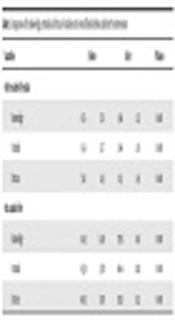
The inter-group and intra-group comparisons of KAP before and after the intervention are shown on Table 1. As can be observed, the mean values obtained for the variables of KAP prior to the intervention were lower than their counterparts after the intervention in all these three provinces. Before the intervention, there was no significant difference in attitude and knowledge scores among the provinces, but there was a significant difference in terms of practice between the subjects from Azerbaijan and Ilam provinces. A significant increase in knowledge, attitude and practice of all the groups was noted post-intervention. After the intervention, there was also a significant difference between the provinces. The results of the pos-hoc test showed that the post-intervention knowledge scores in Ilam were significantly higher compared to those obtained from Khorasan Razavi and Azerbaijan provinces. However, post-intervention attitude scores in subjects from Khorasan Razavi province were significantly lower compared to those of the subjects from Ilam and East Azerbaijan provinces. In case of practice, the results showed that Azerbaijan and Khorasan Razavi provinces scores were significantly different after the intervention. Azerbaijan province had the lowest practice scores before and after the intervention. Improvement of practice was higher in Khorasan Razavi province compared to Ilam province.
Table 1.
The Inter-and Intra-Group Comparisons of Knowledge, Attitude and Practice Before and After the Intervention
| Variables/Provinces | Beforea | Aftera | P Value |
|---|---|---|---|
| On the Scale of the Data | |||
| Knowledge (0 - 11) | |||
| Khorasan Razavi | 6.90 ± 1.56 | 9.59 ± 1.34 | < 0.01 |
| Ilam | 7.00 ± 2.02 | 10.50 ± 0.91 | < 0.01 |
| East Azerbaijan | 6.49 ± 1.86 | 9.29 ± 1.05 | < 0.01 |
| P value (comparison of the provinces) | 0.451 | 0.000 | |
| Attitude (0 - 10) | |||
| Khorasan Razavi | 6.49 ± 1.55 | 8.02 ± 1.23 | < 0.01 |
| Ilam | 6.23 ± 1.74 | 9.14 ± 1.17 | < 0.01 |
| East Azerbaijan | 6.76 ± 1.50 | 9.00 ± 0.84 | < 0.01 |
| P value (comparison of the provinces) | 0.358 | 0.000 | |
| Practice (0 - 13) | |||
| Khorasan Razavi | 7.98 ± 2.83 | 11.61 ± 1.59 | < 0.01 |
| Ilam | 8.77 ± 2.39 | 11.32 ± 0.89 | < 0.01 |
| East Azerbaijan | 7.32 ± 1.85 | 10.54 ± 1.34 | < 0.01 |
| P value (comparison of the cities) | 0.017 | 0.000 | |
| On a Scale of 100 | |||
| Knowledge (0 - 100) | |||
| Khorasan Razavi | 62.75 ± 14.20 | 87.14 ± 12.19 | < 0.01 |
| Ilam | 63.64 ± 18.40 | 95.45 ± 8.30 | < 0.01 |
| East Azerbaijan | 58.98 ± 16.90 | 84.48 ± 9.59 | < 0.01 |
| P value (comparison of the provinces) | 0.415 | 0.000 | |
| Attitude (0 - 100) | |||
| Khorasan Razavi | 64.88 ± 15.51 | 80.24 ± 12.35 | < 0.01 |
| Ilam | 62.27 ± 17.44 | 91.36 ± 11.67 | < 0.01 |
| East Azerbaijan | 67.56 ± 14.96 | 90.00 ± 8.37 | < 0.01 |
| P value (comparison of the cities) | 0.358 | 0.000 | |
| Practice (0 - 100) | |||
| Khorasan Razavi | 61.35 ± 21.79 | 89.31 ± 12.27 | < 0.01 |
| Ilam | 67.48 ± 18.39 | 87.06 ± 6.87 | < 0.01 |
| East Azerbaijan | 56.29 ± 14.23 | 81.05 ± 10.33 | < 0.01 |
| P value (comparison of the cities) | 0.017 | 0.000 | |
aValues are expressed as Mean ± SD.
Generally, the survey indicated that the mean scores (in the two measuring scales) of the knowledge, attitude and practice variables before the intervention were lower than the values post-intervention. In the post-intervention phase, there was a significant increase in KAP. We noted that the mean levels of knowledge, attitude and practice in all the provinces before the intervention were generally higher than 56% (moderate), and these scores increased to higher than 80% after the intervention. Overall, these scores improved from a moderate level to a good level. Also, another categorization was carried out on the KAP indexes. In this categorization, the scores below 33.33% were weak, the scores ranging from 33.33% to 66.66% were average and the scores above 66.66% were considered as good.
Table 2.
Comparison of the Knowledge, Attitude and Practice Variables in the Overall Results Before and After the Intervention
| Variables | Before | After | P Value | ||
|---|---|---|---|---|---|
| On the scale of the data | |||||
| Knowledge | 6.76 | 1.78 | 9.66 | 1.23 | < 0.01 |
| Attitude | 6.54 | 1.57 | 8.64 | 1.18 | < 0.01 |
| Practice | 7.88 | 2.43 | 11.13 | 1.45 | < 0.01 |
| On a scale of 100 | |||||
| Knowledge | 61.45 | 16.20 | 87.85 | 11.16 | < 0.01 |
| Attitude | 65.38 | 15.70 | 86.44 | 11.82 | < 0.01 |
| Practice | 60.65 | 18.70 | 85.58 | 11.12 | < 0.01 |
Survey of the level of knowledge based on provinces and in general showed that before the intervention, there was only one subject with low level of knowledge in East Azerbaijan and there was one subject in Ilam, whose knowledge improved after intervention, such that there were no cases of weak knowledge in the three provinces. Before the intervention, 63.4% of the subjects had moderate knowledge and 36.6% had high knowledge, but the high level of knowledge increased to 90.2% and the average knowledge level decreased to 9.8% after the intervention. Before the intervention, 50% in Ilam had an average level of knowledge, 45.5% had high level of knowledge and only 4.5% of the subjects had weak knowledge. After the intervention, the knowledge level increased. Before the intervention, the knowledge levels in East Azerbaijan province were weak, average and high in 2.4%, 63.4% and 34.1% of the subjects, respectively, but after the intervention, most of the subjects (95.2%) had a high level of knowledge and only 4.8% had moderate knowledge. In the overall survey, it was observed that 9.1%, 60.6% and 37.5% of the subjects had weak, moderate and high knowledge levels, respectively. These levels changed to 94.2% with high knowledge level and 5.7% with average knowledge level after the intervention, which shows the enhancement in the knowledge level of the subjects. In general and in each province separately, the changes in knowledge status were significant after the intervention compared to before the intervention, and the probability values obtained from Fisher’s exact test were indicative of the significant changes after the intervention.
Table 3.
Assessment of the Level of Knowledge Before and After the Intervention in the Total Subjects and in Each Province
| Province | Before the Intervention | After the Interventiona | P Value | |||
|---|---|---|---|---|---|---|
| Weak | Moderate | Good | Total | |||
| Khorasan Razavi | < 0.01 | |||||
| Weak | 0 (0.0) | 0 (0.0) | 0 (0.0) | 0 (0.0) | ||
| Moderate | 0 (0.0) | 3 (7.3) | 23 (56.1) | 26 (63.4) | ||
| Good | 0 (0.0) | 1 (2.4) | 14 (34.1) | 15 (36.6) | ||
| Total | 0 (0.0) | 4 (9.8) | 37 (90.2) | 41 (100.0) | ||
| Ilam | < 0.01 | |||||
| Weak | 0 (0.0) | 0 (0.0) | 1 (4.5) | 1 (4.5) | ||
| Moderate | 0 (0.0) | 0 (0.0) | 11 (50.0) | 11 (50.0) | ||
| Good | 0 (0.0) | 0 (0.0) | 10 (45.5) | 10 (45.5) | ||
| Total | 0 (0.0) | 0 (0.0) | 22 (100.0) | 22 (100.0) | ||
| East Azerbaijan | < 0.01 | |||||
| Weak | 0 (0.0) | 0 (0.0) | 1 (2.4) | 1 (2.4) | ||
| Moderate | 0 (0.0) | 1 (2.4) | 25 (61.0) | 26 (63.4) | ||
| Good | 0 (0.0) | 1 (2.4) | 13 (31.7) | 14 (34.1) | ||
| Total | 0 (0.0) | 2 (4.8) | 39 (95.2) | 41 (100.0) | ||
| Total | < 0.01 | |||||
| Weak | 0 (0.0) | 0 (0.0) | 2 (1.9) | 2 (1.9) | ||
| Moderate | 0 (0.0) | 4 (3.8) | 59 (56.7) | 63 (60.6) | ||
| Good | 0 (0.0) | 2 (1.9) | 37 (35.6) | 39 (37.5) | ||
| Total | 0 (0.0) | 6 (5.7) | 98 (94.2) | 104 (100.0) | ||
aValues are expressed as No. (%).
The study of attitude level based on province and in general showed that there was only one subject in East Azerbaijan and one in Ilam who had low attitudes before the intervention, whose attitude scores increased after the intervention. There was no weak attitude towards the infection after the intervention. Prior to the intervention, the attitude level of 48.8% of the subjects was average and in 51.2% it was high, which changed to 7.3% with average and 92.7% with high attitude scores after the intervention. The attitude level in Ilam was average in 50% of the subjects, high in 45.5% of the subjects and weak in 4.5% of the subjects before the intervention. All these rates increased after the intervention. In addition, the attitude level in East Azerbaijan was weak in 2.4% of the subjects, average in 36.6% of the subjects and high in 61% of the subjects before the intervention, all of which increased to 100% after the intervention. In the overall survey, it was observed that 1.9%, 44.2%, and 53.8% of the subjects had weak, average and high attitudes, respectively, which changed to 97.1% high and 2.9% average at the end of the intervention. In overall results and the results related to each province, the variation of attitude status was significant after the intervention compared to before the intervention, and the probability values obtained from Fisher’s exact test were indicative of significant changes after the intervention. Table 4 shows the attitude levels before and after the intervention in the overall results and the results related to each province.
Table 4.
Assessment of the Level of Attitude Before and After the Intervention in the Total Subjects and in Each Province
| Province | Before the Intervention | After the Interventiona | P Value | |||
|---|---|---|---|---|---|---|
| Weak | Moderate | Good | Total | |||
| Khorasan Razavi | < 0.01 | |||||
| Weak | 0 (0.0) | 0 (0.0) | 0 (0.0) | 0 (0.0) | ||
| Moderate | 0 (0.0) | 2 (4.9) | 18 (43.9) | 20 (48.8) | ||
| Good | 0 (0.0) | 1 (2.4) | 20 (48.8) | 21 (51.2) | ||
| Total | 0 (0.0) | 3 (7.3) | 38 (92.7) | 41 (100.0) | ||
| Ilam | < 0.01 | |||||
| Weak | 0 (0.0) | 0 (0.0) | 1 (4.5) | 1 (4.5) | ||
| Moderate | 0 (0.0) | 0 (0.0) | 11 (50.0) | 11 (50.0) | ||
| Good | 0 (0.0) | 0 (0.0) | 10 (45.5) | 10 (45.5) | ||
| Total | 0 (0.0) | 0 (0.0) | 22 (100.0) | 22 (100.0) | ||
| East Azerbaijan | < 0.01 | |||||
| Weak | 0 (0.0) | 0 (0.0) | 1 (2.4) | 1 (2.4) | ||
| Moderate | 0 (0.0) | 0 (0.0) | 15 (36.6) | 15 (36.6) | ||
| Good | 0 (0.0) | 0 (0.0) | 25 (61.0) | 25 (61.0) | ||
| Total | 0 (0.0) | 0 (0.0) | 41 (100.0) | 41 (100.0) | ||
| Total | < 0.01 | |||||
| Weak | 0 (0.0) | 0 (0.0) | 2 (1.9) | 2 (1.9) | ||
| Moderate | 0 (0.0) | 2 (1.9) | 44 (42.3) | 46 (44.2) | ||
| Good | 0 (0.0) | 1 (1.0) | 55 (52.9) | 56 (53.8) | ||
| Total | 0 (0.0) | 3 (2.9) | 102 (97.1) | 104 (100.0) | ||
aValues are expressed as No. (%).
The level of practice in each province and the overall subjects (Table 5) showed that in 9.8% it was weak, in 41.5% average, and in 48.8% high in Khorasan Razavi before the intervention, which changed to 4.3% average and 95.5% high at the end of the intervention. Prior to the intervention, the practice status in Ilam was average in 22.7%, high in 68.2% and weak in 9.1%, which improved to be high in all the subjects after the intervention. In East Azerbaijan province, before the intervention, the practice level in 7.3% of the subjects was weak, in 63.4% it was average and in 29.3% it was high. However, it was average in 7.3% and high in 92.7% after the intervention. In general, it was observed that the practice scores were weak in 8.7%, moderate in 46.2% and high in 45.2% before the intervention. These scores were moderate in 4.8% and high in 95.2% after the intervention. The results of overall scores and the results of each province showed that the changes in practice scores were significant after the intervention compared to before the intervention, and the probability values obtained from Fisher’s exact test indicated significant changes after the intervention.
Table 5.
Evaluation of the Levels of Practice Before and After the Intervention in the Total Subjects and in Each Province
| Province | Pre-Intervention | Post-Interventiona | P Value | |||
|---|---|---|---|---|---|---|
| Weak | Moderate | Good | Total | |||
| Khorasan Razavi | < 0.01 | |||||
| Weak | 0 (0.0) | 0 (0.0) | 4 (9.8) | 4 (9.8) | ||
| Moderate | 0 (0.0) | 1 (2.4) | 16 (39.0) | 17 (41.5) | ||
| Good | 0 (0.0) | 1 (2.4) | 19 (46.3) | 20 (48.8) | ||
| Total | 0 (0.0) | 2 (4.8) | 39 (95.2) | 41 (100.0) | ||
| Ilam | < 0.01 | |||||
| Weak | 0 (0.0) | 0 (0.0) | 2 (9.1) | 2 (9.1) | ||
| Moderate | 0 (0.0) | 0 (0.0) | 5 (22.7) | 5 (22.7) | ||
| Good | 0 (0.0) | 0 (0.0) | 15 (68.2) | 15 (68.2) | ||
| Total | 0 (0.0) | 0 (0.0) | 22 (100.0) | 22 (100.0) | ||
| East Azerbaijan | < 0.01 | |||||
| Weak | 0 (0.0) | 0 (0.0) | 3 (7.3) | 3 (7.3) | ||
| Moderate | 0 (0.0) | 3 (7.3) | 23 (56.1) | 26 (63.4) | ||
| Good | 0 (0.0) | 0 (0.0) | 12 (29.3) | 12 (29.3) | ||
| Total | 0 (0.0) | 3 (7.3) | 38 (92.7) | 41 (100.0) | ||
| Total | < 0.01 | |||||
| Weak | 0 (0.0) | 0 (0.0) | 9 (8.7) | 9 (8.7) | ||
| Moderated | 0 (0.0) | 4 (3.8) | 44 (42.3) | 48 (46.2) | ||
| Good | 0 (0.0) | 1 (1.0) | 46 (44.2) | 47 (45.2) | ||
| Total | 0 (0.0) | 5 (4.8) | 99 (95.2) | 104 (100.0) | ||
aValues are expressed as No. (%).
5. Discussion
As mentioned earlier, education is one of the most important strategies for controlling leishmaniasis and other infectious diseases (21), because health education encourages and empowers people to accept and perform voluntary health behaviors, reasonably use the available health services, make decisions for the promotion and improvement of their health in the environment, increase their awareness regarding disease prevention and change attitudes and behaviors, which is one of the main goals of health education programs based on model and theories (22).
The aim of this study was to determine the levels of KAP among health volunteers in East Azerbaijan, Khorasan Razavi and Ilam provinces. The results showed that the three variables studied were in low degrees in all the three provinces before the intervention; however, all the three factors in each province and in overall results showed significant enhancements, which is consistent with previous findings. Hosseini et al. studied the levels of KAP among health volunteers of Esfarayen, Iran, and observed that the mean scores of health volunteers for knowledge, attitude and practice were 11.99 ± 2.76, 51.61 ± 19.8 and 14.83 ± 5.47, respectively. Knowledge level in 86.6% of the subjects was average, and in 5.1% and 32.6% attitude and practice levels were average, respectively. They concluded that, in spite of suitable knowledge among health volunteers in this city, an educational program is required to improve practice (23). The results of our study also revealed relatively similar results with respect to knowledge (61.45%), attitude (65.38%) and practice (60.65%) before the intervention, but we observed development in these three factors after education.
Khani Jeihooni et al. in another study examined the effectiveness of education in the enhancement of preventive behaviors among health volunteers and families under the coverage of health centers. The results of that study revealed that the mean scores of knowledge, attitude and intention as well as enabling factors and behaviors were significantly increased in the intervention group post-intervention. Also, the mean scores of knowledge, attitude, intention, enabling factors and the behavior of the head of households under the coverage of health volunteers were significantly increased after the intervention in the experimental group. They concluded that the educational program based on the BASNEF model would lead to a change in the behaviors of health care providers. Finally, behavior of health volunteers leads to the utilization of preventive measures in families (24). As can be noted, the results of the above study were consistent with our findings. In another study, Motamedi et al. achieved similar results about the role of education in the development of preventive behaviors for cutaneous Leishmania among students and confirmed the essential role of education in this context (18).
Heshmati et al. were other researchers who conducted a study to survey the preventive behaviors for leishmaniasis in families living in endemic areas of Yazd based on the BASNEF model and observed the inappropriate and inadequate knowledge, attitude and behavior of subjects. They emphasized on the necessity of education in this area, especially for the health volunteers, to improve the preventive measures against cutaneous leishmaniasis. This study provides sufficient ground for verifying our obtained results. These studies indicate that adequate knowledge about all aspects of leishmaniasis can facilitate decide-making and application of proper measures against this infection (25). The study of Sarkari et al. which was conducted to observe the level of the knowledge, attitude and practice about cutaneous leishmaniasis, illustrated the inadequate knowledge of residents of this region about the nature of infection, vectors, transmission and the preventive measures. They concluded that educational programs are needed to increase the knowledge of subjects to control the infection (26). Kavoosi and Shojaeizadeh implemented a study to evaluate the impact of education on the knowledge and attitude of mothers about cutaneous leishmaniasis in Khorasan Razavi province (27). The study was indicative of the positive effect of this intervention on the studied variables, such that the knowledge and attitude of mothers were enhanced after the intervention compared to the before the intervention. Hejazi et al. also conducted a study on 166 mothers who had at least one child infected with cutaneous leishmaniasis. The results of their study showed that mean KAP score of these mothers was 15.7 ± 1.6 (range: 11.5 to 19). KAP was weak among 48 (28.9%) mothers, it was moderate in 79 (47.6%) mothers, and it was excellent in 39 (23.5%) mothers. They claimed that at least one-third of the population in Isfahan needed practical education against leishmaniasis. They also recommended in-person education and the use of educational aids to remove the gap between knowledge and practice of mothers. These results confirmed our findings regarding the necessity of education to boost KAP (28).
There is a large body of evidence in other parts of the world that substantiate the obtained results in the present work; for instance, Kamga et al. performed a study to investigate the effect of health education on the prevalence of faecal-orally transmitted parasitic infections among school children in a rural community in Cameroon. They introduced health education as a vital strategy for controlling faecal-orally transmitted parasitic infections among children in Cameroon (29). In another study, Abiola et al. conducted a study to survey the effect of health education on knowledge, attitudes and practices related to personal hygiene among secondary school students in rural Sokoto, northwest Nigeria. They found that health education intervention could successfully impact knowledge, attitude and practice of intervention group compared to control group (30). Asaolu and Ofoezie reviewed the role of health education and sanitation in the control of helminth infections and introduced health education as a cost-effective and easy-to-perform strategy to achieve the related goals (31).
5.1. Conclusions
The present study revealed the positive effect of education on KAP among health volunteers about leishmaniasis and showed that better practice is expected among health volunteers with further knowledge and information about the disease, which highlights the importance of education for reducing and preventing the spread of this infection.