
1. Background
Helicobacter pylori is a microaerophilic Gram-negative bacterium that resides within gastric mucosa. It is responsible for a variety of gastric and extra-gastrointestinal diseases (1, 2). Although in some developing countries, its prevalence is as high as 80% - 90%, lower rates of infection are reported from developed countries (3). Many different therapeutic regimens are used in order to eradicate H. pylori infection and prevent the development of drug resistance. The standard triple therapy includes amoxicillin in combination with either metronidazole or clarithromycin and a proton pump inhibitor (4). Resistance to antimicrobial drugs is a major cause of treatment failure and is largely responsible for the decline in eradication rates. Other regimens that have been used so far in patients with H. pylori infection include second-line therapy, sequential therapy, and concomitant therapy (5-7). In these regimens, alternative antibiotics such as ciprofloxacin, rifampin, and tetracycline are used. Clinical trials have demonstrated that the degree of H. pylori eradication using the same regimen is much lower in most developing countries than in developed countries (8). There are numerous reports regarding the resistance of clinical isolates of H. pylori to antibiotics used in first-line therapy (e.g. metronidazole and clarithromycin) in Iran (9). Therefore, there seems to be a need to use other drugs, such as ciprofloxacin, in alternative therapeutic regimens (e.g. levofloxacin triple therapy). Due to the lack of laboratory-based evidence of assessing the susceptibility of H. pylori strains to ciprofloxacin compared to metronidazole and clarithromycin, we decided to investigate the levels of resistance towards these drugs in the current study so that a newer, more effective therapeutic regimen could be proposed.
2. Objectives
This cross-sectional study aimed to determine the resistance property and minimum inhibitory concentration (MIC50-90) of Helicobacter pylori strains toward metronidazole, clarithromycin, and ciprofloxacin in patients with distinct gastric histopathological changes in Tehran, Iran.
3. Methods
3.1. Patients and Bacterial Strains
This cross-sectional study was conducted on 170 patients suffering from gastric complications in Laleh, Kasra, and Behbood hospitals in Tehran, Iran, from October 2014 until March 2015. Patients with a recent history of anti-H. pylori therapy were excluded from this study. This investigation was approved by the Ethics Committee of Iran University of Medical Sciences (code: 02-9324745-30). A standard questionnaire was used to collect demographic data, including age, gender, smoking behavior, and relevant clinical data. All the patients announced their agreement with the study by signing informed consent forms. Pathological results were provided by the pathological departments of the selected hospitals according to the updated Sydney system. The presence of gastric and duodenal ulcers was determined by gastroenterologists after endoscopy.
3.2. Isolation and Identification of Helicobacter pylori
Two separate biopsy samples were obtained from the antrum of each patient, one for microbiological culture, and the other for pathology. The samples were placed in thioglycollate transport medium and then transferred to the Helicobacter laboratory at the Foodborne and Waterborne Diseases Research Center, Research Institute for Gastroenterology and Liver Diseases, Shahid Beheshti University of Medical Sciences, Tehran, Iran. After homogenization, the samples were cultured on Brucella agar (Merck, Germany) with defibrinated sheep blood (5%), fetal calf serum (10%), supplement (Merck, Homburg, Germany), and amphotericin B (Sigma-Aldrich, USA) (2 mg/L). The plates were incubated at 37ºC in a microaerophilic atmosphere for 3 - 7 days. Any grown colonies were Gram stained and, for species identification, subjected to urease, oxidase, and catalase tests and polymerase chain reaction (PCR) using species-specific primer sets (10). The reaction was performed in a final volume of 25 µL. The PCR was performed in a thermocycler (AG 22331; Eppendorf, Hamburg, Germany) under the following conditions: initial denaturation for 5 min at 94ºC, followed by 30 cycles of 93ºC for 1 min, 58ºC for 30 s, and 72ºC for 1 min (10). Strain RIGLD-OC4 was used as a positive control.
3.3. Antibiotic Susceptibility Tests
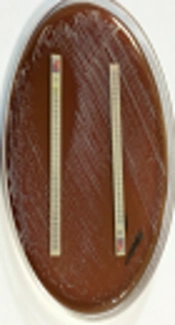
The agar dilution method recommended by CLSI (11) was used for antibiotic susceptibility testing. Fresh bacterial colonies were transferred to culture in BHI broth (Merck, Germany) until the liquid medium turbidity was equivalent to a 2 McFarland standard. Then, 10 µL of this medium was transferred onto Mueller Hinton agar (Merck, Germany) medium supplemented with defibrinated sheep blood (7%) and different concentrations of antibiotics, metronidazole (4 - 64 µg/mL, Sigma-Aldrich), ciprofloxacin (0.5 - 16 µg/mL, Fluka, USA), and clarithromycin (0.25 - 16 µg/mL, Sigma-Aldrich). The threshold levels for the determination of sensitivity or resistance status were derived from EUCAST (12) guidelines with the borderline levels of > 8 µg/mL for metronidazole, > 1 µg/mL for ciprofloxacin, and > 0.5 µg/mL for clarithromycin. The inoculated plates were incubated in a microaerophilic atmosphere for 48 - 72 h. Minimum inhibitory concentration (MIC) values at which 50% and 90% of the tested strains were inhibited were reported as MIC50 and MIC90, respectively. Strain RIGLD-OC4 was used as a control strain.
3.4. Statistical Analysis
For the analysis of demographic data and the results of antibiotic susceptibility tests, SPSS22 software and GraphPad Prism 6 software were used. The chi-square test was used for variance analysis with a P value of less than 0.05 being significant.
4. Results
4.1. Bacterial Isolation Distribution and Demographic Data
Out of 170 biopsy samples from patients, 55 were found infected with H. pylori. All bacterial isolates were confirmed as H. pylori based on the tests performed. The age range of the infected patients was 30 - 75 years among whom, 86 were female (51%) and 84 were male (49%). Other demographic data are shown in Table 1. Around 42% of the patients were diagnosed with a peptic ulcer, 33% with duodenal ulcer, and 25% with a non-ulcer disease. Pathological observations indicated that 58% of the patients had chronic gastritis, 33% had severe active gastritis, and 9% were with intestinal metaplasia.
Table 1.
The Percentage Distribution of MICs in H. pylori Strains and Its Relationship with Clinical Findings and Demographic Data
| Variable | Resistance to Clarithromycina | P Value | MIC50 (µg/mL) | Resistance to Metronidazolea | P Value | MIC50 (µg/mL) | Resistance to Ciprofloxacina | P Value | MIC50 (µg/mL) |
|---|---|---|---|---|---|---|---|---|---|
| Age | 0.0004 | NS | 0.0001 | ||||||
| 30 - 45 (n = 25) | 5 (20) | 0.5 | 16 (64) | 32 | 7 (28) | 2 | |||
| 45 - 60 (n = 21) | 15 (71.42) | 1 | 17 (80.9) | 16 | 17 (80.95) | 2 | |||
| 60 - 75 (n = 9) | 7 (77.77) | 1 | 9 (100) | 32 | 1 (11.11) | 2 | |||
| Sex | NS | 0.5 | NS | ||||||
| Female (n = 28) | 14 (50) | 24 (85.71) | 4 | 14 (50) | NS | 0.5 | |||
| Male (n = 27) | 13 (48.14) | 18 (66.66) | 11 (40.7) | ||||||
| Smoking | NS | 0.0009 | NS | ||||||
| Yes (n = 35) | 18 (51.4) | 1 | 32 (91.42) | 32 | 19 (54.2) | 4 | |||
| No (n = 20) | 9 (45) | 1 | 10 (50) | 32 | 6 (30) | 2 | |||
| Pathological data | < 0.0001 | 1 | 0.01 | NS | 0.5 | ||||
| CG (n = 32) | 8 (25) | 20 (62.5) | 32 | 18 (56.2) | |||||
| SAG (n = 18) | 16 (88.88) | 17 (94.4) | 16 | 6 (33.3) | |||||
| IM (n = 5) | 3 (60) | 5 (100) | 8 | 1 (20) | |||||
| Endoscopic findings | < 0.001 | < 0.0001 | NS | ||||||
| PUD (n = 23) | 20 (87) | 0.5 | 23 (100) | 16 | 10 (43.4) | 2 | |||
| DU (n = 18) | 3 (17) | 2 | 17 (94.44) | 32 | 9 (50) | 8 | |||
| NUD (n = 14) | 4 (28.57) | 4 | 2 (14.28) | 16 | 6 (42.8) | 4 | |||
| Total resistance | 27 (49) | 42 (76.3) | 25 (45.4) |
Abbreviations: CG, chronic gastritis; DU, duodenal ulcer; IM, intestinal metaplasia; NS, not significant; NUD, non-ulcer disease; PUD, peptic ulcer disease; SAG, severe active gastritis.
a Values are expressed as No. (%).
4.2. Antimicrobial Susceptibility Results
The results of MIC for the tested antibiotics showed that 76.3% (42 out of 55) of the isolates were resistant to metronidazole, 49% (27 out of 55) were resistant to clarithromycin, and 45.4% of them were ciprofloxacin resistant (25 out of 55). The degree of resistance to clarithromycin and ciprofloxacin was statistically higher in patients with the age range of 60 - 75 and 45 - 60 years than in other patients. Out of the 55 H. pylori isolates, 10 isolates were simultaneously resistant to clarithromycin and metronidazole, three were resistant to both ciprofloxacin and metronidazole, and two were resistant to ciprofloxacin and clarithromycin.
4.3. Minimum Inhibitory Concentration (MIC) Levels
The isolated H. pylori strains showed the MIC values of 4 - 64 µg/mL for metronidazole. The MIC50 and MIC90 levels for metronidazole were 32 and ≥ 64 µg/mL, respectively. Concerning clarithromycin, the MIC was 0.25 - 16 µg/mL with the MIC50 and MIC90 levels being 0.5 and ≥ 16 µg/mL, respectively. The MIC levels for ciprofloxacin in these strains was 0.5 - 16 µg/mL and the MIC50 and MIC90 were 2 and ≥ 16 µg/mL, respectively.
4.4. Statistical Relationship Between Demographic Parameters and MIC Values
There was a direct relationship between resistance to clarithromycin and higher ages and acute pathologic ulcers. Additionally, the degree of metronidazole resistance was related to smoking and positive ulcer status (Table 1). Concerning resistance to ciprofloxacin, there seems to be no statistically significant correlation with demographic parameters. The only significant factor was the middle age group (45 - 60-years-old), in which ciprofloxacin-resistant strains were more prevalent. Furthermore, the MIC values for clarithromycin were higher in the bacteria recovered from higher age groups (≥ 60-years-old). The MIC ranges of ciprofloxacin and clarithromycin were almost twice in the strains recovered from females and smokers compared to those isolated from men and non-smokers (Table 1).
5. Discussion
The antimicrobial resistance of H. pylori strains found in different geographical regions is the direct reflection of their genetic background and the antibiotic therapy commonly used in that region. In this study, the relative abundance of H. pylori strains resistant to metronidazole and clarithromycin was significantly higher in those who had active ulcers than in those who did not have ulcers. Wolle et al. reported a similar observation concerning metronidazole-resistant strains (13). In contrast, investigators in China and Taiwan reported almost opposite results (14, 15). The relative usage of metronidazole for parasitic and anaerobic infections may be the reason for the discrepancies. The higher resistance levels toward clarithromycin in the older population can be indicative of earlier treatment failures in chronic infections with subsequent appearance of highly resistant phenotypes. This theory was experimentally proven by Olokoba et al. (16). The extent of metronidazole resistance was detected to be 76% in the current study that was associated with more severe clinical complications; however, in other recent investigations in Iran, this rate was reported from 33% to 78.6% (9). However, in a previous study, no statistically meaningful relationship was found between metronidazole resistance and clinical findings (17). This rate was claimed to be 80% to 100% in Africa and 50% to 95% in Asia (18). The prevalence of H. pylori resistance to metronidazole ranges from 20% to 40% in Europe and the USA, with one exception in Northern Italy (19). Additionally, previous studies found no meaningful correlation between metronidazole resistance and patient's sex and age, which was similar to our results. Saracino et al. reported almost similar observations in Italy (20). However, in a single study from India, higher metronidazole resistance rates were reported in women in comparison with male patients (21). The metronidazole MIC in our study was in the range of 4 µg to 64 µg, which was higher than that detected in a European survey performed by Megraud et al. with MIC of 0.05 µg to 32 µg (22), but lower than that reported by An et al. in Korea with 0.08 µg to 512 µg (23). The rate of clarithromycin-resistant strains in this study was found to be 49.1% while other recent investigators in Iran have reported the average range of 22.4% (9). Studies from the USA, Asia, and Europe reported clarithromycin resistance in 29.3%, 18.9%, and 11.1% of the strains, respectively (18). In this study, there was a meaningful correlation between clarithromycin resistance rate and the existence of active ulcers. This correlation was not confirmed in a similar study by Khademi et al. (24). The clarithromycin MICs for the strains isolated in Iran were in the range of 0.016 µg to 256 µg (25). These values are apparently lower than those reported in other countries. Megraud et al. in Europe reported the MICs in the range of 0.05 µg to 128 µg (22). However, the rates in Asian countries were reported to be 0.03 µg to 256 µg (26). In this study, we did not detect any correlation between clarithromycin resistance and patient sex; however, there was a correlation with age. A similar correlation was reported by Ji et al. in China (27). Lower clarithromycin resistance rates in females and peptic ulcer patients compared to males and those who had non-ulcer disease were also reported by De Francesco et al. in Italy (18). The higher prevalence of clarithromycin-resistant strains among those with acute ulcer and metaplasia in our study points to the clinical significance of these strains. Such correlation was not detected in a study by Bai et al. in China (28). Regarding resistance towards ciprofloxacin, the rate observed in this study was 45%; however, other studies from Iran reported it in the range of 2.4% to 65% (9). The resistance rate in our study was much higher than those reported from Europe (7% - 33.9%) and lower than those from Asia (2.6% - 57%) (29). Even though the rates of ciprofloxacin resistance among patients with gastritis and duodenal ulcers were 24.1% and 20%, respectively, there was no meaningful correlation between resistance rates and clinical parameters (17). Additionally, just like the present study, Llanes et al. in Cuba and Shokrzadeh et al. in Iran found no correlation between ciprofloxacin resistance and patients’ gender (30, 31). Lower rates of ciprofloxacin resistance among 60 - 75-year-old patients might be due to the lower rate of ciprofloxacin consumption among these people compared to younger patients. The correlation between patients’ age and antibiotic resistance rate has previously been shown for metronidazole by Boyanova et al. (32). They proposed that co-infection with urinary tract infections or respiratory diseases can be considered a risk factor for colonization with ciprofloxacin-resistant strains of H. pylori.
5.1. Conclusions
In summary, the results of the investigation indicated a high degree of resistance among Iranian H. pylori strains towards metronidazole, ciprofloxacin, and clarithromycin. The earlier administration of second-line antibiotic therapy for H. pylori -infected patients may help reduce therapy failure and subsequent affliction with a more serious infection.