Full Text
Full text is available in PDF
Archives of Clinical Infectious Diseases
Infectious Diseases and Tropical Medicine Research Center, SBUMS
Authors
Staphylococcus aureus is a virulent pathogen that is currently the most common cause of infection in hospitalized patients. These days, increment in antimicrobial resistance coupled with increasing prevalence of the agent as a nosocomial infection makes the situation even more complex. Patients on hemodialysis are at increased risk due to their immunocompromised state. The present study was designed to determine the prevalence of Staphylococcus aureus nasal carriage in a group of Iranian patients on hemodialysis.
For this descriptive study, sterile-cotton-tripped swabs were rotated into anterior nares of 96 patients on hemodialysis, and then cultured on blood-agar medium. Having grown the colony, gram stain, catalase, manitol, DNAase and coagulase tests were all performed and the pattern of antibacterial sensitivity was determined.
Of 96 patients on hemodialysis, 44 (45.8%) were nasal carrier of S. aureus. All isolated S. aureus were resistant to methicillin (MRSA), while 95% were resistant to cloxacillin, 6.81% to clindamycin, 6.81% to ciprofloxacin and 4.5% to rifampin; however, all microorganisms were sensitive to vancomycin.
Patients on hemodialysis are at increased risk of S. aureus contamination, thus, screening these susceptible patients should be served as a health priority. Meanwhile, antibiogram should be ordered for all cases to optimize treatment options.
© 2006, Author(s). This open-access article is available under the Creative Commons Attribution 4.0 (CC BY 4.0) International License (https://creativecommons.org/licenses/by/4.0/), which allows for unrestricted use, distribution, and reproduction in any medium, provided that the original work is properly cited.

Hoseini SM, Jormand H, Ayubi E, Ghadimipour H, Mohagheghi V. Prevalence and Antibiotic Resistance of Nasal Staphylococcus aureus in Hemodialysis Patients and Its Association with Catheter-Related Infections: A Retrospective Cohort Study. Nephro-Urol Mon. 2026;18(1):e166017. doi: https://doi.org/10.5812/numonthly-166017
Mohajeri P, Izadi B, Rezaei M, Falahi B, Moradi Z, et al. Study of nasal carriage Methicillin resistant Staphylococcus aureus in hemodialysis patients in Kermanshah. J Kermanshah Univ Med Sci. 2012;15(6):e78902. doi:
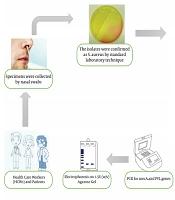
Amirizadeh M, Rahimi A, Ansari M, AtashAbParvar A, Hamadiyan H, et al. Frequency of Nasal Carriage of Staphylococcus aureus Among Healthcare Workers (HCWs) and Patients in Bandar Abbas, Southern Iran. Gene Cell Tissue. 2021;8(2):e113442. doi: https://doi.org/10.5812/gct.113442
Fard-Mousavi N, Mosayebi G, Amouzandeh-Nobaveh A, Japouni-Nejad A, Ghaznavi-Rad E. The Dynamic of Staphylococcus aureus Nasal Carriage in Central Iran. Jundishapur J Microbiol. 2015;8(7):e20760. doi: https://doi.org/10.5812/jjm.20760v2
Mohajeri P, Izadi B, Rezaei M, Farahani A. Frequency Distribution of Hospital-Acquired MRSA Nasal Carriage Among Hospitalized Patients in West of Iran. Jundishapur J Microbiol. 2013;6(6):e9076. doi: https://doi.org/10.5812/jjm.9076
More by these authors
Last Update: 3 weeks ago
Last Update: 3 weeks ago
Last Update: 3 weeks ago
Last Update: 5 hours ago
Last Update: 7 hours ago
Last Update: 4 days ago