Full Text
Full text is available in PDF
Archives of Clinical Infectious Diseases
Infectious Diseases and Tropical Medicine Research Center, SBUMS
Authors
The nature of changes in the lipid profile caused by an acute infection is controversial.
In this study we compared concentrations of plasma lipids in 70 septic and non-septic patients in ICU and studied the prognostic impact of cholesterol, LDL-C, HDL-C and triglyceride.
From March 2009 to February 2010, all patients consecutively admitted to the Intensive Care Units of Rasoul Akram University Hospital, Tehran, Iran, were studied. Each person was examined for signs and symptoms of infection during hospital stay. Patients were classified as suffering from sepsis or not at the first 24 hours of admission. Descriptive results of continuous variables were expressed as mean (SD). The associations between factors were analyzed by t-test and between factors and prognosis by .2 test when appropriate.
The study population included 28 males and 42 females with mean ( standard deviation) age of years 73.6 15.7 that 29 of them were in sepsis group and 41 of them in non-sepsis group. There wasnt any relationship between sex and mortality (p= 0.34), although by increasing age mortality leveled out (r=-0.58, p= 0.04).The concentrations of total cholesterol (89.3 33.6 vs 100.7 25.3 mg/dl), HDL (20 5.6 vs 30.2 8.7 mg/dl), and LDL (61.5 18.7 vs 70.6 14.5 mg/dl) showed significantly lower values in septic group but no difference could be find in triglyceride level (177.7 28.7 vs 182.8 45.9 mg/dl). In septic group the initial and second levels of cholesterol were considerably higher in patients who died than those who survived (101.6 37.5 versus 69.4 8.3 and 103.2 23.4 versus 79.4 47 respectively, p=0.00).
In ICU setting, measurement of cholesterol values has been shown to improve risk prediction, and inclusion of lipid values in clinical risk assessment scores of critically ill patients has been advocated. Further understanding of the alterations in lipid metabolism may have therapeutic implications in treatment of sepsis.
© 2011, Author(s). This open-access article is available under the Creative Commons Attribution 4.0 (CC BY 4.0) International License (https://creativecommons.org/licenses/by/4.0/), which allows for unrestricted use, distribution, and reproduction in any medium, provided that the original work is properly cited.
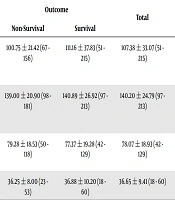
Delirrad M, Gharebaghi N, Mobarhan S, Nejadrahim R. Relationship Between Lipid Profile and Sepsis Outcome in Intensive Care Unit. Arch Clin Infect Dis. 2020;15(2):e93533. doi: https://doi.org/10.5812/archcid.93533
Motafaker Azad M, Abbasi MA, Basharzad N, Fadaii A. Predictive Implications of Serum Lipid Metabolism over Time in Intensive Care Unit Admitted Patients. Int J Cardiovasc Pract. 2018;3(2):e130265. doi: https://doi.org/10.21859/ijcp-03205
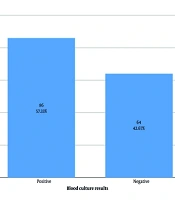
Asghari R, Novin Bahador T, Morshedzadeh T, Ghasempour M, Mahmoodpoor A, et al. Mortality Rate in Critically Ill Patients Diagnosed with Sepsis: Can Blood Culture Results Predict Mortality?. Arch Clin Infect Dis. 2026;21(1):e168271. doi: https://doi.org/10.5812/archcid-168271
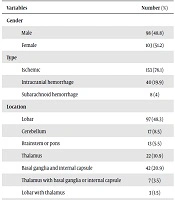
Vakilian A, Moghadam-Ahmadi A, Iranmanesh F, Shamsaddini M. A Study of Serum Lipid Profile in Ischemic and Hemorrhagic Stroke Patients. Zahedan J Res Med Sci. 2019;21(4):e87815. doi: https://doi.org/10.5812/zjrms.87815
Mortazavi Moghaddam S, Ghandhari K, Saadatjoo S. Comparison of serum lipid level in ischemic and hemorrhagic stroke. J Inflamm Dis. 2024;8(3):e155065. doi:
Last Update: 2 weeks ago
Last Update: 2 weeks ago
Last Update: 2 weeks ago
Last Update: 7 hours ago
Last Update: 1 day ago
Last Update: 4 days ago