1. Background
The professional cycling schedule (training and competition) limits the available time for physical fitness assessment (1). Consequently, tests should have short exercise duration, lower exercise-induced fatigue, provide relevant information, and resemble the real competition to motivate high performance of the athletes (2, 3). Thus, good tests should balance the vectors of feasibility, reliability, ecological validity (3), and sensitivity to detect the small and specific physiological adaptations to high-level training (2). Incremental test on cycle simulator is the most common protocol to evaluate cardiorespiratory fitness of endurance athletes (4). Although such test provides important aerobic endurance indices (e.g. maximal aerobic power output and aerobic and anaerobic thresholds), it has low ecological validity regarding the specific aerobic endurance performance of the sport. On the other hand, time trial has been indicated as the most reliable and ecologically valid protocol to assess this specific performance, to predict the competitive performance and to track the effects of training interventions on aerobic endurance of road cyclists (2, 5). This test consists of cycling a predetermined distance as fast as possible, in self-selected pace. Time trial resembles real competition rather than incremental test (6) due to the bioenergetics responses that are closer to the competitive events (5, 6) and the fact that athletes can freely manage the power output. Hence, cyclists tend to accept and engage more in time trial tests than in incremental ones (7). In addition, time trial performance variables (e.g. power output and time to complete the distance/work), ranging from three to 100 kilometers (6), have shown high correlations with aerobic endurance indices measured during incremental tests (8-10). Physiological parameters have often been recorded during time trials to evaluate acute responses and/or training effects (1, 10-13). Local and systemic training responses have been associated with increased aerobic endurance performance (14, 15). These training responses can be detected in physiological variables (e.g. heart rate and electromyography activity) over the season (1, 14-17). However, the accuracy of these variables to detect real training responses remains unknown, at least when time trials are used to evaluate athletes. The 40-km time trial has been considered the most reliable test among time trials (9, 11, 12, 18, 19). However, the 40-km time trial lasts nearly one hour (11, 12), whereas the five-kilometer time trial (TT5km) lasts from 7 to 12 minutes. The TT5km maintains the competition characteristics, such as prologue and short time trials (7, 20, 21), and its duration corresponds to the group of aerobic endurance tests (14, 21). This time trial has been used to assess aerobic endurance performance, to predict maximal lactate steady state intensity and 40-km time trial performance (5, 8, 18, 22-25). Then, the TT5km may be a better alternative to evaluate endurance fitness compared with the longer ones. Furthermore, the TT5km has been also used as performance test in guides for practical settings (26) and in research protocols (8, 16, 27), for instance, to evaluate the effect of arterial oxygen content on performance and peripheral quadriceps fatigue using electromyography (16). However, TT5km validation criteria have not been checked, in spite of its wide use. The TT5km absolute reliability was evaluated in two studies with reduced sample sizes (16, 24), whereas relative reliability has not been evaluated. Other studies have also correlated TT5km performance with aerobic endurance indices (18, 22, 23, 25); however, TT5km per se has received low importance in such studies, and the sensitivity of the test has not been evaluated. Only one of these studies has strictly aimed to validate the TT5km as the predictor of the maximal lactate steady state velocity (23). However, it has not evaluated important validation criteria (e.g. absolute and relative reliability, and sensitivity). Thus, the current literature has not consistently defined whether the TT5km can be used as a valid cycling test to evaluate aerobic endurance performance. Moreover, reference parameters to detect real significant changes in TT5km performance are important to the interpretation of test results (e.g. typical error and the smallest worthwhile change).
2. Objectives
The aim of this study was to perform a preliminary validation of the TT5km to 1) rank well-trained cyclists based on aerobic endurance fitness; 2) assess changes of the aerobic endurance performance.
3. Materials and Methods
3.1. Subjects
The volunteers were classified as well-trained cyclists according to previous literature criteria (21). Twenty well-trained male cyclists participated in this study (Table 1). All of them were involved in regional or national races. They were instructed to refrain from vigorous activities and ingestion of beverages containing alcohol or caffeine within 24 hours prior to each test. All tests were performed at the same time of day (± 1 hour). Volunteers were informed about the experimental procedures and gave written informed consent. The study was approved by the local ethics committee.
Table 1.
Anthropometric and Training Background of the Cyclists
| Values a | Minimal | Maximum | |
|---|---|---|---|
| Weight, kg | 69.8 ± 5.6 | 60.0 | 83.0 |
| Height, m | 1.75 ± 0.05 | 1.64 | 1.86 |
| Age, y | 31.3 ± 8.1 | 18.0 | 52.0 |
| Body mass index, kg/m2 | 22.7 ± 1.6 | 19.3 | 24.9 |
| Training volume, km/wk | 422.5 ± 156.8 | 200 | 800 |
| Training experience, y | 9.0 ± 7.4 | 1.0 | 30.0 |
a Values are presented as mean ± SD.
3.2. Experimental Procedure
This is a cross-validation and test-retest design study determining the preliminary validity of TT5km. It was carried out in three sessions, an incremental test and two time trials. Each test used physiological (electromyography and heart rate) and performance variables (absolute and relative power output, time to complete and average speed) to determine the validation criteria: absolute and relative reliability; cross-validation in relation to incremental test; internal responsiveness evaluating the smallest worthwhile change and typical error relationship.
3.3. Incremental Test
In the first session, volunteers performed an incremental test (starting at 100 W + 50 W.2 min-1) until exhaustion (voluntary or cadence < 70 rpm) on the cycle simulator (Velotron Dynafit, Racer Mate®, USA). Power output and heart rate were recorded during the entire test. Maximal aerobic power output and peak heart rate were determined, as well as these variables at the metabolic thresholds determined by heart rate variability method (28, 29). Peak heart rate was considered as the highest value in the last minute of incremental test, and it was used to normalize the heart rate data from subsequent tests in percentage. Maximal aerobic power output was considered as the highest power output maintained during the test, determined from the Equation 1 (10).
Where, MAP is the maximal aerobic power output (W), Wfinal is the power output of the last completed stage, t is the duration of the uncompleted stage at exhaustion (s). Heart rate was recorded in beats per minutes and RR intervals in milliseconds using a portable monitor (RS800CX POLAR®, Finland), validated for similar purposes to the present study (30). The heart rate variability method allowed detecting the first and second heart rate variability thresholds, corresponding to the ventilatory threshold and the respiratory compensation point (28), respectively. Other authors have named these points as aerobic and anaerobic thresholds (29).
3.4. Five-Kilometer Time Trial
In the 2nd and 3rd sessions, separated by at least two recovery days, each volunteer performed two TT5km on cycle simulator (TT5km1, TT5km2). Before testing, the volunteers had performed a freely chosen light warm-up (~100W during 10 minutes), becoming familiar with the electronic gear ratios. The setup of cycle simulator was reproduced in both TT5km sessions for each athlete. After warming-up, the participants performed a torque-velocity test to normalize the quadriceps muscle electromyography (31) (see details in the Electromyography Activity section). Five minutes after torque-velocity test, the participants performed a standardized warm-up (consisting of 3 sets of 5 minutes at 70, 80, and 90% of power output corresponding to the first heart rate variability threshold) (32). After two minutes of rest, the TT5km was initiated. Figure 1 shows the protocol overview.

Figure 1.
A) Entire protocol showing all sessions; B) Time trial 5 kilometers session (TT5km); HRVT1 = first and HRVT2 = second heart rate variability threshold; PO = power output; HR = heart rate; T-V = torque-velocity test; RMSMAX = maximal root mean square from T-V; rec. = recovery; 5KPO = average power output of TT5km; 5KTime = time to complete TT5km; 5KAVS = average speed of TT5km; QEMG = normalized electromyography activity of the quadriceps muscle; RPE = rating of perceived exertion.
3.5. Electromyographic Activity
The electromyographic activity of the Quadriceps muscle (Rectus Femoris, Vastus Lateralis, and Vastus Medialis) from the right leg was recorded during the torque-velocity test and TT5km. The electrode sites were identified according to the SENIAM recommendations (34), marked with indelible ink and prepared by the same experimenter in both sessions. Before placement of the electrodes (SOLIDOR®, Medico Electrodes International, India; interelectrode distance = 20 mm), the skin was shaved, lightly rubbed with abrasive gel and cleaned with alcohol swabs. Electromyography signals were recorded using a portable telemetry device (TeleMyo DTS; Noraxon®, AZ, USA; sampling rate at 2000 Hz, common-mode rejection rate at 95 dB, signal passing limit was ± 5 V). The raw electromyography signals were smoothed using a fourth-order band-pass Butterworth digital filter, with a frequency range set between 20 and 500 Hz, using a customized code (MathWorks®, South Natick, MA, USA). The reference electrode was placed over the anterior iliac crest of the right side. The torque-velocity test performed before the TT5km consisted of two “all-out” sprints (8 s; workload at 7.5% body mass; rest interval of 5 minutes between the sprints). The average root mean square for each muscle was calculated every second from the 2nd till the end of torque-velocity test. The highest value between two torque-velocity tests was used to normalize the signals obtained during the TT5km (31). After the normalization, the quadriceps electromyography activity values were calculated as the average of root mean square normalized from three quadriceps muscles.
3.6. Statistical Analyses
The data are presented as mean and standard deviation (s). The Student’s paired t-test was used to compare absolute and relative 5KPO, 5KAVS, 5KTime, average heart rate and quadriceps electromyography between TT5km1 and TT5km2. Two-factor analysis of variance (ANOVA) for repeated measures (TT5km session vs. partial distances) was used to analyse the reliability of pacing strategy between both TT5km (interactive effect). When necessary, the Greenhouse-Geisser adjustment was used. The absolute reliability (agreement) was evaluated by the typical error obtained the Equation 2 (35):
where, TE is the typical error, SDdiff is the standard deviation of the score differences from each volunteer between TT5km1 and TT5km2. Typical error was also reported as a coefficient of variation in percentage (6). Relative reliability (consistency) was evaluated using the two-way mixed model intraclass correlation coefficient (3,1) for consistency (36) and its respective confidence interval (95% CI). Pearson’s product-moment correlation coefficient and coefficient of determination were used to verify the concurrent validation between the aerobic endurance indices obtained from incremental test (maximal aerobic power output, and power output at the first and the second heart rate variability thresholds) and TT5km variables. When any TT5km variable had adequate consistency (intraclass coefficient ≥ 0.90), the correlation was run. To evaluate the test sensitivity (2, 37) (i.e. internal responsiveness (36), the smallest worthwhile change was calculated to detect the minimal score to consider an important difference in TT5km performance. It was determined as 20% of between-subjects standard deviation (Cohen’s effect size) (37), and calculated to TT5km variables that presented strong correlations (≥ 0.70) with the incremental test indices. Although the smallest worthwhile change obtained from the Cohen’s effect size is suggested for team sports, it can be used for individual sports when real results of competitions are not available (36, 37). The sensitivity index was determined from the ratio of the smallest worthwhile change and typical error (2). Since a test is considered sensitive when the smallest worthwhile change is greater than typical error (37), the sensitivity index greater than one allows considering the test as sensitive. The significance level adopted was 5% (P < 0.05). All data was analysed using the software Microsoft Excel 2010 (Microsoft Corporation, WA, USA) and the statistical software SPSS 17.0 (SPSS, Inc.®, Chicago, IL, USA).
4. Results
The power output and heart rate corresponding to the maximal aerobic power output, the first and the second heart rate variability thresholds are presented in Table 2.
| Indices | Power Output | Heart Rate | ||
|---|---|---|---|---|
| Absolute, W | Relative, W.kg-1 | Absolute, bpm | Relative, %HRpeak | |
| MAP | 360.5 ± 49.5 | 5.2 ± 0.7 | 193 ± 8 | - |
| HRVT1 | 221.8 ± 49.6 | 3.2 ± 0.8 | 156 ± 8 | 81.8 ± 4.2 |
| HRVT2 | 294.8 ± 46.5 | 4.2 ± 0.7 | 172 ± 8 | 89.9 ± 3.7 |
a Abbreviations: %HRpeak, relative to heart rate peak; HRVT1, first heart rate variability thresholds; HRVT2 = second heart rate variability thresholds; and MAP, maximal aerobic power output.
b All the indices are significantly different among them within specific variable, P < 0.05.
The 5KTime ranged from 425 to 576s (7 min: 05 s-9 min: 36 s). The TT5km1 and TT5km2 were significantly correlated regarding to the performance variables (Table 3). However, the absolute (t = 3.406; P < 0.05) and relative (t = 3.243; P < 0.05) 5KPO of the TT5km2 were greater than the ones of TT5km1. Consequently, the 5KTime (t = 3.895; P < 0.05) and 5KAVS (t = 3.901; P < 0.05) were significantly different between the TT5km tests. Average heart rate of the TT5km2 was significantly lower than at TT5km1 (t = 6.980; P < 0.05). The average quadriceps electromyography did not differ between tests (n = 17; t = 0.130; P = 0.898).
| TT5km1 | TT5km2 | r c | P Value | |
|---|---|---|---|---|
| 5KPO, W | 282.7 ± 53.5 | 291.7 ± 52.4 d | 0.976 | < 0.001 |
| %MAP | 78.2 ± 8.5 | 80.7 ± 7.0 | - | - |
| 5KPO rel., W.kg-1 | 4.1 ± 0.8 | 4.2 ± 0.8 d | 0.970 | < 0.001 |
| 5KTime, s | 485.6 ± 40.5 | 477.6 ± 36.1 e | 0.980 | < 0.001 |
| 5KAVS, km.h-1 | 37.3 ± 3.0 | 37.9 ± 2.7 e | 0.978 | < 0.001 |
| HR, %HRpeak | 93.3 ± 2.5 | 86.8 ± 3.8 e | 0.223 | > 0.05 |
| QEMG, %RMSMAX | 39.2 ± 8.7 | 38.9 ± 9.5 | 0.505 | < 0.05 |
a Abbreviations: %MAP, percentage of the maximal aerobic power output; 5KAVS, average speed of TT5km; 5KPO, average power output of TT5km; 5KPO rel., ratio between 5KPO and body mass; 5KTime, time to complete TT5km; HR, heart rate; QEMG, normalized Quadriceps electromyography activity; TT5km1, first time trial 5 kilometers ; and TT5km2, second time trial 5 kilometers.
b n = 17.
c Correlation coefficient.
d Significant difference in relation TT5km1, P < 0.05.
e Significant difference in relation TT5km1, P < 0.01.
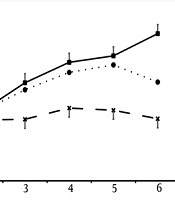
Despite the differences in the average of performance variables, the pacing strategy did not differ significantly between TT5km tests to power output (F (3.03, 57.62) = 1.298; P = 0.284) and average speed (F (2.14, 40.71) = 0.298; P = 0.759). Heart rate (F (2.14, 40.71) = 0.298; P = 0.759) and RPE (F (4, 76) = 0.265; P = 0.900) serial responses to the pacing strategy were not significantly different between TT5km tests (interaction effect, Figure 2 and 3). Quadriceps electromyography serial responses showed significant difference between TT5km1 and TT5km2 (n = 17; F(2.07,33.13) = 6.485; P < 0.05) (interaction effect; Figure 2).

Figure 2.
Serial responses to pacing strategy of (A) heart rate, (B) power output, (C) quadriceps electromyography activity and (D) average speed every 500 meters during both TT5km. *, Significant difference of serial responses to pacing strategies between TT5km tests (interaction effect; P < 0.05). † Significant difference between TT5km tests (main effect; P < 0.05).

Figure 3.
The repeated-measures ANOVA did not show significant difference between TT5km sessions (interaction effect).
The absolute and relative reliability data are presented in Table 4. All TT5km performance variables presented high reliability due to the low coefficient of variation (power output < 3.4%; time to complete < 1.9%) and the high intraclass coefficient correlation (> 0.90), being adequate values for time trials (2). The average of heart rate presented good absolute reliability and poor relative reliability. The absolute and relative reliability of quadriceps electromyography average were low.
Table 4.
Reliability of the Performance and Physiological Variables Obtained From TT5km Tests a
| Physiological Variables | Absolute Reliability | Relative Reliability | |||
|---|---|---|---|---|---|
| TE | CV, % | ICC | 95%CI | P Value | |
| 5KPO, W | 8.2 | 2.9 | 0.976 | 0.940 - 0.990 | < 0.001 |
| 5KPO rel., W.kg-1 | 0.1 | 2.9 | 0.970 | 0.925 - 0.988 | < 0.001 |
| 5KTime, s | 6.3 | 1.3 | 0.973 | 0.934 - 0.989 | < 0.001 |
| 5KAVS, km.h-1 | 0.5 | 1.2 | 0.975 | 0.937 - 0.990 | < 0.001 |
| HR, %HRpeak | 2.9 | 3.2 | 0.206 | -0.249 - 0.587 | > 0.05 |
| QEMG, %RMSMAX | 6.4 | 16.4 | 0.503 | 0.046 - 0.786 | < 0.05 |
a Abbreviations: 5KPO, average power output of TT5km; 5KPO rel., ratio between 5KPO and body mass; 5KTime, time to complete TT5km; 5KAVS, average speed of TT5km; 95%CI, confidence interval of the ICC; CV, coefficient of variation; HR, average heart rate of TT5km; ICC, intraclass coefficient correlation; QEMG, average of normalized Quadriceps electromyography activity; and TE, typical error.
All TT5km performance variables presented strong correlations and high coefficient of determination with the aerobic endurance indices obtained from incremental test (Table 5). The correlations increased from the first to the second TT5km. Higher correlations (≥ 0.85) occurred with power output at the second heart rate variability threshold (Table 5).
Table 5.
Relationship Between Aerobic Endurance Indices Obtained From Incremental Test and TT5km Variables Obtained From Both Time Trials a
| Variables | TT5km1 | TT5km2 | ||||
|---|---|---|---|---|---|---|
| r | R2 | P Value | r | R2 | P Value | |
| 5KPO, W | ||||||
| 5KPO vs. MAP | 0.85 | 0.72 | < 0.001 | 0.90 | 0.81 | < 0.001 |
| 5KPO vs. PO at HRVT1 | 0.77 | 0.59 | < 0.001 | 0.78 | 0.60 | < 0.001 |
| 5KPO vs. PO at HRVT2 | 0.86 | 0.74 | < 0.001 | 0.91 | 0.82 | < 0.001 |
| Relative 5KPO, Watts.kg-1 | ||||||
| 5KPO rel. vs. MAP, W | 0.84 | 0.71 | < 0.001 | 0.90 | 0.81 | < 0.001 |
| 5KPO rel. vs. PO at HRVT1, W | 0.77 | 0.59 | < 0.001 | 0.77 | 0.59 | < 0.001 |
| 5KPO rel. vs. PO at HRVT2, W | 0.86 | 0.74 | < 0.001 | 0.91 | 0.82 | < 0.001 |
| 5KTime, s | ||||||
| 5KTime vs. MAP, W | -0.81 | 0.66 | < 0.001 | -0.87 | 0.75 | < 0.001 |
| 5KTime vs. PO at HRVT1, W | -0.70 | 0.48 | < 0.001 | -0.72 | 0.52 | < 0.001 |
| 5KTime vs. PO at HRVT2, W | -0.80 | 0.64 | < 0.001 | -0.84 | 0.71 | < 0.001 |
| 5KAVS, km.h-1 | ||||||
| 5KAVS vs. MAP, W | 0.83 | 0.68 | < 0.001 | 0.88 | 0.78 | < 0.001 |
| 5KAVS vs. PO at HRVT1, W | 0.72 | 0.52 | < 0.001 | 0.75 | 0.56 | < 0.001 |
| 5KAVS vs. PO at HRVT2, W | 0.83 | 0.69 | < 0.001 | 0.87 | 0.76 | < 0.001 |
a Abbreviations: 5KPO, average power output of the entire test; 5KPO rel., ratio between 5KPO and body mass; 5KTime, time to complete TT5km; 5KAVS, average speed of TT5km; HRVT1, first heart rate variability threshold; HRVT2, second heart rate variability threshold; MAP, maximal aerobic power output; PO, power output; r, Pearson’s coefficient correlation; R2, coefficient of determination; TT5km1, first Time Trial 5 kilometers; and TT5km2, second Time Trial 5 kilometers.
The TT5km performance variables presented sensitivity to detect important changes in performance (sensitivity index > 1). Consequently, typical error was smaller than the smallest worthwhile change in every TT5km performance variable (Table 6).
Table 6.
Sensitivity of the Performance Variables Monitored During the TT5km a
| TE | 90%CI | SWC | 90%CI | SI (SWC / TE) | |
|---|---|---|---|---|---|
| 5KPO, W | 8.2 | ± 13.5 | 10.7 | ± 17.7 | 1.3 |
| 5KPO rel., W.kg-1 | 0.1 | ± 0.2 | 0.2 | ± 0.3 | 1.6 |
| 5KTime, s | 6.3 | ± 10.4 | 8.1 | ± 13.4 | 1.3 |
| 5KAVS, km.h-1 | 0.5 | ± 0.8 | 0.6 | ± 1.0 | 1.2 |
a Abbreviations: 5KPO, average power output of the entire test; 5KPO rel., ratio between 5KPO and body mass; 5KTime, time to complete TT5km; 5KAVS, average speed of the entire test; 90%CI, confidence interval; CV, coefficient of variation; SI, sensitivity index; SWC, the smallest worthwhile change; and TE, typical error.
5. Discussion
The aim of this study was to perform a preliminary validation of the TT5km to 1) assess changes of the aerobic endurance performance and 2) rank well-trained cyclists based on aerobic endurance fitness. The TT5km can rank the aerobic endurance fitness among well-trained cyclists due to the adequate absolute and relative reliability, as well as high correlation with aerobic endurance indices obtained from the incremental test. The TT5km can also differentiate the changes in aerobic endurance performance once the performance variables presented the smallest worthwhile change higher than typical error. When the performance variables were compared (5KPO, 5KAVS, 5KTime), we found higher performance in the TT5km2. Although the sample comprised experienced athletes in road cycling, habituated to perform time trials, such differences may be related to the absence of a specific familiarization session. However, the pacing strategy between TT5km tests (interaction effect) was not significantly different from all variables, excepting for quadriceps electromyographic activity. Although the athletes predominantly increased their performance in the TT5km2, they maintained their pacing strategy and rank position in the classification test. This information is supported by strong correlations between performance variables from the TT5km1 and TT5km2, and consistency of the relative reliability data. Thus, the consistency with the TT5km2 showed that TT5km1 could differentiate performance of the cyclists. Further, absolute reliability of performance indices was acceptable. These arguments emerge a critical problem around this point: familiarization sessions vs. available time for the assessments. Even the learning effect being known (2, 6, 11), multiple familiarization sessions are unfeasible in the practical environment. Thus, a test that has already presented reliability and high correlation between the two first sessions is a desirable option for practical purposes. Moreover, the TT5km presents these characteristics even when it is compared to 40-km time trial data (11, 12). However, despite the absolute reliability of the TT5km performance variables was compatible with other time trials (6, 11, 12), our results suggest that one familiarization session may be required, mainly when using the TT5km for the first time. More sessions are not required in theory because reliability studies using time trials have shown that performance between the second and subsequent sessions are reproduced adequately (6). The TT5km has the coaches’ desirable characteristics (e.g. short duration, lower level of fatigue), even when the familiarization session is required. Moreover, for the subsequent re-evaluations, this familiarization session may not be required once time trials present good reliability even when repeated after a long time (13). The reliability of the TT5km performance variables is equivalent to or better than longer time trials in the literature (6, 11, 13, 35). Nonetheless, this observation was not consistently reproduced in the physiological variables. Although the heart rate had presented good absolute reliability, as described in other studies (12, 13), it presented poor relative reliability. These results demonstrate the inability to rank the athletes’ responses using heart rate. We consider that the narrow range of intensities in which the TT5km is performed (± 4% of heart rate at anaerobic threshold) harms the consistency, where small variations can significantly change the position of a volunteer in the ranking. The non-significant correlation between heart rate average of the TT5km1 and the TT5km2 reinforces this argument. Therefore, it is not recommended to use heart rate to detect differences in aerobic endurance performance. Similar recommendation has to be followed to quadriceps electromyography due to its low absolute reliability, although some studies have been using such variables to evaluate neuromuscular function during research protocols (15, 16) and training season (1, 17). Thus, heart rate and quadriceps electromyography do not seem to be reliable parameters to evaluate changes in aerobic endurance performance. Physiological variables tend to show larger errors and they are not adequate to rank or predict changes in performance, at least when using time trials (19, 38). The correlation and the sensitivity index in the TT5km performance variables were evaluated due to their high reliability. The physiological and neuromuscular variables did not show good reliability, making no sense for their additional evaluations. Our data presented strong correlations and shared variance between the TT5km performance variables and the aerobic endurance indices obtained from incremental test. The data are comparable with the correlations between the same indices and 40-km time trial performance indices (9, 11). Additionally, these aerobic endurance indices are considered performance predictors in several endurance sports (1, 7, 9, 10, 22). It is worth mentioning that the stronger correlations were between the 5KPO (absolute and relative) and power output at the second heart rate variability threshold. This threshold is interpreted as the anaerobic threshold (29), and high indices elicited at this physiological marker (e.g. average speed or power output) are considered essential for a successful endurance performance (1, 7). Our performance data was better correlated with indices at the anaerobic threshold than 40-km time trial in a previous study (11). The majority of the inter-volunteers variation in 5KPO during the TT5km1 (74%) and the TT5km2 performances (82%) is explained by the power output at the second heart rate variability threshold. Besides strong correlations with power output at anaerobic threshold, the TT5km has also shown strong correlation and shared variance with 40-km time trial performance (18, 22), which is considered a reliable time trial to evaluate aerobic endurance performance in the laboratory and field (11, 18, 19). The 40-km time trial has also been frequently used to predict intensity at the maximal lactate steady state (11, 18, 19). The TT5km has predicted the maximal lactate steady state and the 40-km time trial intensity (23). Our present results demonstrated that the TT5km distinguishes the athletes regarding to the aerobic endurance level similarly to the 40-km time trial. Then, these results suggest that the TT5km is valid to assess aerobic endurance performance in cyclists and to rank athletes regarding to their aerobic endurance fitness as well as incremental and 40-km time trial tests do. Thus, if the TT5km is able to detect the changes induced by longitudinal interventions, it has more advantages than incremental test and 40 km-time trial, which are: higher capacity to assess the inherent technical ability of the modality than incremental test (3, 9); the physiological demand and sensation more similar to real race than incremental test (5, 6); the capacity to predict the intensity corresponding to the 40-km time trial and maximal lactate steady state more accurately than using incremental and constant load tests, performing a single session (18, 22, 23, 38); duration and fatigue level lesser than in the 40 km-time trial. Hence, TT5km sensitivity was also evaluated. The TT5km presented sensitivity index > 1 for all performance variables, showing its ability to detect longitudinal changes in the performance (internal responsiveness). The cross-sectional studies with experimental interventions corroborate with our sensitivity data. For instance, some studies have used the TT5km in their research protocols to evaluate performance (8, 16, 27). These studies have used interventions aiming to reduce the capacity of determinant systems for the aerobic endurance performance. Performing the TT5km, the performance (i.e. 5KPO and 5KTime) was greater and lower than our smallest worthwhile change values for effective (8, 16) and non-effective reduction of capacity in the systems (27), respectively. This information means that the smallest worthwhile change from our data could detect the effective and non-effective changes in aerobic endurance performance. Further, the estimated confidence interval for detecting the differences in performance presented in a previous study was similar to the smallest worthwhile change for 5KPO and 5KTime of our study (24). Then, these results suggest adequate sensitivity and validity of the TT5km to differentiate aerobic endurance performance in cyclists. However, a longitudinal study should verify whether the magnitude of changes in the TT5km performance caused by long-term training is higher than the smallest worthwhile change values, and closely related to aerobic endurance indices change (i.e. external responsiveness) (36). Moreover, although our sample comprised well-trained cyclists who had experience in time trials, the TT5km performance varied considerably between the best and worst athlete (e.g. almost equal to 2.5 minute). This range may have overestimated our relative reliability index, and future studies are needed to verify the relative reliability using elite cyclists. It is also, worth mentioning that the feedback of distance could have influenced the pacing strategy and learning effect. Although we cannot evaluate such influence in our study, feedback has not changed performance in short time trials similar to our protocol (39). From the results of this study, coaches can use the TT5km to differentiate performance and to rank athletes through simple and affordable parameters, without endangering subsequent training sessions. For instance, using the confidence interval of the smallest worthwhile changes from this study, an increment of 17.7 W in average power output allows detecting improvements in aerobic endurance performance. On the other hand, a similar amount of decrement after high training loads can suggest a functional overreaching. Similar rationale can be followed in relative power output (± 0.3 W.kg-1), time to complete the test (± 13.4 s), or average speed variables (± 1.0 km.h-1). All of them are parameters provided by most of the cycle simulators and devices used to control training sessions. The TT5km is a valid test to rank the aerobic endurance fitness of well-trained cyclists and to differentiate changes on aerobic endurance performance. However, a familiarization session is recommended for the first time the test will be performed. A future study should investigate the longitudinal validity of the TT5km.