Full Text
Full text is available in PDF
Asian Journal of Sports Medicine
Sports Medicine Research Center, TUMS
Authors
The aim of this study was to investigate eccentric torque production capacity of the ankle, knee and hip muscle groups in patients with unilateral chronic ankle instability (CAI) as compared to healthy matched controls.
In this case-control study, 40 participants (20 with CAI and 20 controls) were recruited based on convenient non-probability sampling. The average peak torque to body weight (APT/BW) ratio of reciprocal eccentric contraction of ankle dorsi flexor/plantar flexor, ankle evertor/invertor, knee flexor/extensor, hip flexor/extensor and hip abductor/adductor was determined using an isokinetic dynamometer. All subjects participated in two separate sessions with a rest interval of 48 to 72 hours. In each testing session, the torque production capacity of the ankle, knee, and hip muscle groups of only one lower limb was measured. At first, 3 repetitions of maximal eccentric-eccentric contraction were performed for the reciprocal muscles of a joint in a given movement direction. Then, the same procedure of practice and testing trials was repeated for the next randomly-ordered muscle group or joint of the same limb.
There was no significant interaction of group (CAI and healthy controls) by limb (injured and non-injured) for any muscle groups. Main effect of limb was not significant. Main effect of group was only significant for eccentric torque production capacity of ankle dorsi flexor and hip flexor muscle groups. The APT/BW ratio of these muscles was significantly lower in the CAI group than the healthy controls (
CAI is associated with eccentric strength deficit of ankle dorsi flexor and hip flexor muscles as indicated by reduction in torque production capacity of these muscles compared to healthy controls. This strength deficit appeared to exist in both the injured and non-injured limbs of the patients.
© 2013, Author(s). This open-access article is available under the Creative Commons Attribution 4.0 (CC BY 4.0) International License (https://creativecommons.org/licenses/by/4.0/), which allows for unrestricted use, distribution, and reproduction in any medium, provided that the original work is properly cited.
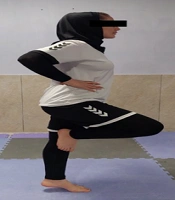
Hosseinimehr SH, Mazhari Z. The Endurance Ratio of Core Stability Global Muscles and Postural Control in Female Athletes with and Without Chronic Ankle Instability. J Motor Control Learn. 2024;6(3):e149985. doi: https://doi.org/10.5812/jmcl-149985
Yalfani A, Gandomi F, Kohboomi M. The Effect of G-Max and G-Med Muscles Fatigue on Functional Performance and Balance in Athletes with and without Chronic Ankle Instability. Asian J Sports Med. 2017;8(3):e55444. doi: https://doi.org/10.5812/asjsm.55444
Sharma N. Functional Performance Testing in Athletes with Functional Ankle Instability. Asian J Sports Med. 2011;2(4):34741. doi: https://doi.org/10.5812/asjsm.34741
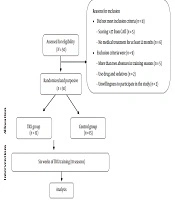
Khorjahani A, Mirmoezzi M, Bagheri M, Kalantariyan M. Effects of TRX Suspension Training on Proprioception and Muscle Strength in Female Athletes with Functional Ankle Instability. Asian J Sports Med. 2021;12(2):e107042. doi: https://doi.org/10.5812/asjsm.107042
Azaran T, Esfandiarpour F, Salehi R, Goharpey S. The Correlation Between Self-Reported Instability, Balance and Health Status in Individuals with Chronic Functional Ankle Instability. Jentashapir J Cell Mol Biol. 2016;7(6):e39249. doi: https://doi.org/10.17795/jjhr-39249
More by these authors
Last Update: 1 week ago
Last Update: 1 week ago
Last Update: 1 week ago
Last Update: 4 hours ago
Last Update: 12 hours ago
Last Update: 5 days ago