Full Text
Full text is available in PDF
Asian Journal of Sports Medicine
Sports Medicine Research Center, TUMS
Authors
Trainers and physical fitness coaches need a useful tool to assess training loads to avoid overtraining. However, perceived scales or questionnaires were required. Therefore, the purpose of this study was to assess whether a short 8-item questionnaire of fatigue could be a useful tool for monitoring changes in perceived training load and strain among elite rugby Sevens (7s) players during preparation for a major competition.
Sixteen elite rugby 7s players completed an 8-week training program composed of 6-week intense training (IT) and 2-week reduced training (RT). They were tested before (T0), after the IT (T1) and after the RT (T2). The quantification of the perceived training load and strain were performed by the session-RPE (rating of perceived exertion) method and concomitantly the 8-item questionnaire of fatigue was administered.
Training load (TL) and strain (TS) and total score of fatigue (TSF from the 8-item questionnaire) increased during IT and decreased during RT. Simultaneously, physical performances decreased during IT and were improved after LT. The changes in TL, TS and TSF correlated significantly over the training period (r=0.63-0.83).
These findings suggest that the short questionnaire of fatigue could be a practical and a sensitive tool for monitoring changes in training load and strain in team-sport athletes. Accordingly, the simultaneous use of the short questionnaire of fatigue along with the session-RPE method for perceived changes in training load and strain during training could provide additional information on the athletes status, allowing coaches to prevent eventual states of overreaching or overtraining.
© 2012, Author(s). This open-access article is available under the Creative Commons Attribution 4.0 (CC BY 4.0) International License (https://creativecommons.org/licenses/by/4.0/), which allows for unrestricted use, distribution, and reproduction in any medium, provided that the original work is properly cited.
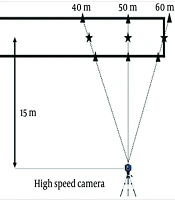
Tokutake G, Ueta K. Cross Sectional Study About Intra-Individual and Inter-Individual Variability of Subjective Effort in Submaximal Sprint Running in Collegiate Male Sprinters. Asian J Sports Med. 2024;15(3):e147182. doi: https://doi.org/10.5812/asjsm-147182
Djaoui L, Diaz-Cidoncha Garcia J, Hautier C, Dellal A. Kinetic Post-match Fatigue in Professional and Youth Soccer Players During the Competitive Period. Asian J Sports Med. 2016;7(1):e28267. doi: https://doi.org/10.5812/asjsm.28267
Zouhal H, LeMoal E, Wong DP, BenOunis O, Castagna C, et al. Physiological Responses of General vs. Specific Aerobic Endurance Exercises in Soccer. Asian J Sports Med. 2013;4(3):34285. doi: https://doi.org/10.5812/asjsm.34285
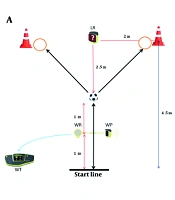
Bumrung N, Jansupom C, Rohmansyah NA, Khaothin T, Hiruntrakul A. Acute Effects of Combined High Intensity Interval Training and Step Aerobics Training on Agility in Male Futsal Athletes During the Pre-season. Middle East J Rehabil Health Stud. 2025;12(3):e158636. doi: https://doi.org/10.5812/mejrh-158636
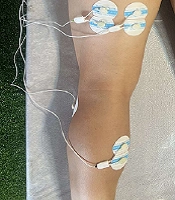
Firouzi A, Azghani MR, Rezaei M, Jahan A. Reliability of Voluntary Response Index Analysis Using Surface Electromyography in Professional Football Players. Middle East J Rehabil Health Stud. 2024;11(3):e146098. doi: https://doi.org/10.5812/mejrh-146098
Last Update: 2 weeks ago
Last Update: 2 weeks ago
Last Update: 2 weeks ago
Last Update: 6 days ago
Last Update: 6 hours ago
Last Update: 5 days ago