
Full Text
Full text is available in PDF
Official Publication of Health Promotion Research Center
Authors
Universities, like any other organization, are working in a variable and dynamic environment. In order to empower these organizations to deal with constant change, they should focus on organizational learning.
This research aimed to study the relationship between organizational learning and employees' empowerment among the headquarters staff of Shiraz University of Medical Sciences in 2013.
This was an applied, cross-sectional, and analytical-descriptive study. A sample of 100 headquarters staff of Shiraz University of Medical Sciences were selected using stratified sampling proportional to size, and simple random sampling methods. The required data were collected using two questionnaires. Collected data were analyzed by SPSS 18.0 and statistical tests including; ANOVA, independent-sample t-test as well as Pearsons correlation coefficient, and multiple linear regression (stepwise method). In all tests, P value < 0.05 was considered statistically significant.
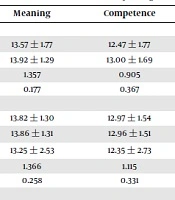
The results showed that the studied employees' empowerment and organizational learning were moderate. In addition, the results of multiple linear regression indicated that only participation (P < 0.001) and competence (P = 0.001) had a positive and significant association with organizational learning.
The studied university could promote employees' empowerment and organizational learning using strategies including job enrichment, providing opportunities for innovation and creativity for their employees, giving rewards to individuals and team learning.
© 2014, Author(s). This is an open-access article distributed under the terms of the Creative Commons Attribution 4.0 International License (CC BY 4.0) (https://creativecommons.org/licenses/by/4.0/) which permits unrestricted use, distribution, and reproduction in any medium, provided the original work is properly cited.
Mirzaei-Alavijeh M, Rajati F, Hatamzadeh N, Solaimanizadeh L, Jalilian F. The Psychological Empowerment of Faculty Members: Across-Sectional Study in Kermanshah University of Medical Sciences. J Health Rep Technol. 2019;5(2):e94545. doi: https://doi.org/10.5812/ijhls.94545
Ghasemzadeh A, Parsa S, Radmanesh M. Interactive Role of Organizational Learning and Informal Norms in Accountability and Job Performance in 2014. Educ Res Med Sci. 2015;4(2):e79166. doi:
Dadgar Z, Fallah V, Taheri F. Mediating role of emotional well-being in the effect of metacognitive learning and self-directed learning on the level of e-learning in the managers of universities. J Nurs Midwifery Sci. 2020;7(2):e140795. doi: https://doi.org/10.4103/jnms.jnms_56_19
Askari R, Rafiei S, Montazerolfaraj R, Fallahzadeh H, Keyghobadi N, et al. Role of managers’ communication skills and leadership style on organizational effectiveness: Path analysis. J Inflamm Dis. 2024;21(6):e156063. doi:
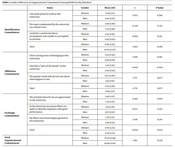
Mirzaei-Alavijeh M, Jalilian F. Organizational Commitment in Kermanshah University of Medical Sciences Faculty Members. Educ Res Med Sci. 2023;12(1):e138564. doi: https://doi.org/10.5812/erms-138564
Last Update: 1 week ago
Last Update: 1 week ago
Last Update: 1 week ago
Last Update: 4 hours ago
Last Update: 9 hours ago
Last Update: 5 days ago
