
1. Background
1.1. Internet and Social Media
The ever-increasing use of the internet and its penetration rate, alongside the emergence of digital innovations, has transformed human societies and lifestyles (1). The development of the internet, computers, and smartphones has led to substantial changes in audiences' and customers' expectations, preferences, and behaviors. Additionally, the emergence of advanced technologies such as artificial intelligence, blockchain, and virtual reality has automated systems, fostered integration, and ultimately brought about further transformations in human behavior (2).
Social media and their role in fostering communication have transformed various sectors, markets, and segments of societies, including the healthcare sector (3). Using diverse social media platforms such as Facebook, Twitter, Telegram, WhatsApp, and TikTok and incorporating innovations like artificial intelligence into the abovementioned platforms has created new opportunities within societies. Factors such as content sharing, engagement rates, and individuals' interactions with posts, images, videos, and animations have influenced education and awareness among intended audiences (4).
The power and cost-effectiveness of social media seem to be the important advantages of this type of communication media. Recent research indicates that over 75% of adults use various social media platforms to access health-related information (5). Existing studies have explored the role of social media in disease management, increasing interpersonal communication and interaction, social learning, and various forms of social support (6). Social media can be a crucial and strategic factor in raising awareness, behavior control, reinforcement, and behavior modification by establishing new behavioral models (7, 8). Shaping new behaviors is important in knowledge dissemination and sharing experiences within these media (9). Moreover, countries' use of social media platforms enables the exploitation of vast communication networks, which can, in turn, enhance the effectiveness and cost moderation of delivering messages (6). Examining the advantages and challenges of using social media in different countries can lead to further optimization. For instance, the role social media played during the recent pandemic in achieving successful patterns, including prevention, vaccination, screening, and education, exemplifies the effective use of this platform (10).
1.2. Social Media and the Health Sector
Countries have targeted the formulation of investment and research and development models, utilizing new approaches in community education. Correct utilization of interactive tools (social media) has been considered a successful example in strengthening healthcare systems, enhancing social and political commitments, community mobilization, and coordinating public programs (11). Online relationships through social networks have evolved and have been capable of fostering mutual interests, trust, and reinforcement of behavioral norms (12). International research shows that children, adolescents, and young adults engage with health information through their favorite websites and social networks (13). The future of many sectors in the health domain relies heavily on the direct integration of new technologies in hardware and software, as well as the application of these digital innovations. Proper use of these technologies, alongside experts and decision-makers in the realm of prevention, diagnosis, and treatment, plays a significant role in the performance of public health care (14). Recently, public health institutions have repeatedly employed social media platforms to advertise educational resources and content for public awareness. For example, social media platforms promote healthy dietary regimes, lifestyle improvements, preventing epidemics, blood donation and other campaigns, vaccination event promotions, and other health-related initiatives (15). In addition, identifying existing channels for information gathering, sharing, and exchange plays a key role in implementing health promotion activities (16). Campaigns can also be used to determine target audiences and tailor messages to their specific characteristics. It must be noted that campaigns with defined topics and objectives have the potential to alter attitudes (17). Governments can significantly drive controlling factors and influence individuals' health through online tools, particularly social media platforms and public campaigns. Stakeholders and decision-makers aim to target the dynamism and interactions of individuals in these platform communities by disseminating accurate content and establishing new behavioral patterns (10). It is worth mentioning that the structure of social networks and the nature of these media can serve as information providers and advertisers or create competition regarding transmission, learning, and dissemination capabilities (18).
1.3. Social Media Influencers and the Health Domain
The community of social media influencers expands and possesses considerable potential and influential power over their audience (19). Influencers can be described as thought leaders in the media (20). Due to their credibility and distinct position, influencers or influential individuals serve as supporters and trusted figures in social media, acting as progressive agents (21). Influencers in social networks, channels, platforms, and applications, utilizing the power of media, play a significant role in human societies. Utilizing these individuals can contribute to conveying health-centered messages (22). The success of worldwide health programs relies on aligning goals, implementing strategies, and using tools correctly and innovatively. Coordination and alignment of strategies with culture, social norms, public awareness levels, financial resources, and the levels of engagement with actors and stakeholders are vital for any initiative. The emergence of influencer phenomena and influencer marketing has created attractive opportunities for accessing and engaging with audiences (23). Influencer marketing is a form of native advertising that can promote various communication techniques to create promotional messages (24). Identifying influencers on social media can significantly affect target audiences (21). The interest of advertisers in influencer marketing is steadily growing, giving rise to increased budgeting and expenses for investing in influencers (25). Influencers can stimulate, inspire, and motivate audiences by engaging them with posts, comments, likes, hashtags, etc. (26). Influencer marketing is a strategic marketing process that involves researching, identifying, engaging, and supporting individuals who can generate influential conversations and interactions with audiences about a brand or behavior on social media (27). Collaborating with these influencers provides new opportunities for interacting with audiences and offers useful applications for modeling health behaviors, promoting proper behavioral norms, and eliminating risky behaviors or breaking taboos (23). Most healthcare brands can effectively engage their audience by providing education, findings, news, and new preventive and therapeutic techniques in an attractive and informative manner. It should be noted that establishing and facilitating cultural aspects appears to be a significant challenge in this field (28). Since the internet inhibits many influencers, celebrities, bloggers, athletes, musicians, etc., it is quintessential to reduce this clutter and categorize and identify suitable influencers at the right time (29). In the realm of interdisciplinary studies and the integration of sciences, there has been no effort to identify influencers in specific medical areas or explore the characteristics of influencers globally and in Iran, particularly in healthcare and medical services. Since countries have diverse cultures and population segments, it is crucial to properly examine geographical regions, residents' awareness levels, cultures, religions, and traditions to develop successful strategies through influencers and regional and global programs and strategies. Influencers can play a pivotal role in the success or failure of such programs (30). The presence of influencers in international programs, including those designed by the World Health Organization, can significantly contribute to cost reduction.
2. Objectives
This study aimed to identify specific characteristics of influencer marketing in the healthcare sector and categorize the most important ones.
3. Methods
This study was approved by the Ethical Committee of Yazd Branch, Islamic Azad, University, Yazd, Iran (IR.IAU.YAZD.REC.1401.065. Approval date: 2022-12-28).
The methodology of this study involved both qualitative and quantitative analysis. Initially, a total of available articles published between 2015 and 2022 encompassing marketing and influencer keywords were reviewed. Subsequently, to extract influencer and influencer marketing characteristics, specifically in the healthcare field, the texts were coded and analyzed using NVIVO software (version 12). The identified factors were then used to develop a questionnaire with 26 questions. The questionnaire was distributed among 1,126 individuals through online Google Forms and paper-based surveys. Purposeful sampling was used to select responses, followed by simple random sampling. The study population included individuals in both medical and non-medical sciences (Appendix 1 and Figure 1). To categorize the indicators and identify the factors, factor analysis (FA), specifically exploratory factor analysis (EFA), was performed using SPSS software (version 27).
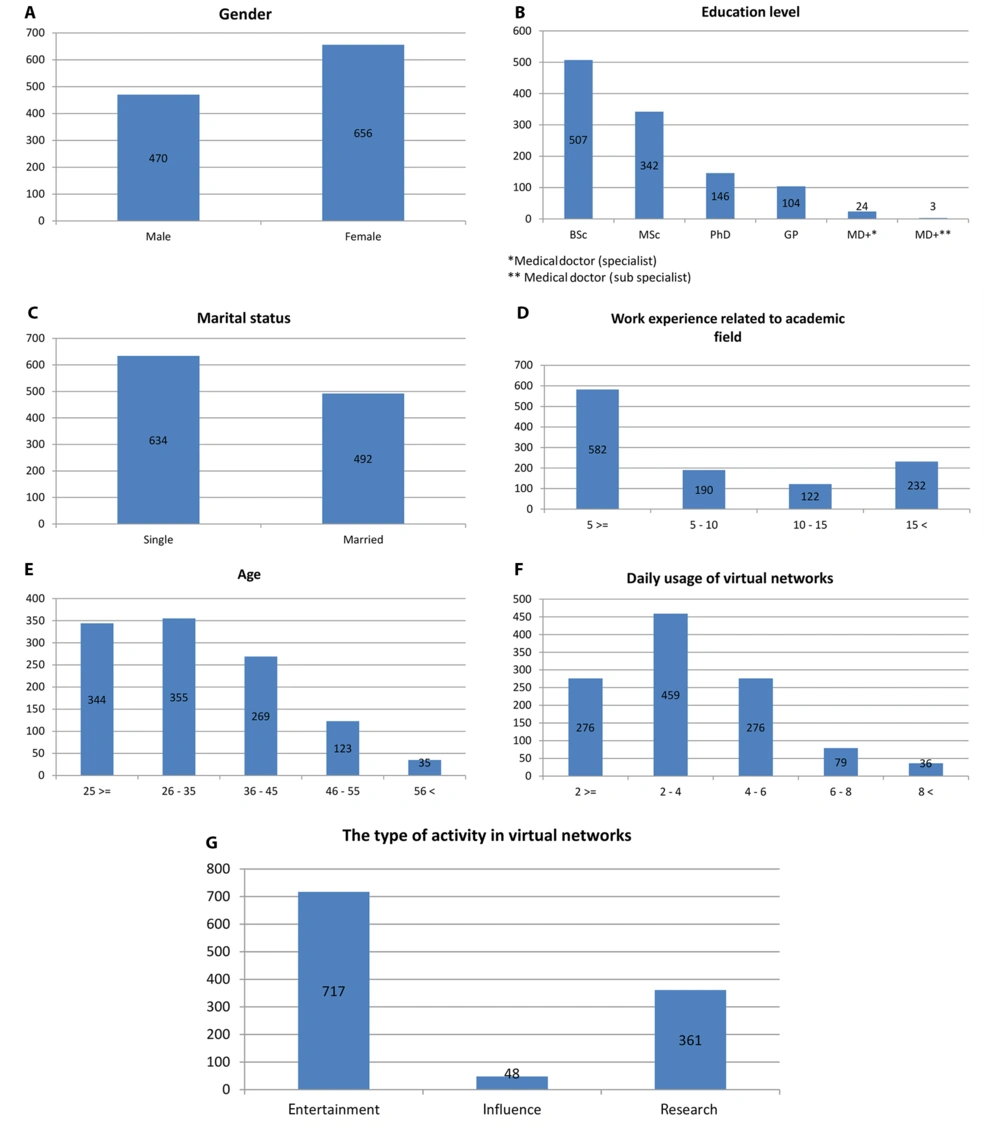
Figure 1.
Demographic profile of study participants: A, gender distribution; B, marital status; C, different age groups of participants; D, educational level of individuals; E, work experience related to the academic degree; F, daily usage; and G, type of social media activities of participants.
Exploratory factor analysis is employed to identify and validate the main dimensions within the proposed constructs. In this analysis, researchers aim to examine experimental data to discover and identify indicators and their relationships without imposing any specific model. In other words, exploratory analysis is used when sufficient prior evidence does not exist to form a hypothesis about the number of underlying factors in the data. It allows researchers to explore the data to determine the number and nature of factors that explain the interrelationships among variables.
Subsequently, using SPSS AMOS software (version 23), confirmatory factor analysis (CFA) and structural equation modeling (SEM) was conducted to assess the factor structure validation, the number of factors, and the fit of the factor structures. In confirmatory factor analysis, researchers aim to validate a specific factor structure. Hypotheses are clearly defined regarding the number of factors, and the fit of the hypothesized factor structure with the covariance structure of the measured variables is rigorously tested. In confirmatory factor analysis, the goal is to create a model that describes, explains, or justifies experimental data using a relatively small number of parameters. This model is developed based on prior knowledge and empirical information about the data structure.
3.1. Descriptive Statistics
This section of the statistical analysis focuses on examining the distribution of the sample in terms of variables such as gender, marital status, age, work experience, and education level (Figure 1).
4. Results
In the present study, 1126 individuals replied to our request and completed the questionnaire. Of these, 58.3% were female, and 41.7% were male. Notably, more than half of the participants (656) were female. Furthermore, 56% were unmarried. Regarding age, 31% of the sample was between 26 and 35. Regarding age, 31% of the sample were between 26 and 35. Regarding the education level, 507 respondents (45%) held a bachelor's degree, 342 (30.4%) held a master’s degree, 146 individuals (13%) held a PhD, 104 respondents (9.2%) were general practitioners, 24 (2.1%) were specialists, and 3 respondents (0.3%) were subspecialists. In terms of work experience, more than half of the study population, i.e., 582 subjects (52 %) had less than 5 years of work experience, 190 (17%) between 5 to 10 years, 122 individuals (11%) between 10 and 15 years, and 232 (20%) had more than 15 years of relevant work experience in their field of study.
Moreover, approximately 41% of the participants (n = 459) used social media platforms for two to four hours per day, and approximately 64% (n = 717) of the respondents used social media as entertainment and for leisure activities in cyberspace.
4.1. Exploratory Factor Analysis
Based on the results of the initial phase of the research, a set of 26 questions was extracted and formulated into a structured questionnaire. An exploratory factor analysis was conducted, and it was observed that all 26 questions had factor loadings greater than 0.40 for each factor. Accordingly, none of the items were excluded from the analysis, and the exploratory factor analysis was performed, yielding the following results.
The first step in exploratory factor analysis is assessing the sample adequacy. The results of the Kaiser-Meyer-Olkin (KMO)-Bartlett test indicated that the KMO measure (0.902) exceeded 0.60, indicating the adequacy of the samples. The significance level of zero for Bartlett's test also suggested the appropriateness of the factor model. Based on these results, the exploratory factor analysis can be conducted on the collected data. Additionally, the principal component analysis with the varimax rotation method was employed in all stages of the analysis. The extracted variance showed that the eigenvalue for 5 factors was greater than 1.0. Therefore, the proposed factor structure would consist of 5 factors, which account for more than 60.82% of the cumulative variance.
Next, the final factor structure was presented in the rotated matrix, which included the contribution of variables in explaining the factors. Each element in this table indicates the partial correlation between the respective structure (row) and the rotated factor (column) (Appendix 2).
As observed, the factor loading values in the final rotated matrix indicate that the items are loading significantly on one factor only, with each item having a factor loading above 0.40. Therefore, based on the results obtained from the rotated matrix, the factors can be labeled as shown in Table 1.
Table 1.
Number of Determined Factors
| Agents | Name | Symbol |
|---|---|---|
| Factor 1 | Active and skillful characteristic | SKIL |
| Factor 2 | Infrastructure actions | INFR |
| Factor 3 | Consequence | CONS |
| Factor 4 | Intrinsic and latent characteristic | ATRI |
| Factor 5 | Behavioral characteristic | BEHA |
4.2. Confirmatory Factor Analysis
Although exploratory data analysis has hitherto been conducted successfully, confirmatory factor analysis needs to be undertaken to ensure the validity and meaningfulness of the analysis. The software AMOS was used for this purpose (Figure 2).
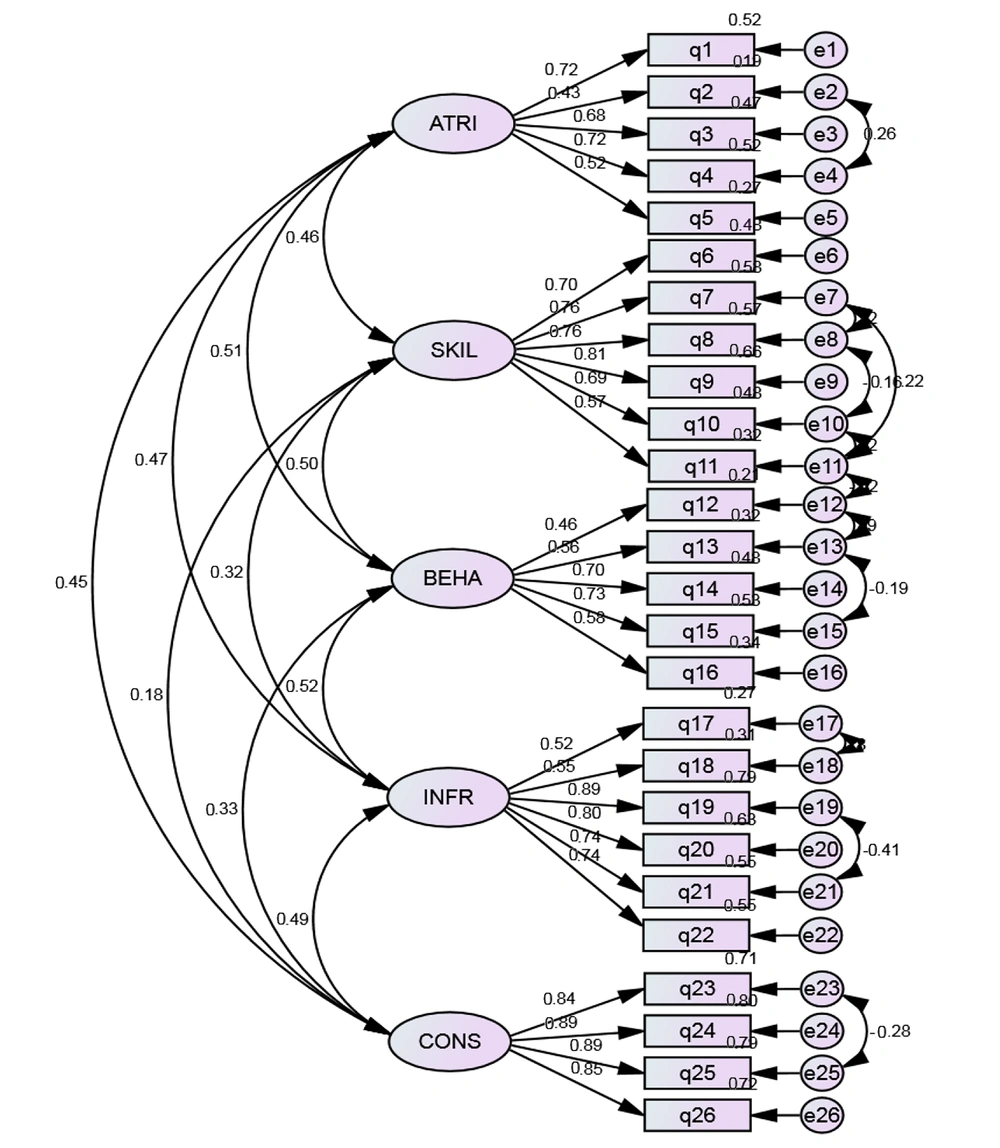
Figure 2.
The structural model in standard (corrected) form
The significance of the estimated standardized coefficients in the final model is presented in Table 2.
Table 2.
The Meaningfulness of Confirmatory of the Model Coefficients
| Variables | Coefficient Standard | Coefficient Non-standard | SE | CR | P-Value |
|---|---|---|---|---|---|
| Intrinsic and latent characteristic | |||||
| Q1 | 0.722 | 1.000 | - | - | - |
| Q2 | 0.434 | 0.601 | 0.048 | 12.388 | 0.000 |
| Q3 | 0.685 | 0.993 | 0.051 | 19.355 | 0.000 |
| Q4 | 0.723 | 1.035 | 0.052 | 20.057 | 0.000 |
| Q5 | 0.520 | 0.769 | 0.051 | 15.205 | 0.000 |
| Active and skillful characteristic | |||||
| Q6 | 0.696 | 1.000 | - | - | - |
| Q7 | 0.760 | 1.005 | 0.045 | 22.206 | 0.000 |
| Q8 | 0.758 | 0.948 | 0.043 | 21.824 | 0.000 |
| Q9 | 0.810 | 1.079 | 0.045 | 23.809 | 0.000 |
| Q10 | 0.694 | 0.894 | 0.044 | 20.527 | 0.000 |
| Q11 | 0.568 | 0.764 | 0.045 | 17.072 | 0.000 |
| Behavioral characteristic | |||||
| Q12 | 0.460 | 1.000 | - | - | - |
| Q13 | 0.561 | 1.210 | 0.075 | 16.169 | 0.000 |
| Q14 | 0.695 | 1.663 | 0.127 | 13.074 | 0.000 |
| Q15 | 0.727 | 1.741 | 0.132 | 13.152 | 0.000 |
| Q16 | 0.585 | 1.364 | 0.112 | 12.191 | 0.000 |
| Infrastructure actions | |||||
| Q17 | 0.524 | 1.000 | - | - | - |
| Q18 | 0.553 | 0.991 | 0.062 | 16.025 | 0.000 |
| Q19 | 0.887 | 1.782 | 0.097 | 18.361 | 0.000 |
| Q20 | 0.797 | 1.609 | 0.090 | 17.878 | 0.000 |
| Q21 | 0.739 | 1.516 | 0.091 | 16.707 | 0.000 |
| Q22 | 0.740 | 1.702 | 0.099 | 17.229 | 0.000 |
| Consequence | |||||
| Q23 | 0.842 | 1.000 | - | - | - |
| Q24 | 0.894 | 1.111 | 0.030 | 36.871 | 0.000 |
| Q25 | 0.892 | 1.138 | 0.033 | 33.985 | 0.000 |
| Q26 | 0.847 | 1.065 | 0.031 | 34.292 | 0.000 |
Abbreviations: SE, standard; CR, composite reliability.
As shown in Table 2, all relationships are statistically significant (the significance level of the test statistic for each relationship was less than 0.05). Furthermore, since all factor loadings in Table 2 are greater than 0.40, it can be inferred that the items effectively explain the construct, and the construct (variables) exhibit factorial and construct validity.
Various fit indices were calculated to assess the model fit, indicating a close fit between the model and the data. The chi-square value divided by the degrees of freedom was close to 3. Additionally, the RMSEA value was 0.045, which was less than 0.08, and indices such as Tucker Lewis index (TLI), incremental fit index (IFI), relative fit index (RFI), normed fit index (NFI), and comparative fit index (CFI) were all above 0.90. Therefore, the model demonstrated a good fit and was hence validated.
Furthermore, influencer attributes such as expressive ability (62.3%), being honest with the audience (60.2%), creativity (57.9%), content production (53.8%), self-confidence (52.8%), adherence to professional principles (51.9%), physical appearance (44.4%), work experience in a specific field (38%), were identified as having the highest frequency in the influential factor of health domain (with a wide spectrum) examined by the statistical population in this study.
Additionally, having relationships with stakeholders (47.9%), noticeable presence in the community (43.9%), accessibility (43%), being relatable to the audience (41.6%), expertise in a specific field (41.3%), educational level (40.7%), acceptable work resume (40.6%), number of followers (40.1%), presence on media platforms (38.3%), uniformity of profile and coloring (37.7%), number of views (37.5%), participation in various events (37.3%), number of likes (35.3%), scientific resume (34.6%), were extracted with the highest frequency and a wide range of responses.
Additionally, gender (36%) and number of comments (35.1%) were extracted with a moderate spectrum of responses in terms of audience perception. A flowchart illustrating the entire study package is included as a new figure in the manuscript (Figure 3).
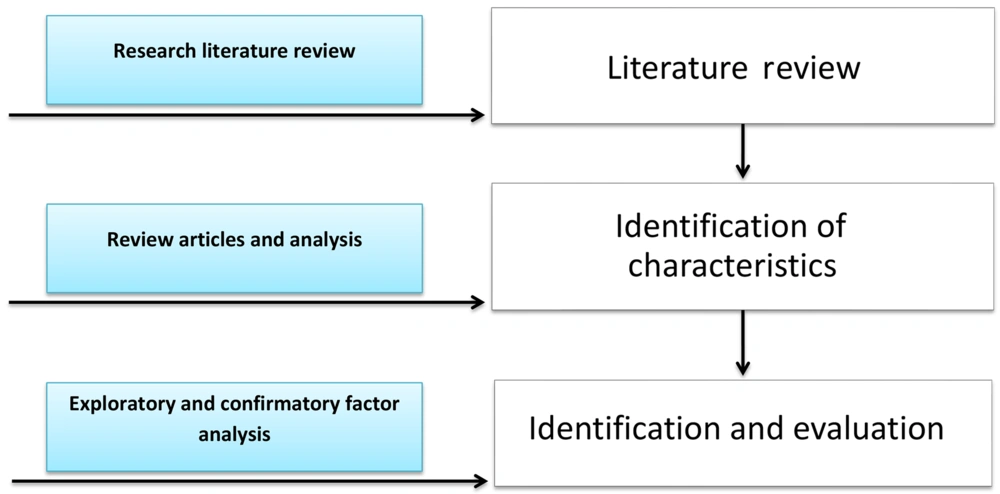
Figure 3.
Flowchart illustrating the step-by-step methodology employed in the study for data collection and analysis.
5. Discussion
Social media has become increasingly popular as a tool for digital marketing. Identifying and communicating with active individuals on social media, often called 'influencers,' in various fields, especially the health sector, requires a series of tips and advice for ordinary people. On the other hand, health organizations employ their influencers to disseminate health messages and implement their programs. Our study aimed to discover a more effective method of identifying genuine influencers in the health sector. We conducted surveys among both specialized and non-specialized individuals in the health sector. The collected data were meticulously analyzed, leading to significant results. To discuss our objectives and findings, it is important to address some preliminary points.
Different regions worldwide, including the Middle East, increasingly embrace healthcare organizations (31). Generating innovative ideas and providing novel services in healthcare institutions and sectors are both important and essential. Creating a value chain in health organizations and developing a strategy is important. They are also decisive in evaluating the services of organizations in the public and private sectors (32). In preparing, implementing, and evaluating strategic plans, a competitive advantage is formed through close communication with contacts and efforts to activate social programs in providing services to patients and contacts, which secures the success of strategic plans (33). These institutions utilize digital marketing platforms and tools to establish their brand in the minds of their audience. Through this digital approach, social media platforms contribute to managing communication with healthy audiences and patients by providing online services and disseminating medical information to healthcare institutions. Topics such as sexual health, physical fitness, and mental well-being are abundant on these social media platforms, particularly in generation Z (born after 1981). Therefore, having a roadmap and planning for applying these tools seems crucial (34). YouTube, Instagram, Twitter, TikTok, etc., contain influencers who express positive and negative experiences, plans and personal goals, and even self-disclosures of their actions among their followers. Disclosure of personal life and experiences by influencers can build a strong relationship with followers and subsequently lead to a change in the attitudes of their audience (35).
Since the official COVID-19 pandemic declaration by the World Health Organization, public announcements such as daily notifications, prevention tips, vaccination offers, contact tracing, and screening have unprecedentedly highlighted the role of experts in the media (36). In this context, the presentation of textual and video content on topics such as COVID and statements such as “I have also been vaccinated" among influencers, celebrities, and opinion leaders with their followers has become significantly widespread and effective (37). The adaptation of health subjects in social media and the enhancement of the effectiveness of social media in health management and disease prevention still require further improvement and particular caution (38, 39).
The necessity of hiring specialized influencers at the community health level is crucial because the abundant non-specialized and unofficial influencers can pose a threat to public health. Therefore, categorizing and screening influencers based on their expertise and target communities can lead to effective and safe practices (40). Influencers with marketing strategies, especially social marketing, can play a directing role in health (41). The main and fundamental factor in the presence of influencers is the ease of spreading and transferring their perspectives and attitudes to their audience (42, 43).
The impact of influencers on individuals' attitudes, with additional studies in psychology, anthropology, and cultural studies, can result in synergistic effects. The combination of digital tools, textual elements, visual effects, and learning prepares the audience for the persuasion phase to receive the message (44). Unfortunately, many influencers with dubious and unofficial sources, with a lack of scientific and specialized qualifications, or to profit through platforms and media, are spreading incorrect knowledge in various health fields (45). This issue has a visible, devastating impact on global and national public health management (46). Qualified and approved health experts, on the other hand, are the most reliable and accurate information sources in the health field. Influencers, along with the adaptation of an influencer marketing approach in the health domain, can provide the ability to disseminate scientifically based information correctly to the general public. To address the importance of the topics mentioned above, creating and introducing approved influencers in various specialized health domains requires an understanding of influencer characteristics, factors, and indicators.
This study presents a general perspective on influencer marketing in the health field. Contrary to frequently available articles, we have focused on the preferred characteristics of health influencers based on input from experts and non-experts (47). Our research indicates that the most important priority for a health influencer is possessing skills and expertise in communication, education, creativity, confidence, and content creation. This result aligns with recent studies emphasizing the importance of education and related skills (45, 48). It is worth mentioning that factors such as the honesty of the influencer with the followers, the appearance and compliance with the professional work principles, and having relevant work experience in the specific field are desirable and accepted among the audience. Factors like honesty must be highlighted as part of ethics on social media (49), although the relevance of influencers' work experience continues to spark debates (50).
As the next priority, the communication and interaction of health influencers with stakeholders, including the trustees and decision-makers, and communication with organizations, managers, and experts is important. Also, influencers' active and dynamic availability, together with creating and inducing a sense of companionship and being an audience, are important factors in establishing a relationship with followers. This part of the results, which depicts a dynamic relation of influencers and bi-directional interactions with the audience, was already expected and discussed on different occasions in the literature (51, 52).
It is worth mentioning that health influencers should pay special attention to improving the level of education, work resumes, and scientific expertise in their activities. In addition, the use of correct techniques to retain and attract new followers and order in the integrity and coloring of the profile, the effort to increase the number of visits, and the techniques of receiving likes are also important factors in the characteristics of the influencer (52). These findings shed light on the necessity of strategic activities of influencers on social media (53, 54). It should be noted that presence in different media and platforms and participation in various meetings are effective factors for being up-to-date and efficient in communicating with the audience (55). As discussed in the literature (56, 57), gender is a factor that can be further analyzed and investigated in completing the influencer indicators. For example, the field of sexual health, emerging diseases in societies, behavioral diseases, and the increasing trend of trans subjectivity can be discussed and investigated in more depth; more research should be done on the appropriate gender of the influencers in these fields to attract their target audience.
Based on the previous research and considering the need for expert influencers in the field of health, creating regional or international influencers with the discussed characteristics can assist health systems, including the World Health Organization, and the health systems of countries can benefit from them in influencing, transferring norms, publishing guidelines, training of desirable behaviors and warnings used in public health-related issues (15). Since different countries have various restrictions for accessing social media platforms, domestically tailored strategies by influencers on accessible platforms can assist the audience.
5.1. Conclusions
our study highlighted certain characteristics that influencers in public health should have. An influencer's honesty with their audience, physical appearance, adherence to professional principles, and relevant work experience in the field can lead to greater acceptance and approval among the target audience. Additionally, influencers’ communication and interaction with stakeholders, including managers and health policy decision-makers, as well as engagement with organizations and experts concerned, were crucial points spotlighted by our study. The application of our study results in ongoing WHO initiatives, such as eliminating viral hepatitis, can be extremely influential. Accordingly, recruiting skillful, honest, and responsible influencers with relevant education in viral hepatitis, including virologists, gastroenterologists, and physicians, represents the most effective approach in this crucial worldwide health program. This approach can enhance the capabilities of health organizations to implement their programs in various societies by utilizing social media platforms to reach a wider audience.