1. Introduction
Chronic hepatitis B (CHB) is a persistent hepatitis B virus infection characterized by the presence of hepatitis B surface antigen (HBsAg) for at least six months and encompasses a clinical spectrum ranging from inactive chronic infection and immune-active hepatitis to cirrhosis and hepatocellular carcinoma (1). Recent global modelling based on the 2022 WHO hepatitis report estimates that approximately 254 million people are living with HBV infection and CHB-related cirrhosis and hepatocellular carcinoma remain major causes of liver-related mortality despite expanded vaccination coverage and antiviral treatment programs (2). The burden is heaviest in the Western Pacific and African regions, where East and Southeast Asia contribute substantially to the global caseload due to historically high endemicity and predominant perinatal or early-childhood transmission. In China alone, tens of millions of adults remain chronically infected even as prevalence falls in younger cohorts (3). However, the global cascade of care remains weak: By 2022 only about 13% of people with chronic HBV had been diagnosed and fewer than 3% were receiving antiviral treatment — figures far below elimination targets and with particularly large gaps in Asia (4). Current CHB management still relies primarily on long-term nucleos(t)ide analogues, with or without pegylated interferon. These therapies effectively suppress HBV DNA replication and reduce the risks of decompensation and hepatocellular carcinoma, but they rarely achieve functional cure, often require lifelong administration, do not fully correct HBV-induced immune dysregulation, and leave a residual risk of progressive liver disease (5). These limitations underscore the need for adjunctive approaches that can act on complementary pathogenic pathways while remaining safe and practical in high-burden Asian settings.
Against this backdrop, traditional Chinese medicine has gained renewed attention as a potential adjunct to standard antiviral therapy for CHB. Recent reviews suggested that Chinese herbal formulas can exert multi-target anti-HBV, immunomodulatory, anti-inflammatory, and antifibrotic effects, and may enhance virological and biochemical responses when combined with nucleos(t)ide analogues, while generally maintaining acceptable safety (6). Xiaochaihu decoction (XCHD), a classic multi-herb formula originating from Shang Han Lun, is widely used across East Asia for chronic viral hepatitis, fatty liver disease and cirrhosis, and is traditionally regarded as a “pivot” prescription for disorders with fluctuating hepatic-biliary symptoms.
Modern pharmacology and network pharmacology analyses suggest that XCHD can attenuate hepatic inflammatory signalling, modulate bile acid and lipid metabolism, and interfere with hepatic stellate cell activation and extracellular matrix deposition, thereby alleviating fibrosis and improving hepatocellular function in experimental models (7). Clinically, contemporary evidence syntheses suggest that herbal formulas containing XCHD may improve alanine aminotransferase (ALT) normalization, reduce fibrosis-related biomarkers, and alleviate symptom burden when added to standard antivirals or hepatoprotective therapies, without a clear increase in adverse events (6). Combined with accumulating randomized trial data comparing XCHD plus Western medicine (WM) versus WM alone, these findings suggest that XCHD may serve as a valuable adjunct to existing CHB therapies, with potential benefits in improving liver biochemical profiles and patient-reported symptoms; therefore, it warrants rigorous quantitative evaluation. Moreover, numerous clinical trials of XCHD in CHB have been published. However, the methodological quality and combined effects of these clinical trials have not yet been systematically evaluated. Only a limited number of systematic reviews—mostly older and methodologically limited — have evaluated XCHD for CHB. Recently, the Rome consensus on good clinical trials for traditional medicine emphasized clear clinical questions, rigorous design, and clinically meaningful endpoints in traditional medicine research (8).
We performed an updated systematic review and meta-analysis of randomized trials evaluating XCHD as an adjunct to WM for CHB, aiming to estimate short-term adjunctive effects on virological, biochemical, fibrosis-related, and safety outcomes while explicitly appraising risk of bias, certainty of evidence, and the implications of between-trial heterogeneity.
2. Methods
The protocol for this systematic review was registered in PROSPERO (CRD420251147917) and the review was reported in accordance with the Preferred Reporting Items for Systematic Reviews and Meta-Analyses (PRISMA 2020) statement (9).
2.1. Ethical Statement
Ethics committee approval and written informed consent were not required for this study, as it included only previously published randomized clinical trials with prior ethics approval and informed consent.
2.2. Eligibility Criteria
Inclusion criteria were prespecified as follows: (1) Study design: Randomized controlled trials; quasi-randomized or non-randomized studies were excluded. (2) Participants: Patients diagnosed with chronic hepatitis B; trials enrolling CHB populations with fibrosis or cirrhosis remained eligible when CHB was the underlying disease of interest. Diagnostic terminology and operational criteria are summarized in Supplementary Material A1. (3) Intervention and control: Within each trial, both groups had to receive the same background WM, and the intervention arm additionally received XCHD. Background WM could include nucleos(t)ide analogues, interferon-based regimens, immunomodulators, and/or hepatoprotective therapies used in routine CHB care. Eligible XCHD interventions had to retain the core classical prescription; modified formulations were permitted only when they were explicitly described as XCHD-based formulas. Details of formulation consistency and outcome definitions are provided in Supplementary Material A2. (4) Outcomes: Primary outcomes: Hepatitis B virus DNA (HBV-DNA) negativity, hepatitis B e antigen (HBeAg) negativity, HBsAg negativity, ALT and aspartate aminotransferase (AST). Secondary outcomes: Total clinical efficacy, total bilirubin (TBil), hyaluronic acid (HA), laminin (LN), type III procollagen (PCIII), and type IV collagen (IV-C). Safety outcome: Incidence of adverse events.
Exclusion criteria were: (1) Data insufficient for effect estimation after attempts to clarify the report; (2) concomitant traditional Chinese interventions other than herbal XCHD-based therapy, such as acupuncture or additional botanical formulas not shared across study arms; and (3) duplicate reports of the same trial, in which case the most complete dataset was retained.
2.3. Information Sources and Search Strategy
A comprehensive search of CNKI, VIP, Wanfang, SinoMed, PubMed, Embase, the Cochrane Library and Web of Science was conducted from database inception to October 5, 2025. Searches were run between October 3 and October 5, 2025. The PubMed search strategy is detailed below (Table 1). Full reproducible search strategies for all databases, including Boolean operators, field tags, and any limits used, are provided in Supplementary Material A3.
Table 1.
PubMed Search Strategy a
| No. | Search Query for PubMed |
|---|---|
| #1 | "Hepatitis B, Chronic" [MeSH Terms] OR "Hepatitis B Virus Infection, Chronic" [Title/Abstract] OR "Chronic Hepatitis B Virus Infection" [Title/Abstract] OR "Chronic Hepatitis B" [Title/Abstract] |
| #2 | "xiaochaihu" [Supplementary Concept] OR "shosaiko-to" [Title/Abstract] OR "sho-saiko-to" [Title/Abstract] OR "shosaiko-toh" [Title/Abstract] OR "TJ-9" [Title/Abstract] OR "TJ9" [Title/Abstract] OR "xiaochaihutang" [Title/Abstract] OR "xiao-chai-hu-tang" [Title/Abstract] OR "xiaochaihu-tang" [Title/Abstract] OR "XCHT herbal formula" [Title/Abstract] OR "xiao chai hu" [Title/Abstract] OR "bupleurum chinense DC formula" [Title/Abstract] OR "minor bupleurum" [Title/Abstract] OR "small bupleurum" [Title/Abstract] OR "radix bupleuri" [Title/Abstract] OR "bupleurum root" [Title/Abstract] |
| #3 | "randomized controlled trial" [Publication type] OR "randomized clinical trial" [Publication type] OR "randomized trial" [Publication type] OR "clinical trial" [Publication type] OR "randomized controlled trial" [Title/Abstract] OR "randomized clinical trial" [Title/Abstract] OR "randomized trial" [Title/Abstract] OR "clinical trial" [Title/Abstract] |
| #4 | #1 AND #2 AND #3 |
a Abbreviation: XCHD, Xiaochaihu decoction.
2.4. Study Screening and Data Extraction
Study selection was conducted in two stages: Title/abstract screening followed by full-text review. Two reviewers independently screened records against the eligibility criteria, with disagreements resolved by discussion or consultation with a third reviewer.
Data extraction and synthesis decisions: Data were extracted independently using a standardized form developed a priori and pilot-tested on three randomly selected studies. The form captured: (1) Study design and setting, (2) participant characteristics (age, sex, diagnostic criteria, disease duration, baseline severity), (3) background WM treatments permitted during the trial, (4) XCHD formulation details (herbal composition, dosage, preparation method, any modifications), (5) treatment duration and follow-up period, (6) outcome definitions and measurement instruments, and (7) numerical outcome data (mean, standard deviation, sample size at each time point).
Decision rules for data handling were established before analysis and applied consistently: (1) Duplicate reports of the same study were collated, and the report with the most complete outcome data was retained as the primary source; (2) when multiple post-treatment time points were reported, end-of-treatment data were prioritized for the primary synthesis, with sensitivity analyses using the longest follow-up data where available; (3) when both baseline and post-treatment values were reported, change-from-baseline scores were calculated and used in preference to final values, as prespecified; (4) when studies reported outcomes by subgroups without a combined total, the subgroups were combined according to Cochrane guidance; (5) standard deviations for change scores were calculated from available data using correlation coefficients derived from studies reporting all necessary components, or imputed as 0.5 when unavailable. Corresponding authors were contacted by email (up to two attempts, two weeks apart) when key information was unclear or missing. The full extraction form and a detailed calibration protocol are provided in Supplementary Material A Table A3.
2.5. Risk of Bias Assessment and Evidence Certainty
Risk of bias was assessed with the Cochrane Risk of Bias 2 (RoB 2) tool (10) across the five standard domains by two independent reviewers, with arbitration by a third reviewer when needed. Certainty of evidence was rated using GRADE as high, moderate, low, or very low by two independent reviewers, with disagreements resolved by discussion with a third reviewer (11). Because many outcomes were surrogate measures and several analyses were expected to show important clinical heterogeneity, certainty judgments were interpreted conservatively. Detailed decision rules are provided in Supplementary Material A4.
2.6. Statistical Analysis
Statistical analyses were performed using Review Manager (Cochrane Collaboration, version 5.4) and Stata 17.0. Dichotomous outcomes were pooled as relative risks (RR) with 95% confidence intervals (CI), and continuous outcomes were summarized as mean differences (MD) using change scores when available. Statistical heterogeneity was assessed using the chi-square test and the I2 statistic. A fixed-effect model was used when heterogeneity was low (I2 ≤ 50%) and clinical comparability was acceptable; otherwise, a random-effects model was used. Given the anticipated variation in background WM, disease stage, treatment duration, and XCHD modifications, pooled effects for highly heterogeneous outcomes were interpreted as exploratory average effects. Prespecified subgroup analyses explored treatment duration, age, and disease course. Sensitivity analyses were conducted by sequentially omitting individual studies. Publication bias was assessed by visual inspection of funnel plots and by Egger’s regression test when more than 10 studies were available.
2.7. Trial Sequential Analysis
Trial sequential analysis (TSA) was performed using TSA software (version 0.9.5.10) as a supplementary assessment of the risk of random errors arising from repeated testing and sparse data. Crossing the conventional boundary but not the TSA monitoring boundary was interpreted as statistically suggestive but potentially premature evidence. Crossing both boundaries indicates that random error is less likely to explain the finding, but such results were not considered to override persistent concerns related to risk of bias, publication bias, indirectness, or substantial heterogeneity. Accordingly, TSA was used to complement, not replace, the RoB 2 and GRADE assessments (12).
3. Results
3.1. Study Screening
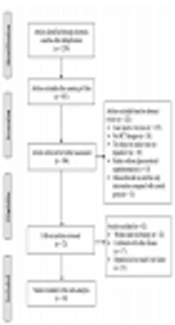
The search identified 353 studies. After 175 duplicates were removed, leaving 178 studies for title and abstract review; 94 of these did not meet eligibility criteria. 84 studies proceeded to full-text evaluation, where 35 were excluded: (1) Not RCTs (n = 5); (2) the outcome did not match the inclusion criteria (n = 7); (3) the intervention did not match the inclusion criteria (n = 13); (4) the study data were incomplete (n = 8); (5) repeated publications (n = 1); (6) abstract only (n = 1); Ultimately, 49 RCTs were included in the analysis. The study selection process is summarized in Figure 1.
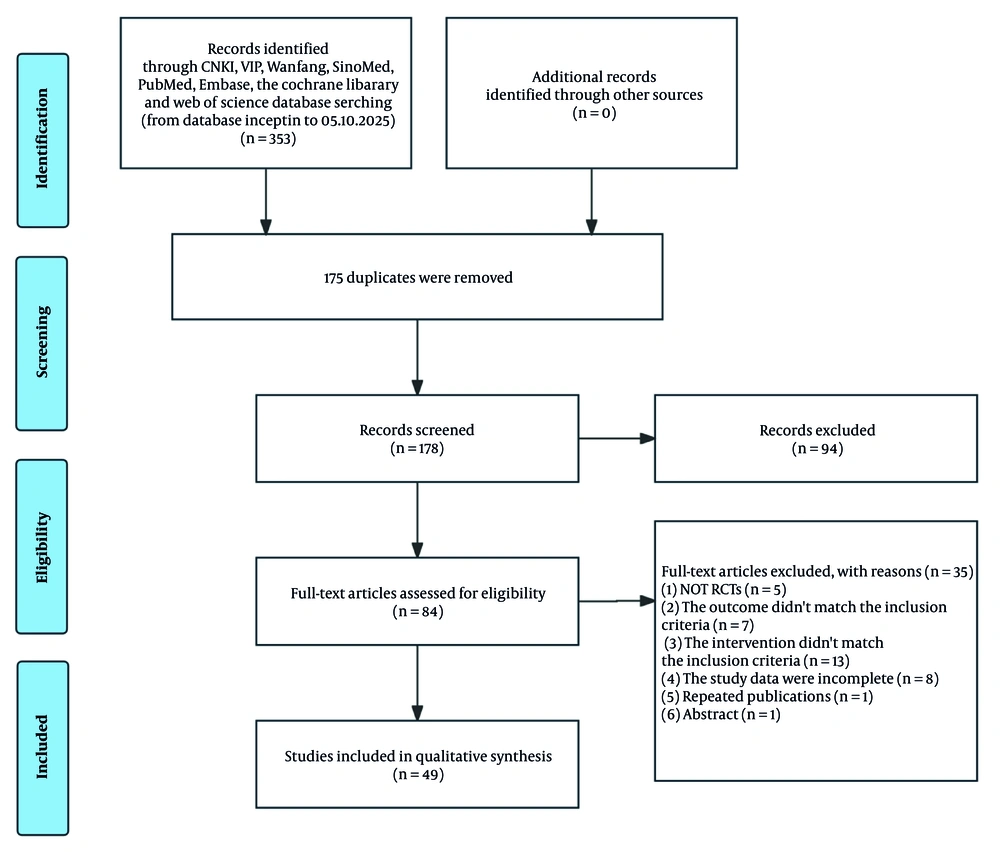
Figure 1.
PRISMA flow diagram of study selection
3.2. Study Characteristics
Table 2 summarizes the included studies. All 49 RCTs were conducted in China and published in Chinese between 2002 and 2025, enrolling 4,768 participants (2,402 individuals assigned to the intervention group and 2,366 to the control group). All studies compared XCHD + WM with WM alone. In a subset of RCTs, the treatment regimen lasted between 28 and 365 days. Baseline characteristics were generally comparable between the intervention and control groups in all trials.
Table 2.
Study Characteristics a
| Study | Disease | Age (T/C) | Sample Size (T/C) | Course of the Disease (y) (T/C) | Intervention (T/C) | Course of Treatment (mon) | Outcome | |
|---|---|---|---|---|---|---|---|---|
| Chen et al. (2014), (13) | CHB with pulmonary tuberculosis | 34.32 ± 3.19 | 60/60 | 2.81 ± 0.3 | XCHD + WM | WM | 3 | ①④⑤⑥⑦⑫ |
| Chen, (2018), (14) | CHB | 40.72 ± 7.28/ 41.3 ± 8.44 | 40/40 | 5.02 ± 3.11/ 5.56 ± 2.7 | XCHD + WM | WM | 5 | ①②④⑥ |
| Dong, (2015), (15) | CHB | 42.5 ± 11.3 | 148/149 | 8.2 ± 4.1 | XCHD + WM | WM | 3 | ④⑤⑫ |
| Kang, (2016), (16) | CHB | 41.89 ± 8.34/ 42.33 ± 7.58 | 40/41 | 4.77 ± 2.87/ 4.46 ± 2.66 | XCHD + WM | WM | 7 | ①②④⑥ |
| Li and Yu (2022), (17) | CHB | 48.19 ± 4.21/ 48.51 ± 4.45 | 35/35 | 6.25 ± 0.17/ 6.56 ± 0.15 | XCHD + WM | WM | 3 | ④⑤⑥⑦⑫ |
| Li, (2015), (18) | CHB | 44.85 ± 12.42/ 45.10 ± 13.24 | 50/50 | - | XCHD + WM | WM | 10 | ①②④⑤ |
| Lin et al., (2017), (19) | CHB | 43.53 ± 10.31 | 49/49 | 6.78 ± 3.12 | XCHD + WM | WM | 7 | ①②④⑥ |
| Ma, (2018), (20) | CHB | 37.09 ± 7.64/ 36.83 ± 7.39 | 32/32 | 4.61 ± 1.8 /4.58 ± 2.14 | XCHD + WM | WM | 7 | ④⑥⑦ |
| Qiu et al., (2010), (21) | CHB with HF | 48.1 ± 6.9/ 46.2 ± 5.8 | 50/40 | - | XCHD + WM | WM | 6 | ①②④⑤⑦⑧⑨⑩⑪⑫ |
| Shi, (2020), (22) | CHB | 54.20 ± 5/ 53.09 ± 4.5 | 40/40 | 7.9 ± 2.5/ 7.2 ± 2 | XCHD + WM | WM | 8 | ④⑤⑥⑦⑫ |
| Shi, (2012), (23) | CHB | 41.4 ± 10.9/ 42.6 ± 11.2 | 46/46 | 5.3 ± 3.5/ 4.9 ± 3.1 | XCHD + WM | WM | 8 | ①②④ |
| Sun et al., (2005), (24) | CHB | - | 35/30 | - | XCHD + WM | WM | 6 | ①②③④⑤ |
| Wang, (2023), (25) | CHB | 52.23 ± 5.16/ 51.12 ± 4.36 | 46/46 | 8.01 ± 2.16/ 7.67 ± 2.35 | XCHD + WM | WM | 8 | ④⑤⑥⑦⑫ |
| Wu, (2015), (26) | CHB cirrhosis | 44.5 ± 7.6/ 44.1 ± 7.3 | 46/46 | 12.5 ± 4.7/ 12.1 ± 4.4 | XCHD + WM | WM | 5 | ④⑤⑦ |
| Xue, 2015 (27) | CHB with HF | 47.35 ± 4.36/ 48.67 ± 4.91 | 44/29 | 3.9 ± 0.7/ 4.0 ± 0.9 | XCHD + WM | WM | 4 | ④⑤⑦⑧⑨⑩⑪⑫ |
| Yang, (2009), (28) | CHB | 36.8/37 | 60/60 | 5.5/ 6.5 | XCHD + WM | WM | 2 | ①②⑥⑫ |
| Yuan et al., (2002), (29) | CHB | 29.7/32.3 | 35/30 | 31.5/28.2 | XCHD + WM | WM | 6 | ①②③④⑦ |
| Zhou, (2015), (30) | CHB | 43.81 ± 5.76/ 43.77 ± 5.82 | 41/41 | 4.73 ± 3.32/ 4.7 ± 3.28 | XCHD + WM | WM | 3 | ⑥ |
| Zong, (2018), (31) | CHB | 41.78 ± 10.85/ 42.11 ± 11.12 | 43/43 | 5.32 ± 1.54/ 5.58 ± 1.61 | XCHD + WM | WM | 8 | ①②④⑥ |
| Zeng et al., (2015), (32) | CHB cirrhosis | 64.42 ± 3.81/ 64.56 ± 3.9 | 60/60 | 4.53 ± 1.66/ 4.61 ± 1.72 | XCHD + WM | WM | - | ④⑤⑦⑧⑨⑩ |
| Chen, (2017), (33) | CHB with HF | 32.5 ± 10.2/ 35.2 ± 9.7 | 32/32 | 3.1 ± 1.6/ 3.8 ± 1.2 | XCHD + WM | WM | 3 | ④⑤⑦⑧⑨⑩⑪ |
| Dong and Zhao, (2002), (34) | CHB | 36/33 | 35/30 | 1-4.5/ 0.6-5 | XCHD + WM | WM | 1 | ④⑤⑥ |
| Hu, (2022), (35) | CHB | 47.33 ± 7.23/ 48.67 ± 8.22 | 30/30 | 7.23 ± 2.65/ 7.61 ± 2.98 | XCHD + WM | WM | 11 | ④⑤⑥⑦ |
| Huang and Xie, (2022), (36) | CHB | 48.51 ± 7.27/ 48.74 ± 7.31 | 140/140 | 7.68 ± 1.06/ 7.93 ± 1.18 | XCHD + WM | WM | 6 | ④⑤⑥⑦⑧⑨⑩⑫ |
| Wang et al., (2014), (37) | CHB | 40.2 ± 5.2 | 90/90 | 6.8 ± 1.8 | XCHD + WM | WM | 11 | ①②④⑧⑨⑩ |
| Wang, (2018), (38) | CHB | 41.78 ± 15.16/ 41.29 ± 15.42 | 41/41 | - | XCHD + WM | WM | 12 | ①②④⑤⑦⑫ |
| Wang, (2016), (39) | CHB | 35.1 ± 7.9/ 35.8 ± 8.1 | 41/41 | 2.5 ± 0.8/ 2.4 ± 0.9 | XCHD + WM | WM | 6 | ④⑤⑦ |
| Wu et al., (2023), (40) | CHB with HF | 46.83 ± 8.16/ 46.85 ± 8.14 | 40/40 | 8.29 ± 2.71/ 8.26 ± 2.73 | XCHD + WM | WM | 6 | ⑥⑧⑨⑩⑪ |
| Wu, (2009), (41) | CHB | 56/56 | 69/73 | 5/ 9.5 | XCHD + WM | WM | 6 | ④⑤⑥⑧⑨⑩ |
| Yan et al., (2019), (42) | CHB | 39.7 ± 7.5/ 39.3 ± 7.2 | 72/72 | 2.3 ± 0.9/ 2.1 ± 0.7 | XCHD + WM | WM | 12 | ①②④⑤⑥⑦⑧⑨⑩⑪⑫ |
| Zhao et al., (2014), (43) | CHB | 38.1 ± 3.1/ 40 ± 4.6 | 40/39 | 0.8-20/ 1-18 | XCHD + WM | WM | 12 | ①②④⑤⑦ |
| Zhou and Bian, (2021), (44) | CHB | 48.49 ± 3.53/ 47.61 ± 3.22 | 25/25 | 8.12 ± 1.47/ 7.69 ± 1.23 | XCHD + WM | WM | 6 | ④⑤⑥⑦⑫ |
| Zhou and Ni (2023), (45) | CHB | 44.26 ± 2.17/ 44.85 ± 2.15 | 30/30 | 7.06 ± 1.34/ 7.15 ± 1.25 | XCHD + WM | WM | 4 | ④⑤⑥⑦⑧⑨⑩⑫ |
| Tian et al., (2010), (46) | CHB | - | 20/20 | 39 | XCHD + WM | WM | 6 | ①②④ |
| Hu, (2011), (47) | CHB with HF | 45 | 34/28 | 9 | XCHD + WM | WM | 11 | ①④⑧⑩⑪ |
| Li, (2025), (48) | CHB | 37.34 ± 6.24/ 38.82 ± 5.75 | 40/40 | 2.95 ± 0.64/ 3.27 ± 0.75 | XCHD + WM | WM | 6 | ①②④⑤⑦⑨⑪ |
| Sheng and Zou (2018), (49) | CHB with HF | 48.4 ± 8.9/ 49.1 ± 9.9 | 40/40 | 6.5 ± 1.8/ 6.1 ± 2.1 | XCHD + WM | WM | 5 | ①②③④⑤⑦⑧⑨⑩⑪ |
| Wang, (2013), (50) | CHB with HF | 40.2 ± 1.2/ 42.1 ± 1.5 | 80/80 | 0.75-10/ 0.6 - 9 | XCHD + WM | WM | 4 | ④⑤⑫ |
| Wang, (2013), (51) | CHB | 43.60/ 45.1 | 48/48 | 0.5 -6/ 0.5 - 5 | XCHD + WM | WM | 12 | ①②④⑧⑩⑪ |
| Zhang et al., (2018), (52) | CHB | 41.83 ± 3.5/ 40.91 ± 3.26 | 48/48 | 69.65 ± 5.37/ 68.54 ± 5.29 | XCHD + WM | WM | 1 | ①②③⑥ |
| Liu, (2017), (53) | CHB | 63.50 ± 4.7/ 63.6 ± 4.3 | 40/40 | - | XCHD + WM | WM | 3 | ⑥⑫ |
| Lu, (2017), (54) | CHB | 40.72 ± 7.28/ 41.3 ± 8.44 | 40/40 | 5.02 ± 3.11/ 5.56 ± 2.70 | XCHD + WM | WM | 5 | ①②④⑥ |
| Wang, (2015), (55) | CHB | 43.18 ± 8.62/ 44.05 ± 9.17 | 74/74 | 5.18 ± 3.26/ 5.36 ± 3.19 | XCHD + WM | WM | - | ①②④⑥⑦ |
| Zou, (2016), (56) | CHB | 58 | 48/48 | - | XCHD + WM | WM | - | ①②④⑥ |
| Chen, (2013), (57) | CHB | 39 | 35/35 | - | XCHD + WM | WM | 6 | ①② |
| Hu, (2017), (58) | CHB | 55.5 | 60/60 | 2.7 ± 1.0 | XCHD + WM | WM | 3 | ①④⑤ |
| Wu, (2018), (59) | CHB | 38.88 ± 13.33/ 37.61 ± 12.78 | 40/40 | 10 ± 0.51/ 11 ± 0.52 | XCHD + WM | WM | 3 | ①②④⑤⑥⑦⑧⑨⑪ |
| Zhang and Liu, (2008), (60) | CHB | 41.25 ± 6.55/ 40.67 ± 6.48 | 40/45 | 7.55 ± 3.58/ 7.17 ± 3.45 | XCHD + WM | WM | 6 | ①②④⑤ |
| Fang, (2017), (61) | CHB | 36.6 ± 14.71/ 42.2 ± 12.13 | 30/30 | - | XCHD + WM | WM | 1 | ④⑤⑥ |
a Abbreviations: T, treatment group; C, control group; XCHD, Xiaochaihu decoction; WM, Western medicine; CHB, chronic hepatitis B; HF, Hepatic Fibrosis; ① HBV-DNA, hepatitis B virus DNA; ② HBeAg, hepatitis B e antigen; ③ HBsAg, hepatitis B surface antigen; ④ ALT, alanine aminotransferase; ⑤ AST, aspartate aminotransferase; ⑥ total clinical efficacy; ⑦ TBil, total bilirubin; ⑧ HA, hyaluronic acid; ⑨ LN, laminin; ⑩ PCIII, type III procollagen; ⑪ IV-C, type IV collagen; ⑫ adverse events.
3.3. Risk of Bias Assessment
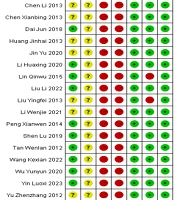
The 49 trials were evaluated using the five domains of RoB 2. In all trials, issues were identified with the randomization process; 27 of these trials referenced randomization but failed to specify the implementation method. Additionally, all trials failed to report allocation concealment. In 48 trials, concerns arose regarding deviations from the intended interventions, likely due to the absence of blinding. Missing outcome data: All trials reported complete outcome data for randomized participants. Measurement of the outcome: 32 studies lacked blinding of outcome assessors, which may have affected the objectivity of outcome measurement. Within the 32 trials, four trials were judged to be at high risk because knowledge of the intervention could plausibly influence outcome measurement. Selection of the reported result: All trials faced issues with selective reporting of results because none had a preregistered protocol, and three trials were high risk for selective outcome reporting. In total, 41 trials were assessed with some concerns, while 8 trials were deemed high risk. The assessment of bias risk for the included trials is presented in Figure 2.
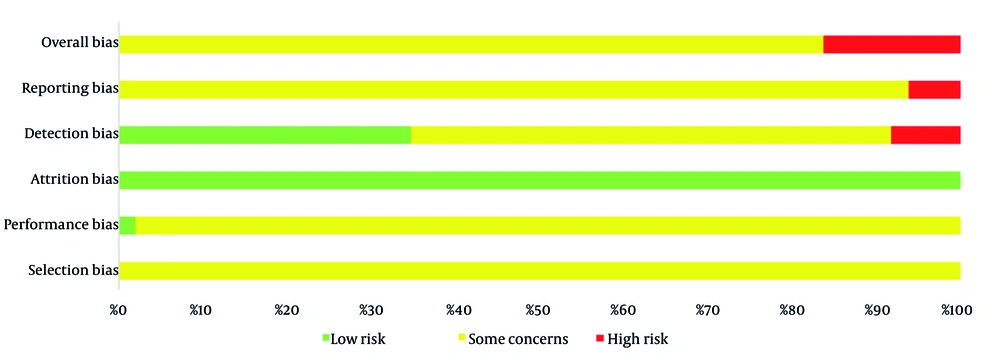
Figure 2.
Risk of bias summary
3.4. Meta-Analysis Results
3.4.1. Primary Outcomes
Pooled estimates for dichotomous virological outcomes showed low heterogeneity, whereas several continuous biochemical and fibrosis-related outcomes showed substantial between-study heterogeneity. For the latter, pooled estimates should be read as exploratory signals of possible adjunctive benefit rather than as precise effect sizes.
3.4.1.1. HBV-DNA Negativity
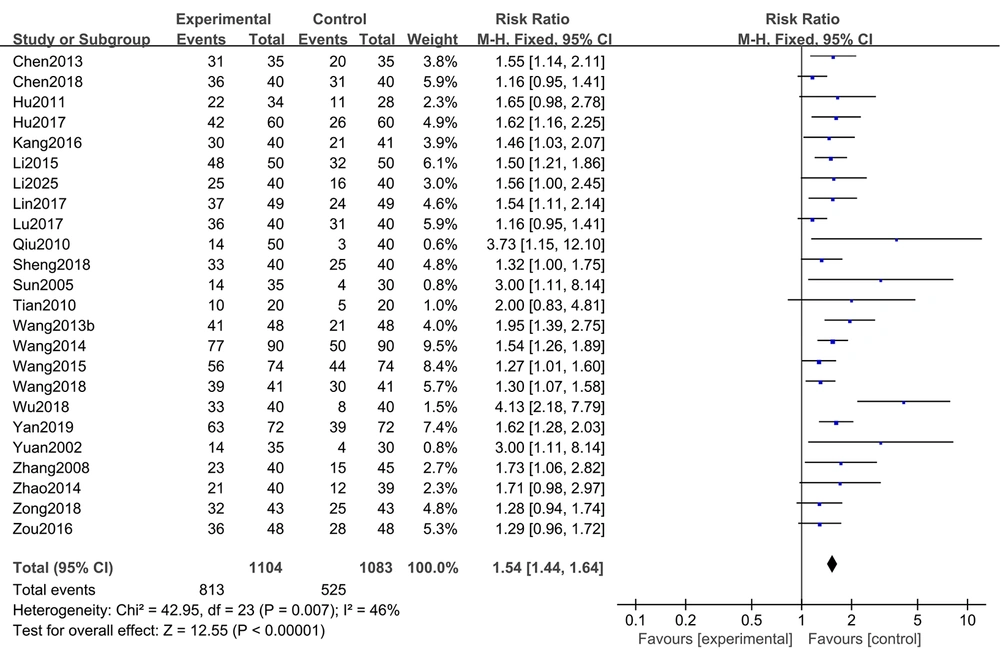
HBV-DNA negativity was reported in 24 RCTs (n = 2,187; Figure 3). Heterogeneity was low (I2 = 46%), and a fixed-effect model favored XCHD + WM [RR = 1.54, 95% CI 1.44 to 1.64, P < 0.00001].
3.4.1.2. HBeAg Negativity
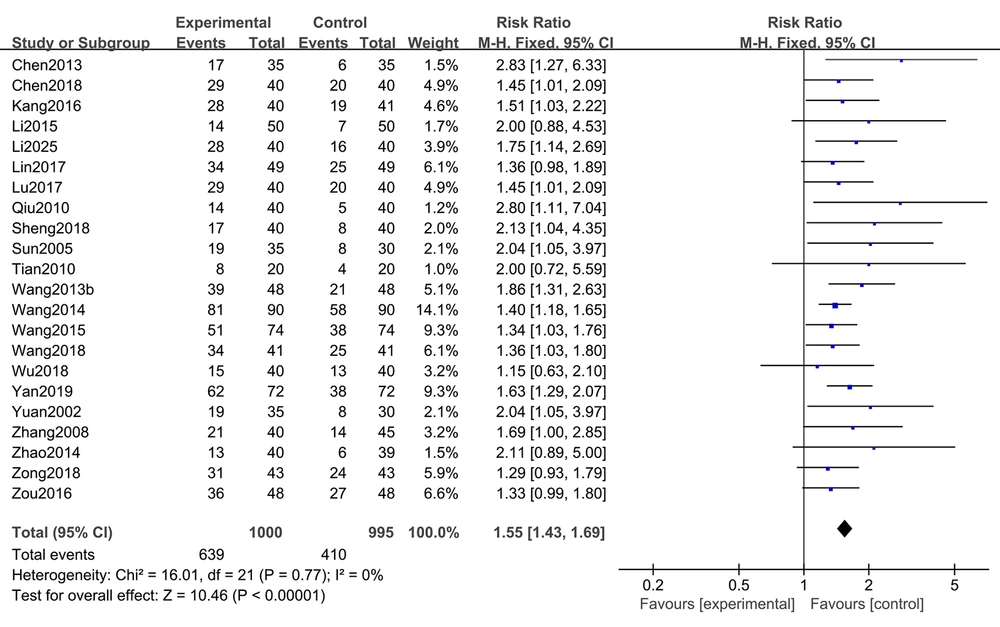
HBeAg negativity was reported in 22 RCTs (n = 1,995; Figure 4). Heterogeneity was absent (I2 = 0%), and a fixed-effect model favored XCHD + WM [RR = 1.55, 95% CI 1.43 to 1.69, P < 0.00001].
3.4.1.3. HBsAg Negativity
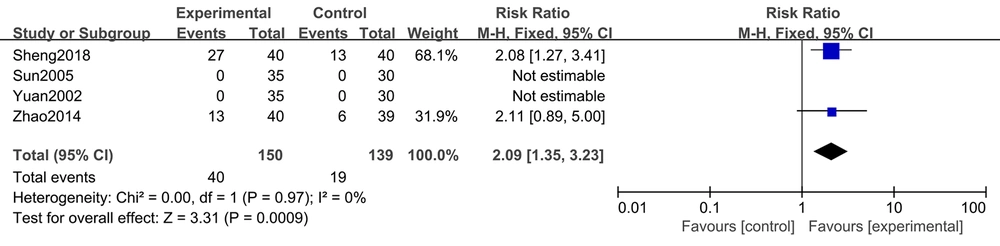
HBsAg negativity was reported in 4 RCTs (n = 289; Figure 5). Heterogeneity was absent (I2 = 0%), and a fixed-effect model favored XCHD + WM [RR = 2.09, 95% CI 1.35 to 3.23, P = 0.0009]. Because the evidence base was small, this result should be interpreted cautiously.
3.4.1.4. ALT
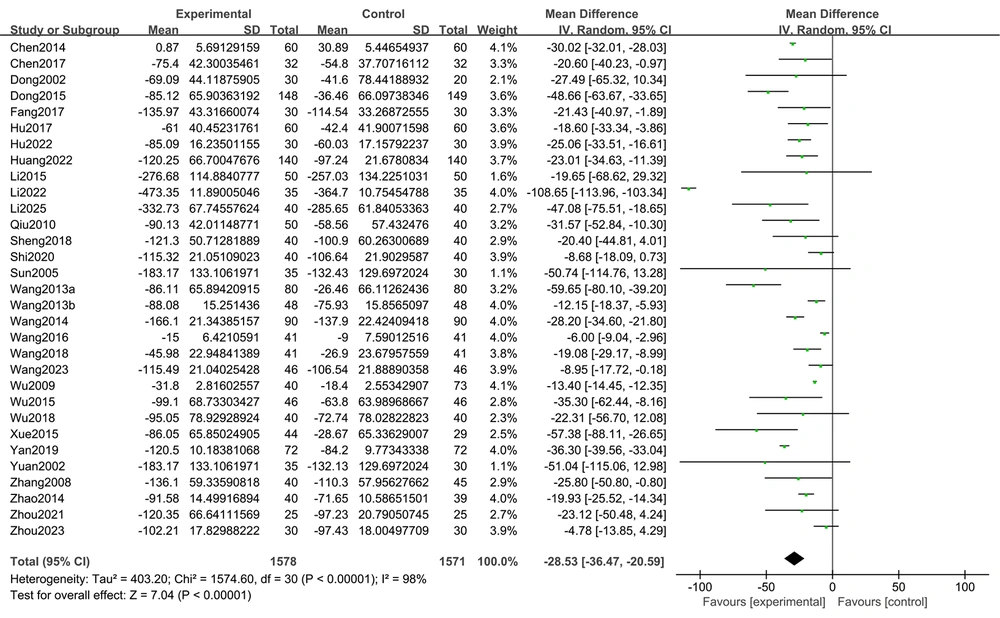
ALT was reported in 31 RCTs (n = 3,149; Figure 6). Heterogeneity was high (I2 = 98%), and the random-effects model favored XCHD + WM [MD = -28.53, 95% CI -36.47 to -20.59, P < 0.00001]. This estimate should be interpreted cautiously because of marked heterogeneity.
3.4.1.5. AST
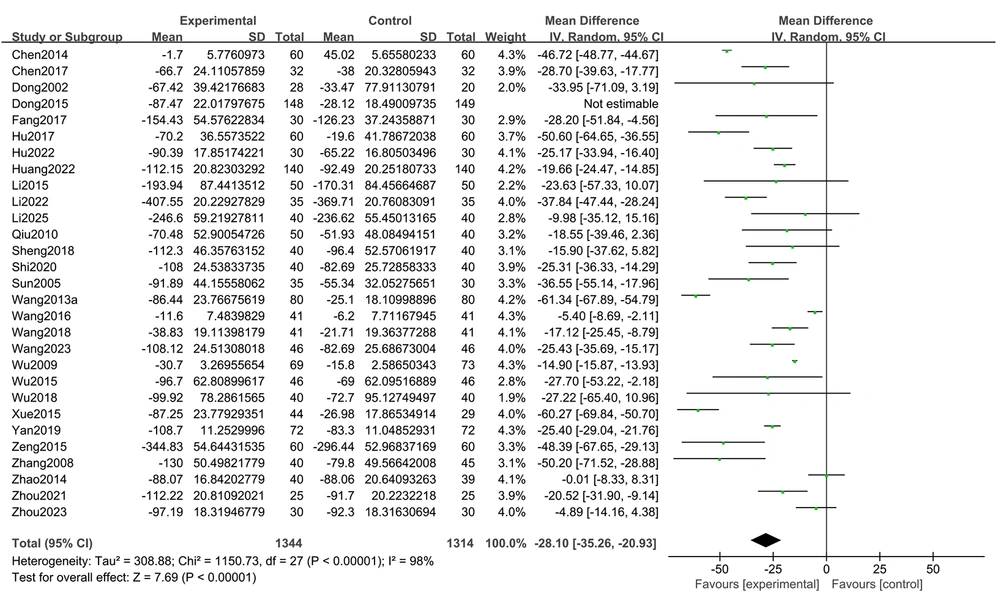
AST was reported in 29 RCTs; after leave-one-out exclusion of one study, 28 RCTs (n = 2,658) were included in the meta-analysis (Figure 7). Heterogeneity was high (I2 = 98%), and the random-effects model favored XCHD + WM [MD = -28.10, 95% CI -35.26 to -20.93, P < 0.00001]. This estimate should be interpreted cautiously because of marked heterogeneity.
3.4.2. Secondary Outcomes
3.4.2.1. Total Clinical Efficacy
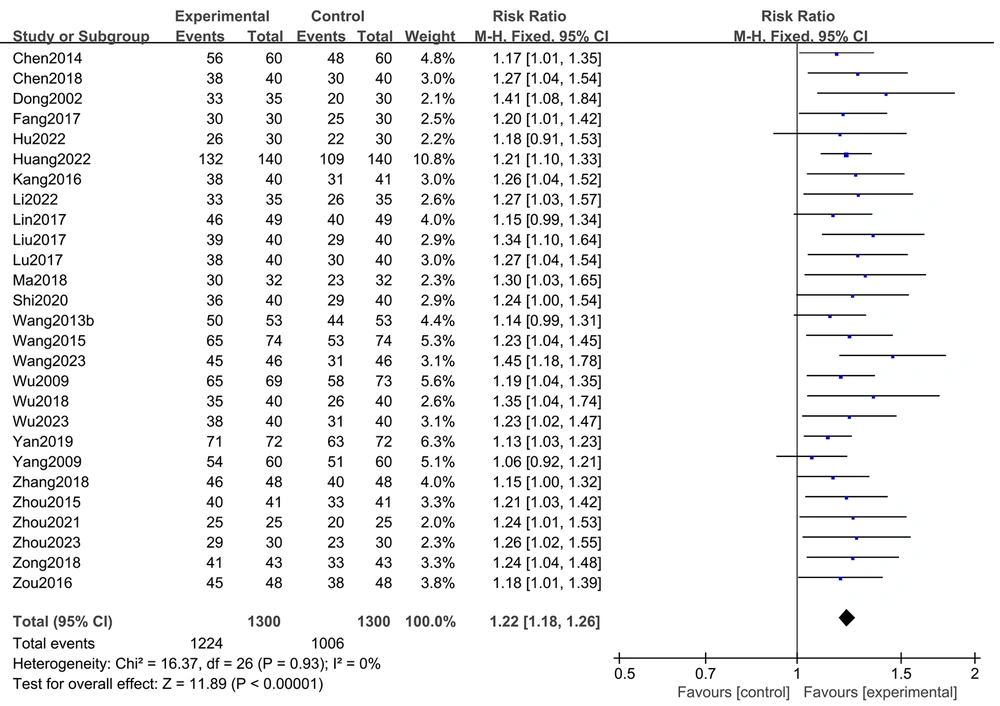
Total clinical efficacy was reported in 27 RCTs (n = 2,600; Figure 8). Heterogeneity was absent (I2 = 0%), and a fixed-effect model favored XCHD + WM [RR = 1.22, 95% CI 1.18 to 1.26, P < 0.00001].
3.4.2.2. TBil
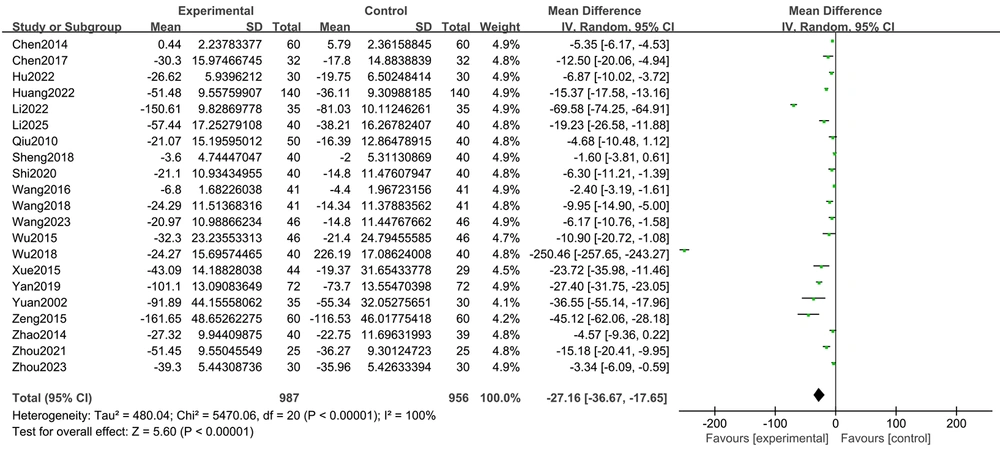
TBil was reported in 21 RCTs (n = 1,943; Figure 9). Heterogeneity was extremely high (I2 = 100%), and the random-effects model favored XCHD + WM [MD = -27.16, 95% CI -36.67 to -17.65, P < 0.00001]. This estimate should be interpreted cautiously because of extreme heterogeneity.
3.4.2.3. HA
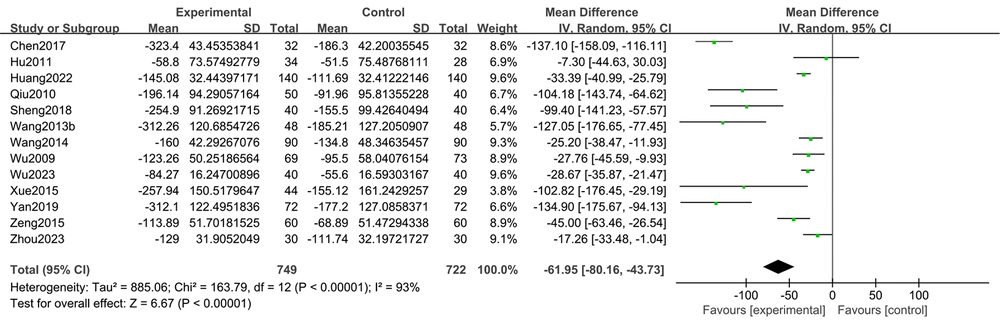
HA was reported in 13 RCTs (n = 1,471; Figure 10). Heterogeneity was substantial (I2 = 93%), and the random-effects model favored XCHD + WM [MD = -61.95, 95% CI -80.16 to -43.73, P < 0.00001]. This estimate should be interpreted cautiously because of marked heterogeneity.
3.4.2.4. LN
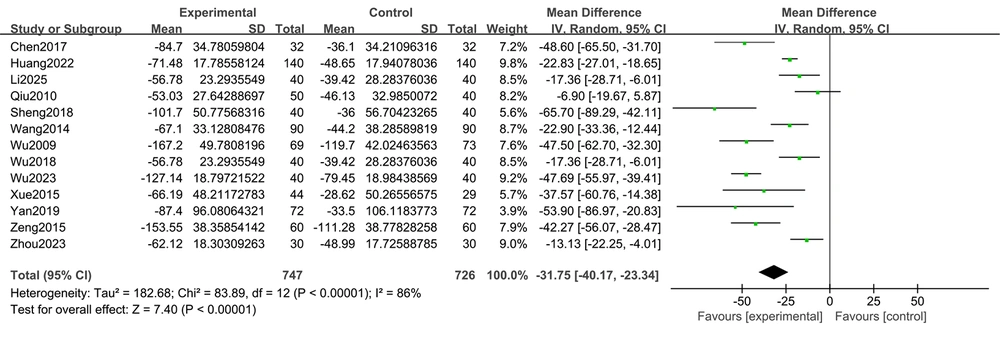
LN was reported in 13 RCTs (n = 1,473; Figure 11). Heterogeneity was substantial (I2 = 86%), and the random-effects model favored XCHD + WM [MD = -31.75, 95% CI -40.17 to -23.34, P < 0.00001]. This estimate should be interpreted cautiously because of marked heterogeneity.
3.4.2.5. PCIII
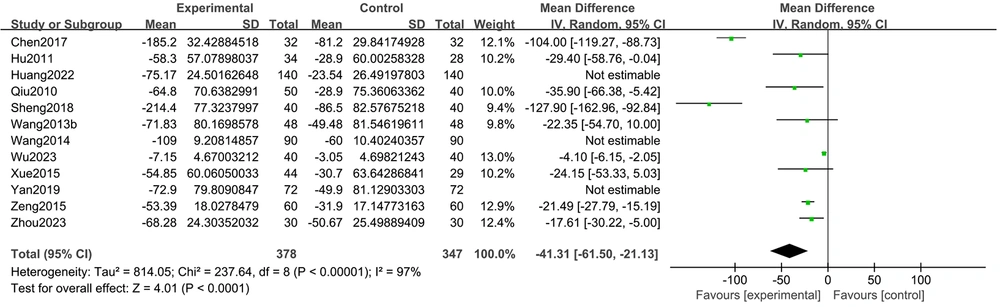
PCIII was reported in 12 RCTs; after exclusion of non-estimable studies, 9 RCTs (n = 725) were included in the meta-analysis (Figure 12). Heterogeneity was high (I2 = 99%), and the random-effects model favored XCHD + WM [MD = -41.31, 95% CI -61.50 to -21.13, P < 0.0001]. This estimate should be interpreted cautiously because of marked heterogeneity.
3.4.2.6. IV-C
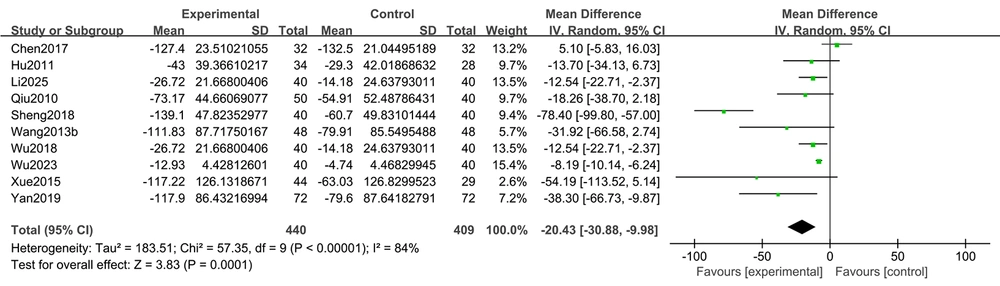
IV-C was reported in 10 RCTs (n = 849; Figure 13). Heterogeneity was substantial (I2 = 84%), and the random-effects model favored XCHD + WM [MD = -20.43, 95% CI -30.88 to -9.98, P = 0.0001]. This estimate should be interpreted cautiously because of marked heterogeneity.
3.5. Adverse Events
Adverse events were reported in 16 RCTs (n = 1,890; Figure 14). Heterogeneity was low (I2 = 34%), and a fixed-effect model showed fewer reported adverse events in the XCHD + WM group [RR = 0.53, 95% CI 0.38 to 0.73, P = 0.0001]. Because adverse-event reporting was available for only a subset of trials and follow-up was short, this result should be interpreted as evidence of no apparent short-term safety signal.
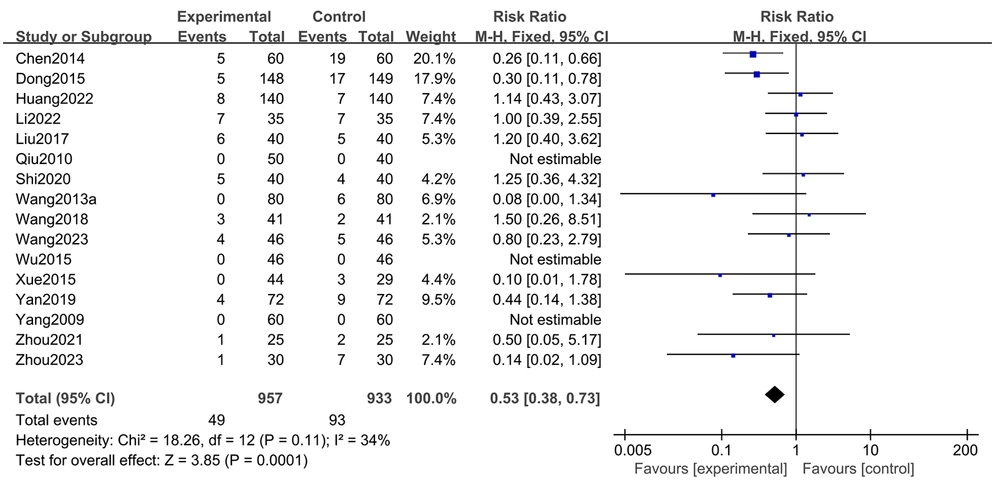
Table 3 summarizes the reported adverse events. Across trials reporting these data, 49/957 participants (5.1%) in the XCHD + WM group and 93/933 (10.0%) in the WM-alone group experienced at least one adverse event. Reported events were generally gastrointestinal symptoms, dizziness/fatigue, sleep disturbance, or laboratory hepatic dysfunction, but definitions and ascertainment were inconsistent across studies. Accordingly, the safety findings suggest that adding XCHD did not increase reported short-term adverse events.
Table 3.
Reported Adverse Events a
| Study | Sample Size | Adverse Events | ||
|---|---|---|---|---|
| T | C | T | C | |
| Chen and Zhou (2014), (13) | 60 | 60 | 5 (hepatic dysfunction) | 19 (hepatic dysfunction) |
| Dong, (2015), (15) | 148 | 149 | 5 (nausea, dizziness, sleep disturbances) | 17 (nausea, dizziness, sleep disturbances) |
| Huang and Xie, (2022), (36) | 140 | 140 | 8 (3 nausea, 2 emesis, 3 diarrhea) | 7 (2 nausea, 2 emesis, 3 diarrhea) |
| Li and Yu, (2022), (17) | 35 | 35 | 7 (1 dry mouth and bitter taste, 1 dizziness and fatigue, 2 nausea and vomiting, 1 abdominal distension, 1 fever, 1 decreased appetite) | 7 (1 dry mouth and bitter taste, 1 dizziness and fatigue, 2 nausea and vomiting, 1 abdominal distension (bloating), 1 fever, 1 decreased appetite) |
| Liu, (2017), (53) | 40 | 40 | 6 (1 dry mouth and bitter taste, 1 dizziness and fatigue, 2 nausea and vomiting, 1 abdominal distension and belching, 1 poor appetite) | 5 (1 dry mouth and bitter taste, 1 dizziness and fatigue, 1 nausea and vomiting, 1 abdominal distension and belching, 1 poor appetite) |
| Qiu et al., (2010), (21) | 50 | 40 | 0 | 0 |
| Shi, (2020), (22) | 40 | 40 | 5 (2 dizziness, 2 nausea, 1 diarrhea) | 4 (2 dizziness, 1 nausea, 1 diarrhea) |
| Wang, (2013), (50) | 80 | 80 | 0 | 6 (2 nausea, 4 dizziness with sleep disturbances) |
| Wang, (2023), (25) | 46 | 46 | 4 (1 diarrhea, 2 dizziness, 1 nausea) | 5 (2 diarrhea, 2 dizziness, 1 nausea) |
| Wang, (2018), (38) | 41 | 41 | 3 (1 nausea and vomiting, 2 dry mouth) | 2 (1 nausea and vomiting, 1 dry mouth) |
| Wu, (2015), (26) | 46 | 46 | 0 | 0 |
| Xue, 2015 (27) | 44 | 29 | 0 | 3 (1 sleep disturbance, 1 nausea, 1 dizziness) |
| Yan et al., (2019), (42) | 72 | 72 | 4 | 9 |
| Yang, (2009), (28) | 60 | 60 | 0 | 0 |
| Zhou, (2021), (44) | 25 | 25 | 1 (nausea) | 2 (diarrhea) |
| Zhou, (2023), (45) | 30 | 30 | 1 (nausea) | 7 (3 nausea, 2 vomiting, 2 diarrhea) |
a Abbreviations: T, treatment group; C, control group.
3.6. Subgroup Analysis and Sensitivity Analysis
3.6.1. Treatment Duration
Subgroup analyses were performed by treatment duration, age, and disease course (Tables 4 -6). Most interaction tests were not statistically significant, suggesting no consistent effect modification across subgroups. Notable signals were a larger TBil reduction in studies with treatment duration ≤ 6 months (P for interaction = 0.002), a larger reduction in reported adverse events in participants aged ≤ 45 years (P for interaction = 0.003), a larger improvement in HBV-DNA negativity in the > 7 years disease-course subgroup (P = 0.002), and larger reductions in HA and LN in the ≤ 7 years subgroup (P < 0.05). Because subgroup sizes were uneven and multiple comparisons were performed, these findings should be considered exploratory.
Sensitivity analyses showed that removal of a small number of influential studies reduced heterogeneity for some outcomes but did not materially change the overall direction of effect. Detailed results are provided in Supplementary Material A6.
Table 4.
Subgroup Analyses by Treatment Duration a
| Outcome | Subgroup (mo) | Number of Studies | Sample Size (T/C) | Measures | Effect Estimate (95% CI) | Heterogeneity (%) (I2) | P Interaction |
| HBV-DNA negativity | ≤ 6 | 12 | 475/460 | RR | 1.67 [1.33 to 2.08] | 72 | 0.39 |
| HBV-DNA negativity | > 6 | 10 | 507/501 | RR | 1.50 [1.37 to 1.63] | 0 | 0.39 |
| HBeAg negativity | ≤ 6 | 10 | 370/365 | RR | 1.70 [1.43 to 2.01] | 0 | 0.32 |
| HBeAg negativity | > 6 | 8 | 424/424 | RR | 1.53 [1.37 to 1.70] | 0 | 0.32 |
| HBsAg negativity | ≤ 6 | 3 | 110/100 | RR | 2.08 [1.27 to 3.41] | - | 0.97 |
| HBsAg negativity | > 6 | 1 | 40/39 | RR | 2.11 [0.89 to 5.00] | - | 0.97 |
| ALT | ≤ 6 | 12 | 1121/1115 | MD | -32.91 [-43.86 to -21.97] | 99 | 0.11 |
| ALT | > 6 | 8 | 411/410 | MD | -21.60 [-29.91 to -13.29] | 91 | 0.11 |
| AST | ≤ 6 | 21 | 965/936 | MD | -30.17 [-39.51 to -20.83] | 98 | 0.10 |
| AST | > 6 | 7 | 319/318 | MD | -19.85 [-27.59 to -12.12] | 82 | 0.10 |
| Total clinical efficacy | ≤ 6 | 16 | 773/772 | RR | 1.20 [1.15 to 1.25] | 0 | 0.71 |
| Total clinical efficacy | > 6 | 9 | 405/406 | RR | 1.21 [1.15 to 1.29] | 0 | 0.71 |
| TBil | ≤ 6 | 14 | 695/670 | MD | -32.82 [-45.15 to -20.49] | 100 | 0.002 |
| TBil | > 6 | 6 | 269/268 | MD | -10.22 [-17.11 to -3.33] | 93 | 0.002 |
| HA | ≤ 6 | 8 | 445/424 | MD | -62.53 [-86.04 to -39.02] | 94 | 0.79 |
| HA | > 6 | 4 | 244/238 | MD | -71.26 [-130.81 to -11.72] | 94 | 0.79 |
| LN | ≤ 6 | 10 | 525/504 | MD | -30.72 [-40.64 to -20.80] | 88 | 0.82 |
| LN | > 6 | 2 | 162/162 | MD | -34.27 [-63.55 to -4.99] | 67 | 0.82 |
| PCIII | ≤ 6 | 7 | 236/211 | MD | -51.13 [-88.90 to -13.37] | 98 | 0.26 |
| PCIII | > 6 | 4 | 82/76 | MD | -26.22 [-47.96 to -4.47] | 0 | 0.26 |
| IV-C | ≤ 6 | 7 | 286/261 | MD | -18.93 [-31.09 to -6.76] | 88 | 0.60 |
| IV-C | > 6 | 3 | 154/148 | MD | -24.26 [-39.94 to -8.58] | 7 | 0.60 |
| Adverse events | ≤ 6 | 12 | 758/734 | RR | 0.45 [0.31 to 0.67] | 47 | 0.13 |
| Adverse events | > 6 | 4 | 199/199 | RR | 0.80 [0.43 to 1.50] | 0 | 0.13 |
a Abbreviations: C, control group; T, treatment group; CI, confidence interval; MD, mean difference; RR, relative risk; P for interaction, P value for subgroup interaction; HBV-DNA, hepatitis B virus DNA; HBeAg, hepatitis B e antigen; HBsAg, hepatitis B surface antigen; ALT, alanine aminotransferase; AST, aspartate aminotransferase; TBil, total bilirubin; HA, hyaluronic acid; LN, laminin; PCIII, type III procollagen; IV-C, type IV collagen.
Table 5.
Subgroup Analyses by Age a
| Outcome | Subgroup (y) | Number of studies | Sample Size (T/C) | Measures | Effect estimate (95% CI) | Heterogeneity (I2) | P interaction |
| HBV-DNA negativity | ≤ 45 | 18 | 851/845 | RR | 1.52 [1.42 to 1.64] | 51 | 0.63 |
| HBV-DNA negativity | > 45 | 6 | 253/238 | RR | 1.60 [1.34 to 1.91] | 35 | 0.63 |
| HBeAg negativity | ≤ 45 | 17 | 817/817 | RR | 1.52 [1.40 to 1.66] | 0 | 0.30 |
| HBeAg negativity | > 45 | 5 | 183/178 | RR | 1.76 [1.36 to 2.27] | 17 | 0.30 |
| HBsAg negativity | ≤ 45 | 2 | 75/69 | RR | 2.11 [0.89 to 5.00] | - | 0.97 |
| HBsAg negativity | > 45 | 2 | 75/70 | RR | 2.08 [1.27 to 3.41] | - | 0.97 |
| ALT | ≤ 45 | 19 | 993/983 | MD | -25.85 [-32.93 to -18.77] | 94 | 0.65 |
| ALT | > 45 | 12 | 585/588 | MD | -31.84 [-56.65 to -7.03] | 99 | 0.65 |
| AST | ≤ 45 | 16 | 670/666 | MD | -25.77 [-37.94 to -13.61] | 98 | 0.52 |
| AST | > 45 | 13 | 674/648 | MD | -30.48 [-38.43 to -22.54] | 92 | 0.52 |
| Total clinical efficacy | ≤ 45 | 17 | 787/783 | RR | 1.18 [1.14 to 1.23] | 0 | 0.15 |
| Total clinical efficacy | > 45 | 10 | 513/517 | RR | 1.24 [1.18 to 1.31] | 0 | 0.15 |
| TBil | ≤ 45 | 11 | 477/471 | MD | -34.57 [-49.21 to -19.92] | 100 | 0.10 |
| TBil | > 45 | 10 | 510/485 | MD | -18.93 [-30.28 to -7.59] | 99 | 0.10 |
| HA | ≤ 45 | 6 | 306/300 | MD | -73.18 [-120.96 to -25.40] | 96 | 0.29 |
| HA | > 45 | 7 | 443/422 | MD | -46.50 [-60.53 to -32.46] | 79 | 0.29 |
| LN | ≤ 45 | 6 | 304/304 | MD | -24.60 [-34.60 to -14.60] | 72 | 0.13 |
| LN | > 45 | 7 | 443/422 | MD | -37.35 [-50.63 to -24.08] | 90 | 0.13 |
| PCIII | ≤ 45 | 6 | 144/138 | MD | -43.93 [-93.89 to 6.03] | 96 | 0.74 |
| PCIII | > 45 | 6 | 234/209 | MD | -35.00 [-54.64 to -15.35] | 95 | 0.74 |
| IV-C | ≤ 45 | 6 | 266/260 | MD | -12.37 [-22.66 to -2.08] | 62 | 0.19 |
| IV-C | > 45 | 4 | 174/149 | MD | -37.29 [-72.97 to -1.61] | 93 | 0.19 |
| Adverse events | ≤ 45 | 8 | 537/538 | RR | 0.31 [0.19 to 0.51] | 3 | 0.003 |
| Adverse events | > 45 | 8 | 420/395 | RR | 0.86 [0.55 to 1.36] | 0 | 0.003 |
a Abbreviations: C, control group; T, treatment group; CI, confidence interval; MD, mean difference; RR, relative risk; P for interaction, P value for subgroup interaction; HBV-DNA, hepatitis B virus DNA; HBeAg, hepatitis B e antigen; HBsAg, hepatitis B surface antigen; ALT, alanine aminotransferase; AST, aspartate aminotransferase; TBil, total bilirubin; HA, hyaluronic acid; LN, laminin; PCIII, type III procollagen; IV-C, type IV collagen.
Table 6.
Subgroup Analyses by Disease Course a
| Outcome | Subgroup | Number of studies | Sample Size (T/C) | Measures | Effect estimate (95% CI) | Heterogeneity (I2) | P Interaction |
| HBV-DNA negativity | ≤ 7 | 10 | 548/549 | RR | 1.40 [1.29 to 1.52] | 22% | 0.002 |
| HBV-DNA negativity | > 7 | 14 | 556/534 | RR | 1.74 [1.56 to 1.95] | 51% | 0.002 |
| HBeAg negativity | ≤ 7 | 9 | 488/489 | RR | 1.45 [1.31 to 1.60] | 0% | 0.06 |
| HBeAg negativity | > 7 | 13 | 512/506 | RR | 1.71 [1.49 to 1.98] | 0% | 0.06 |
| HBsAg negativity | ≤ 7 | 3 | 110/100 | RR | 2.08 [1.27 to 3.41] | - | 0.97 |
| HBsAg negativity | > 7 | 1 | 40/39 | RR | 2.11 [0.89 to 5.00] | - | 0.97 |
| ALT | ≤ 7 | 9 | 474/459 | MD | -36.25 [-55.26 to -17.23] | 99% | 0.13 |
| ALT | > 7 | 22 | 1104/1112 | MD | -21.17 [-25.81 to -16.53] | 73% | 0.13 |
| AST | ≤ 7 | 11 | 519/499 | MD | -34.58 [-47.35 to -21.81] | 98% | 0.14 |
| AST | > 7 | 18 | 825/815 | MD | -23.21 [-31.16 to -15.26] | 93% | 0.14 |
| Total clinical efficacy | ≤ 7 | 12 | 586/587 | RR | 1.20 [1.14 to 1.25] | 0% | 0.65 |
| Total clinical efficacy | > 7 | 15 | 714/713 | RR | 1.21 [1.16 to 1.27] | 6% | 0.65 |
| TBil | ≤ 7 | 8 | 384/369 | MD | -22.18 [-30.17 to -14.18] | 99% | 0.54 |
| TBil | > 7 | 13 | 603/587 | MD | -29.89 [-53.02 to -6.75] | 100% | 0.54 |
| HA | ≤ 7 | 6 | 338/323 | MD | -88.80 [-134.46 to -43.15] | 95% | 0.04 |
| HA | > 7 | 7 | 411/399 | MD | -37.79 [-52.02 to -23.56] | 82% | 0.04 |
| LN | ≤ 7 | 6 | 338/323 | MD | -42.88 [-56.08 to -29.69] | 69% | 0.03 |
| LN | > 7 | 7 | 409/403 | MD | -24.54 [-35.07 to -14.02] | 89% | 0.03 |
| PCIII | ≤ 7 | 6 | 176/161 | MD | -68.57 [-123.09 to -14.06] | 98% | 0.07 |
| PCIII | > 7 | 6 | 202/186 | MD | -16.87 [-29.75 to -3.99] | 67% | 0.07 |
| IV-C | ≤ 7 | 4 | 188/173 | MD | -40.10 [-88.59 to 8.38] | 94% | 0.20 |
| IV-C | > 7 | 6 | 252/236 | MD | -8.68 [-10.54 to -6.82] | 0% | 0.20 |
| Adverse events | ≤ 7 | 5 | 271/256 | RR | 0.42 [0.25 to 0.71] | 43% | 0.35 |
| Adverse events | > 7 | 11 | 686/677 | RR | 0.58 [0.38 to 0.87] | 26% | 0.35 |
a Abbreviations: C, control group; T, treatment group; CI, confidence interval; MD, mean difference; RR, relative risk; P for interaction, P value for subgroup interaction; HBV-DNA, hepatitis B virus DNA; HBeAg, hepatitis B e antigen; HBsAg, hepatitis B surface antigen; ALT, alanine aminotransferase; AST, aspartate aminotransferase; TBil, total bilirubin; HA, hyaluronic acid; LN, laminin; PCIII, type III procollagen; IV-C, type IV collagen.
3.7. Publication Bias
Egger’s tests suggested possible small-study effects or publication bias for HBV-DNA negativity (P < 0.0001), HBeAg negativity (P = 0.001), total clinical efficacy (P < 0.0001), and HA (P = 0.033). For ALT (P = 0.195), AST (P = 0.171), TBil (P = 0.055), LN (P = 0.170), and adverse events (P = 0.301), Egger’s tests were not statistically significant, although visual inspection suggested mild asymmetry for some outcomes. Detailed plots are provided in Supplementary Material A5.
3.8. Certainty of Evidence
The certainty of evidence was evaluated using GRADE (Table 7). Evidence was moderate for HBeAg negativity, HBsAg negativity, and adverse events; low for HBV-DNA negativity and total clinical efficacy; and very low for ALT, AST, TBil, HA, LN, PCIII, and IV-C. Thus, moderate certainty was limited to only three outcomes, while most efficacy outcomes remained low or very low certainty. Downgrading was driven mainly by risk of bias, inconsistency, and suspected publication bias.
Table 7.
GRADE Certainty of Evidence a
| Outcome | Quality assessment | No. of Patients | Effect | Certainty | ||||||||
|---|---|---|---|---|---|---|---|---|---|---|---|---|
| No. of trials | Design | Risk of bias | Inconsistency | Indirectness | Imprecision | Publication bias | T | C | Relative (95% CI) | Absolute (95% CI) | ||
| HBV-DNA negativity | 24 | RCT | Serious | No serious | No serious | No serious | Strongly suspected | 813/1104 (73.6%) | 525/1083 (48.5%) | RR 1.54 (1.44 to 1.64) | 262 more per 1000 (from 213 more to 310 more) | Low |
| HBeAg negativity | 22 | RCT | Serious | No serious | No serious | No serious | None | 639/1000 (63.9%) | 410/995 (41.2%) | RR 1.55 (1.43 to 1.69) | 227 more per 1000 (from 117 more to 284 more) | Moderate |
| HBsAg negativity | 4 | RCT | Serious | No serious | No serious | No serious | None | 40/150 (26.7%) | 19/139 (13.7%) | RR 2.09 (1.35 to 3.23) | 149 more per 1000 (from 48 more to 305 more) | Moderate |
| ALT | 31 | RCT | Serious | Very serious | No serious | No serious | None | 1578 | 1571 | - | MD 28.53 lower (36.47 to 20.59 lower) | Very low |
| AST | 28 | RCT | Serious | Very serious | No serious | No serious | Strongly suspected | 1344 | 1314 | - | MD 28.1 lower (35.26 to 20.93 lower) | Very low |
| Total clinical efficacy | 27 | RCT | Serious | No serious | No serious | No serious | Strongly suspected | 1224/1300 (94.2%) | 1006/1300 (77.4%) | RR 1.22 (1.18 to 1.26) | 170 more per 1000 (from 139 more to 201 more) | Low |
| TBil | 21 | RCT | Serious | Very serious | No serious | No serious | Strongly suspected | 987 | 956 | - | MD 27.16 lower (36.67 to 17.65 lower) | Very low |
| HA | 13 | RCT | Serious | Very serious | No serious | No serious | Strongly suspected | 749 | 722 | - | MD 61.95 lower (80.16 to 43.73 lower) | Very low |
| LN | 13 | RCT | Serious | Very serious | No serious | No serious | Strongly suspected | 747 | 726 | - | MD 31.75 lower (40.17 to 23.34 lower) | Very low |
| PCIII | 9 | RCT | Serious | Very serious | No serious | No serious | Strongly suspected | 378 | 347 | - | MD 41.31 lower (61.5 to 21.13 lower) | Very low |
| IV-C | 10 | RCT | Serious | Very serious | No serious | No serious | None | 440 | 409 | - | MD 20.43 lower (30.88 to 9.98 lower) | Very low |
| Adverse events | 16 | RCT | Serious | No serious | No serious | No serious | None | 49/957 (5.1%) | 93/933 (10.2%) | RR 0.53 (0.38 to 0.73) | 47 fewer per 1000 (from 27 fewer to 62 fewer) | Moderate |
a Abbreviations: C, control group; T, treatment group; CI, confidence interval; MD, mean difference; RR, relative risk; HBV-DNA, hepatitis B virus DNA; HBeAg, hepatitis B e antigen; HBsAg, hepatitis B surface antigen; ALT, alanine aminotransferase; AST, aspartate aminotransferase; TBil, total bilirubin; HA, hyaluronic acid; LN, laminin; PCIII, type III procollagen; IV-C, type IV collagen; RCT, randomized controlled trial.
3.9. Trial Sequential Analysis
Supplementary Material A7 shows that the cumulative Z-curves for HBV-DNA negativity, HBeAg negativity, ALT, AST, LN, PCIII, IV-C, and total clinical efficacy crossed the conventional and TSA monitoring boundaries. Several of these outcomes crossed the TSA monitoring boundary before the required information size was reached. By contrast, HA, HBsAg negativity, and TBil did not cross the TSA monitoring boundary. For HA, the cumulative evidence crossed the conventional threshold but remained below the TSA boundary and required information size, while for HBsAg negativity the accrued sample size was far below the required information size.
4. Discussion
4.1. Interpretation of the Results
This review suggested that adding XCHD to WM may improve several short-term surrogate outcomes in CHB, including virological response measures and some biochemical indices. These were selected because they are common treatment targets in CHB trials and conform to EASL Clinical Practice Guidelines on the management of hepatitis B virus infection, although they remain surrogate outcomes for long-term clinical benefit (62). The outcomes are biologically plausible and directionally consistent across many analyses. However, these should be interpreted as exploratory estimates of average effect rather than established evidence of long-term clinical benefit, given that the available trials were generally small, methodologically limited, and most pooled endpoints were surrogate markers rather than patient-important outcomes such as progression to cirrhosis, hepatic decompensation, hepatocellular carcinoma, mortality, or quality of life. In addition, because variation in background WM, disease stage, treatment duration, and XCHD modifications was anticipated, pooled effects for highly heterogeneous outcomes were likewise considered exploratory average effects.
Within each trial, both groups received the same background WM, including nucleos(t)ide analogues, interferon-based regimens, immunomodulators, and/or hepatoprotective therapies, but WM varied across trials. Otherwise, since XCHD is a compound preparation, some studies have variations in the core herbal composition, dosage, and compatible interventions, which may also contribute to clinical heterogeneity. Therefore, these reasons may be the source of clinical heterogeneity after merging data from the experimental group and control group. The findings therefore represent XCHD-based therapy, not a single standardized product.
Supplementary Material A7 showed that the cumulative Z-curves for HBV-DNA negativity, HBeAg negativity, ALT, AST, total clinical efficacy, LN, PCIII, and IV-C crossed both the conventional and TSA monitoring boundaries. In most of these analyses, however, boundary crossing occurred before the required information size was reached, suggesting a reduced risk of random error under the prespecified TSA assumptions rather than definitive or high-certainty evidence. By contrast, HA and TBil crossed the conventional threshold but not the TSA monitoring boundary and remained below the required information size, while for HBsAg negativity the accrued sample size was far below the required information size. These outcomes should therefore be considered inconclusive from a TSA perspective. TSA findings were interpreted together with RoB 2, GRADE, publication bias, and clinical heterogeneity.
The reported incidence of adverse events was not higher with XCHD + WM and was numerically lower in the pooled analysis. Even so, adverse events were reported in only 16 of 49 trials, and follow-up was short. Accordingly, the safety findings supported no clear short-term harm signal, but they did not establish long-term comparative safety.
4.2. Mechanistic Evidence
Consistent with prior preclinical research, XCHD appeared to modulate inflammatory and fibrogenic pathways, including NF-κB and TGF-β1, in a manner broadly consistent with the biochemical and fibrosis-marker improvements observed in this review (63, 64). In animal and cellular models of chronic liver injury, XCHD-based interventions were reported to alleviate oxidative stress, regulate bile-acid and lipid metabolism, and ameliorate steatosis and cholestasis (65, 66). In addition, XCHD was shown to inhibit TGF-β1-driven hepatic stellate-cell activation, downregulate profibrotic mediators such as HSP47 and collagen I/III, and reduce extracellular-matrix deposition in experimental fibrosis models (7). Taken together, these mechanistic observations suggested that XCHD might mitigate hepatocellular injury, support antiviral and immune-regulatory activity, and help restore immune–metabolic balance in chronic hepatitis B, thereby providing only tentative mechanistic support for the clinical findings observed in this meta-analysis.
In addition to the primary outcomes, secondary outcomes — including total clinical efficacy, TBil, and fibrosis-related serum markers such as HA, LN, PCIII, and IV-C — were evaluated to provide a broader assessment of treatment benefit. In the included trials, adjunctive XCHD was associated with improvements in these outcomes. However, these findings were accompanied by substantial heterogeneity, and the certainty of evidence for most of these outcomes was low or very low. Moreover, several of these measures were indirect surrogate markers rather than hard clinical endpoints. These findings were therefore best interpreted as signals that warranted further confirmation rather than as definitive evidence of antifibrotic or cholestasis-modifying effects.
Clinically, several trials in CHB patients with liver fibrosis or cirrhosis reported that adding XCHD to conventional therapy reduced serum fibrosis markers, such as HA, LN, and procollagen peptides, and improved liver-function tests and imaging-based fibrosis scores; these findings were broadly consistent with the pattern of TBil and fibrosis-marker improvement observed in our meta-analysis (67). In animal models of chronic liver injury and parasite-induced fibrosis, XCHD was also reported to reduce serum ALT, bilirubin, and HA, decrease granuloma burden and collagen-rich areas on histology, and ameliorate architectural distortion of the liver, thus suggesting a possible protective effect on fibrogenic remodeling and cholestatic injury (7). Additional mechanistic studies indicated that key XCHD-related formulations and constituents might modulate extracellular-matrix turnover and hepatic stellate-cell behavior. For example, baicalin and baicalein derived from Scutellaria baicalensis were reported to inhibit PDGF-BB-induced stellate-cell activation and collagen synthesis, whereas XCHD-related formulations were reported to enhance matrix metalloproteinase (MMP-2 and MMP-13) expression and downregulate tissue inhibitors of metalloproteinases (TIMP-1/2), thereby potentially promoting collagen degradation in fibrotic livers (59). Overall, the mechanistic evidence was broadly compatible with a potential adjunctive role for XCHD.
4.3. Clinical Implications
Subgroup analyses suggested that the adjunctive effects of XCHD plus WM were broadly consistent across most subgroups, and statistically significant subgroup differences were limited to a few outcomes. By treatment duration, studies with treatment courses of ≤ 6 months showed a larger reduction in TBil than those with treatment courses > 6 months (P for interaction = 0.002). This may suggest that bilirubin improvement can be observed within the earlier treatment period. By age, studies with a mean age ≤ 45 years showed a larger relative reduction in adverse events than those with a mean age > 45 years (P for interaction = 0.003). This finding may indicate that any short-term tolerability advantage was more apparent in younger study populations, but it should not be interpreted as evidence of excess harm in older patients. By disease course, studies with a mean disease duration >7 years showed a larger improvement in HBV-DNA negativity (P = 0.002), whereas studies with a mean disease duration ≤ 7 years showed larger reductions in HA (P = 0.04) and LN (P = 0.03). These patterns may reflect differential study-level responses in virological and fibrosis-related surrogate outcomes, but they remain exploratory and are insufficient to support patient-level treatment stratification. Given the multiple comparisons, the substantial heterogeneity of several continuous outcomes, and the low or very low certainty of evidence for many biochemical and fibrosis-related endpoints, these subgroup findings should be regarded as exploratory. Clinically, XCHD may provide short-term improvements in surrogate virological and biochemical endpoints when added to guideline-based WM, but it should not be considered a replacement for established antiviral therapy, and treatment decisions should not be based solely on treatment duration, age, or disease course.
4.4. Strengths
This study integrates a comprehensive meta-analysis with rigorous evidence appraisal to clarify the potential role of XCHD as an adjunct to WM for CHB. Using large-scale aggregated data from randomized trials, the analysis evaluated virological responses, liver biochemistry, fibrosis-related markers, and adverse events, providing an integrated view of both benefits and harms. Prespecified subgroup and sensitivity analyses were applied to probe the robustness of findings across treatment duration, age, and disease course, while RoB 2 and GRADE were used to characterize methodological limitations and certainty. In addition, trial sequential analysis was conducted to assess information size adequacy and confirm the stability of key findings under sparse-data conditions, thereby strengthening inference and highlighting outcomes that remain underpowered.
4.5. Limitations
Several limitations materially restrict confidence in the pooled estimates. First, many included trials inadequately reported random sequence generation, allocation concealment, blinding, and protocol registration, creating a substantial risk of exaggerated treatment effects. Many trials were relatively small with short treatment and follow-up durations, which constrains inference on longer-term clinical outcomes and late adverse events. Given that all trials were conducted in one country and were mostly small Chinese-language studies, publication bias and selective dissemination may have inflated some pooled benefits, so generalizability to other settings may be limited, and publication bias cannot be fully excluded. Although heterogeneity remained substantial for several continuous outcomes, the direction of effect was generally consistent across studies. We further explored sources of heterogeneity, but due to insufficient data in the included literature, we could only identify these as potential contributing factors of heterogeneity. Sensitivity analyses excluding a small number of influential trials reduced heterogeneity without materially changing the overall direction of the pooled estimates, which supported cautious interpretation of the findings. Additionally, most measures were surrogate markers rather than patient-important endpoints, and GRADE ratings were moderate for some outcomes but low for several key efficacy results.
4.6. Future Perspectives
Given the limited methodological quality and predominance of surrogate endpoints in the current evidence, the next generation of trials on XCHD for CHB should prioritize fewer but higher-quality studies rather than sheer numbers. Large, multicenter RCTs with prospective registration, transparent statistical plans, robust randomization and allocation concealment, blinded outcome assessment, and intention-to-treat analyses are needed to provide more credible effect estimates. Treatment protocols should clearly standardize the core XCHD composition, permitted modifications, dosage form, course length, and background antiviral regimens so that results are comparable across centers and reproducible in clinical practice.
Future research should move beyond short-term virological and biochemical endpoints and instead prioritize long-term, patient-centred outcomes, such as progression to cirrhosis, hepatic decompensation, hepatocellular carcinoma, liver-related and all-cause mortality, together with validated quality-of-life measures. Non-invasive fibrosis indices, elastography findings, and quantitative HBsAg/HBV-DNA trajectories can still be incorporated, but mainly as intermediate surrogates prospectively anchored to these hard clinical events. In parallel, mechanistic and translational studies that integrate pharmacokinetic profiling, focused biomarker panels, and omics-based analyses are needed to elucidate how XCHD influences antiviral immunity, bile-acid and lipid homeostasis, and fibrogenic signalling, and to define the biological or clinical phenotypes of CHB patients most likely to benefit from XCHD as an adjunct to guideline-directed therapy.
4.7. Conclusions
The current evidence suggests that XCHD may have adjunctive short-term benefits for surrogate virological and biochemical outcomes in CHB, without an apparent increase in reported short-term adverse events. However, the evidence base remains limited by high bias risk and heterogeneity. Further large-scale, high-quality RCTs are warranted to validate these findings and assess their long-term clinical benefits.