
1. Background
Infections are the major cause of morbidity and mortality during the early postoperative phase of liver transplantation (LT) (1, 2). In comparison to other organ transplantations, LT recipients are more likely to develop a bacterial infection due to the complexity of the surgical procedure and possible injury to the hepatobiliary system (3). Common risk factors that predispose LT recipients to develop infections are comprised of surgical interventions, immunosuppressive status, nutritional status, and urinary and respiratory tract infections (4). Bacterial infections are the most prevalent type of infection, followed by fungal, viral, and protozoal infections. Despite advances in the prevention and prophylaxis with antimicrobial agents in the post-transplant era, the occurrence of sepsis still remains a challenging issue for centers, where this procedure is performed. Therefore, early recognition of sepsis is crucial to initiating the appropriate treatment, which eventually results in the improvement of post-transplant outcomes and reduces the risk of mortality and organ rejection. However, early signs of infection in these immunocompromised patients may not be diagnosed properly due to the absence of relevant specific diagnostic tools and inability to discriminate infection from allograft rejection (5, 6). In recent years, multiple attempts had been made in order to find a powerful diagnostic biomarker for accurate and timely detection of sepsis. Although common markers of inflammation such as C-reactive protein (CRP) and leukocyte count are generally used to assess systemic inflammation, these markers are not sensitive enough to identify severe bacterial infections due to concomitant immunosuppression by corticosteroid (7-9). Serum procalcitonin (PCT) has been shown to be a reliable biomarker in differentiating bacterial infection from non-infectious acute inflammatory states and viral infections (10, 11). Moreover, the PCT level increases earlier than other inflammatory biomarkers, and due to its feasibility and easy immunometric laboratory evaluation, it may be a good diagnostic tool for early diagnosis of sepsis and determining its severity (10). On the other hand, any invasive hepatobiliary surgical procedures or perioperative distress will result in an increase in serum PCT concentrations (12). Additionally, viral infections do not increase PCT levels and, therefore, they cannot be identified by this inflammatory biomarker (13). This fact represents the major limitation of PCT’s diagnostic power.
2. Objectives
Since the utility of serum PCT in the diagnosis of sepsis among LT recipients is under a great debate, the present study aimed to investigate the usefulness of this diagnostic biomarker.
3. Methods
3.1. Study Population
The present prospective cohort study was performed on postoperative LT patients in the LT Ward of Imam Khomeini Hospital Complex affiliated to Tehran University of Medical Sciences between January 2014 and March 2015. All patients were visited by infectious disease specialist of the LT team before LT surgery. Inclusion criteria of the study consisted of patients who received orthotopic LT for the first time, age more than 18 years, and the ability to agree with entering the study. All patients were generally examined for the signs and symptoms of infection and determination of the systemic inflammatory response syndrome (SIRS). Clinical information and laboratory findings, including white blood cell count, serum biochemistry, liver enzyme and function tests (LFT), and procalcitonin levels were measured and recorded for all patients before LT, one to two days after LT and one week post-transplant. Moreover, it should be noted that PCT has not been widely used in patients who underwent LT.
Pharmacologic immunosuppression consists of one-gram methyl prednisone administered concurrently with the placement of the liver in the patient’s body and then gradually tapered off. Oral Mycophenolatemofetil and tacrolimus were administered on the first and second postoperative day, respectively. All patients were followed up for one month for infectious and non-infectious complications or re-admission. This study was approved by the Ethics Committee of the Tehran University of the Medical Sciences and written informed consent was obtained from all patients.
3.2. Definitions
The definition of significant infections was based on the criteria proposed by the Centers for Disease Control and Prevention (14). The combination of the following parameters was monitored and evaluated for each patient: clinical symptoms of infections, including a temperature greater than 38°C or less than 36°C, chills, purulent discharge from drains, purulent sputum, or abnormal respiratory exam. For patients with a suspected sign of clinical infection, chest X-rays, ultrasound examinations, or computed tomography scans were performed to confirm the presence of the infection. Samples from the suspected site of the infection (e.g., bronchoalveolar lavage, blood, catheter tips, ascites, or fluid collections) were obtained and cultured before initiation of antimicrobial therapy and then prompt administration of empirical antibacterial therapy was initiated. Sepsis was defined as the presence of SIRS with a confirmed infectious process according to the 2001 Society of Critical Care Medicine/ European Society of Critical Care Medicine/ American College of Chest Physicians/ American Thoracic Society/ Surgical Infection Society criteria (15). Life-threatening organ dysfunction due to a dysregulated host response to infection was referred to as post-transplant sepsis, according to the third international consensus definitions for sepsis and septic shock (Sepsis-3) (16). Severe sepsis was defined as sepsis complicated by acute organ dysfunction (15). In patients with suspected liver allograft rejection, liver biopsy and histopathologic examination were performed according to BANFF criteria (17).
3.3. Measurements
The patient’s clinical and paraclinical data were recorded daily for the first 7 postoperative days. The PCT was measured by an automatic semi-quantitative method using a LUMItest PCT kit (BRAHMS Diagnostica, Berlin, Germany). The cut-off value for PCT was determined at 0.5 ng/mL. Four PCT cut-off concentrations were used in the present study: 0.5, 2, 5, and 10 ng/mL. An experienced investigator performed PCT measurements.
3.4. Statistical Analysis
Nominal and ordinal variables were reported as numbers (%) and continuous numeric variables were reported as mean ± standard deviation. For statistical comparisons of the association between independent variables with the incidence of infectious complications, we used classical statistical tests. For independent numeric variables, t-test was used and for independent nominal variables, Fisher or ANOVA tests were used as indicated. Statistical significance was defined as P < 0.05. Finally, for each of the 6 diagnostic methods used to predict the incidence of post-transplant infections, sensitivity, specificity, positive (PPV) and negative predictive values (NPV), and the area under curve (AUC) were calculated. Data were analyzed using Stata software version 10.0 (StataCorp LP, Texas) and charts were depicted using Excel software.
4. Results
4.1. Patient Demographics
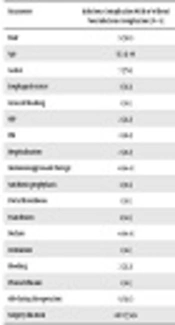
A total number of 28 LT patients (19 males and 9 females) were enrolled in the present study. The mean age of the patients was 48.6 ± 10.9 (range 26 - 66) years old. With respect to the underlying pathogenesis of the cirrhosis, 7 patients suffered from autoimmune hepatitis (4 females and 3 males), 11 patients had viral hepatitis (3 females and 8 males), 5 patients had steatohepatitis (2 females and 3 males), and 5 male patients were diagnosed with Budd-Chiari or cryptogenic cirrhosis. Tazocin (4.5 gr IV every 8 hours) was administered in 9 patients, while 19 patients received Ampicillin/sulbactam (3.5 gr IV every 6 hours) before the operation. There was no significant difference between the type of antibiotic prophylaxis and the rate of postoperative infection complications (P = 0.339). The patient’s characteristics are summarized in Table 1.
Table 1.
Characteristics of Study Patients Before, During, and After the Operationa
| Parameters | Infectious Complication With or Without Non-Infectious Complication (N = 9) | Only Non-Infectious Complications or No Complications (N = 19) | Total (N = 28) | P Valueb |
|---|---|---|---|---|
| Male | 5 (55.6) | 14 (73.7) | 19 (67.9) | 0.337 |
| Age | 51.3 ± 4.8 | 48.3 ± 2.57 | 49.3 ± 2.3 | 0.549c |
| Ascites | 7 (77.8) | 16 (84.2) | 23 (82.1) | 0.678 |
| Esophageal varices | 3 (33.3) | 8 (42.1) | 11 (39.3) | 0.657 |
| Variceal bleeding | 1 (11.1) | 8 (42.1) | 9 (32.1) | 0.101 |
| SBP | 2 (22.2) | 2 (10.5) | 4 (14.3) | 0.409 |
| DM | 2 (22.2) | 2 (10.5) | 4 (14.3) | 0.409 |
| Hospitalization | 2 (22.2) | 2 (10.5) | 4 (14.3) | 0.409 |
| Immunosuppressant therapy | 4 (44.4) | 3 (15.8) | 7 (25.0) | 0.102 |
| Antibiotic prophylaxis | 3 (33.3) | 10 (52.6) | 13 (46.4) | 0.339 |
| Portal thrombosis | 1 (11.1) | 3 (15.8) | 4 (14.3) | 0.741 |
| Transfusion | 1 (14.3) | 0 | 1 (4.0) | 0.280 |
| Dialysis | 4 (44.4) | 0 | 4 (14.3) | 0.006 |
| Ventilation | 1 (11.1) | 1 (5.3) | 2 (7.1) | 1.000 |
| Bleeding | 2 (22.2) | 0 | 2 (7.1) | 0.095 |
| Pleural Effusion | 1 (11.1) | 1 (5.3) | 2 (7.1) | 1.000 |
| SBP during the operation | 5 (55.6) | 0 | 5 (17.9) | 0.001 |
| Surgery duration | 247.6 ± 45.1 | 265.8 ± 45.6 | 260.0 ± 45.4 | 0.329c |
Abbreviations: DM, diabetes mellitus; SBP, spontaneous bacterial peritonitis.
aValues are expressed as mean ± SD or No. (%).
bP values were calculated based on Fisher’s Exact test unless it was mentioned.
cP value was calculated using t-test.
4.2. Postoperative Complications
All patients who underwent LT were subsequently admitted to the ICU. Four patients were diagnosed with spontaneous bacterial peritonitis (SBP) during surgery. During the first week following LT, five transplant recipients (3 females and 2 males) were clinically considered to have a SIRS while 10 patients developed non-infectious complications, including dialysis in 4 patients, need for ventilator in 2 patients, postoperative bleeding in 2 patients, and pleural effusion in 2 patients. Six out of 28 patients had both clinical signs of infections and non-infections complications including, 3 patients showed signs suggestive of septic shock, 2 patients developed severe liver dysfunction and one patient had clinical and radiological evidence of pneumonia. After transplantation, 5 patients (2 females and 3 males) were re-admitted to the hospital. In total, 2 patients died of both infectious and non-infectious postoperative complications in the second week after transplantation. The first patient was a 55-year-old woman with SBP during operation, which developed pneumonia and meningitis and finally died because of septic shock. The PCT level in this patient was negative before the operation; however, the PCT level was higher than 10 in the first/second days post-operation, as well as 6 to 7 days post-operation. The second patient who died was a 26-year-old woman with fulminant hepatitis B. She died despite the pre-operative administration of piperacillin/Tazobactam (Tazocin) and broad-spectrum antibiotic treatment post-transplantation, with septic shock. On the first/second days post-surgery, the PCT level was higher than 5 in this patient, which reached more than 10 in 6 to 7 days after surgery. Therefore, both of these patients had an active infection before transplantation.
4.3. Changes in Serum PCT Levels
The pre-operative serum PCT level was negative in all of the patients. One to two days following the operation, PCT concentrations in all patients were higher than 2 ng/mL, in 17 patients between 2 to 5 ng/mL, in 4 patients between 5 to 10 ng/mL, and in 7 patients more than 10 ng/mL. After the first week following LT, PCT was higher than 0.5 ng/mL in all of the patients. The PCT level was significantly higher in patients with infectious complications than patients without these complications (P < 0.05) (Table 2). There was no significant association between gender and age with postoperative PCT levels at different time points of serum PCT evaluations.
Table 2.
Comparison Between Infectious- and Non-Infectious Complications with Regard to the Timing of the PCT Evaluationa
| Parameters | Infectious Complication With or Without Non-Infectious Complication (N = 9) | Only Non-Infectious Complications or No Complications (N = 19) | Total (N = 28) | P Valueb |
|---|---|---|---|---|
| Positive SIRS one to 2 days post-operation | 2 (22.2) | 3 (15.8) | 5 (17.9) | 1.000 |
| Positive SIRS, 6 to 7 days post-operation | 2 (22.2) | 1 (5.3) | 3 (10.7) | 0.234 |
| PCT > 5, one to 2 days post-operation | 7 (77.8) | 4 (21.1) | 11 (39.3) | 0.010 |
| PCT > 10, one to 2 days post-operation | 3 (33.3) | 4 (21.1) | 7 (25.0) | 0.646 |
| PCT > 2, six to 7 days post-operation | 4 (44.4) | 1 (5.3) | 5 (17.9) | 0.026 |
| PCT > 5, six to 7 days post-operation | 3 (33.3) | 0 | 3 (10.7) | 0.026 |
Abbreviations: PCT, Procalcitonin; SIRS, systemic inflammatory response syndrome.
aValues are expressed as No. (%).
bP values were calculated by Fisher’s exact test.
4.4. SIRS and PCT Diagnostic Accuracy
We analyzed whether PCT could be used as a marker to confirm or exclude bacteremia 2 days after LT. Table 3 summarizes the sensitivity, specificity, PPV, NPV, and AUC (for different cut-offs for SIRS and PCT). One to two days post-surgery, the PCT level more than 5 ng/mL showed the highest diagnostic accuracy (below the curvature level of 0.88). At the serum PCT level more than 5 ng/mL, the sensitivity, specificity, and NPV were 77.8%, 79%, and 88.2%, respectively.
Table 3.
Results Derived from the 2 × 2 Table of Procalcitonin Versus Infectious Complications in the Patients Undergoing the Liver Transplant
| Cut-off | Sensitivity | Specificity | PPV | NPV | AUC |
|---|---|---|---|---|---|
| PCT > 5, one to 2 days after transplant | 77.8% (62.4 - 93.2) | 79.0% (63.9 - 94.1) | 63.6% (45.8 - 81.5) | 88.2% (76.3 - 100.0) | 0.78 (0.59 - 0.92) |
| PCT > 10, one or 2 days after transplant | 33.3% (15.9 - 50.8) | 79.0% (63.9 - 94.1) | 42.9% (24.5 - 61.2) | 71.4% (54.7 - 88.2) | 0.56 (0.37 - 0.76) |
| PCT > 2, six to 7 days after transplant | 44.4% (26.0 - 62.9) | 94.7% (86.5 - 100) | 80.0% (65.2 - 94.8) | 78.3% (63.0 - 93.5) | 0.70 (0.48 - 0.84) |
| PCT > 5, six to 7 days after transplant | 33.3% (15.9 - 50.8) | 100.0% (100 - 100) | 100.0% (100 - 100) | 76.0% (60.2 - 91.8) | 0.67 (0.48 - 0.84) |
| Positive SIRS, one to 2 days after transplant | 22.2% (6.8 - 37.6) | 84.2% (70.7 - 97.7) | 40.0% (21.9 - 58.2) | 69.6% (52.5 - 86.6) | 0.53 (0.34 - 0.73) |
| Positive SIRS, 6 to 7 days after transplant | 22.2% (6.8 - 37.6) | 94.7 (86.5 - 100) | 66.7% (49.2 - 84.1) | 72.0% (55.4 - 88.6) | 0.59 (0.37 - 0.76) |
Abbreviations: AUC, area under curve; NPV, negative predictive value; PCT, Procalcitonin; PPV, positive predictive value; SIRS, systemic inflammatory response syndrome.
5. Discussion
In the present study, data showed that PCT can be considered a reliable biomarker for the diagnosis of post-operation LT-related infections. Severe sepsis is a serious and life-threatening complication among solid-organ recipient patients, which can be difficult to diagnose after transplantation due to the immunodeficiency status of the patients. Standard methods for the diagnosis of the infection such as the growth of organisms in the culture medium or findings of biopsy and histopathology are slow processes. Given the importance of rapid and timely initiation of antibiotics in the survival of these patients, it is necessary to use methods that can quickly and accurately diagnose infection in transplant patients. Owing to the immunodeficiency status of these patients, they may not show an inflammatory response to bacterial infections, such as fever, leukocytosis, etc. Previously, biomarkers such as neopterin, interleukin (IL)-2 receptor, CRP, IL-6, IL-8, and tumor necrosis factor-alpha (TNF-α) have been investigated in order to diagnose infection processes, but none of them have shown reliable results. Among new biomarkers, PCT seems to be more accurate in identifying systemic infections in both healthy and immunocompromised individuals (18-20).
Yu et al. (21) reported that PCT has high sensitivity and moderate specificity in the diagnosis of infection in solid-organ transplant recipients. In this study, PCT levels more than 5 ng/mL in the first and second days after transplantation were able to detect the infections with a sensitivity of 77.8% and a specificity of 79%. A PPV of 100% was calculated in the cases where the PCT remained above 5 ng/mL on the 6th and 7th day after the transplant surgery. In our study, PCT levels were negative in all patients before transplantation and were higher than 2 ng/mL after the first and second days of surgery, which is similar to previous studies (20, 22-27). The main reason for the increase in the serum PCT level following LT is still unclear. Some researchers have suggested that high levels of PCT might be due to surgical injuries or release of endotoxins from the liver (28-30).
Previous studies on pediatric populations have suggested that PCT levels in patients who underwent liver, cardiac or allogeneic stem cell transplantations could be helpful in detecting infection in the early days after transplantation (22-24). It has been shown that in lung transplant recipients, PCT with a mean concentration of 8.18 ng/mL on the second day after implantation had the highest PPV with 80% sensitivity and 100% specificity (20).
Our results showed that after the initial PCT increase, it gradually decreased to the baseline level of below 0.5 ng/mL until the 7th day post-transplant. Patients with PCT elevation or no decrease during the first week have encountered more infectious complications, and this finding has also been seen in other studies. Perrakis et al. (25) examined PCT as an early diagnostic marker for predicting complications in postoperative LT period. In this study, patients were divided into two groups, including with and without infectious complications. The group of patients with infectious complications had a marked increase in PCT levels on the seventh day after transplantation. At a peak PCT > 5 ng/mL, the odds ratio was approximately 11.2 among the complicated patient group. In a meta-analysis performed by Liu et al. (31), increases in the levels of PCT was strongly associated with higher mortality rates in patients with sepsis of any cause. Kadio et al. (5) showed that patients who died within three months of transplantation had high PCT levels on the 7th day after surgery, while all patients with declined PCT on the 7th day survived. In our study, two patients who had serum PCT more than 10 ng/mL after the 7th day of transplant died.
In a recent study conducted by Cousin et al. (32), evaluation of PCT level was not helpful during the first week after the surgery and suggested that this biomarker should be measured after the first week post-transplantation to demonstrate the infection, while our study showed the increase more than 5 ng/mL after the first and second days of surgery is associated with an increased risk of infectious complications, and the failure to reduce it after 7 days is predictive of undesirable outcome.
5.1. Conclusions
In summary, serum PCT measurement, after liver transplantation has good sensitivity and specificity in the diagnosis of infection by using appropriate cut-off values and might be able to discriminate infection from rejection. Further studies are warranted to confirm the findings of the current study.